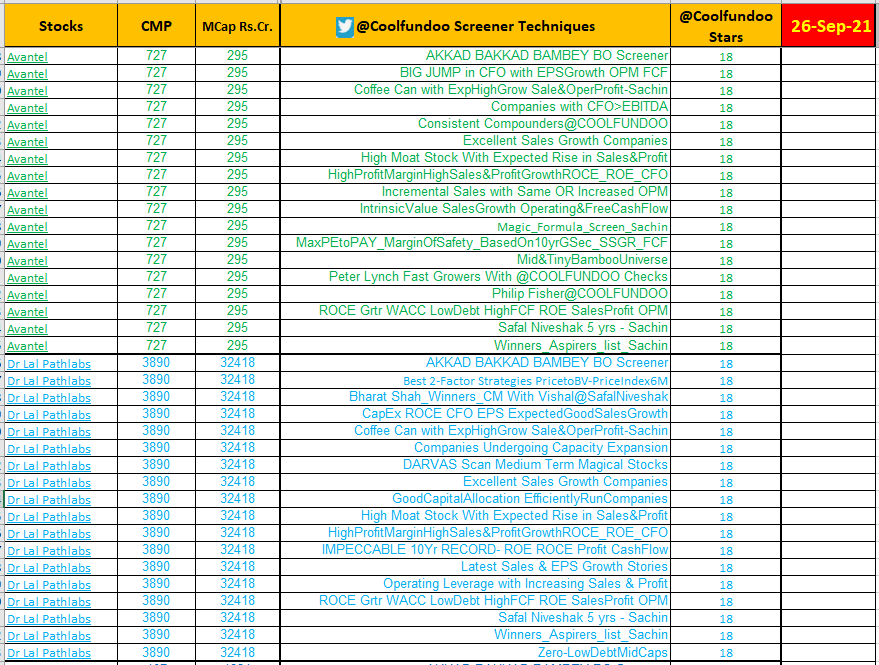
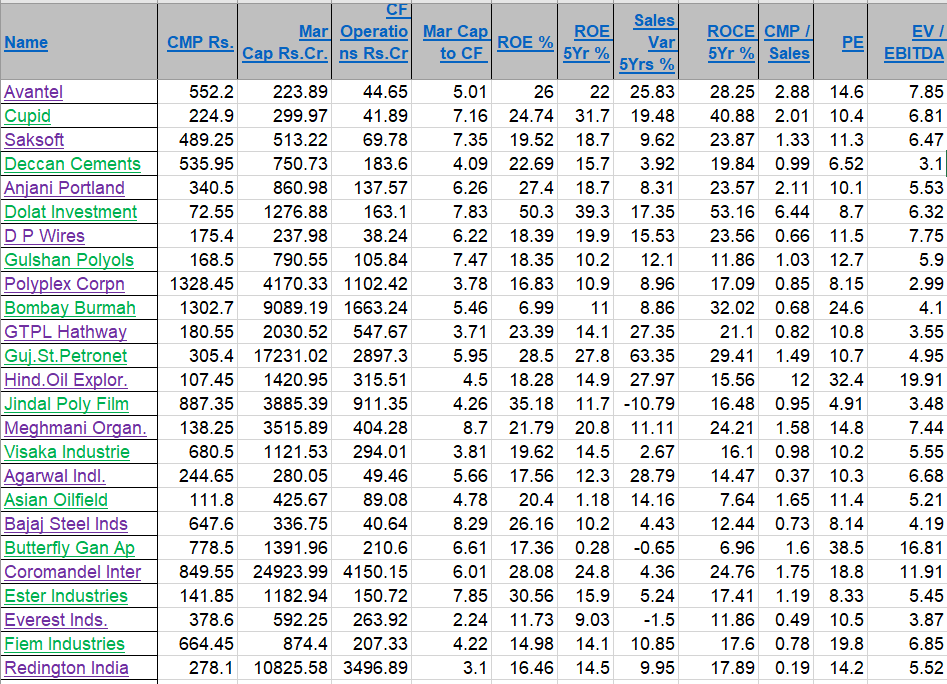
DrVijayMalik_ValueGuru_Checklist
Ist Upd - 05Jul2020

#Thread

A small tribute to @drvijaymalik on the occasion of Guru Purnima🙏

#valueinvesting #stocks
#SalesGrowth #OPM #npm
#CurrentRatio #DebtToEquity
#SSGR #MarginOfSafety #MaxPEtoPay #EarningsYield
#FII
#MaithanAlloy

1n

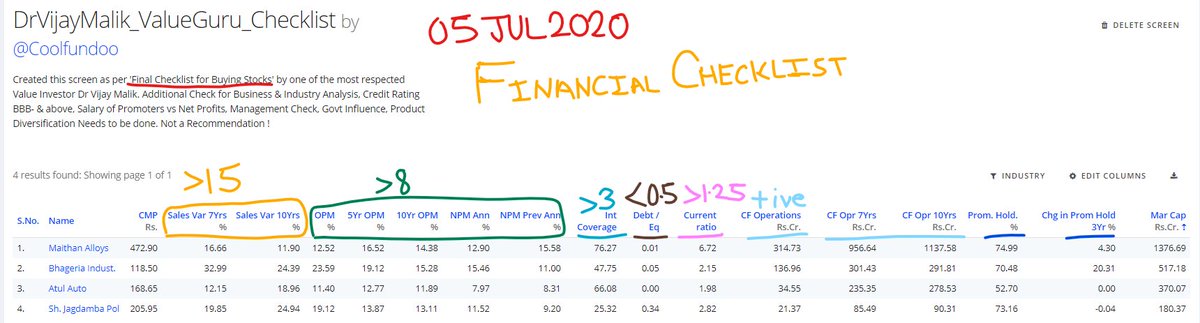
@drvijaymalik The Final Checklist for Buying Stocks !

Financial Checklist !

Taking Maithan Alloys as Sample Stock !

Tax Payout Shown in 1n (above).

2n
Valuation Checklist !

Earnings Yield > 10Yr G-Sec Yield. Higher the difference better it is.

Max PE to Pay calculated on the basis of Prevailing Current Interest Rate in the Economy (10Yr G-Sec Yield)

3n
Business & Industry Checklist !

10yr Cumulative PAT vs CFO. Ideally both should be similar or CFO may be little higher (Maithan Alloy Example)

Creation of Value for shareholders -
10Yr Increase in Market Cap > 10yr Increase in Retained Earnings (Maithan Alloy Example)

4n
Management Checklist & Other Business Parameters !

Most of this needs to be done manually. Take it as homework🙂

Maithan Alloy FII (1.87%) & Promoter Shareholding(74.99%).

Less FII better it is.

Check Change in Promoter Holding in last 3yrs (insider Buying) in 1n (above)

5n
Margin of Safety !

EY Vs 10yr G-Sec

SSGR > Current & Over a Period Sales Growth. Higher SSGR better it is.

Maithan Alloy SSGR Calculation @drvijaymalik

FCF vs CFO ratio over 7 to 10yrs. Higher the ratio better it is.

MaxPEtoPay - 3n (above)

6n
Please refer below thread from Dr Vijay Malik for details -

https://t.co/P5uR2wc6vD

7n
Missed to post one point in Financial Checklist (2n) above.

If CFO meets outflows of CFI & CFF it would be great.

For Maithan Alloys in FY 2019 CFO is 15 Cr short of meeting the outflow of CFI & CFF.

8n
Credit Rating Checklist !

Credit rating should be min BBB- . It should be improving over the years.

Maithan Alloys is a Net Cash Company667 Cr in Mar 2019

Credit Rating: CARE AA CRISIL AA CARE/CRISIL A1+

9n

More from Screening Stocks Enjoy 'My StressBusters'

You May Also Like

A brief analysis and comparison of the CSS for Twitter's PWA vs Twitter's legacy desktop website. The difference is dramatic and I'll touch on some reasons why.

Legacy site *downloads* ~630 KB CSS per theme and writing direction.

6,769 rules
9,252 selectors
16.7k declarations
3,370 unique declarations
44 media queries
36 unique colors
50 unique background colors
46 unique font sizes
39 unique z-indices

https://t.co/qyl4Bt1i5x


PWA *incrementally generates* ~30 KB CSS that handles all themes and writing directions.

735 rules
740 selectors
757 declarations
730 unique declarations
0 media queries
11 unique colors
32 unique background colors
15 unique font sizes
7 unique z-indices

https://t.co/w7oNG5KUkJ


The legacy site's CSS is what happens when hundreds of people directly write CSS over many years. Specificity wars, redundancy, a house of cards that can't be fixed. The result is extremely inefficient and error-prone styling that punishes users and developers.

The PWA's CSS is generated on-demand by a JS framework that manages styles and outputs "atomic CSS". The framework can enforce strict constraints and perform optimisations, which is why the CSS is so much smaller and safer. Style conflicts and unbounded CSS growth are avoided.