
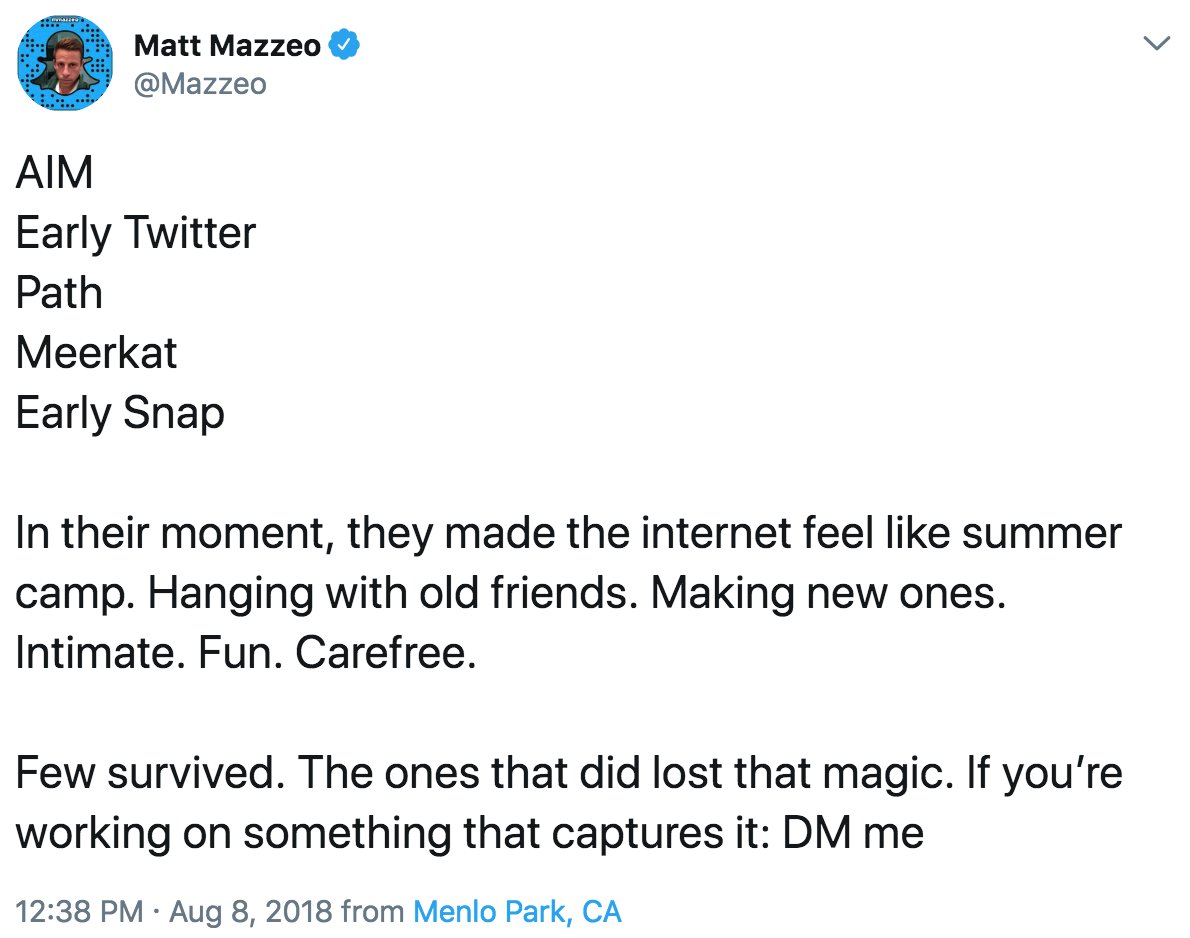
📱 Over the past 2-3 years, I screenshotted a ton of random tweets about social/product that made me think
Here they are, in chronological order, w highlights from @nikitabier, @BrianNorgard, @rsg, @Mazzeo, @prestonattebery, + many more
(sry for weird twtr cropping + threading)
literally have a folder of dozens of my fav screenshotted tweets on consumer social product stuff...and @nikitabier is well represented
— Adam O'Kane \U0001f4ad (@adamokane) February 13, 2021

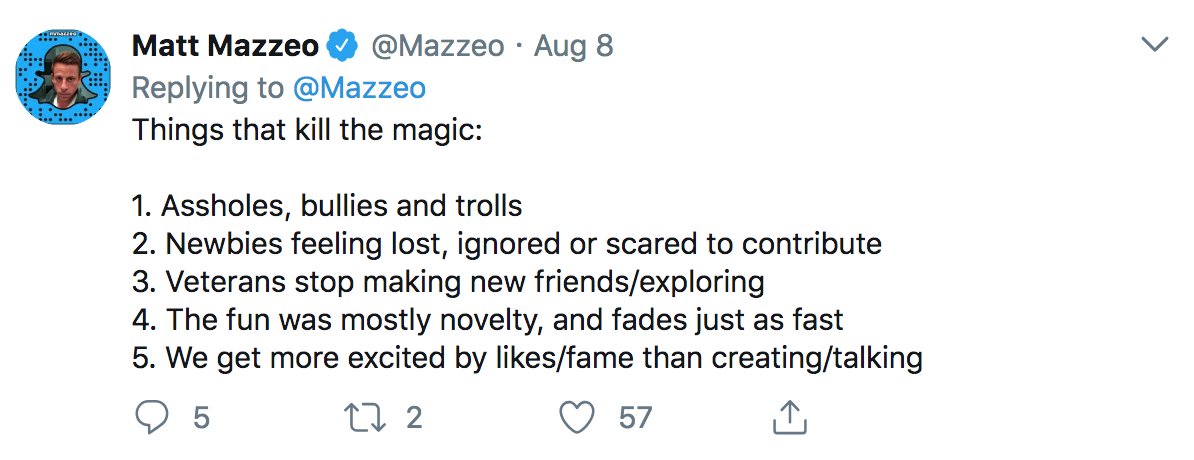



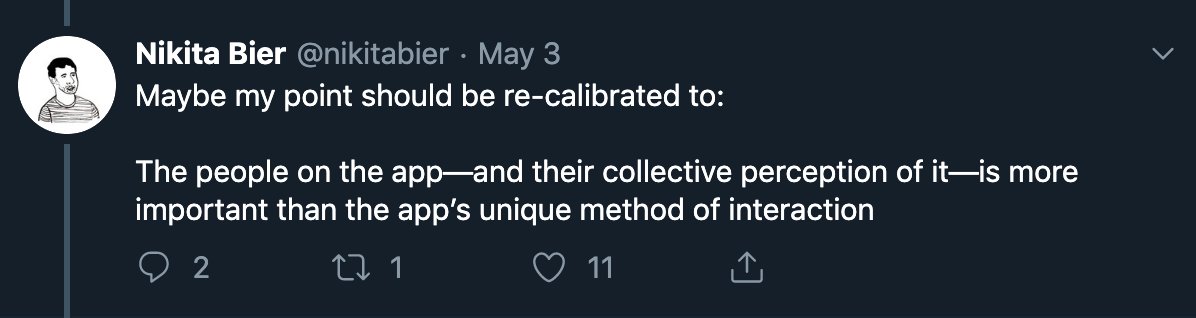





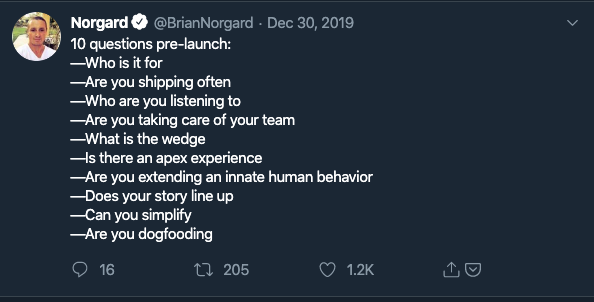





Takeaways from this: I should pay @nikitabier and the rest of you for your tweets. Can't believe this website is free!
More from Twitter


Here are 20 of my best threads from 2020 covering personal finance, entrepreneurship, economics & finance, investment banking ++ useful resources.
Massively grateful to everyone who took time out to read, comment & share these across the year. I really appreciate you.
[Thread]
1. Breaking-in – study notes, free textbooks & past
2. Breaking-in – the job connector
3. Breaking-in – book smart vs. street
4. Personal Finance – MEGA Property
Massively grateful to everyone who took time out to read, comment & share these across the year. I really appreciate you.
[Thread]
1. Breaking-in – study notes, free textbooks & past
If you have any study notes, past exam papers, quick excel models... anything you feel could help Twitter peeps, post the links below \U0001f4aa\U0001f4aa
— Koshiek Karan (@iamkoshiek) May 29, 2020
2. Breaking-in – the job connector
The interview job connector thread. If you're currently job hunting, please post the industry/role & someone who is already in the field can give you tailored tips ++ share their experiences \U0001f4aa\U0001f3fd\U0001f4aa\U0001f3fd
— Koshiek Karan (@iamkoshiek) December 4, 2020
3. Breaking-in – book smart vs. street
Anyone who has ever worked a corporate job will tell you where you studied means very little.
— Koshiek Karan (@iamkoshiek) August 8, 2020
Education doesn't guarantee ability.
4. Personal Finance – MEGA Property
The Reserve Bank cut the repo rate by 25bps & just like clockwork, the rats who are paid to sell houses are encouraging people to go out & buy
— Koshiek Karan (@iamkoshiek) July 23, 2020
The usual "influencers"/ estate agents/ mortgage brokers/ banks/ loan sharks/ excavator salesmen
Here's a useful MEGA property thread:

Today's threads (a Twitter thread).
Inside: Twitter's Project Blue Sky; Brazil's world-beating data breach; Evictions and utility cutoffs are covid comorbidities; "North Korea" targets infosec researchers; and more!
Archived at: https://t.co/eCzogk14kg
#Pluralistic
1/

Join me this Thursday for the launch of the print edition of my 2020 book HOW TO DESTROY SURVEILLANCE CAPITALISM!
https://t.co/8Op6IEocPB
2/

Twitter's Project Blue Sky: Fix the internet, not the platforms.
https://t.co/KoZNABMJrE
3/

Brazil's world-beating data breach: More than 100% of the population doxed.
https://t.co/6tcbcX2gQ6
4/

Evictions and utility cutoffs are covid comorbidities: 143,000 covid deaths due to economic precarity.
https://t.co/pZM80W5DuR
5/

Inside: Twitter's Project Blue Sky; Brazil's world-beating data breach; Evictions and utility cutoffs are covid comorbidities; "North Korea" targets infosec researchers; and more!
Archived at: https://t.co/eCzogk14kg
#Pluralistic
1/
Join me this Thursday for the launch of the print edition of my 2020 book HOW TO DESTROY SURVEILLANCE CAPITALISM!
https://t.co/8Op6IEocPB
2/
Twitter's Project Blue Sky: Fix the internet, not the platforms.
https://t.co/KoZNABMJrE
3/
It's been more than a year since @jack announced Project Blue Sky, inspired by @mmasnick's "Protocols, Not Platforms," paper - a critical work explaining how walled gardens can be transformed into open protocols.https://t.co/1yDSNJehRP
— Cory Doctorow #BLM (@doctorow) January 26, 2021
1/ pic.twitter.com/xwDIErMFLJ
Brazil's world-beating data breach: More than 100% of the population doxed.
https://t.co/6tcbcX2gQ6
4/
Brazil's public health agency has suffered what is arguably the worst data-exposure in world history, losing 243m+ records in a country of 211m people (the excess represents dead peoples' records).https://t.co/VsQUtIEnC7
— Cory Doctorow #BLM (@doctorow) January 26, 2021
1/ pic.twitter.com/DV6k2NfvHW
Evictions and utility cutoffs are covid comorbidities: 143,000 covid deaths due to economic precarity.
https://t.co/pZM80W5DuR
5/
"Public health" isn't just about vaccinations, clinics and urgent care: it's a holistic discipline that encompasses all the contributors to health outcomes, which include things like housing, employment, transportation, pollution and more.
— Cory Doctorow #BLM (@doctorow) January 26, 2021
1/ pic.twitter.com/UQRgLVoczQ


You May Also Like

Tip from the Monkey
Pangolins, September 2019 and PLA are the key to this mystery
Stay Tuned!

1. Yang
2. A jacobin capuchin dangling a flagellin pangolin on a javelin while playing a mandolin and strangling a mannequin on a paladin's palanquin, said Saladin
More to come tomorrow!

3. Yigang Tong
https://t.co/CYtqYorhzH
Archived: https://t.co/ncz5ruwE2W

4. YT Interview
Some bats & pangolins carry viruses related with SARS-CoV-2, found in SE Asia and in Yunnan, & the pangolins carrying SARS-CoV-2 related viruses were smuggled from SE Asia, so there is a possibility that SARS-CoV-2 were coming from
Pangolins, September 2019 and PLA are the key to this mystery
Stay Tuned!
1. Yang
Meet Yang Ruifu, CCP's biological weapons expert https://t.co/JjB9TLEO95 via @Gnews202064
— Billy Bostickson \U0001f3f4\U0001f441&\U0001f441 \U0001f193 (@BillyBostickson) October 11, 2020
Interesting expose of China's top bioweapons expert who oversaw fake pangolin research
Paper 1: https://t.co/TrXESKLYmJ
Paper 2:https://t.co/9LSJTNCn3l
Pangolinhttps://t.co/2FUAzWyOcv pic.twitter.com/I2QMXgnkBJ
2. A jacobin capuchin dangling a flagellin pangolin on a javelin while playing a mandolin and strangling a mannequin on a paladin's palanquin, said Saladin
More to come tomorrow!
3. Yigang Tong
https://t.co/CYtqYorhzH
Archived: https://t.co/ncz5ruwE2W
4. YT Interview
Some bats & pangolins carry viruses related with SARS-CoV-2, found in SE Asia and in Yunnan, & the pangolins carrying SARS-CoV-2 related viruses were smuggled from SE Asia, so there is a possibility that SARS-CoV-2 were coming from

A brief analysis and comparison of the CSS for Twitter's PWA vs Twitter's legacy desktop website. The difference is dramatic and I'll touch on some reasons why.
Legacy site *downloads* ~630 KB CSS per theme and writing direction.
6,769 rules
9,252 selectors
16.7k declarations
3,370 unique declarations
44 media queries
36 unique colors
50 unique background colors
46 unique font sizes
39 unique z-indices
https://t.co/qyl4Bt1i5x

PWA *incrementally generates* ~30 KB CSS that handles all themes and writing directions.
735 rules
740 selectors
757 declarations
730 unique declarations
0 media queries
11 unique colors
32 unique background colors
15 unique font sizes
7 unique z-indices
https://t.co/w7oNG5KUkJ

The legacy site's CSS is what happens when hundreds of people directly write CSS over many years. Specificity wars, redundancy, a house of cards that can't be fixed. The result is extremely inefficient and error-prone styling that punishes users and developers.
The PWA's CSS is generated on-demand by a JS framework that manages styles and outputs "atomic CSS". The framework can enforce strict constraints and perform optimisations, which is why the CSS is so much smaller and safer. Style conflicts and unbounded CSS growth are avoided.
Legacy site *downloads* ~630 KB CSS per theme and writing direction.
6,769 rules
9,252 selectors
16.7k declarations
3,370 unique declarations
44 media queries
36 unique colors
50 unique background colors
46 unique font sizes
39 unique z-indices
https://t.co/qyl4Bt1i5x
PWA *incrementally generates* ~30 KB CSS that handles all themes and writing directions.
735 rules
740 selectors
757 declarations
730 unique declarations
0 media queries
11 unique colors
32 unique background colors
15 unique font sizes
7 unique z-indices
https://t.co/w7oNG5KUkJ
The legacy site's CSS is what happens when hundreds of people directly write CSS over many years. Specificity wars, redundancy, a house of cards that can't be fixed. The result is extremely inefficient and error-prone styling that punishes users and developers.
The PWA's CSS is generated on-demand by a JS framework that manages styles and outputs "atomic CSS". The framework can enforce strict constraints and perform optimisations, which is why the CSS is so much smaller and safer. Style conflicts and unbounded CSS growth are avoided.


