
women of twitter: raise your hand if you’ve ever discovered that a male colleague with the same (or less!) years of experience and same job title as you was actually making more money?
i’ll go first: 🙋🏽♀️
More from Society

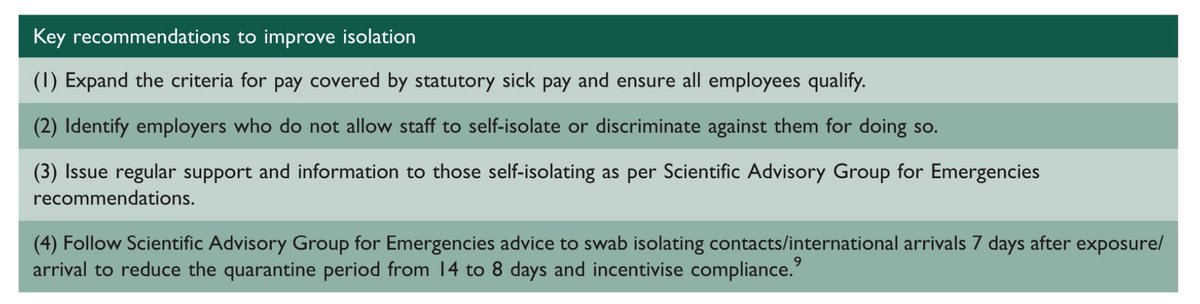

Krugman is, of course, right about this. BUT, note that universities can do a lot to revitalize declining and rural regions.
See this thing that @lymanstoneky wrote:
And see this thing that I wrote:
And see this book that @JamesFallows wrote:
And see this other thing that I wrote:
One thing I've been noticing about responses to today's column is that many people still don't get how strong the forces behind regional divergence are, and how hard to reverse 1/ https://t.co/Ft2aH1NcQt
— Paul Krugman (@paulkrugman) November 20, 2018
See this thing that @lymanstoneky wrote:
And see this thing that I wrote:
And see this book that @JamesFallows wrote:
And see this other thing that I wrote:


I’ll address every nonsense argument and lie used to defend the suicidal gender ideology Thats in vogue today:
3:45 - “So what if you don’t have gametes?”
It’s called a birth defect. You’re still male or female.
~5:00 *nonsense trying to say the sexes of seahorses could be swapped coz male carry the eggs*
male doesn’t produce eggs, he produces the sperm. He’s still the male. If I impregnated a chick then carried the amniotic sac in a backpack ‘til the baby was done I’ll still be male🤦♂️
5:10 - we could say there’s 4 sexes of fruit fly cause there’s 3 producers of different sized sperm
No. They’re still producing sperm. They’re males. This is idiotic. Is this whole video like this? (Probably. 99% likely. Abandon hope.)
~6:10 - hermaphroditism and sequential hermaphroditism exists therefore....
No. Some animals being hermaphrodites, which is meaningless w/o the existence of binary sex to contrast it to, still doesn’t make gender ideology or transgenderism valid.
Intersex ≠ transgenderism 🙄
6:20 - bilateral gynandromorphism is a disorder in some species (not in humans). Has nothing to do w/ “gender” or transgenderism.
Ova-testes in humans are also a disorder, usually found in those w/ the karyotype disorders that you ppl also try to appropriate (extra X’s/Y’s).
3:45 - “So what if you don’t have gametes?”
It’s called a birth defect. You’re still male or female.
*one horrible doctor does a horrible thing* "oh I guess gender is horrible" miss me with that transphobic nonsense
— Goob \u26a1 (@Goob999) February 17, 2021
Here's a video to even disprove your take on sex (not gender) and the binary:https://t.co/bpmqqJWoJX
~5:00 *nonsense trying to say the sexes of seahorses could be swapped coz male carry the eggs*
male doesn’t produce eggs, he produces the sperm. He’s still the male. If I impregnated a chick then carried the amniotic sac in a backpack ‘til the baby was done I’ll still be male🤦♂️
5:10 - we could say there’s 4 sexes of fruit fly cause there’s 3 producers of different sized sperm
No. They’re still producing sperm. They’re males. This is idiotic. Is this whole video like this? (Probably. 99% likely. Abandon hope.)
~6:10 - hermaphroditism and sequential hermaphroditism exists therefore....
No. Some animals being hermaphrodites, which is meaningless w/o the existence of binary sex to contrast it to, still doesn’t make gender ideology or transgenderism valid.
Intersex ≠ transgenderism 🙄
6:20 - bilateral gynandromorphism is a disorder in some species (not in humans). Has nothing to do w/ “gender” or transgenderism.
Ova-testes in humans are also a disorder, usually found in those w/ the karyotype disorders that you ppl also try to appropriate (extra X’s/Y’s).


You May Also Like

The first area to focus on is diversity. This has become a dogma in the tech world, and despite the fact that tech is one of the most meritocratic industries in the world, there are constant efforts to promote diversity at the expense of fairness, merit and competency. Examples:
USC's Interactive Media & Games Division cancels all-star panel that included top-tier game developers who were invited to share their experiences with students. Why? Because there were no women on the
ElectronConf is a conf which chooses presenters based on blind auditions; the identity, gender, and race of the speaker is not known to the selection team. The results of that merit-based approach was an all-male panel. So they cancelled the conference.
Apple's head of diversity (a black woman) got in trouble for promoting a vision of diversity that is at odds with contemporary progressive dogma. (She left the company shortly after this
Also in the name of diversity, there is unabashed discrimination against men (especially white men) in tech, in both hiring policies and in other arenas. One such example is this, a developer workshop that specifically excluded men: https://t.co/N0SkH4hR35
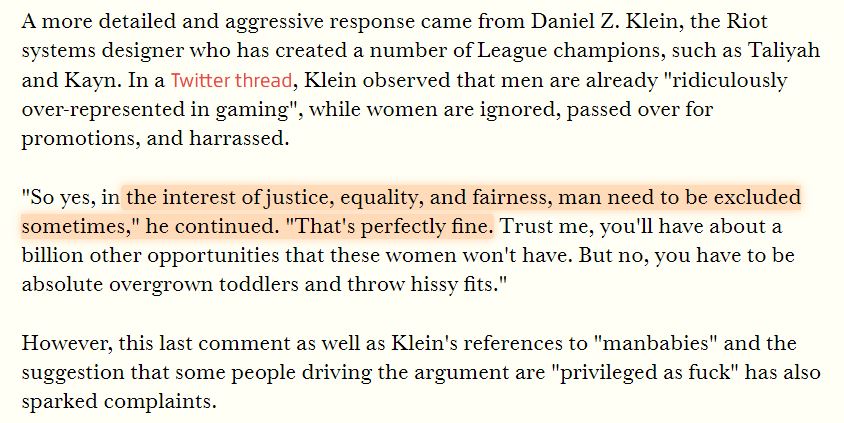
USC's Interactive Media & Games Division cancels all-star panel that included top-tier game developers who were invited to share their experiences with students. Why? Because there were no women on the
ElectronConf is a conf which chooses presenters based on blind auditions; the identity, gender, and race of the speaker is not known to the selection team. The results of that merit-based approach was an all-male panel. So they cancelled the conference.
Apple's head of diversity (a black woman) got in trouble for promoting a vision of diversity that is at odds with contemporary progressive dogma. (She left the company shortly after this
Also in the name of diversity, there is unabashed discrimination against men (especially white men) in tech, in both hiring policies and in other arenas. One such example is this, a developer workshop that specifically excluded men: https://t.co/N0SkH4hR35


Margatha Natarajar murthi - Uthirakosamangai temple near Ramanathapuram,TN
#ArudraDarisanam
Unique Natarajar made of emerlad is abt 6 feet tall.
It is always covered with sandal paste.Only on Thriuvadhirai Star in month Margazhi-Nataraja can be worshipped without sandal paste.

After removing the sandal paste,day long rituals & various abhishekam will be https://t.co/e1Ye8DrNWb day Maragatha Nataraja sannandhi will be closed after anointing the murthi with fresh sandal paste.Maragatha Natarajar is covered with sandal paste throughout the year
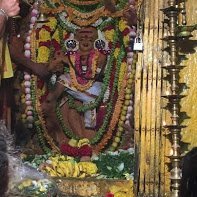
as Emerald has scientific property of its molecules getting disturbed when exposed to light/water/sound.This is an ancient Shiva temple considered to be 3000 years old -believed to be where Bhagwan Shiva gave Veda gyaana to Parvati Devi.This temple has some stunning sculptures.
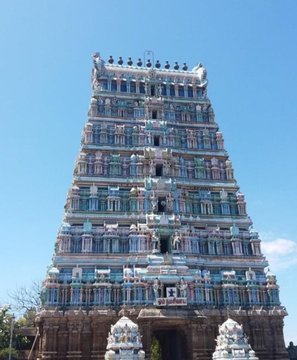
#ArudraDarisanam
Unique Natarajar made of emerlad is abt 6 feet tall.
It is always covered with sandal paste.Only on Thriuvadhirai Star in month Margazhi-Nataraja can be worshipped without sandal paste.
After removing the sandal paste,day long rituals & various abhishekam will be https://t.co/e1Ye8DrNWb day Maragatha Nataraja sannandhi will be closed after anointing the murthi with fresh sandal paste.Maragatha Natarajar is covered with sandal paste throughout the year
as Emerald has scientific property of its molecules getting disturbed when exposed to light/water/sound.This is an ancient Shiva temple considered to be 3000 years old -believed to be where Bhagwan Shiva gave Veda gyaana to Parvati Devi.This temple has some stunning sculptures.