
2/
We live in a society that misunderstands boundaries and consent. Most people think the former is about just saying no, and the latter is about sex. And while that’s a part of it, they are about agency, autonomy, respect and interpersonal relationships.
1/
2/
3/
4/
5/
6/
7/
8/
9/
10/
11/
More from Jo Luehmann
TW: suicidal ideation.
At the darkest days of the abuse I was being subjected to I decided to attend a conference for women in Los Angeles. I convinced my mother in law to pay for it because I couldn’t afford it. @ChristineCaine was preaching. I was desperate...
1/
I wanted to die, I didn’t see a way out and I had tried everything. I imagined many ways to die daily. The most recurring one was throwing my car down a bridge I had to drive over every day. I never did it because my kids were in the car and I was afraid one of them would...
2/
survive or I’d kill someone on the way down.
Christine spoke about honoring your pastors even when they weren’t great, she spoke of us expecting too much of pastors and how wrong that was. She said God would use our testimony if we submitted to our pastors.
3/
She said “honor your pastors, God will honor you.” She said more about having disagreed with her pastors but she submitted and God honored her and now she’s blessed. How if they are faithfully serving God, we need to support them and not forfeit what God has for us.
4/
I felt my heart drop into my stomach. I got up and went to the bathroom because I couldn’t breath and I felt like I was going to faint if I didn’t scream. I now know I was having a panic attack. I sat on the toilet w/my head between my legs, breathed and wept..
5/
At the darkest days of the abuse I was being subjected to I decided to attend a conference for women in Los Angeles. I convinced my mother in law to pay for it because I couldn’t afford it. @ChristineCaine was preaching. I was desperate...
1/
There are many reasons why the unfolding news of Ravi Zacharias\u2019 abuse is enraging. But for me, there\u2019s one other piece. The women he chose to abuse were young, massage therapists, ethnic minorities, likely women who were not in positions of power or education.
— Devi Abraham (@devi_writes) February 12, 2021
I wanted to die, I didn’t see a way out and I had tried everything. I imagined many ways to die daily. The most recurring one was throwing my car down a bridge I had to drive over every day. I never did it because my kids were in the car and I was afraid one of them would...
2/
survive or I’d kill someone on the way down.
Christine spoke about honoring your pastors even when they weren’t great, she spoke of us expecting too much of pastors and how wrong that was. She said God would use our testimony if we submitted to our pastors.
3/
She said “honor your pastors, God will honor you.” She said more about having disagreed with her pastors but she submitted and God honored her and now she’s blessed. How if they are faithfully serving God, we need to support them and not forfeit what God has for us.
4/
I felt my heart drop into my stomach. I got up and went to the bathroom because I couldn’t breath and I felt like I was going to faint if I didn’t scream. I now know I was having a panic attack. I sat on the toilet w/my head between my legs, breathed and wept..
5/
More from Society




You May Also Like








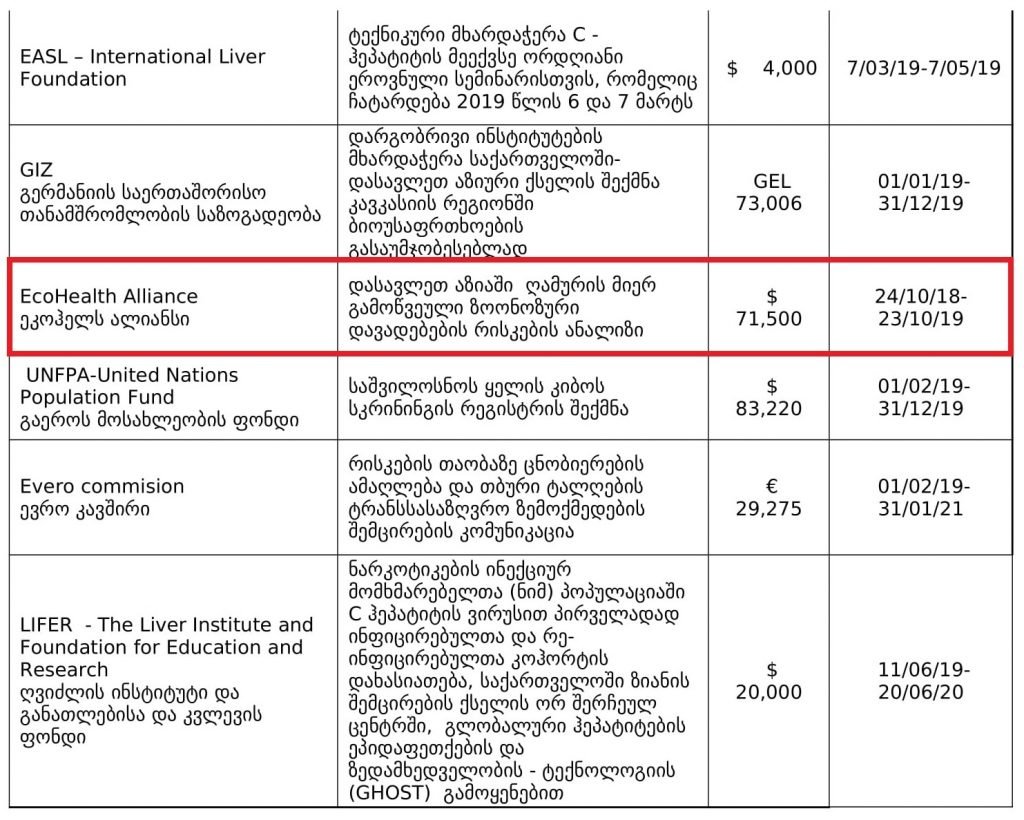
1. Project 1742 (EcoHealth/DTRA)
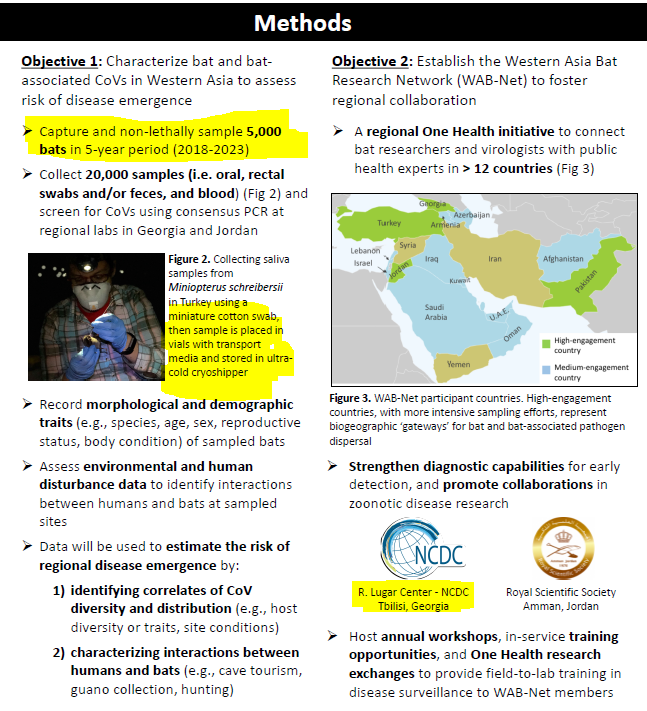
Risks of bat-borne zoonotic diseases in Western Asia
Duration: 24/10/2018-23 /10/2019
Funding: $71,500
@dgaytandzhieva
https://t.co/680CdD8uug
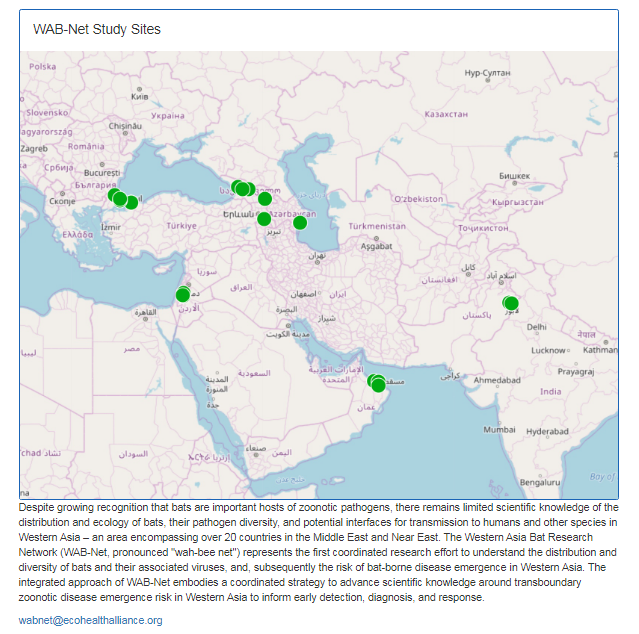
2. Bat Virus Database
Access to the database is limited only to those scientists participating in our ‘Bats and Coronaviruses’ project
Our intention is to eventually open up this database to the larger scientific community
https://t.co/mPn7b9HM48
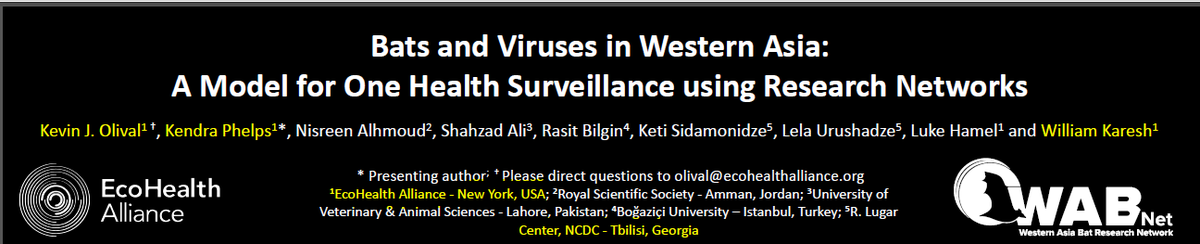
3. EcoHealth Alliance & DTRA Asking for Trouble
One Health research project focused on characterizing bat diversity, bat coronavirus diversity and the risk of bat-borne zoonotic disease emergence in the region.
https://t.co/u6aUeWBGEN
4. Phelps, Olival, Epstein, Karesh - EcoHealth/DTRA
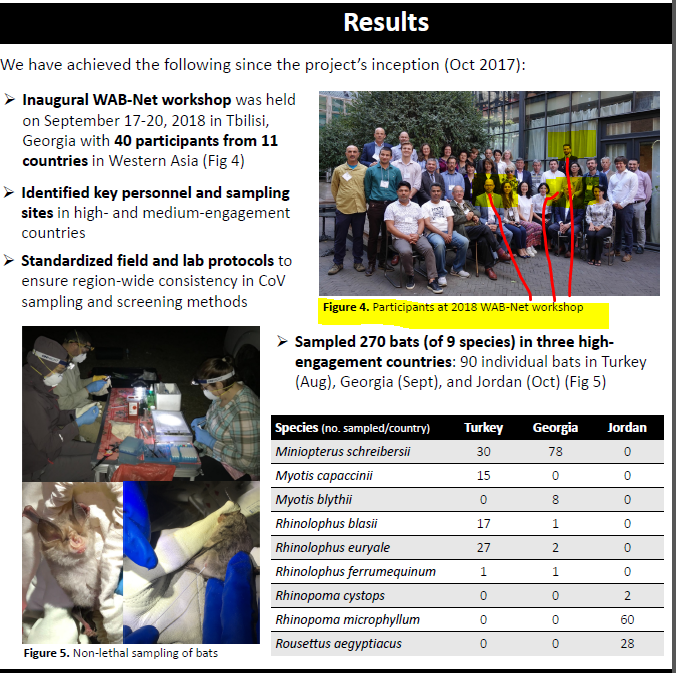
5, Methods and Expected Outcomes
(Unexpected Outcome = New Coronavirus Pandemic)
Risks of bat-borne zoonotic diseases in Western Asia
Duration: 24/10/2018-23 /10/2019
Funding: $71,500
@dgaytandzhieva
https://t.co/680CdD8uug
2. Bat Virus Database
Access to the database is limited only to those scientists participating in our ‘Bats and Coronaviruses’ project
Our intention is to eventually open up this database to the larger scientific community
https://t.co/mPn7b9HM48
3. EcoHealth Alliance & DTRA Asking for Trouble
One Health research project focused on characterizing bat diversity, bat coronavirus diversity and the risk of bat-borne zoonotic disease emergence in the region.
https://t.co/u6aUeWBGEN
4. Phelps, Olival, Epstein, Karesh - EcoHealth/DTRA
5, Methods and Expected Outcomes
(Unexpected Outcome = New Coronavirus Pandemic)
