#CPR is an indicator which is used for #Intraday in Stock Market.
This learning thread would be on
"𝙐𝙨𝙚𝙨 𝙤𝙛 𝘾𝙋𝙍"
Like❤️& Retweet🔁for wider reach and for more such learning thread in the future.
Also, an investment strategy is shared using CPR in the end.
1/24
Central Pivot Range (CPR) acts like a magnetic level for any stock/index. Traders use it for intraday but it works on higher time frame as well.
CPR is just the three lines which is like a magnet and price approaches these levels. CPR acts like a support or resistance.
2/24
What are these three lines now?
𝗣𝗶𝘃𝗼𝘁 = (High + Low + Close)/3
𝗕𝗖 = (High + Low)/2
𝗧𝗖 = (Pivot – BC) + Pivot
For intraday chart use previous day candle HLC. Similarly, for Daily Chart it would be Monthly HLC. For Weekly/Monthly Chart use Yearly HLC.
3/24
This indicator is available on Zerodha Kite (web version) and it works well there. It's also available in @tradingview but setup needs to be done based on the time frame.
Images are shared for CPR setup of both the terminals (Zerodha and Tradingview).
4/24
CPR can be used in finding trend.
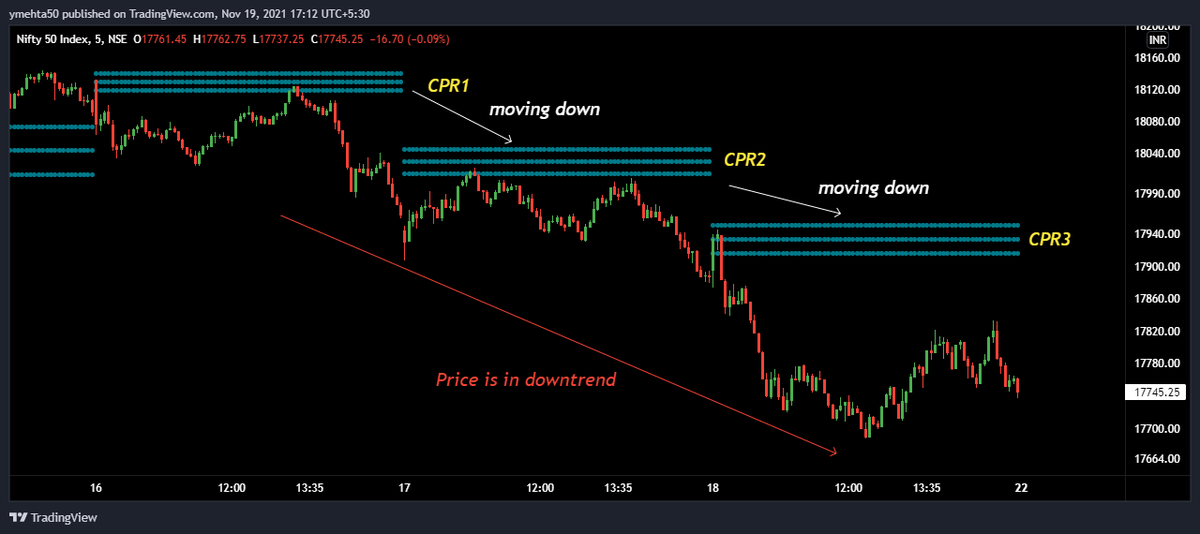
If CPR is moving up for the next day, then trend is up. If CPR is moving down for the next day, then trend is down.
Some examples for both:
In the below chart of Nifty (5 mins), CPR is moving down and price is also in downtrend.
5/24