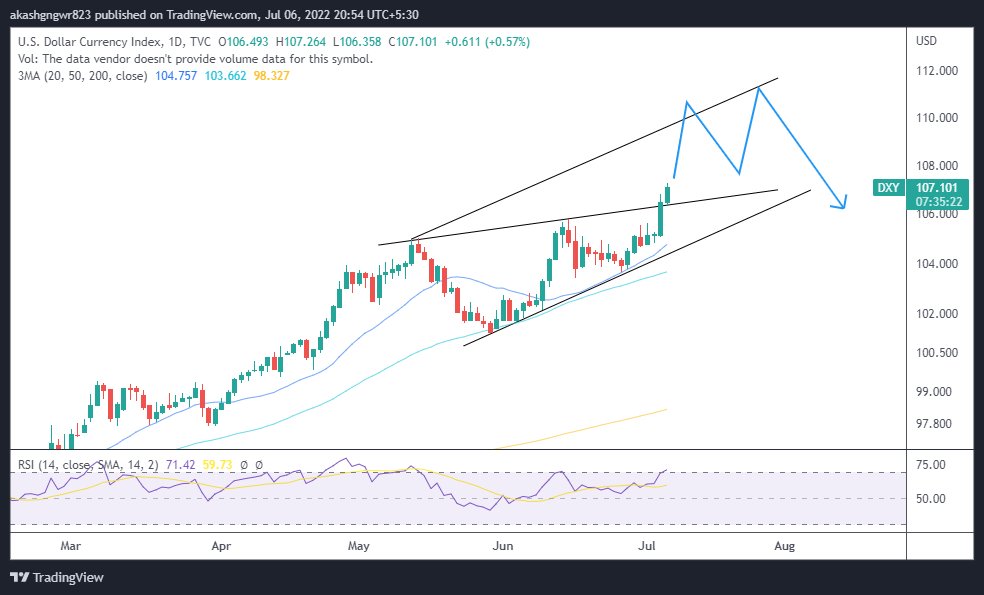
A rising wedge when broken decisively on the upside turns into a channel and stretches a little on the top of channel after a non stop move. Expecting this trajectory as of now.
#DXY
More from Aakash Gangwar
1. Long term channel top.
2. Curvature shift of 20 and 50 WMA along with price hitting 20 WMA frequently.
3. Overall weakness in IT sector.
4. For reference, study reliance top in August 2020, study Nasdaq Weekly chart and the top made in Nov 2021.
#tataelxi https://t.co/RmJa5LrdAP
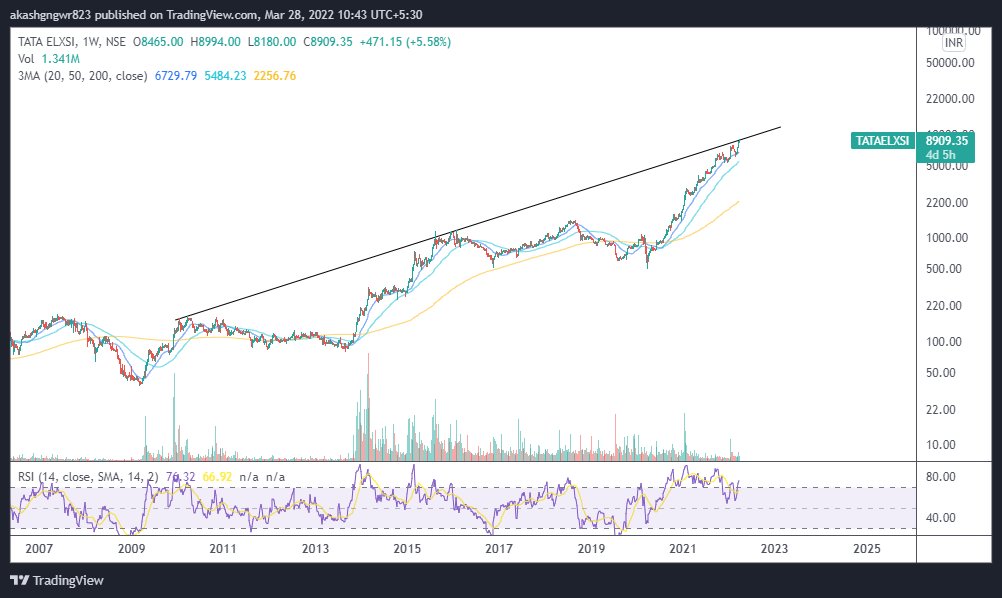
I have traded the current fav Tata Elxi from 2200 to 4500. No regret on missing out rest of the move because I am not an investor. Now there are many technical red flags. I might be trolled but 10.5k looks max target while 5k or 3-4 years of sideways looks inevitable.#tataelxi
— Aakash Gangwar (@akashgngwr823) March 26, 2022
#CNXIT
Parabolic move has been triggered. Let's have 27k. That could be the buying zone for IT names. #CNXIT https://t.co/bJeKTMoCji pic.twitter.com/ab6w1mysz0
— Aakash Gangwar (@akashgngwr823) May 19, 2022
#CNXIT
Almost there. Be prepared to see 33k again in Nifty IT. Only for swing trades, no investment here. #CNXIT https://t.co/RMAsQweoFY pic.twitter.com/BmKD7g6Q8i
— Aakash Gangwar (@akashgngwr823) May 25, 2022
#Nifty50 https://t.co/ajpEwosu3v
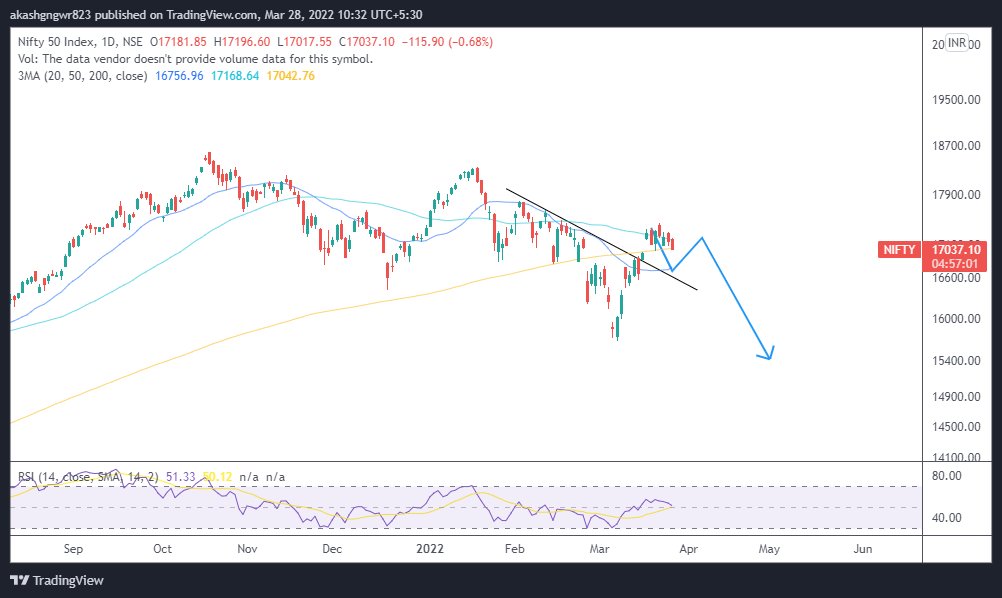
JK bhai let's have fake breakout in Nifty \U0001f61c
— Aakash Gangwar (@akashgngwr823) March 10, 2022
Not joking though, have a reason to anticipate that. https://t.co/idzSRIpWga pic.twitter.com/MNsTm3Mron
#bearrun
#BearMarket
Head & Shoulders pattern, double top and bearish RSI divergences fail more often in bull market and generally gives a very good SAR trade. Vice versa is also true for bear market.#bullrun #BullMarket
— Aakash Gangwar (@akashgngwr823) February 9, 2021
More from Screeners


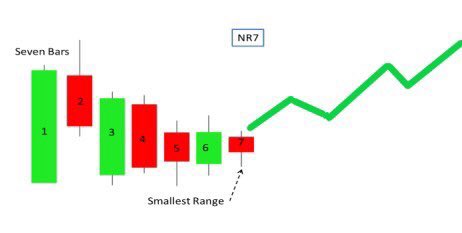


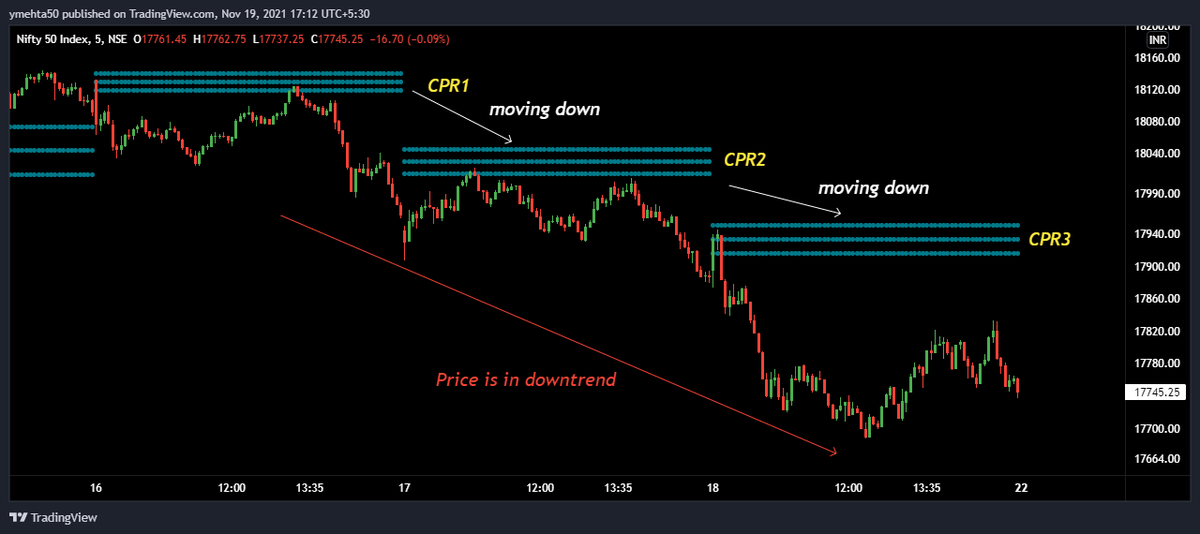
#nifty50 https://t.co/64ZktWHQev
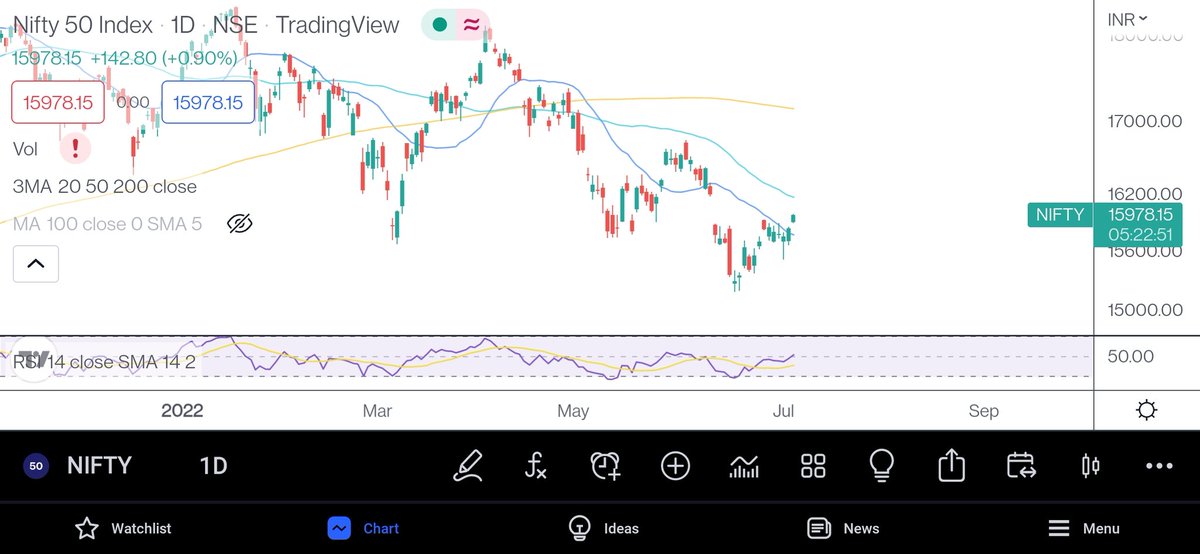
This is the maximum upside for now, post that I am looking for an 8-9% fall in index.#nifty50 pic.twitter.com/BcSOiwWuBs
— Aakash Gangwar (@akashgngwr823) June 24, 2022

USDINR - a breakout that will not bode well for the equities
78+ https://t.co/AWqZxF5B1L
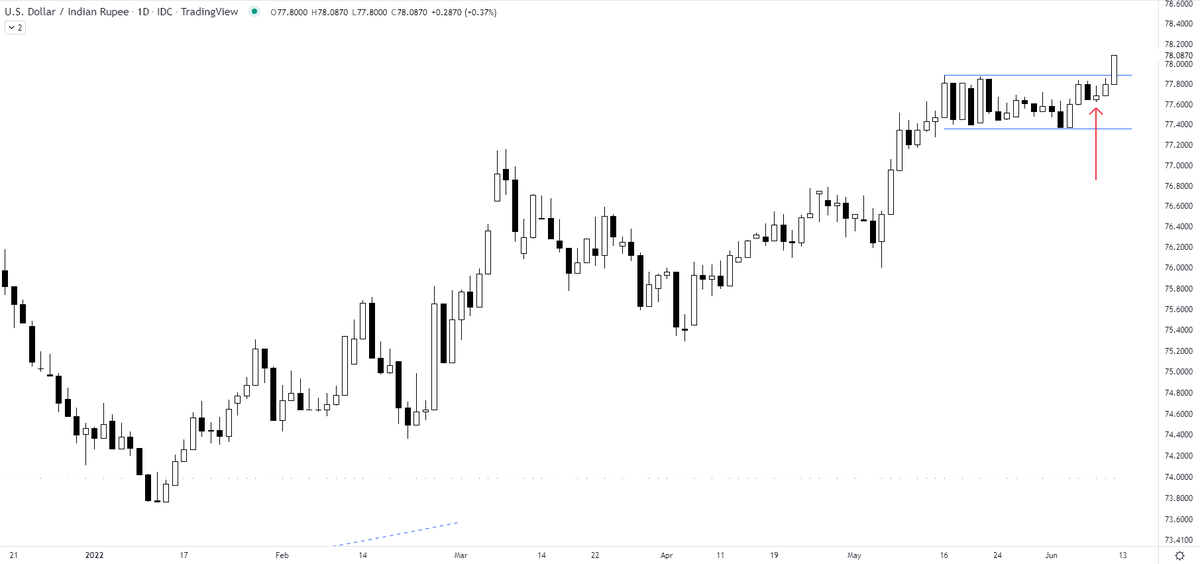
Can you anticipate a breakout? Yes
— The_Chartist \U0001f4c8 (@charts_zone) June 10, 2022
the attached tweet.
now the chart is for USDINR https://t.co/Vb2wKaCvTB pic.twitter.com/INo0GC4fGY
You May Also Like





i wonder if you can make a thread bout witchcraft in malaysia.. or list of our own local gods/deites..
— r a y a \U0001f319 (@lcvelylilith) February 20, 2020
Before I begin, it might be worth explaining the Malay conception of the spirit world. At its deepest level, Malay religious belief is animist. All living beings and even certain objects are said to have a soul. Natural phenomena are either controlled by or personified as spirits
Although these beings had to be respected, not all of them were powerful enough to be considered gods. Offerings would be made to the spirits that had greater influence on human life. Spells and incantations would invoke their
Animist ceremonies of a religious or magical nature were normally held for the purpose of divination or making a request. This would either be done at a keramat or at a shrine similar to the Thai spirit houses or Chinese roadside shrines pic.twitter.com/I1hliyi0x3
— \u2745\u1710\u170b\u1713\u170e (@uglyluhan) June 16, 2019
Two known examples of such elemental spirits that had god-like status are Raja Angin (king of the wind) and Mambang Tali Arus (spirit of river currents). There were undoubtedly many more which have been lost to time
Contact with ancient India brought the influence of Hinduism and Buddhism to SEA. What we now call Hinduism similarly developed in India out of native animism and the more formal Vedic tradition. This can be seen in the multitude of sacred animals and location-specific Hindu gods