The calamoid palms 🌴 have over 500 species spread across the world, but their higher-level relationships were a bit of a mystery. Until now.

Out today in #MolecularPhylogeneticsAndEvolution:

A robust phylogenomic framework for the calamoid palms https://t.co/JiCbSUlheH

1/10

First some background info, so that you know what we are talking about:

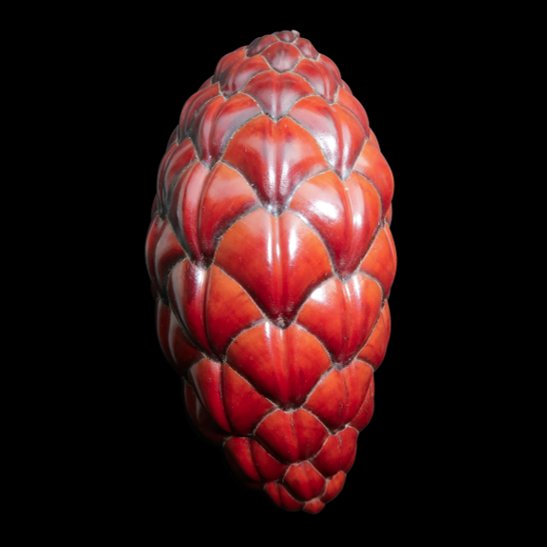
Calamoid palms look a bit like snakes 🐍 (don't they!?!), because their fruits are covered in overlapping scales. And with their often fierce spines, they are equally fearsome. 😱

2/10
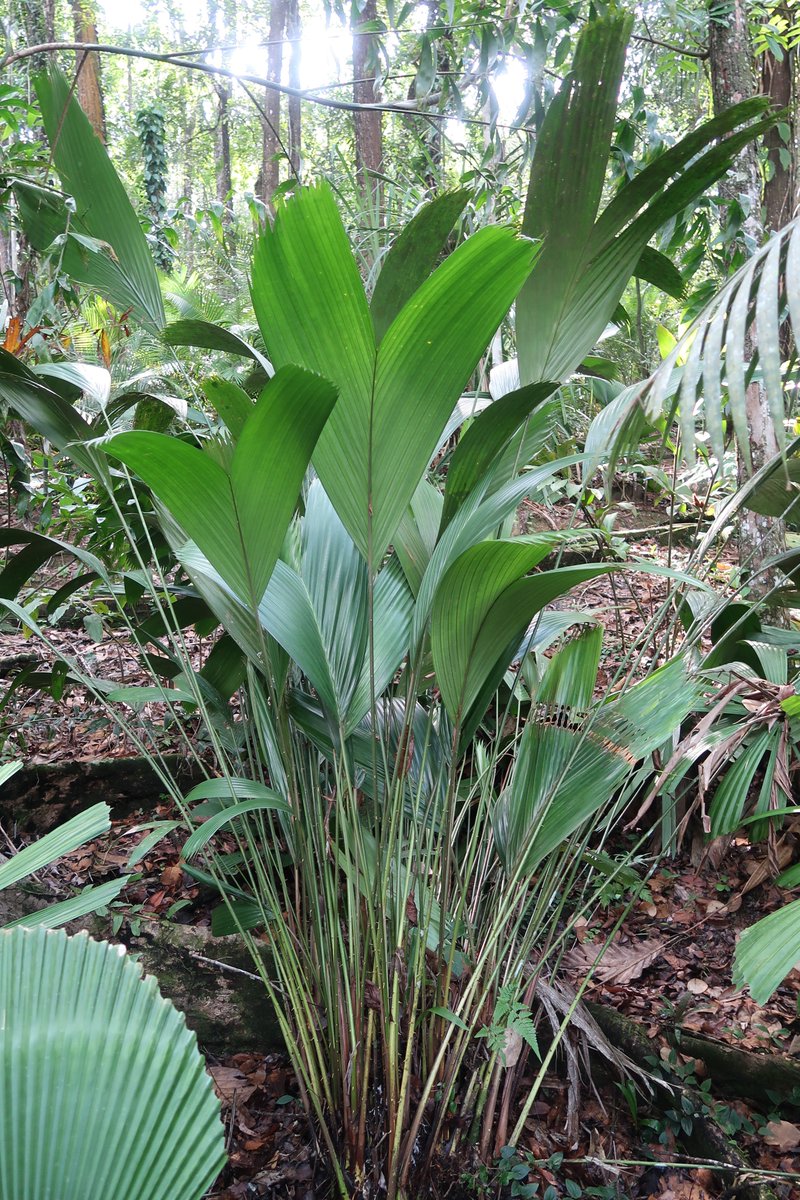
They are classified into 17 genera, 10 subtribes and 3 tribes. They have an amazing variety of growth forms, from stemless to climbing to tree habit. 🌱🌴

3/10
But as I said, their relationships have been a bit of a mystery. Here's the varying relationships previous studies found over the last 20 years.

4/10
We tackled this mystery with a phylogenomic approach: we sampled almost a thousand genes (a hundred times more than previous studies!) of 75 species representing all calamoid tribes, subtribes and genera.

The resulting data matrix is pretty massive...

5/10
With all this data, we were able to reconstruct the higher-level relationships with new confidence, and these results were stable no matter what method we used (we tried out quite a few...). Here's the strict consensus tree from all eight species trees we made.

6/10
How strong is gene tree conflict in our dataset?

For relationships among tribes and subtribes, a clear majority of gene trees supported the main topology. That's why we think that our results are very robust on that level.

7/10
However, in subtribes Ancistrophyllinae and Plectocomiinae, there was a lot of gene tree conflict - similar proportions of gene trees support the 3 different possible relationships among genera.

Why? Hybridisation? Incomplete lineage sorting?

Further research needed!

8/10
Finally, a huge thanks to my fantastic supervisors @BillJBaker, @w_eiserhardt, @Chomicki_G and Simon Hiscock (@OxfordPlants), and all other (equally great) co-authors: @SidonieBellot, @RowanSchley, @tlpcouvreur, and palm legends John Dransfield and Andrew Henderson.

9/10
If you want to read more, feel free to use the below link for free access to the paper - it will work until 13 March 2021.

https://t.co/JiCbSUlheH

10/10

More from Science

Localized Surface Plasmon Resonance - an overview | ScienceDirect Topics

https://t.co/mzS7vVSREJ

https://t.co/353PdAX2fa

https://t.co/3yBImjOdd4

In some cases, almost 100% of the light energy can be converted to the second harmonic frequency. These cases typically involve intense pulsed laser beams passing through large crystals, and careful alignment to obtain phase matching.
It was great to talk about reproducible workflows for @riotscienceclub @riotscience_wlv. You can watch the recording below, but if you don't want to listen to me talk for 40 minutes, I thought I would summarise my talk in a thread:


My inspiration was making open science accessible. I wanted to outline the mistakes I've made along the way so people would feel empowered to give it a go. Increased accountability is seen as a barrier to adopting open science practices as an ECR

It also comes across as all or nothing. You are either fully open science or your research won't get anywhere. However, that can be quite intimidating, so I wanted to emphasise this incremental approach to adapting your workflow

There are two sides to why you should work towards reproducibility. The first is communal. It's going to help the field if you or someone else can reproduce your whole pipeline.


There is also the selfish element of it's just going to help you do your work. If you can't remember what your work means after a lunch break, you're not going to remember months or years down the line

You May Also Like