
The idea is planted in people’s mind that this virus is mutating in such a way as to evade prior immunity. This is completely unfounded, certainly as regards immunity..
In a number of Sunday papers:
Scientific advisers said it was “hard to see” when the restrictions would end as new variants continued to emerge, delivering a potentially devastating blow to the travel industry. The prime minister said that after progress with vaccinations...
The idea is planted in people’s mind that this virus is mutating in such a way as to evade prior immunity. This is completely unfounded, certainly as regards immunity..
To mutations & variants. Many viruses are error-prone when they replicate in your cells. They make “typos” so the virus which results is...
Why these incorrect stories are being spun, I’ve no idea, that not being a scientific matter. But spin & completely inappropriate & severe restrictions...
More from Yardley Yeadon
@ukiswitheu I invite people to run the thought experiment: “what if the ‘cases’ data is inaccurate?”
Ignore ‘cases’, look instead only at excess deaths (per M Levitt’s tweet). Does that look characteristic of an epidemic? It’s completely diff from spring or any winter flu outbreak.
London:

Can anyone explain why there is no ‘2nd wave’ of excess deaths in London, without invoking herd immunity?
It’s not lockdown. See NW England:
This is the largest #SecondaryRipple (which I predicted).

https://t.co/b0rT5Lq9HI
Now check the 3 predictions I made months ago. They’ve all happened. Compare predictions from SAGE’s statements: they’re all wrong.
Even neutrals at this point might ask themselves “if he’s been right on all predictions, maybe he’s correct now?”

I’ve been saying since the Lighthouse Labs got up & running that I’m deeply sceptical about the trustworthiness of their ‘cases’ data. I showed how, at low virus prevalence, the PCR mass testing data was throwing out potentially 90% positives being
https://t.co/t4qQN4rH0u
I got ‘fact checked’ a LOT over that statement. This paper just published, about precisely that time period I speculated about. Turns out that high-80s% of Dr Healy’s positives by PCR were FALSE. This alone is sufficient in my view to throw severe doubt...
Ignore ‘cases’, look instead only at excess deaths (per M Levitt’s tweet). Does that look characteristic of an epidemic? It’s completely diff from spring or any winter flu outbreak.
London:
Can anyone explain why there is no ‘2nd wave’ of excess deaths in London, without invoking herd immunity?
It’s not lockdown. See NW England:
This is the largest #SecondaryRipple (which I predicted).
https://t.co/b0rT5Lq9HI
Now check the 3 predictions I made months ago. They’ve all happened. Compare predictions from SAGE’s statements: they’re all wrong.
Even neutrals at this point might ask themselves “if he’s been right on all predictions, maybe he’s correct now?”
I’ve been saying since the Lighthouse Labs got up & running that I’m deeply sceptical about the trustworthiness of their ‘cases’ data. I showed how, at low virus prevalence, the PCR mass testing data was throwing out potentially 90% positives being
https://t.co/t4qQN4rH0u
I got ‘fact checked’ a LOT over that statement. This paper just published, about precisely that time period I speculated about. Turns out that high-80s% of Dr Healy’s positives by PCR were FALSE. This alone is sufficient in my view to throw severe doubt...


I urge all followers who have read my criticisms of PCR mass testing in U.K. to carefully read Mr Fordham’s carefully worded letter. Note that the innovation minister in the Lords, Lord Bethel, already admitted that the PCR system doesn’t have the equivalent of an MOT. https://t.co/zXzeDMKCBb

Without this information it’s impossible to interpret any result. If the oFPR is 4%, for example, and if the true prevalence is 0.3% (it’s probably less), then for every 10,000 tests, 400 positives would be false & 30 positives would be genuine. So 93% of positives are false.
As Mr Fordham points out, almost all policies pivot on PCR mass testing. Hancock previously admitted on talkRADIO to Julia Hartley-Brewer in late summer that the FPR was “just under 1%”. That was a flat lie (possibly inadvertent but he’s never corrected the record). The reason...
...we are sure Hancock told a lie is that they have never known the FPR. Those including Hancock who believe that the oFPR can be estimated by inspection of the lowest positivity ever recorded, while logical, is completely wrong. Changes in personnel, throughout, testing...
...architecture & the like can radically alter the oFPR. Since Hancock’s remark in late summer, PCR mass testing has moved into the Lighthouse Labs & this creates a new & urgent need to continually assess oFPR. I’ve good reason to believe it’s now VERY much higher now that the...
So I wrote back to @lucyfrazermp for another go. Here\u2019s my letter.
— Edmund Fordham (@EdmundFordham) November 28, 2020
They don\u2019t understand how serious this is.
If they can\u2019t tell us the oFPR, our PCR testing is worthless. (thread) pic.twitter.com/zHJ8SJCzf1
Without this information it’s impossible to interpret any result. If the oFPR is 4%, for example, and if the true prevalence is 0.3% (it’s probably less), then for every 10,000 tests, 400 positives would be false & 30 positives would be genuine. So 93% of positives are false.
As Mr Fordham points out, almost all policies pivot on PCR mass testing. Hancock previously admitted on talkRADIO to Julia Hartley-Brewer in late summer that the FPR was “just under 1%”. That was a flat lie (possibly inadvertent but he’s never corrected the record). The reason...
...we are sure Hancock told a lie is that they have never known the FPR. Those including Hancock who believe that the oFPR can be estimated by inspection of the lowest positivity ever recorded, while logical, is completely wrong. Changes in personnel, throughout, testing...
...architecture & the like can radically alter the oFPR. Since Hancock’s remark in late summer, PCR mass testing has moved into the Lighthouse Labs & this creates a new & urgent need to continually assess oFPR. I’ve good reason to believe it’s now VERY much higher now that the...
More from Science

I want to share my thoughts, as someone who has been so alarmed by the so-called "dissident" scientists like Gupta, Heneghan, Kuldorff, Bhattacharya, & Ioannidis who consider themselves brave Galileos unfairly treated by "establishment scientists." I will try not to swear. 1/n
I want to talk about 3 things:
‼️Their fringe views are inhumane, unethical junk science that promotes harm
‼️They complain that they've been marginalized but this is simply untrue
‼️I am sick of people telling me we have to "listen to both sides." There aren't 2 sides here 2/n
These 'dissident' scientists have consistently downplayed COVID-19, urging policymakers not to take aggressive control measures. They claim it is not a serious threat. Gupta even went on TV saying people under 65 shouldn't worry about it!
RECEIPTS
They have consistently argued that policymakers should just let the virus rip, in an attempt to reach herd immunity by natural infection. Kuldorff *continues* to argue for this even now that we have many highly effective, safe vaccines.
We've never controlled a deadly, contagious pandemic before by just letting the virus spread, as this approach kills & disables too many people. In Manaus, Brazil, 66% of the city was infected & an astonishing *1 in 500* people died of COVID-19
If this is true raises the question of why certain (fringe & unethical) views got access to No.10 while others were ignored... https://t.co/A75HrSEqo4
— Prof. Devi Sridhar (@devisridhar) December 13, 2020
I want to talk about 3 things:
‼️Their fringe views are inhumane, unethical junk science that promotes harm
‼️They complain that they've been marginalized but this is simply untrue
‼️I am sick of people telling me we have to "listen to both sides." There aren't 2 sides here 2/n
These 'dissident' scientists have consistently downplayed COVID-19, urging policymakers not to take aggressive control measures. They claim it is not a serious threat. Gupta even went on TV saying people under 65 shouldn't worry about it!
RECEIPTS
They have consistently argued that policymakers should just let the virus rip, in an attempt to reach herd immunity by natural infection. Kuldorff *continues* to argue for this even now that we have many highly effective, safe vaccines.
Focused Protection: The Middle Ground between Lockdowns and "Let-it-rip". An essay by Jay Bhattacharya (@Stanford), @SunetraGupta (@UniofOxford) and @MartinKulldorff (@Harvard). https://t.co/T8uLxSFwgh
— Martin Kulldorff (@MartinKulldorff) December 11, 2020
We've never controlled a deadly, contagious pandemic before by just letting the virus spread, as this approach kills & disables too many people. In Manaus, Brazil, 66% of the city was infected & an astonishing *1 in 500* people died of COVID-19



All modern research questions frame your mindset and self-frame research paradigm. Broad thinking: how little of everything can a citizen survive on; how cheap can your upkeep be? /1
When an American patient lands in an Austrian hospital for a back problem, a doctor tells him to perform a set of exercises.
- How many?
- Do you have anything else to do? /2
This interchange illustrates two mindsets colliding at bedside. How little can I get away with vs there is no limit to effort when it comes to your wellness. /3
When you were robbed of movement, somebody started selling you exercise. To understand that digging a ditch, to build a house, or to carry a child around, or waking to your grandparents for an hour is not the same as jogging on a treadmill... will reveal what research hides.
/4
When I talk about doing a purposeful activity outdoors, I look at complexity of movement, purpose, meaning, sun, and air, even an opportunity to meet a neighbor... that is now reduced to a calcium pill, vitamin D, an antidepressant, an osteoporosis shot, and an oxygen tank. /5
Is moderate exercise enough to live as long as possible, or should you be doing vigorous exercise? And what proportion is best? This article has the answers. https://t.co/YJqpaaI0UR
— Sebastian Rushworth M.D. (@sebrushworth) January 24, 2021
When an American patient lands in an Austrian hospital for a back problem, a doctor tells him to perform a set of exercises.
- How many?
- Do you have anything else to do? /2
This interchange illustrates two mindsets colliding at bedside. How little can I get away with vs there is no limit to effort when it comes to your wellness. /3
When you were robbed of movement, somebody started selling you exercise. To understand that digging a ditch, to build a house, or to carry a child around, or waking to your grandparents for an hour is not the same as jogging on a treadmill... will reveal what research hides.
/4
When I talk about doing a purposeful activity outdoors, I look at complexity of movement, purpose, meaning, sun, and air, even an opportunity to meet a neighbor... that is now reduced to a calcium pill, vitamin D, an antidepressant, an osteoporosis shot, and an oxygen tank. /5

This is a thread on statistics in science: 1/7 (via @LogicofScience)
Basic Statistics Part 1: The Law of Large Numbers https://t.co/wUH8eAAIak
#Science #Statistics
Basic Statistics Part 2: Correlation vs. Causation
https://t.co/Azhyl8pDsX (2/7)
Basic Statistics Part 3: The Dangers of Large Data Sets: A Tale of P values, Error Rates, and Bonferroni Corrections
https://t.co/LetN6aEBRM (3/7)
Basic statistics part 4: understanding P values
https://t.co/K8MMMgTCOf (4/7)
Basic Statistics Part 5: Means vs Medians, Is the “Average”
Basic Statistics Part 1: The Law of Large Numbers https://t.co/wUH8eAAIak
#Science #Statistics
Basic Statistics Part 2: Correlation vs. Causation
https://t.co/Azhyl8pDsX (2/7)
Basic Statistics Part 3: The Dangers of Large Data Sets: A Tale of P values, Error Rates, and Bonferroni Corrections
https://t.co/LetN6aEBRM (3/7)
Basic statistics part 4: understanding P values
https://t.co/K8MMMgTCOf (4/7)
Basic Statistics Part 5: Means vs Medians, Is the “Average”
You May Also Like





fascinated by this man, mario cortellucci, and his outsized influence on ontario and GTA politics. cortellucci, who lives in vaughan and ran as a far-right candidate for the italian senate back in 2018 - is a major ford donor...
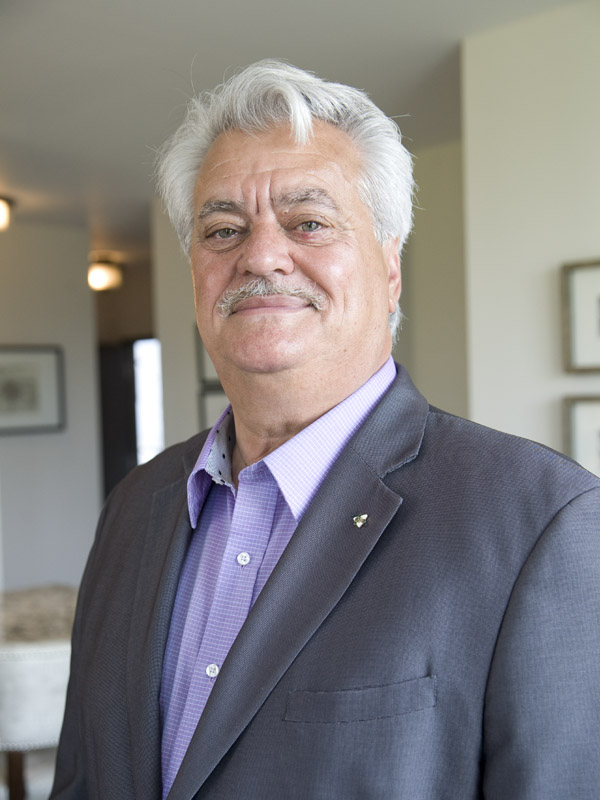
his name might sound familiar because the new cortellucci vaughan hospital at mackenzie health, the one doug ford has been touting lately as a covid-centric facility, is named after him and his family
but his name also pops up in a LOT of other ford projects. for instance - he controls the long term lease on big parts of toronto's portlands... where doug ford once proposed building an nfl stadium and monorail... https://t.co/weOMJ51bVF
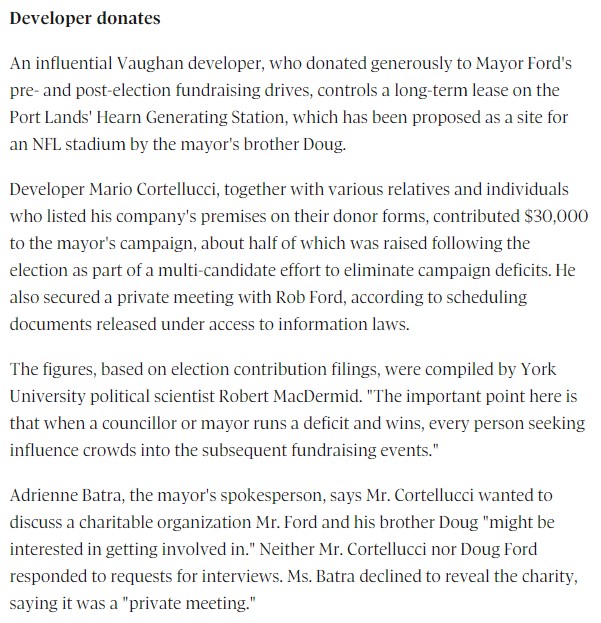
cortellucci, who is a developer, also owns a large chunk of the greenbelt. doug ford's desire to develop the greenbelt has been
and late last year he rolled back the mandate of conservation authorities there, prompting the resignations of several members of the greenbelt advisory
his name might sound familiar because the new cortellucci vaughan hospital at mackenzie health, the one doug ford has been touting lately as a covid-centric facility, is named after him and his family
but his name also pops up in a LOT of other ford projects. for instance - he controls the long term lease on big parts of toronto's portlands... where doug ford once proposed building an nfl stadium and monorail... https://t.co/weOMJ51bVF
cortellucci, who is a developer, also owns a large chunk of the greenbelt. doug ford's desire to develop the greenbelt has been
and late last year he rolled back the mandate of conservation authorities there, prompting the resignations of several members of the greenbelt advisory
