Guru as Trinity - #Thread
This sloka is taught to all of us in early childhood. This is very popular sloka. This sloka can be recited in front of any Guru. The widely prevalent meaning of this sloka is to
worship Guru as the form of Trinity & hence Parabrahma.

sustains like Vishnu & finally leads to merger with the Supreme like Shiva. Though parents give birth to the body, Guru gives Dīkṣā Janma i.e. new life ..
Thus, He is Brahma
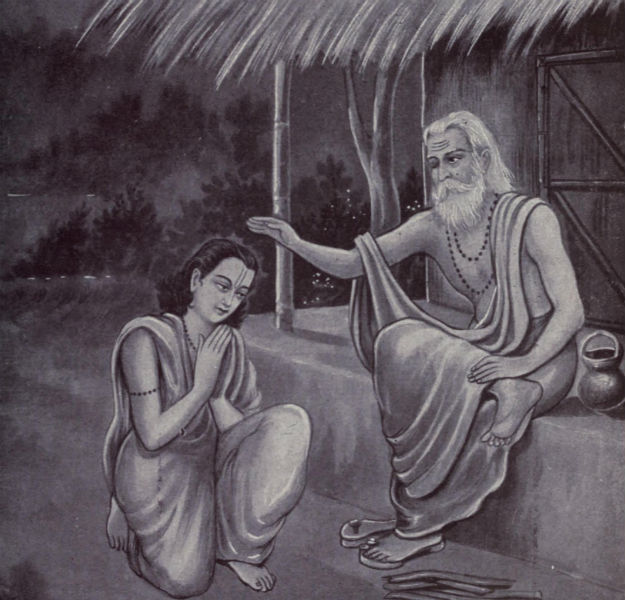
sustains this knowledge in the disciple, protects in this mundane life and preserves disciple’s spiritual practices.
Hence, He is Vishnu.

knowledge about Brahman finally merging the soul in divine.
So, He is Shiva/Maheswara.
Thus, Guru is the embodiment of Brahma, Vishnu
and Maheswara.

If this sloka is recited with utmost devotion and complete concentration, one shall certainly obtain everything here and hereafter.
-- @SriSamavedam
More from Brahmasri Samavedam Shanmukha Sarma










More from Religion











You May Also Like







https://t.co/6cRR2B3jBE
Viruses and other pathogens are often studied as stand-alone entities, despite that, in nature, they mostly live in multispecies associations called biofilms—both externally and within the host.
https://t.co/FBfXhUrH5d

Microorganisms in biofilms are enclosed by an extracellular matrix that confers protection and improves survival. Previous studies have shown that viruses can secondarily colonize preexisting biofilms, and viral biofilms have also been described.

...we raise the perspective that CoVs can persistently infect bats due to their association with biofilm structures. This phenomenon potentially provides an optimal environment for nonpathogenic & well-adapted viruses to interact with the host, as well as for viral recombination.

Biofilms can also enhance virion viability in extracellular environments, such as on fomites and in aquatic sediments, allowing viral persistence and dissemination.

Viruses and other pathogens are often studied as stand-alone entities, despite that, in nature, they mostly live in multispecies associations called biofilms—both externally and within the host.
https://t.co/FBfXhUrH5d
Microorganisms in biofilms are enclosed by an extracellular matrix that confers protection and improves survival. Previous studies have shown that viruses can secondarily colonize preexisting biofilms, and viral biofilms have also been described.
...we raise the perspective that CoVs can persistently infect bats due to their association with biofilm structures. This phenomenon potentially provides an optimal environment for nonpathogenic & well-adapted viruses to interact with the host, as well as for viral recombination.
Biofilms can also enhance virion viability in extracellular environments, such as on fomites and in aquatic sediments, allowing viral persistence and dissemination.