2/n
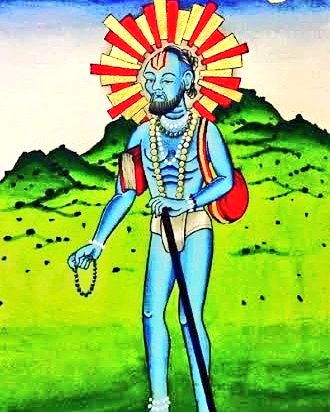
Actually, in general, the term Azhwar is used to refer to even those Adiyaars who permanently reside in Sri Vaikuntam with Emperumaan. They are called Nithyasuris. Chakrathazhwar, Garudazhwar, Thiruvananthazhwan, Senapathi Azhwan and such names are quite common.
1/n
Namaskaram Madam. I have reading your tweets which sre very high in devotional aspect. A small doubt. Why is Guru Ramanujaya is not counted as Alwar. Please parron me if this is idiotic question.
— Sathya (@Sathyaganathe) January 10, 2021
2/n
3/n
In case of Swami Ramanujacharya, the purpose of His Avathara was not to reveal the 4000 Divya Prabandhas but to enhance the spread of those 4000 Divya Prabandhas and Their glories.
4/n
1. Swami Ramanuja is none but Swami Nammazhwar's Divine Feet and His Avathara is an extension of Swami Nammazhwar's Avathara.
5/n
6/n
7/n
Adiyen Ramanujadasi ☺️🙏
n/n
There are 2 kramams to count Azhwars:
— Ms K G Dhouhithri (@kgdhouhithri) January 10, 2021
Kramam # 1. In Upadesharathnamalai, Swami Manavala Mamunigal has identified only 10 Azhwars. Here, Andal & Madhurakavigal are not counted. https://t.co/cwi5drAidy pic.twitter.com/8PgQ9LMgfH
#SriBhavishyathacharyar was the very first name using which Swami Ramanuja was referred to i.e. the Acharya of the Future whose birth was already indicated by Swami Nammazhwar to both Sri Madhurakavigal & Sriman Nathamunigal.
More from Ms K G Dhouhithri
I understand the disappointment when our sects fight in full public view and the embarrassment thereof.
However, my concern is different, TBH.
Am even okay with all our infighting.
My problem is when we don't set those differences aside & join hands to face a common foe.
1/n
This maturity is not new to us - it has already been explained in the Mahabharatha!!
Yudhishtira tells his brothers to fight the Gandharvas & defend their cousins (Kaurava). This was *after* the game of dice, mark you.
2/n
When Bheema protested, Yudhishtira explains: "Between us & the Kauravas, we are 5, they are a hundred. In front of outsiders, however, we're a 105."
Sanathana Dharma has been there for time immemorial. It's natural that we have sects, unresolved disagreements, etc..
3/n
Abrahamics have sects for just a 2000-year existence. And they too bicker among themselves!!!
So, the real issue, IMHO, is forgetting to gather under our common identity.
4/n
If we try to silence voices or concerns of our internal sects for the sake of common unity, some people of the section that feels unheard may even shake hands with the very foe we're trying to vanquish. This is one of my greatest concerns.
5/n
However, my concern is different, TBH.
Am even okay with all our infighting.
My problem is when we don't set those differences aside & join hands to face a common foe.
1/n
This is the problem with us. After all we fight among ourselves for Thengalai or Vadagalai Thiruman for temple elephants. https://t.co/kLvdZl25Ea
— Krish Sriram (@anavrittim) February 6, 2021
This maturity is not new to us - it has already been explained in the Mahabharatha!!
Yudhishtira tells his brothers to fight the Gandharvas & defend their cousins (Kaurava). This was *after* the game of dice, mark you.
2/n
When Bheema protested, Yudhishtira explains: "Between us & the Kauravas, we are 5, they are a hundred. In front of outsiders, however, we're a 105."
Sanathana Dharma has been there for time immemorial. It's natural that we have sects, unresolved disagreements, etc..
3/n
Abrahamics have sects for just a 2000-year existence. And they too bicker among themselves!!!
So, the real issue, IMHO, is forgetting to gather under our common identity.
4/n
If we try to silence voices or concerns of our internal sects for the sake of common unity, some people of the section that feels unheard may even shake hands with the very foe we're trying to vanquish. This is one of my greatest concerns.
5/n


Swamin, thanks much for sharing the refreshing words of the great Swami Pillailokacharyar. Wouldn't dream of speaking against Him. 🙏
Only meant to point out how far we've gone away (IMHO) from the main goal of a Jivathma while dealing with the mischief of vested interests.
1
In the loud din made by deliberate screams like "Can all become Archakars?" or "Can women become Acharyas?", I feel we've kept ourselves too busy in listening to this pointless noise & in trying to "prove" that our Dharma is "inclusive", "open-minded" & what not.
2
In the process, the very purpose of our Janma (Moksham) and the very objective of our Jivathma (Nithya Kainkaryam for Bhagawan and His Adiyaars) lay forgotten.
The truth is these are always open to all Jivathmas regardless of the Varna or any other attribute one can think of.
3
Swami Ramanujacharya & Swami Pillailokacharyar taught us to respect all Jivathmas based on the gnanam, kainkarya manobhavam and other such beautiful parameters.
They showed us examples from our own Ithihasas & Puranas. They didn't do any "activism" is what I mean to say.
4
They taught us that the natural state of the Jivathma is daasathvam towards Emperumaan & His Adiyaars.
Any janma that enables the daasathvam manifest as kainkaryam is beautiful. Once this happens, Varna, Ashrama, etc. are just trivia.
5
Only meant to point out how far we've gone away (IMHO) from the main goal of a Jivathma while dealing with the mischief of vested interests.
1
According to Sri Pillai Lokacharya, he classifies the society based on birth in 2 types; 1.uthkrushtamaaga bramiththa jananam, i.e. 'misunderstood to be high birth", 2.apakrushtamaaga bramiththa jananam, i.e. 'misunderstood to be low birth'.
— \u0b85\u0bb1\u0bbf\u0bb5\u0bca\u0ba9\u0bcd\u0bb1\u0bc1\u0bae\u0bbf\u0bb2\u0bcd\u0bb2\u0bbe\u0ba4 (@rangaram99) January 23, 2021
In the loud din made by deliberate screams like "Can all become Archakars?" or "Can women become Acharyas?", I feel we've kept ourselves too busy in listening to this pointless noise & in trying to "prove" that our Dharma is "inclusive", "open-minded" & what not.
2
In the process, the very purpose of our Janma (Moksham) and the very objective of our Jivathma (Nithya Kainkaryam for Bhagawan and His Adiyaars) lay forgotten.
The truth is these are always open to all Jivathmas regardless of the Varna or any other attribute one can think of.
3
Swami Ramanujacharya & Swami Pillailokacharyar taught us to respect all Jivathmas based on the gnanam, kainkarya manobhavam and other such beautiful parameters.
They showed us examples from our own Ithihasas & Puranas. They didn't do any "activism" is what I mean to say.
4
They taught us that the natural state of the Jivathma is daasathvam towards Emperumaan & His Adiyaars.
Any janma that enables the daasathvam manifest as kainkaryam is beautiful. Once this happens, Varna, Ashrama, etc. are just trivia.
5
More from Religion

#Bookmark this
The full story of || Dhruv ||
We’ll see How Dhruv occupied a fixed position in the northern sky?
I repeat “Untold Unsung now Unearthed”
Go through entire thread carefully.
OM NAMO BHAGWATE VAASUDEVAAY
RT & spread the knowledge.
Any questions use #AskPratz
.... continuing from previous thread/story
O prince! Thus concentrate on that omnipotent eternal Lord with the mantra - ‘OM NAMO BHAGWATE VAASUDEVAAY’ .
https://t.co/H62ehDT3ix
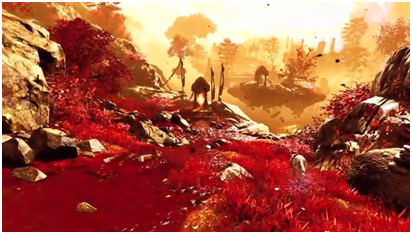
The prince Dhruv greeted the sages and continued on his journey. At last, he reached a beautiful forest Madhuvan on the bank of the river Yamuna. It was the same forest, which was later occupied by a demon Madhu.
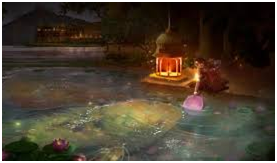
Shatrughana, the youngest brother of Sri Rama had killed demon Lavan, son of Madhu in the same forest & founded the township of Mathura. In the same forest, prince Dhruv decided to carry out his penance. As per the dictate of the sages, he began to recite the mantra continuously
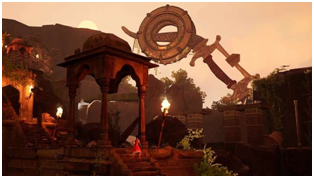
Very soon, the earth began to move because of Dhruv’s severe penance. Even the seat of Indra could not remain stable. A stampede resulted among the gods. The gods then hatched a conspiracy to disturb the penance.
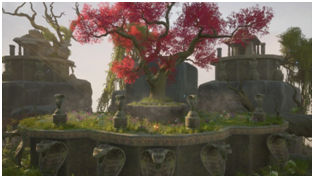
The full story of || Dhruv ||
We’ll see How Dhruv occupied a fixed position in the northern sky?
I repeat “Untold Unsung now Unearthed”
Go through entire thread carefully.
OM NAMO BHAGWATE VAASUDEVAAY
RT & spread the knowledge.
Any questions use #AskPratz
.... continuing from previous thread/story
O prince! Thus concentrate on that omnipotent eternal Lord with the mantra - ‘OM NAMO BHAGWATE VAASUDEVAAY’ .
https://t.co/H62ehDT3ix
So you too go and recite the same mantra in order to please Lord Vishnu.
— Prateechi \U0001f6eb\u2708\ufe0f\U0001f6e9\ufe0f (@BahuRaani) February 6, 2021
\u2026To be continued
It\u2019s a beautiful long story. Read it to your loved ones.
(Next Weekly Thread)
We\u2019ll see How Dhruv occupied a fixed position in the northern sky?
Stay Tuned
Jai Maa
_/\\_ pic.twitter.com/7TxdNsoZes
The prince Dhruv greeted the sages and continued on his journey. At last, he reached a beautiful forest Madhuvan on the bank of the river Yamuna. It was the same forest, which was later occupied by a demon Madhu.
Shatrughana, the youngest brother of Sri Rama had killed demon Lavan, son of Madhu in the same forest & founded the township of Mathura. In the same forest, prince Dhruv decided to carry out his penance. As per the dictate of the sages, he began to recite the mantra continuously
Very soon, the earth began to move because of Dhruv’s severe penance. Even the seat of Indra could not remain stable. A stampede resulted among the gods. The gods then hatched a conspiracy to disturb the penance.