“Adebiyi, Manga, Oyegoke,” he called out to his sergeants who were of the NMTC.
HOW THE AREWA HOUSE WAS BURNT DOWN IN 1966
“Hands up, turn around, and face the wall,” Nzeogwu ordered, raising his gun. One of them quickly complied but the three others were defiant. “Kpruuuuuu, kpruuuuuu, kpruuuuuu.”
#Thread
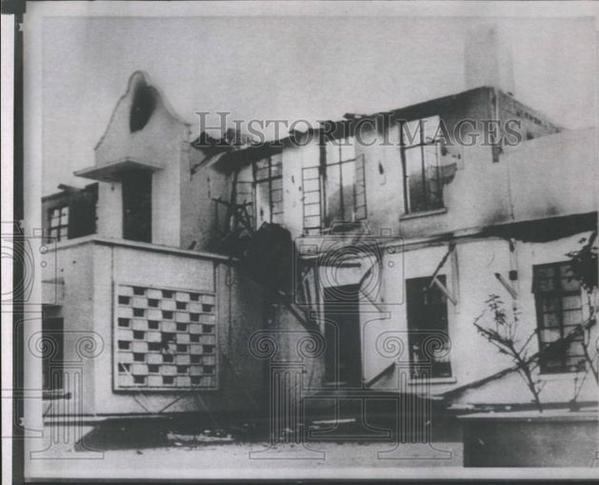
“Adebiyi, Manga, Oyegoke,” he called out to his sergeants who were of the NMTC.
But they fired timidly without hitting the main target nor giving the noise Nzeogwu wanted. Sensing danger, Adebiyi got down quickly to help Manga to reload while Oyegoke who didn’t shoot at all was twitching with his weapon.
As Oyegoke sighted Nzeogwu coming towards them with his SMG, he made a quick dash for the dark.
“Adebiyi, take over Oyegoke's gun,” Nzeogwu ordered. “And keep firing at the damn building,” he screamed.
As the shooting was going on, a police patrol who had sighted the mutineers converging ominously in front of the Premier’s Lodge radioed the British Police officer on duty at the Kaduna Police Operations room who in turn...
More from Religion

I want to talk about the key textual elements you might find in an Islamic manuscript. I'll focus on this manuscript, roughly 18th century, of an Arabic history of the rulers of Egypt called Nuzhat al-nāẓirīn, by Marʻī al-Karmī (d. 1623/4).
Budeiry Library (Jerusalem) MS 593 -jm
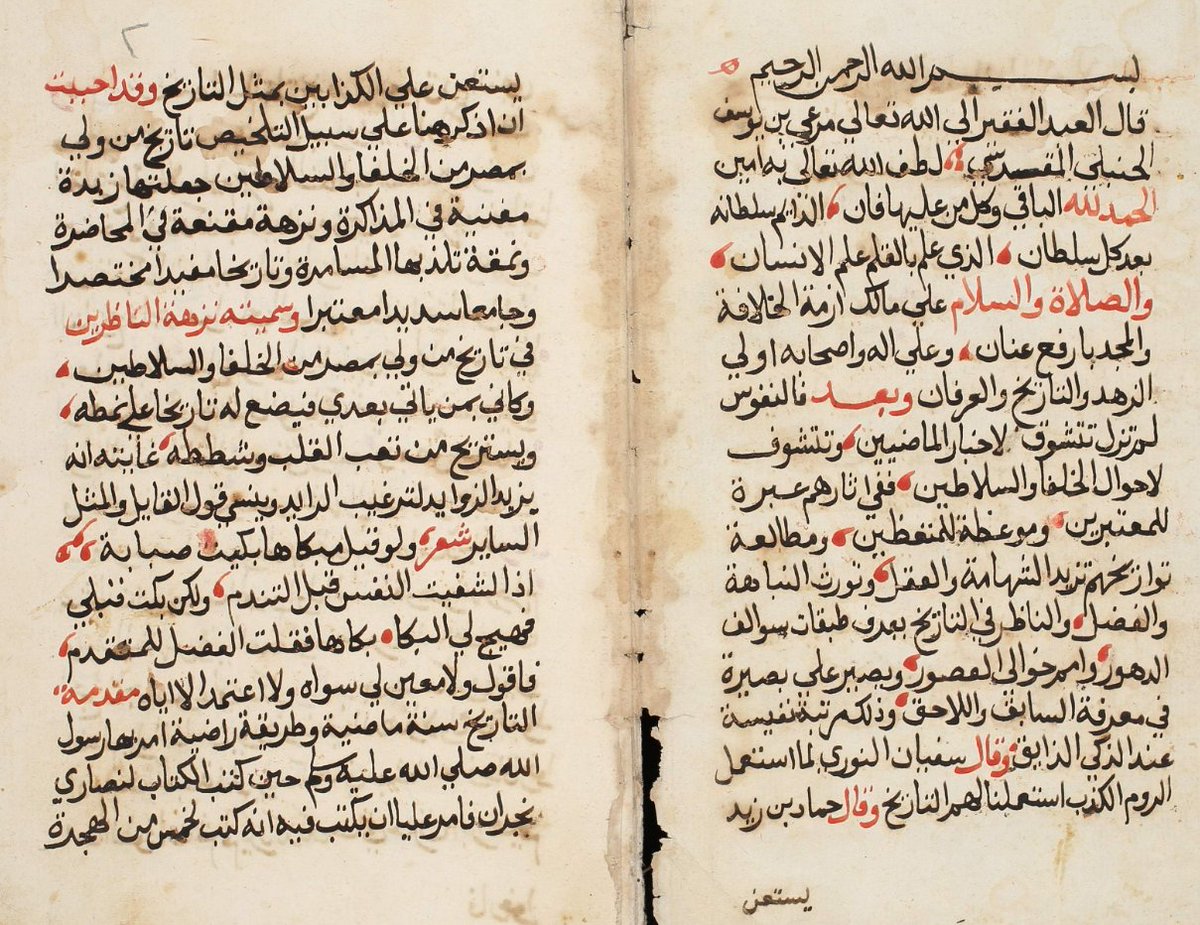
These texts have many elements designed to help the reader understand what they're saying, and choices by the scribe who copied the manuscript often help as well. Let's see what's here. -jm
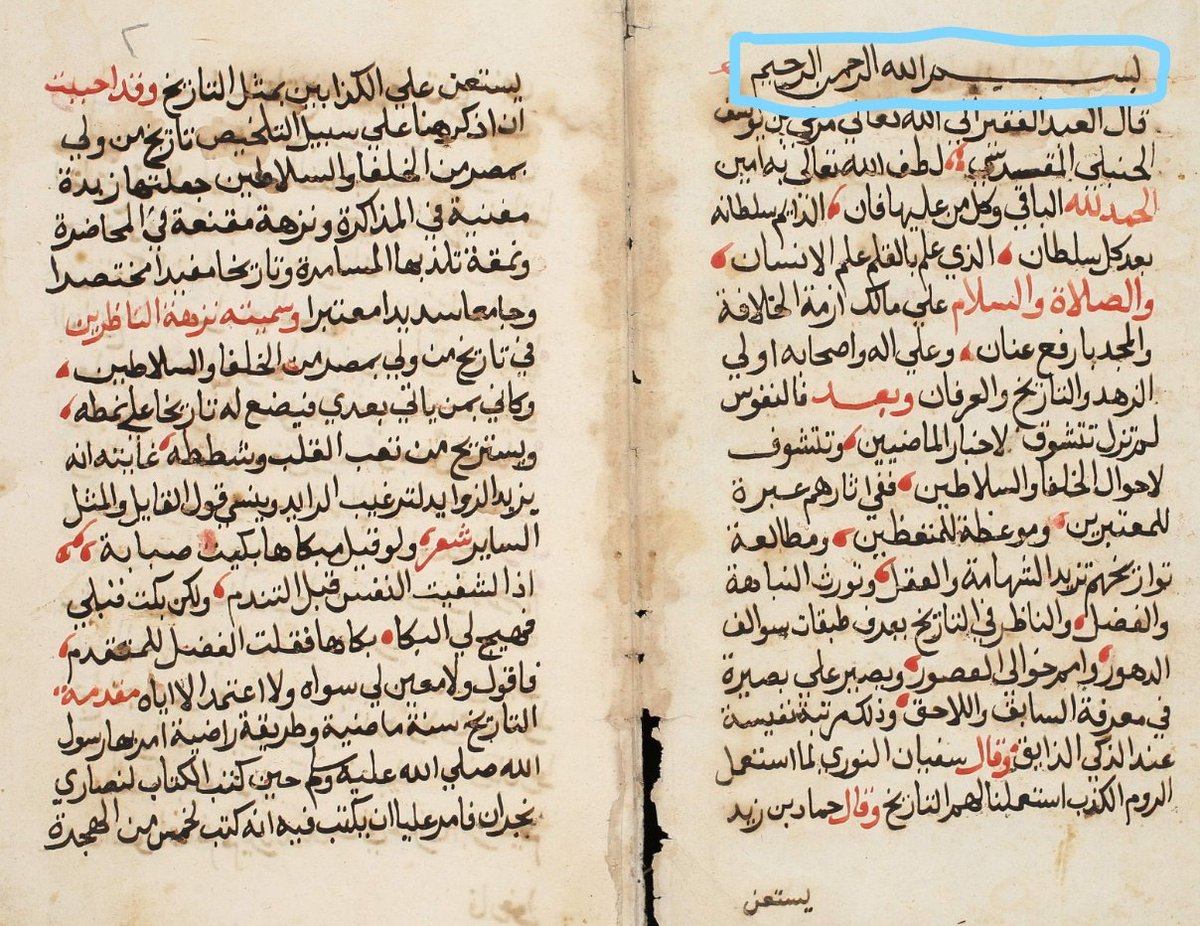
First, almost every Islamic text begins with the invocation "in the name of God, the compassionate, the merciful." The wording is never changed, and it's always in Arabic, no matter what language the text is, although you might add phrases like "and we ask God for help." -jm
Christians were able to do more experimentation with their invocations, as you can see from the examples here. https://t.co/wEPWRitCWA -jm
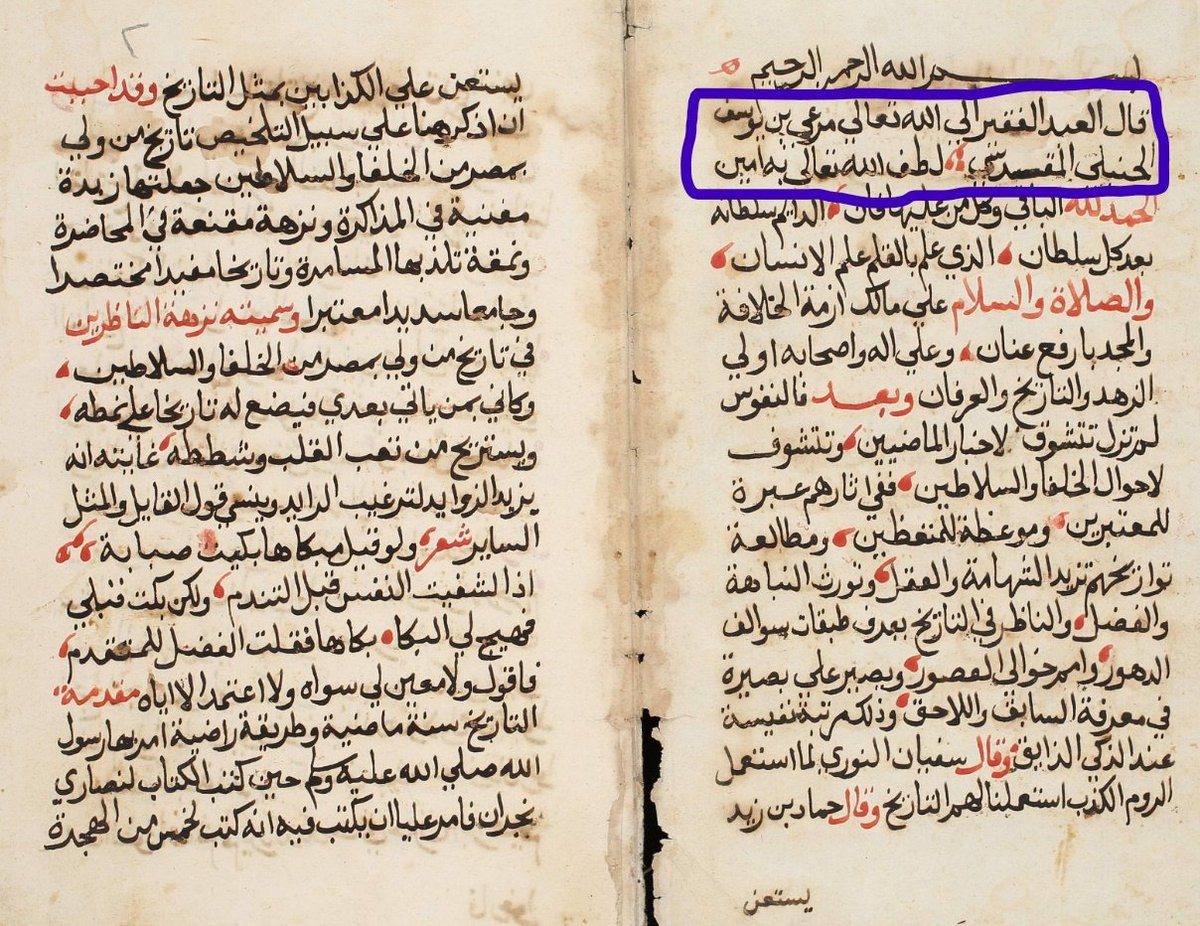
After the invocation (basmalah), you might have what this text has, which is an introduction of the author in the form "the poor slave of God [so-and-so] said..." often followed by a quick prayer for the author. -jm
Budeiry Library (Jerusalem) MS 593 -jm
These texts have many elements designed to help the reader understand what they're saying, and choices by the scribe who copied the manuscript often help as well. Let's see what's here. -jm
First, almost every Islamic text begins with the invocation "in the name of God, the compassionate, the merciful." The wording is never changed, and it's always in Arabic, no matter what language the text is, although you might add phrases like "and we ask God for help." -jm
Christians were able to do more experimentation with their invocations, as you can see from the examples here. https://t.co/wEPWRitCWA -jm
These little prayers are fun pic.twitter.com/hJYk2M01bO
— Josh Mugler (@J_mugs) February 16, 2019
After the invocation (basmalah), you might have what this text has, which is an introduction of the author in the form "the poor slave of God [so-and-so] said..." often followed by a quick prayer for the author. -jm



As the Fall of man was a consequence of the pursuit of our own good, this quest intrinsically contains the possibility of our return to The Good. The route back to The Good was only revealed by The Way [Jn. 14:6], so we might say that Christ incarnates to complete the Circle.

Each thing is moved by, implicitly converted or turned back to, its own good by its cause of procession - which is principally God.
"Via est nobis tendendi in Deum." - St. Thomas Aquinas, which is to say that:
Christ, who as a man, is the way of our tending (back) into God.

Ezekiel 10:6 | When the LORD commanded the man in linen, “Take fire from among the wheels, from among the cherubim,” the man went in and stood beside a wheel.
"So I saw the glorious wheel move." - Dante, Paradiso 10.145

As Scripture and Dante see God's providence in circles, so did Boethius and Platonists more
Aquinas with, "Eadem est via qua descenditur et ascenditur." [SCG 4.1.3], brings back Heraclitus to the medievals, "The way up and the way down is the same." [Diels, B60]
The way up and the way down are the same.
Each thing is moved by, implicitly converted or turned back to, its own good by its cause of procession - which is principally God.
"Via est nobis tendendi in Deum." - St. Thomas Aquinas, which is to say that:
Christ, who as a man, is the way of our tending (back) into God.
Ezekiel 10:6 | When the LORD commanded the man in linen, “Take fire from among the wheels, from among the cherubim,” the man went in and stood beside a wheel.
"So I saw the glorious wheel move." - Dante, Paradiso 10.145
As Scripture and Dante see God's providence in circles, so did Boethius and Platonists more
Imagine a set of concentric circles. The inmost one comes closest to the simplicity of the centre, while forming itself a kind of centre around which revolve those which are set outside it. The circle furthest out rotates through a wider orbit.
— \u300e\U0001d622\U0001d633\U0001d633\U0001d636\U0001d634\u300f (@arrus_kacchi) December 26, 2020
Aquinas with, "Eadem est via qua descenditur et ascenditur." [SCG 4.1.3], brings back Heraclitus to the medievals, "The way up and the way down is the same." [Diels, B60]
The way up and the way down are the same.