People of intellect and sound mind protect and guard themselves from falsehood and their honor from anything which may harm it by following the path of virtue and good and avoiding what causes suspicion.
Khutbah Topic By Sheikh Salaah Al Budair: 01/01/21
'Warning from Busying yourself with others Faults'
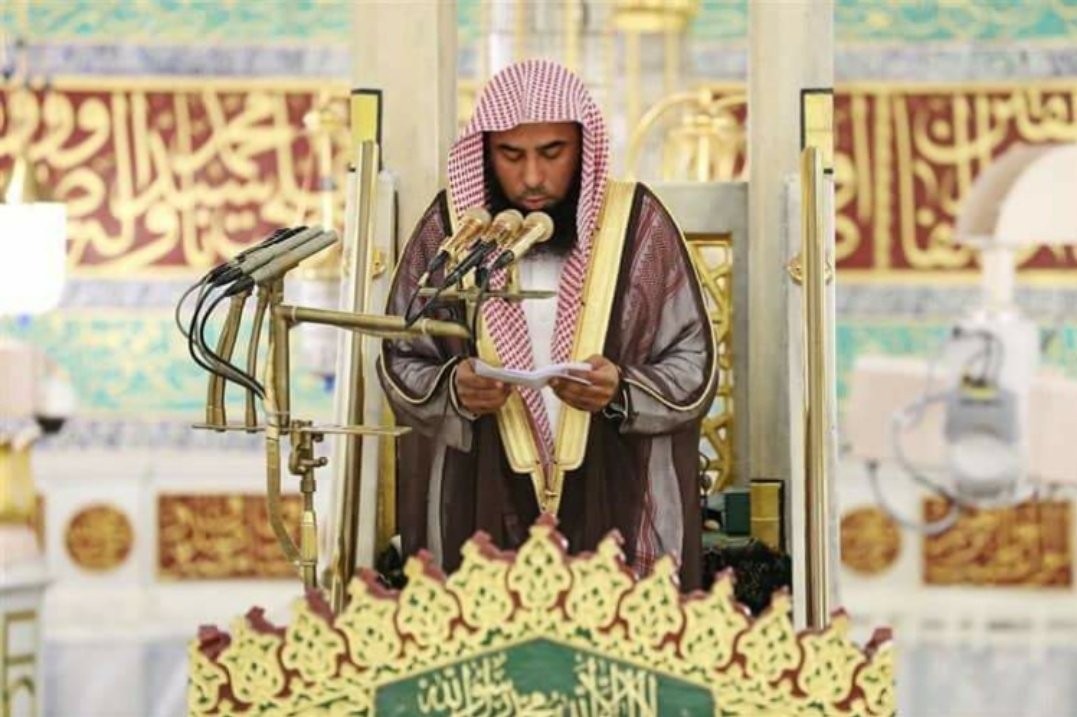
People of intellect and sound mind protect and guard themselves from falsehood and their honor from anything which may harm it by following the path of virtue and good and avoiding what causes suspicion.
Whoever does not protect himself from his desires, then his faults will become great and his secrets will get exposed.
It is also said "Do not reach night causing evil gossip, and do not forget that there is a Lord always watching you.”
People have sharp tongues when it comes to others’ faults and souls that crave finding flaws. They spread others’ faults more than their virtues.
Bakr ibn Abdillah said,“If you see a man busy with other people's faults and he forget his own, then know that he has been deceived
It is prohibited to have evil assumptions of other Muslims who seem to be trustworthy, truthful, and good. Allah (the Most High) said, “Indeed, some assumptions are sin.”
Do not live in the circles of illusions, assumptions, doubts, and suspicions.
The oppressive one is he who criticizes those who are blameless and and belittles those of high moral character.
Criticism might fall on those who are free from it, and faults might be blamed on an Innocent ones, and the slanderer is from those who accused Innocents.
The poet replied,
He accused me and my father with that which we are free from.
He only accused us of this due to this well.
Do not let your minds wonder with falsehood and assumptions.
More from Religion

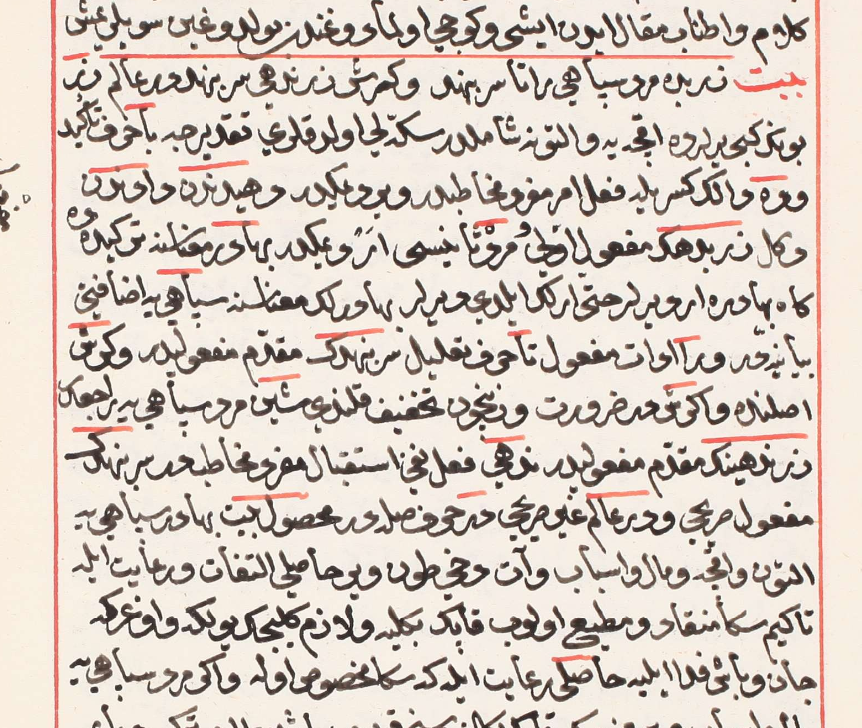
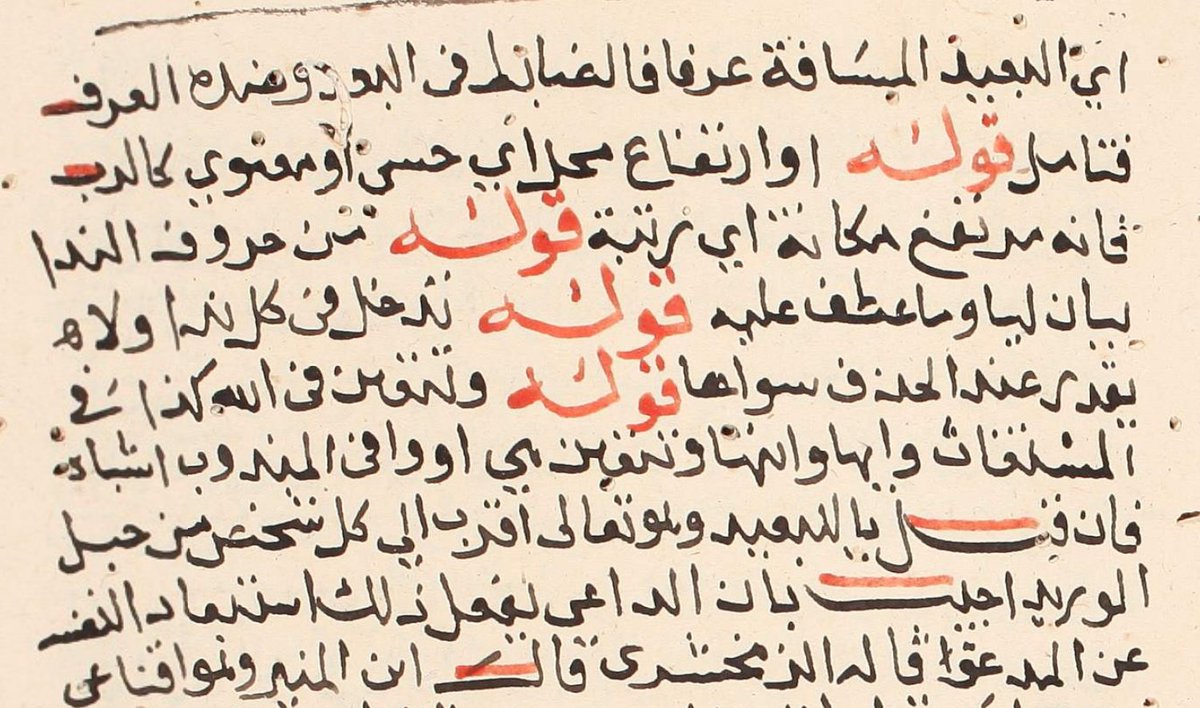
I want to talk about the key textual elements you might find in an Islamic manuscript. I'll focus on this manuscript, roughly 18th century, of an Arabic history of the rulers of Egypt called Nuzhat al-nāẓirīn, by Marʻī al-Karmī (d. 1623/4).
Budeiry Library (Jerusalem) MS 593 -jm
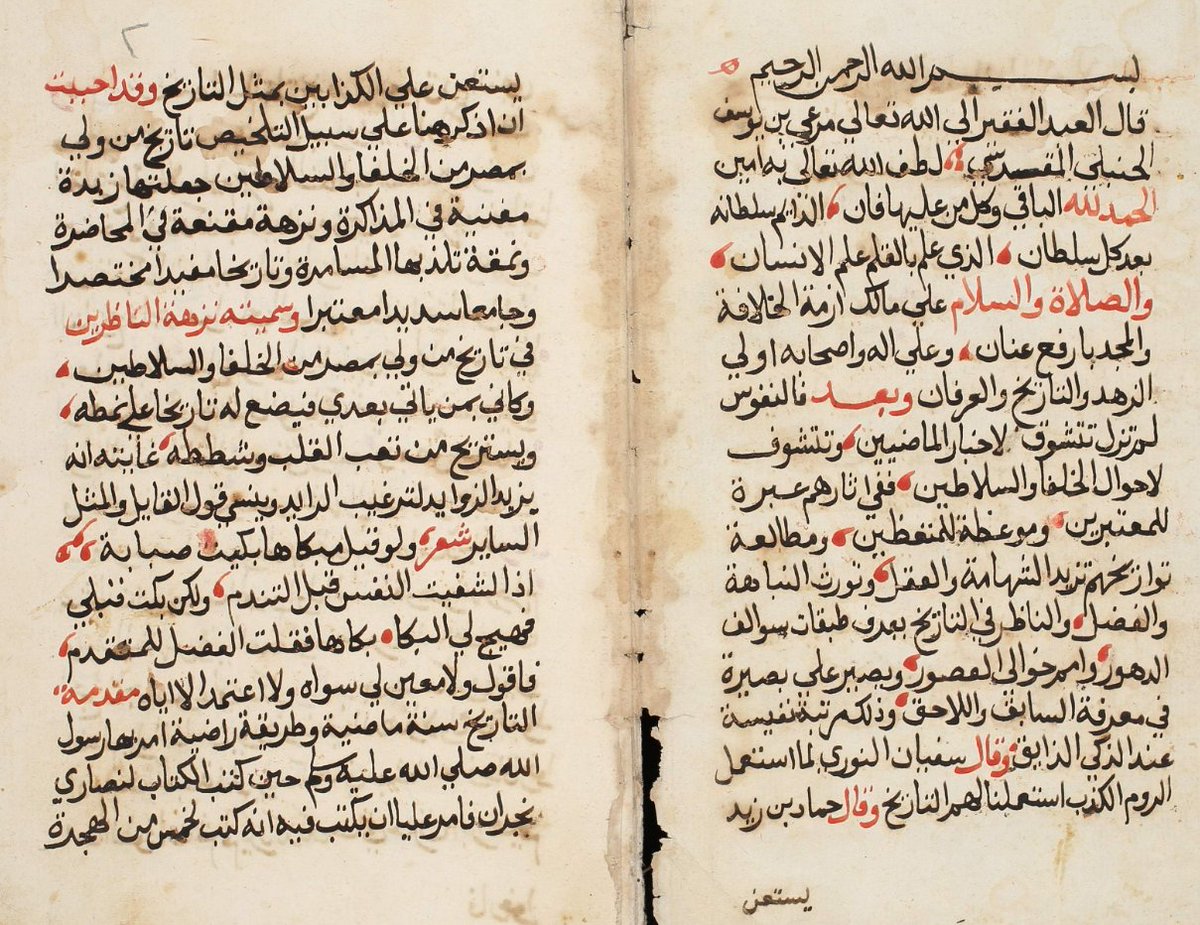
These texts have many elements designed to help the reader understand what they're saying, and choices by the scribe who copied the manuscript often help as well. Let's see what's here. -jm
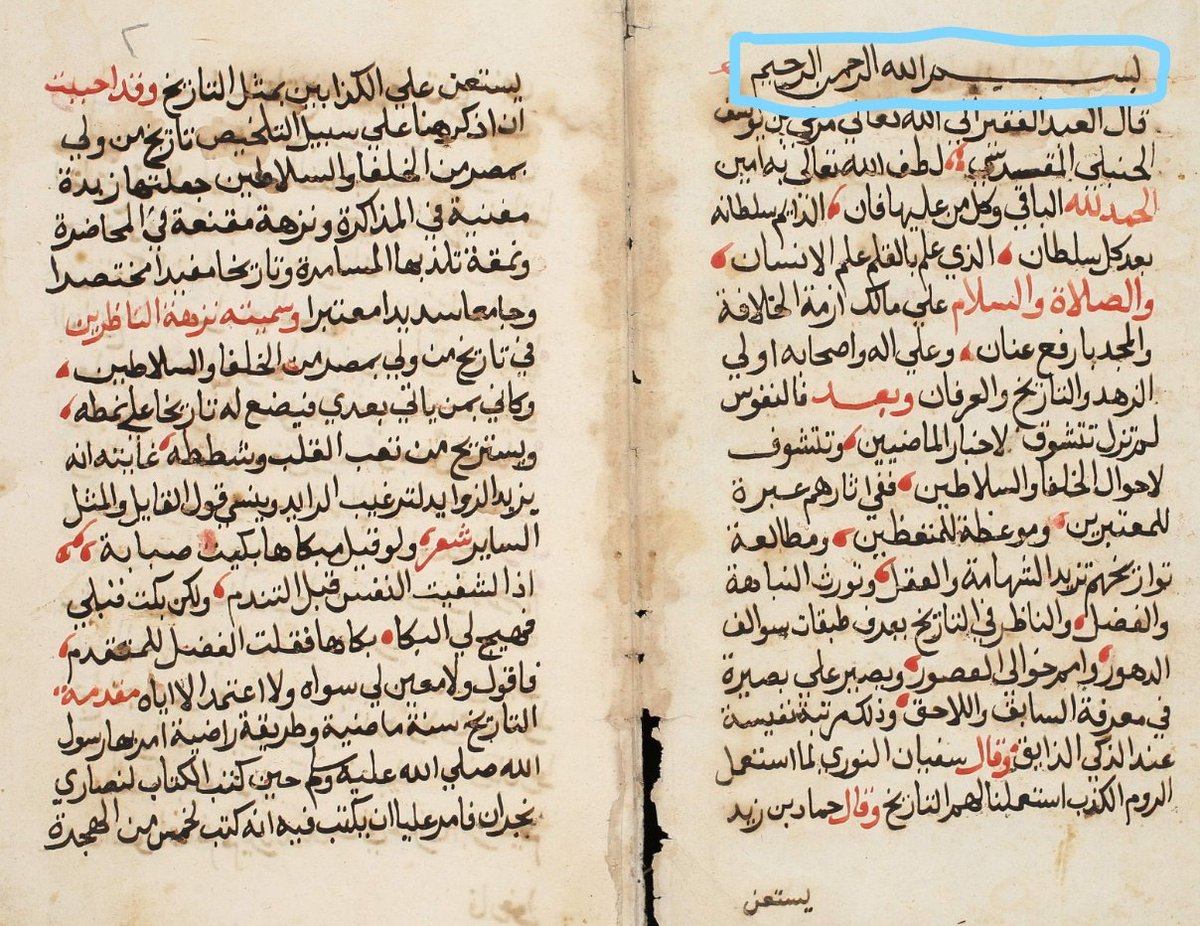
First, almost every Islamic text begins with the invocation "in the name of God, the compassionate, the merciful." The wording is never changed, and it's always in Arabic, no matter what language the text is, although you might add phrases like "and we ask God for help." -jm
Christians were able to do more experimentation with their invocations, as you can see from the examples here. https://t.co/wEPWRitCWA -jm
After the invocation (basmalah), you might have what this text has, which is an introduction of the author in the form "the poor slave of God [so-and-so] said..." often followed by a quick prayer for the author. -jm
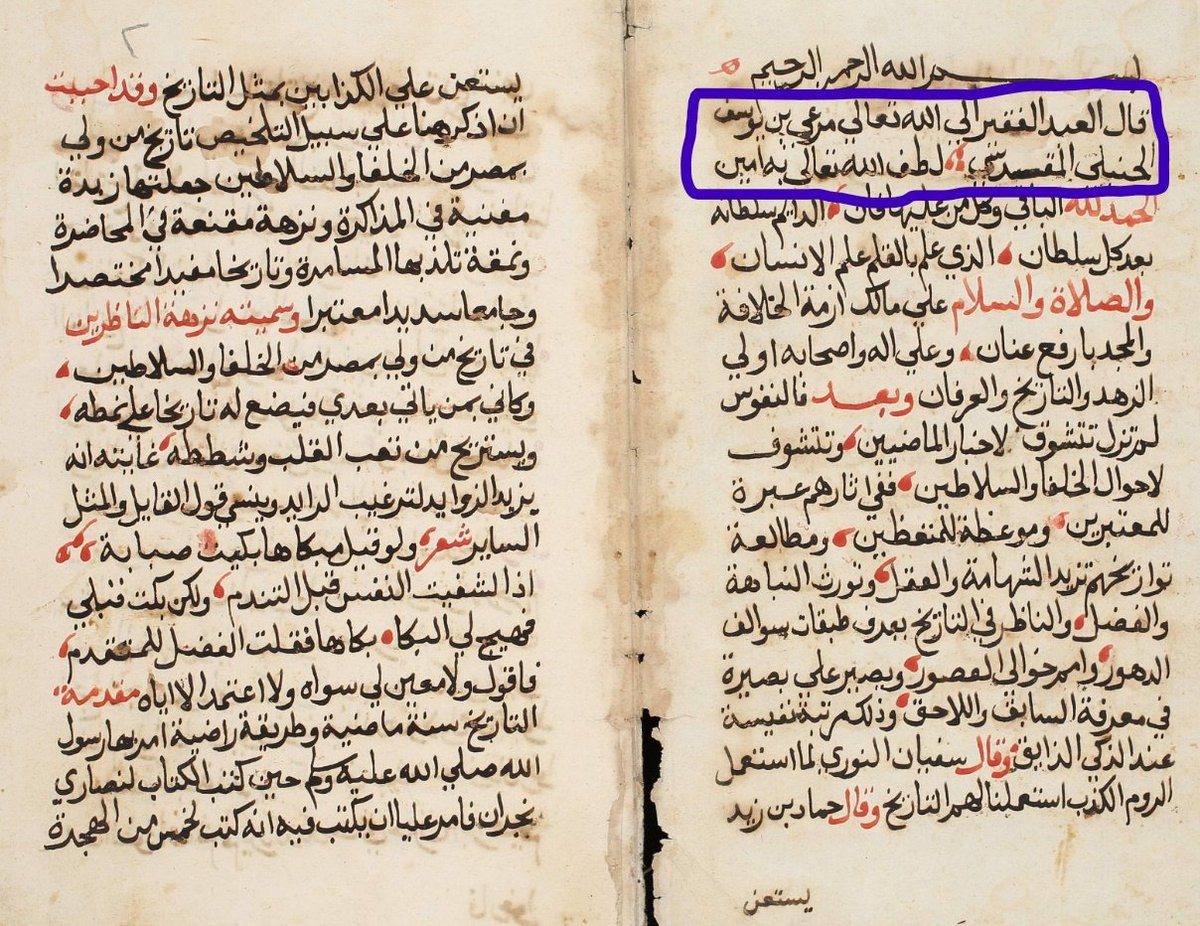
Budeiry Library (Jerusalem) MS 593 -jm
These texts have many elements designed to help the reader understand what they're saying, and choices by the scribe who copied the manuscript often help as well. Let's see what's here. -jm
First, almost every Islamic text begins with the invocation "in the name of God, the compassionate, the merciful." The wording is never changed, and it's always in Arabic, no matter what language the text is, although you might add phrases like "and we ask God for help." -jm
Christians were able to do more experimentation with their invocations, as you can see from the examples here. https://t.co/wEPWRitCWA -jm
These little prayers are fun pic.twitter.com/hJYk2M01bO
— Josh Mugler (@J_mugs) February 16, 2019
After the invocation (basmalah), you might have what this text has, which is an introduction of the author in the form "the poor slave of God [so-and-so] said..." often followed by a quick prayer for the author. -jm

First thread of the year because I have time during MCO. As requested, a thread on the gods and spirits of Malay folk religion. Some are indigenous, some are of Indian origin, some have Islamic
Before I begin, it might be worth explaining the Malay conception of the spirit world. At its deepest level, Malay religious belief is animist. All living beings and even certain objects are said to have a soul. Natural phenomena are either controlled by or personified as spirits
Although these beings had to be respected, not all of them were powerful enough to be considered gods. Offerings would be made to the spirits that had greater influence on human life. Spells and incantations would invoke their
Two known examples of such elemental spirits that had god-like status are Raja Angin (king of the wind) and Mambang Tali Arus (spirit of river currents). There were undoubtedly many more which have been lost to time
Contact with ancient India brought the influence of Hinduism and Buddhism to SEA. What we now call Hinduism similarly developed in India out of native animism and the more formal Vedic tradition. This can be seen in the multitude of sacred animals and location-specific Hindu gods
i wonder if you can make a thread bout witchcraft in malaysia.. or list of our own local gods/deites..
— r a y a \U0001f319 (@lcvelylilith) February 20, 2020
Before I begin, it might be worth explaining the Malay conception of the spirit world. At its deepest level, Malay religious belief is animist. All living beings and even certain objects are said to have a soul. Natural phenomena are either controlled by or personified as spirits
Although these beings had to be respected, not all of them were powerful enough to be considered gods. Offerings would be made to the spirits that had greater influence on human life. Spells and incantations would invoke their
Animist ceremonies of a religious or magical nature were normally held for the purpose of divination or making a request. This would either be done at a keramat or at a shrine similar to the Thai spirit houses or Chinese roadside shrines pic.twitter.com/I1hliyi0x3
— \u2745\u1710\u170b\u1713\u170e (@uglyluhan) June 16, 2019
Two known examples of such elemental spirits that had god-like status are Raja Angin (king of the wind) and Mambang Tali Arus (spirit of river currents). There were undoubtedly many more which have been lost to time
Contact with ancient India brought the influence of Hinduism and Buddhism to SEA. What we now call Hinduism similarly developed in India out of native animism and the more formal Vedic tradition. This can be seen in the multitude of sacred animals and location-specific Hindu gods