Do you know?

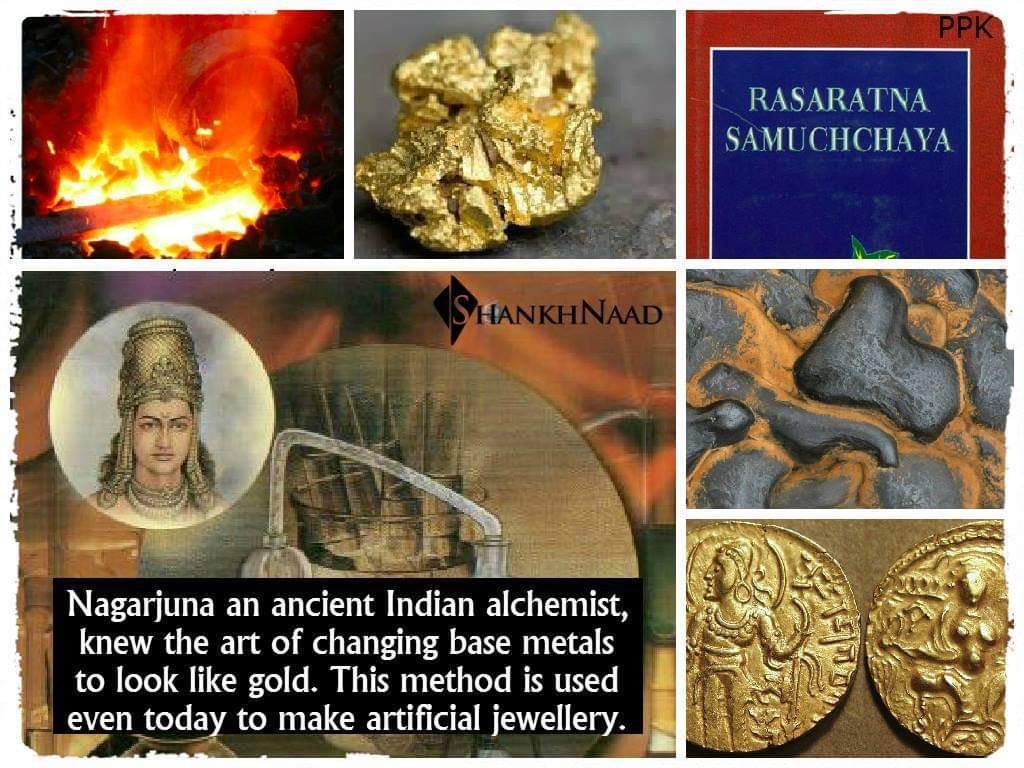
The Golden Shine on the artificial jewellery of modern times is a gift by Nagarjuna.

Now,u might be wondering,who is Nagarjuna?

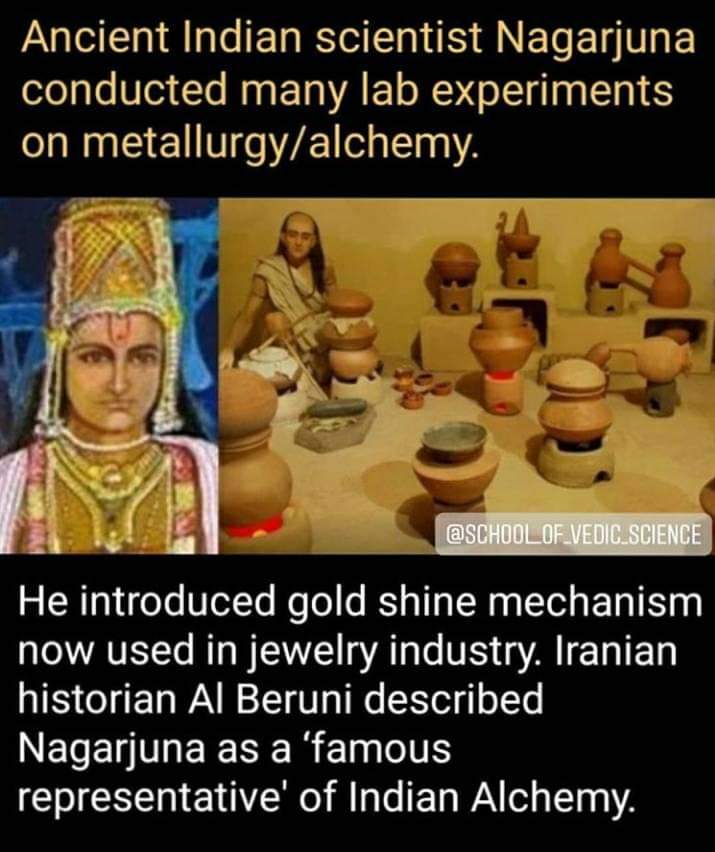
Nagarjuna was the name of an ancient Indian scholar&scientist whose name is associated with the fields of Alchemy,Chemistry& Metallurgy.

He conducted a number of alchemic and Metallurgical experiments directed towards transforming base elements into Gold.
According to Eduard Sachau's Alberuni's India, Nagarjuna was termed as a Metallurgist who was born 100 yrs before Alberuni's time, who was born in 973 CE.
According to some records Nagarjuna was born in 9th century CE near Somnath,Gujarat and according to some Tibetan & Chinese sources he was born in Vidarbha,Maharashtra from where he later migrated to Deccan region.
Edward Schau quotes in his book,'They have a science similar to Alchemy and Nagarjuna is famous for this science which they call as 'Rasayana'.
Nagarjuna's book 'Rasaratnakara' is one of the earliest documented texts on Alchemy,Chemistry & Metallurgy in Sanskrit.Nagarjuna successfully discovered through his experiments the alchemy of transmutation of base metals into Gold.This was not real gold but a gold like substance.
The same procedure that Nagarjuna discovered about a thousand of years ago is used in the modern times to make shining artificial jewellery which is an exact look alike of the original.
Further in his treatise Rasaratnakara,Nagarjuna describes the procedures for metal extracting.
The metal extraction in detail which he describes are of metals like gold, silver, tin or copper.

The usage and intake of Swarna Bhasma(Gold powder)as a therapeutic agent for several diseases in Ayurveda is also mentioned by Nagarjuna.
How this Swarna Bhasma must be made and how it must be mixed with other herbs and in what quantities,has been very minutely detailed. In addition to 'Rasaratnakara', Nagarjuna's works also include 'Rasahradya' & 'Rasandramangla'.These two treatises r mostly of Ayurvedic accounts.
The description of Metals and knowledge of metallurgy finds a mention in ancient Hindu Scriptures. There are numerous archeological evidences on ancient Indian metallurgy. Excavations of the Ganges valley led to the discovery of iron workshops dating back to 1800BCE.
Various excavations at various sites of UP revealed the usage of iron around 1800-1200BCE.
Nagarjuna's contribution in the field of Alchemy, Chemistry and Metallurgy can't be ignored as at a time when western scientists conducted many experiments in Alchemy and failed...
...miserably,it was India who successfully conducted such experiments &lead the world.

Some of the remarkable contributions made by Nagarjuna in the fields of Alchemy,Ayurveda &Metallurgy are:
-Description of metal extracting procedure of metals such as Gold,Silver,Copper & Tin.
-Preparation of herbal medicines.
-Preparation of life saving medicines.
-Preparation of yellow shiny metal which is a look alike of Gold.
-Design of Chemical Labs.

Ancient Indians achieved tremendous progress in every field of Science,Art,Architecture etc and we have a...
..great legacy of the greatest scientists to be proud of.The only thing is we must be aware of our legacy&make others aware of it.

So,if u r fond of the artificial jewellery in today's times which I am sure u r, u should thank an ancient Indian Alchemist named Nagarjuna for it.

More from Vibhu Vashisth

More from All

https://t.co/6cRR2B3jBE
Viruses and other pathogens are often studied as stand-alone entities, despite that, in nature, they mostly live in multispecies associations called biofilms—both externally and within the host.

https://t.co/FBfXhUrH5d


Microorganisms in biofilms are enclosed by an extracellular matrix that confers protection and improves survival. Previous studies have shown that viruses can secondarily colonize preexisting biofilms, and viral biofilms have also been described.


...we raise the perspective that CoVs can persistently infect bats due to their association with biofilm structures. This phenomenon potentially provides an optimal environment for nonpathogenic & well-adapted viruses to interact with the host, as well as for viral recombination.


Biofilms can also enhance virion viability in extracellular environments, such as on fomites and in aquatic sediments, allowing viral persistence and dissemination.
#தினம்_ஒரு_திருவாசகம்
தொல்லை இரும்பிறவிச் சூழும் தளை நீக்கி
அல்லல் அறுத்து ஆனந்தம் ஆக்கியதே – எல்லை
மருவா நெறியளிக்கும் வாதவூர் எங்கோன்
திருவாசகம் என்னும் தேன்

பொருள்:
1.எப்போது ஆரம்பித்தது என அறியப்படமுடியாத தொலை காலமாக (தொல்லை)

2. இருந்து வரும் (இரும்)


3.பிறவிப் பயணத்திலே ஆழ்த்துகின்ற (பிறவி சூழும்)

4.அறியாமையாகிய இடரை (தளை)

5.அகற்றி (நீக்கி),

6.அதன் விளைவால் சுகதுக்கமெனும் துயரங்கள் விலக (அல்லல் அறுத்து),

7.முழுநிறைவாய்த் தன்னுளே இறைவனை உணர்த்துவதே (ஆனந்த மாக்கியதே),

8.பிறந்து இறக்கும் காலவெளிகளில் (எல்லை)

9.பிணைக்காமல் (மருவா)

10.காக்கும் மெய்யறிவினைத் தருகின்ற (நெறியளிக்கும்),

11.என் தலைவனான மாணிக்க வாசகரின் (வாதவூரெங்கோன்)

12.திருவாசகம் எனும் தேன் (திருவா சகமென்னுந் தேன்)

முதல்வரி: பிறவி என்பது முன்வினை விதையால் முளைப்பதோர் பெருமரம். அந்த ‘முன்வினை’ எங்கு ஆரம்பித்தது எனச் சொல்ல இயலாது. ஆனால் ‘அறியாமை’ ஒன்றே ஆசைக்கும்,, அச்சத்துக்கும் காரணம் என்பதால், அவையே வினைகளை விளைவிப்பன என்பதால், தொடர்ந்து வரும் பிறவிகளுக்கு, ‘அறியாமையே’ காரணம்

அறியாமைக்கு ஆரம்பம் கிடையாது. நமக்கு ஒரு பொருளைப் பற்றிய அறிவு எப்போதிருந்து இல்லை? அதைச் சொல்ல முடியாது. அதனாலேதான் முதலடியில், ஆரம்பமில்லாத அஞ்ஞானத்தை பிறவிகளுக்குக் காரணமாகச் சொல்லியது. ஆனால் அறியாமை, அறிவின் எழுச்சியால், அப்போதே முடிந்து விடும்.

You May Also Like

"I really want to break into Product Management"

make products.

"If only someone would tell me how I can get a startup to notice me."

Make Products.

"I guess it's impossible and I'll never break into the industry."

MAKE PRODUCTS.

Courtesy of @edbrisson's wonderful thread on breaking into comics –
https://t.co/TgNblNSCBj – here is why the same applies to Product Management, too.


There is no better way of learning the craft of product, or proving your potential to employers, than just doing it.

You do not need anybody's permission. We don't have diplomas, nor doctorates. We can barely agree on a single standard of what a Product Manager is supposed to do.

But – there is at least one blindingly obvious industry consensus – a Product Manager makes Products.

And they don't need to be kept at the exact right temperature, given endless resource, or carefully protected in order to do this.

They find their own way.