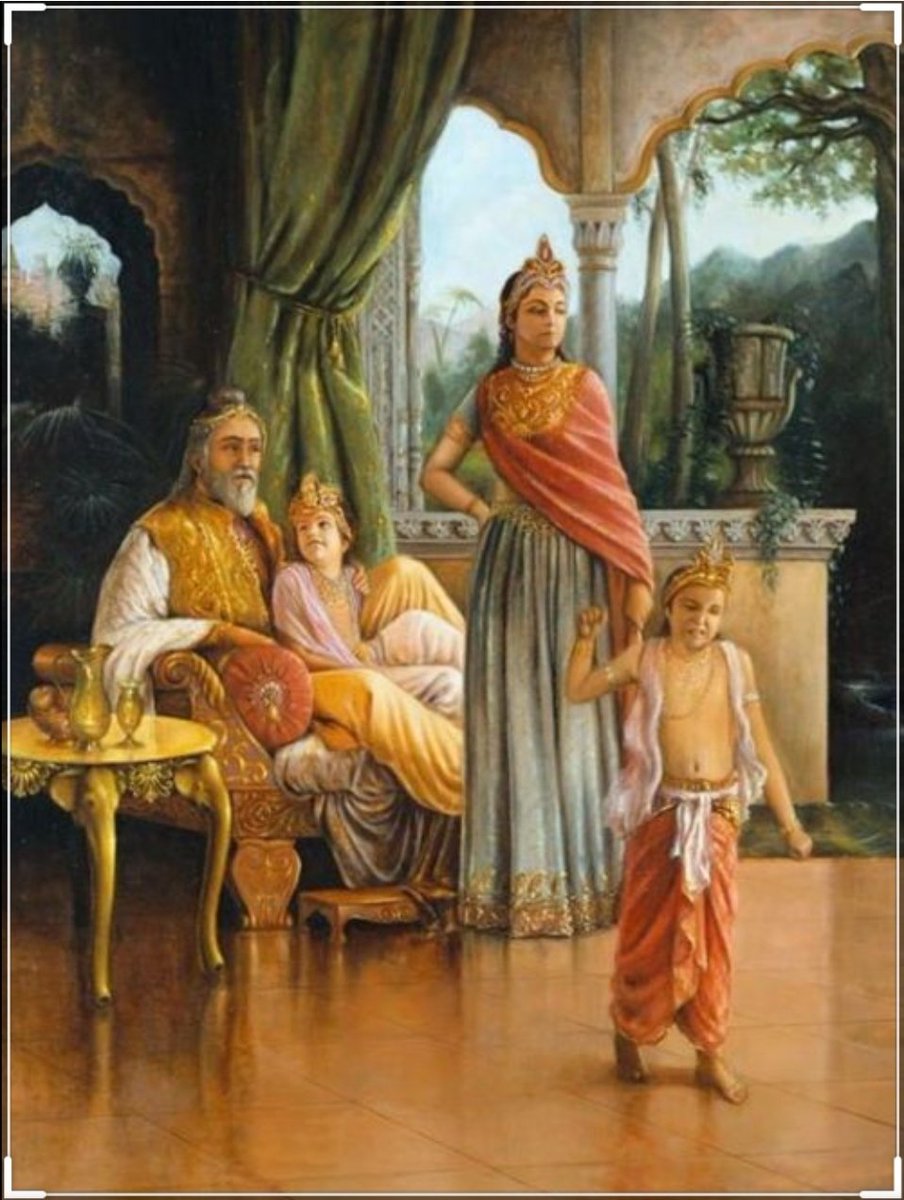
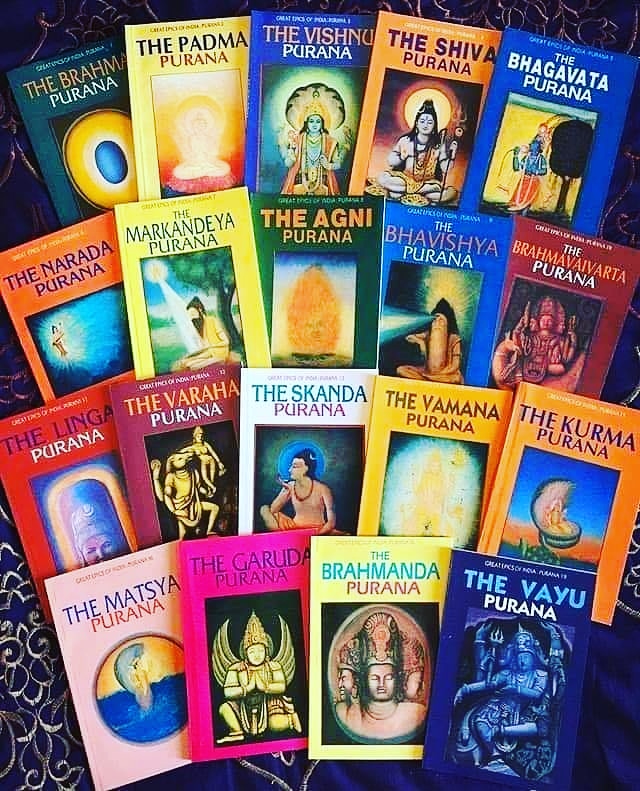
Srimad Bhagvatam - The Book form of Sri Krishna.

Of all the sacred Vaisnava scriptures, Srimad Bhagavatam is considered the topmost. All the Vedic scriptures are compared to a desire fulfilling tree and Srimad-Bhagavatam is compared to be the ripened fruit of that tree, +

the essence of all scriptures. Padma Purana states:

pādau yadīyau prathama-dvitīyau
tṛtīya-tūryau kathitau yad-ūrū
nābhis tathā pancama eva ṣaṣtho
bhujāntaraṁ dor-yugalam tathānyau
kaṇṭhas tu rājan navamo yadīyo
mukharāvindaṁ dasamaḥ praphullam

+
ekādaśo yasya lalāṭa-paṭṭaṁ
śiro’pi tu dvādaśa eva bhāti
tam adidevam karuna-nidhanam
tamala-varnam suhitavataram
apara-samsara-samudra-setum
bhajamahe bhagavata-svarupam

“The First and Second Cantos of the Bhagavatam are Sri Krsna’s lotus feet. The Third and Fourth +
Cantos are His thighs. The Fifth Canto is His navel. The Sixth Canto is His chest. The Seventh and Eighth Cantos are His arms. The Ninth Canto is His throat. The Tenth Canto is His beautiful lotus-face. The Eleventh Canto is His forehead. The Twelfth Canto is His head. +
I bow down to that Lord, the ocean of mercy whose color is like that of a tamala tree and who appears in this world for the welfare of all. I worship Him as the bridge for crossing the unfathomable ocean of material existence. The Bhagavatam has appeared as His very Self.” +
The 10 Topics of Srimad Bhagavatam

Srimad Bhagvatam is also called as maha-purana, and contains ten subjects as described in verse SB 2.10.1:

śrī-śuka uvāca
atra sargo visargaś ca
sthānaṁ poṣaṇam ūtayaḥ
manvantareśānukathā
nirodho muktir āśrayaḥ

+
1. Sarga: Universal creation by the Supreme Lord
2. Visarga: Secondary creation by Lord Brahma
3. Sthanam: Positioning of living entities in various planetary systems
4. Posanam: The Lord’s protection for the devotees
5. Uti: Inclination to act
6. Manvantara: The reign of Manus
+
7. Isanukatha: The topics of the Lord’s various incarnations and His devotees
8. Nirodha: Annihilation
9. Mukti: Liberation
10. Asraya: The supreme shelter, Lord Krsna.
By notes from Gauranga Darshan Das.

More from Religion

@Kate_SdE @PriyamvadaGopal @ChathamHouse @AdomGetachew Hindu nationalism should not have a negative connotation. It’s not exclusivist because Hinduism isn’t a religion - rather, it’s a way of life, and the term “Hindu” refer broadly to the people around and east of the Sindhu. This transcends the modern construct of religions.

@PriyamvadaGopal @ChathamHouse @AdomGetachew For “Hindus” - a broad-brush stroke for a people whose culture is underpinned by a knowledge system that provides logical structure for adopters of a plethora of philosophies, “Hindu nationalism” by definition, is inclusive and pluralistic. It gives space to everyone.

@PriyamvadaGopal @ChathamHouse @AdomGetachew If Nyaya, Vaisheshika, Samkhya, Yoga, Purva-Mimamsa, Buddhist and Jain philosophies are studied in comparison with Abrahamic faiths, India’s unique Carl Popper Paradox comes to light. The imposition of a western matrix of secularism on a pluralistic culture has done much harm.

@PriyamvadaGopal @ChathamHouse @AdomGetachew Because the traditions are rooted in universalist philosophies, India gladly hosts followers of non-proselytizing faiths. Supremacist theocratic ideologies find little resonance with the people of the land. To understand “Hindu nationalism,” one has to study Indic philosophy.

@PriyamvadaGopal @ChathamHouse @AdomGetachew Equally, it is important to view history objectively, know the excesses of supremacist invaders/colonizers, and importantly, understand the asymmetries created by the “secular” state which structurally disadvantage the vastly heterogeneous so-called “Hindu” majority.

You May Also Like

"I really want to break into Product Management"

make products.

"If only someone would tell me how I can get a startup to notice me."

Make Products.

"I guess it's impossible and I'll never break into the industry."

MAKE PRODUCTS.

Courtesy of @edbrisson's wonderful thread on breaking into comics –
https://t.co/TgNblNSCBj – here is why the same applies to Product Management, too.


There is no better way of learning the craft of product, or proving your potential to employers, than just doing it.

You do not need anybody's permission. We don't have diplomas, nor doctorates. We can barely agree on a single standard of what a Product Manager is supposed to do.

But – there is at least one blindingly obvious industry consensus – a Product Manager makes Products.

And they don't need to be kept at the exact right temperature, given endless resource, or carefully protected in order to do this.

They find their own way.