https://t.co/uUW1aSsloW
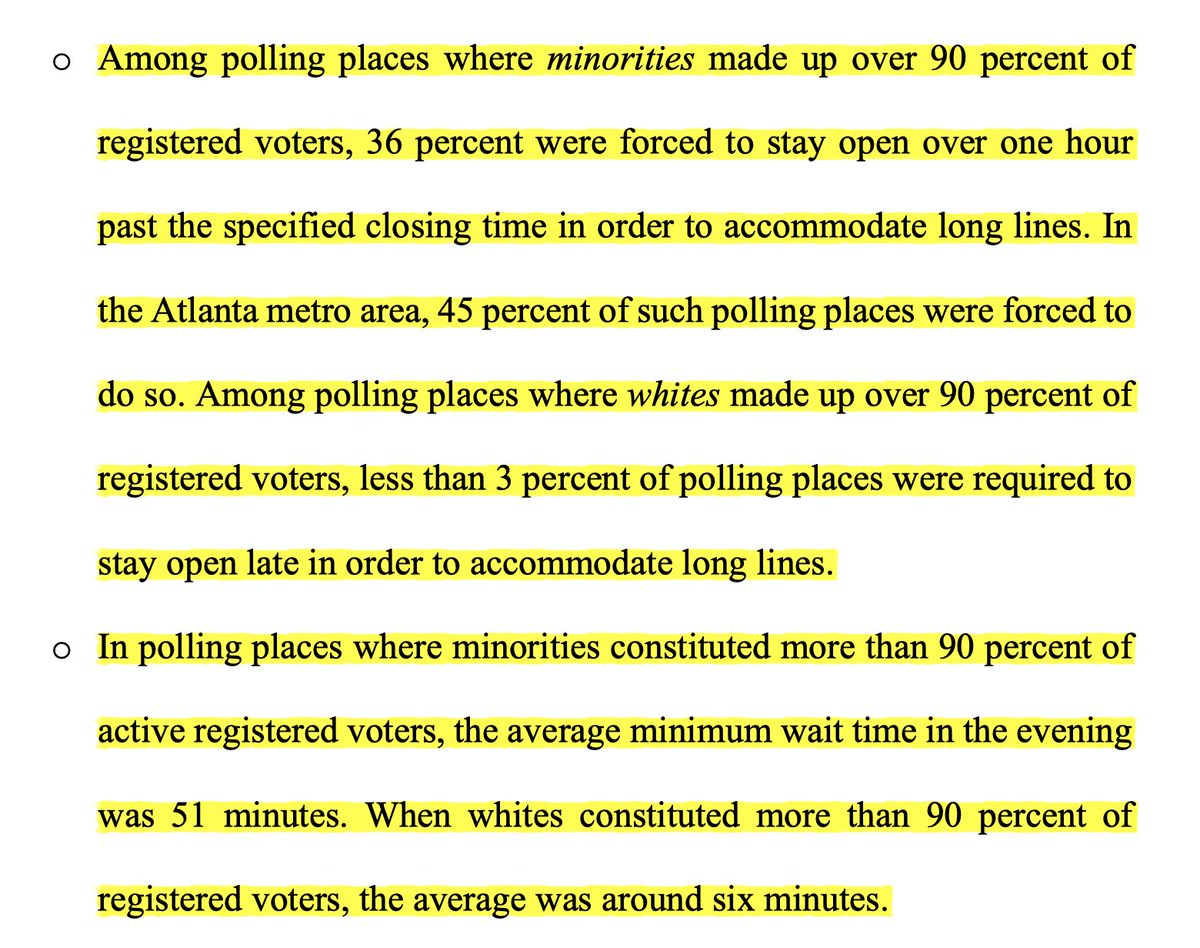
ЁЯНСЁЯз╡Our voting rights litigation was instrumental to winning Georgia in the 2020 election. As a result of our lawsuits, over 3,000 ballots were cured statewide. The post-cure rejection rate DECREASED by 6% since 2016. How did we get there?
https://t.co/uUW1aSsloW
https://t.co/WDYQQcHTz6
https://t.co/MNcoiNaiCd
More from Politics
All the challenges to Leader Pelosi are coming from her right, in an apparent effort to make the party even more conservative and bent toward corporate interests.
Hard pass. So long as Leader Pelosi remains the most progressive candidate for Speaker, she can count on my support.
I agree that our party should, and must, evolve our leadership.
But changed leadership should reflect an actual, evolved mission; namely, an increased commitment to the middle + working class electorate that put us here.
Otherwise itтАЩs a just new figure with the same problems.
I hope that we can move swiftly to conclude this discussion about party positions, so that we can spend more time discussing party priorities: voting rights, healthcare, wages, climate change, housing, cannabis legalization, good jobs, etc.
Hard pass. So long as Leader Pelosi remains the most progressive candidate for Speaker, she can count on my support.
The strange thing about the fight to displace Nancy Pelosi as Speaker of the House is that no one seems willing to run against her. https://t.co/VhBqf4KJom
— The New Yorker (@NewYorker) November 21, 2018
I agree that our party should, and must, evolve our leadership.
But changed leadership should reflect an actual, evolved mission; namely, an increased commitment to the middle + working class electorate that put us here.
Otherwise itтАЩs a just new figure with the same problems.
I hope that we can move swiftly to conclude this discussion about party positions, so that we can spend more time discussing party priorities: voting rights, healthcare, wages, climate change, housing, cannabis legalization, good jobs, etc.
You May Also Like
1/OK, data mystery time.
This New York Times feature shows China with a Gini Index of less than 30, which would make it more equal than Canada, France, or the Netherlands. https://t.co/g3Sv6DZTDE
That's weird. Income inequality in China is legendary.
Let's check this number.
2/The New York Times cites the World Bank's recent report, "Fair Progress? Economic Mobility across Generations Around the World".
The report is available here:
3/The World Bank report has a graph in which it appears to show the same value for China's Gini - under 0.3.
The graph cites the World Development Indicators as its source for the income inequality data.
4/The World Development Indicators are available at the World Bank's website.
Here's the Gini index: https://t.co/MvylQzpX6A
It looks as if the latest estimate for China's Gini is 42.2.
That estimate is from 2012.
5/A Gini of 42.2 would put China in the same neighborhood as the U.S., whose Gini was estimated at 41 in 2013.
I can't find the <30 number anywhere. The only other estimate in the tables for China is from 2008, when it was estimated at 42.8.
This New York Times feature shows China with a Gini Index of less than 30, which would make it more equal than Canada, France, or the Netherlands. https://t.co/g3Sv6DZTDE
That's weird. Income inequality in China is legendary.
Let's check this number.
2/The New York Times cites the World Bank's recent report, "Fair Progress? Economic Mobility across Generations Around the World".
The report is available here:
3/The World Bank report has a graph in which it appears to show the same value for China's Gini - under 0.3.
The graph cites the World Development Indicators as its source for the income inequality data.
4/The World Development Indicators are available at the World Bank's website.
Here's the Gini index: https://t.co/MvylQzpX6A
It looks as if the latest estimate for China's Gini is 42.2.
That estimate is from 2012.
5/A Gini of 42.2 would put China in the same neighborhood as the U.S., whose Gini was estimated at 41 in 2013.
I can't find the <30 number anywhere. The only other estimate in the tables for China is from 2008, when it was estimated at 42.8.