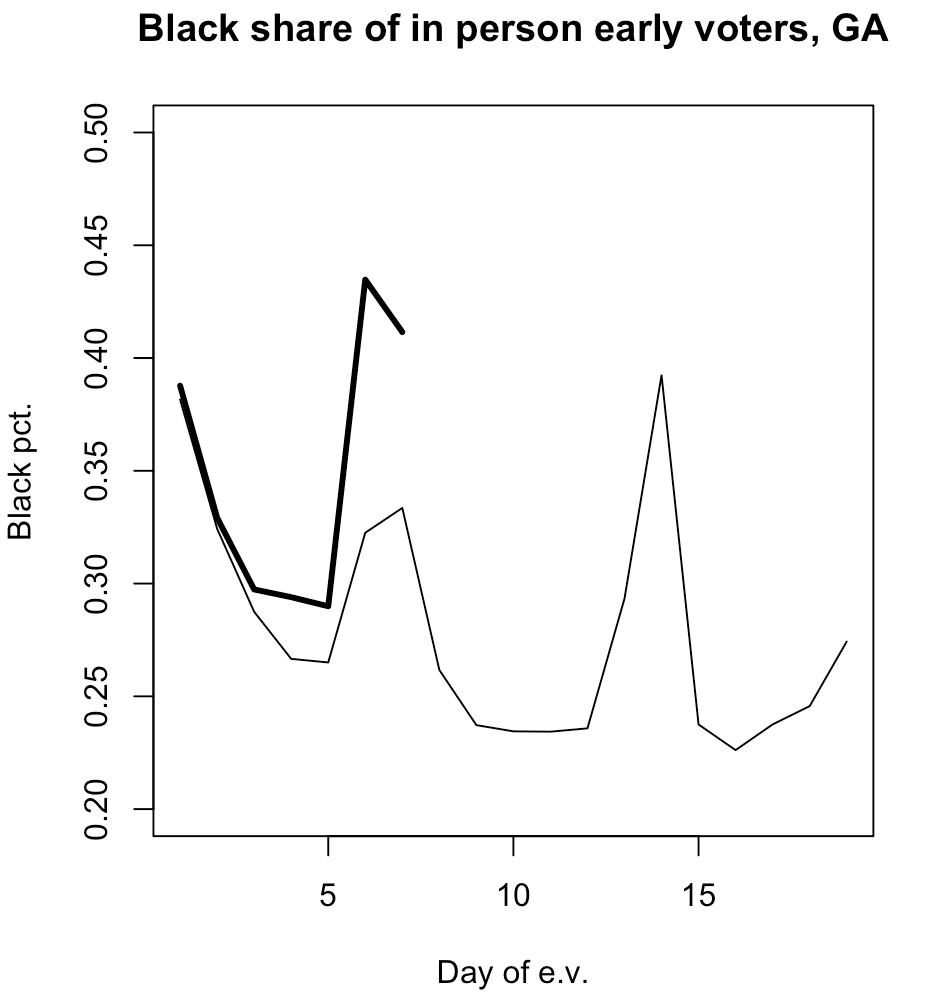
A lot for Democrats to like in the early voting data over the last few days, as they are now running ahead of where they stood at a similar point of the general election--thanks to a stronger Black turnout

More from Nate Cohn


One question I keep getting about the Georgia early voting is about age: isn't the electorate older, and how much does it hurt the Democrats?
So far the answer is 'not really' and 'not at all.'
The first question is easy enough. As of today, youth turnout is basically keeping pace with the general, controlling for the slightly reduced opportunities to vote. This augurs for an unusually young
The second question is more interesting: are the Democrats hurt by lower youth turnout? So far the answer is no, and there are two reasons.
One reason: there's not a *huge* gen. gap. Maybe young voters are D+20 while >65 are R+15. You need a big gap for modest changes to matter.
The second reason is maybe more interesting: the young voters who have voted are just a lot more Democratic than the young voters who turned out at this stage of the general election
By party primary vote history, the 18-29 year olds who have voted so far are D 38, R 12. They were D 33, R 14 in the general at this stage.
So far the answer is 'not really' and 'not at all.'
The first question is easy enough. As of today, youth turnout is basically keeping pace with the general, controlling for the slightly reduced opportunities to vote. This augurs for an unusually young
it's not a very material difference pic.twitter.com/ygdD3hb8b7
— Nate Cohn (@Nate_Cohn) December 29, 2020
The second question is more interesting: are the Democrats hurt by lower youth turnout? So far the answer is no, and there are two reasons.
One reason: there's not a *huge* gen. gap. Maybe young voters are D+20 while >65 are R+15. You need a big gap for modest changes to matter.
The second reason is maybe more interesting: the young voters who have voted are just a lot more Democratic than the young voters who turned out at this stage of the general election
By party primary vote history, the 18-29 year olds who have voted so far are D 38, R 12. They were D 33, R 14 in the general at this stage.



More from Politics


You May Also Like




THE MEANING, SIGNIFICANCE AND HISTORY OF SWASTIK
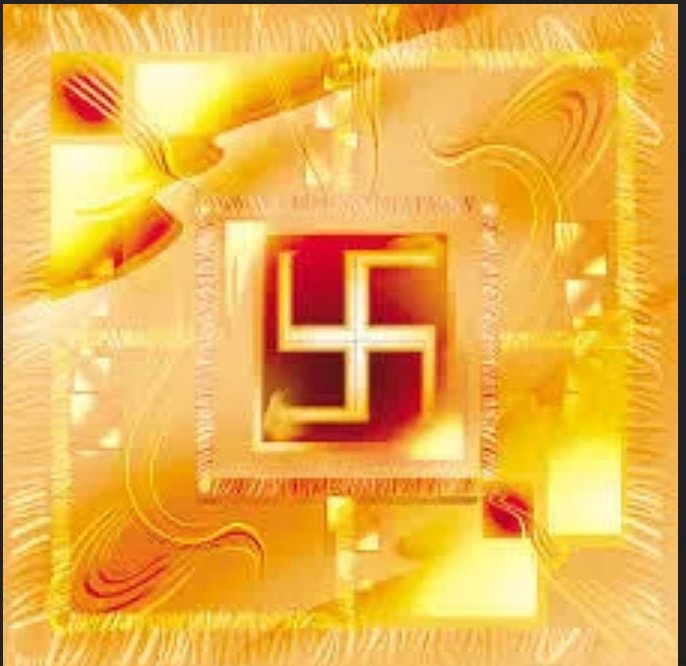
The Swastik is a geometrical figure and an ancient religious icon. Swastik has been Sanatan Dharma’s symbol of auspiciousness – mangalya since time immemorial.

The name swastika comes from Sanskrit (Devanagari: स्वस्तिक, pronounced: swastik) &denotes “conducive to wellbeing or auspicious”.
The word Swastik has a definite etymological origin in Sanskrit. It is derived from the roots su – meaning “well or auspicious” & as meaning “being”.
"सु अस्ति येन तत स्वस्तिकं"
Swastik is de symbol through which everything auspicios occurs
Scholars believe word’s origin in Vedas,known as Swasti mantra;
"🕉स्वस्ति ना इन्द्रो वृधश्रवाहा
स्वस्ति ना पूषा विश्ववेदाहा
स्वस्तिनास्तरक्ष्यो अरिश्तनेमिही
स्वस्तिनो बृहस्पतिर्दधातु"
It translates to," O famed Indra, redeem us. O Pusha, the beholder of all knowledge, redeem us. Redeem us O Garudji, of limitless speed and O Bruhaspati, redeem us".
SWASTIK’s COSMIC ORIGIN
The Swastika represents the living creation in the whole Cosmos.

Hindu astronomers divide the ecliptic circle of cosmos in 27 divisions called https://t.co/sLeuV1R2eQ this manner a cross forms in 4 directions in the celestial sky. At centre of this cross is Dhruva(Polestar). In a line from Dhruva, the stars known as Saptarishi can be observed.

The Swastik is a geometrical figure and an ancient religious icon. Swastik has been Sanatan Dharma’s symbol of auspiciousness – mangalya since time immemorial.
The name swastika comes from Sanskrit (Devanagari: स्वस्तिक, pronounced: swastik) &denotes “conducive to wellbeing or auspicious”.
The word Swastik has a definite etymological origin in Sanskrit. It is derived from the roots su – meaning “well or auspicious” & as meaning “being”.
"सु अस्ति येन तत स्वस्तिकं"
Swastik is de symbol through which everything auspicios occurs
Scholars believe word’s origin in Vedas,known as Swasti mantra;
"🕉स्वस्ति ना इन्द्रो वृधश्रवाहा
स्वस्ति ना पूषा विश्ववेदाहा
स्वस्तिनास्तरक्ष्यो अरिश्तनेमिही
स्वस्तिनो बृहस्पतिर्दधातु"
It translates to," O famed Indra, redeem us. O Pusha, the beholder of all knowledge, redeem us. Redeem us O Garudji, of limitless speed and O Bruhaspati, redeem us".
SWASTIK’s COSMIC ORIGIN
The Swastika represents the living creation in the whole Cosmos.
Hindu astronomers divide the ecliptic circle of cosmos in 27 divisions called https://t.co/sLeuV1R2eQ this manner a cross forms in 4 directions in the celestial sky. At centre of this cross is Dhruva(Polestar). In a line from Dhruva, the stars known as Saptarishi can be observed.