
This year's polls would have been *way* worse than 2016 with a 2016 methodology
Some early theories on went went wrong with the pre-election polling this
This year's polls would have been *way* worse than 2016 with a 2016 methodology
Since 2016, pollsters got better at the adjustments, but the underlying sample got worse
In 2016, the polls *did* show Trump doing way better among those voters.
In 2020, they did not. And they were dead wrong.
Same story with seniors.
At this stage, it's really just speculation. We'll know more later--it's too early for an autopsy.
But here's some early speculation
He thinks it's the pandemic: Dems took it seriously, stayed home and started responding to polls more. GOP did not.
Remember those studies that said Biden does better in a COVID hotspot?
Well, Biden didn't do better in COVID hotspots.
So maybe... that just means the polls were biased by COVID
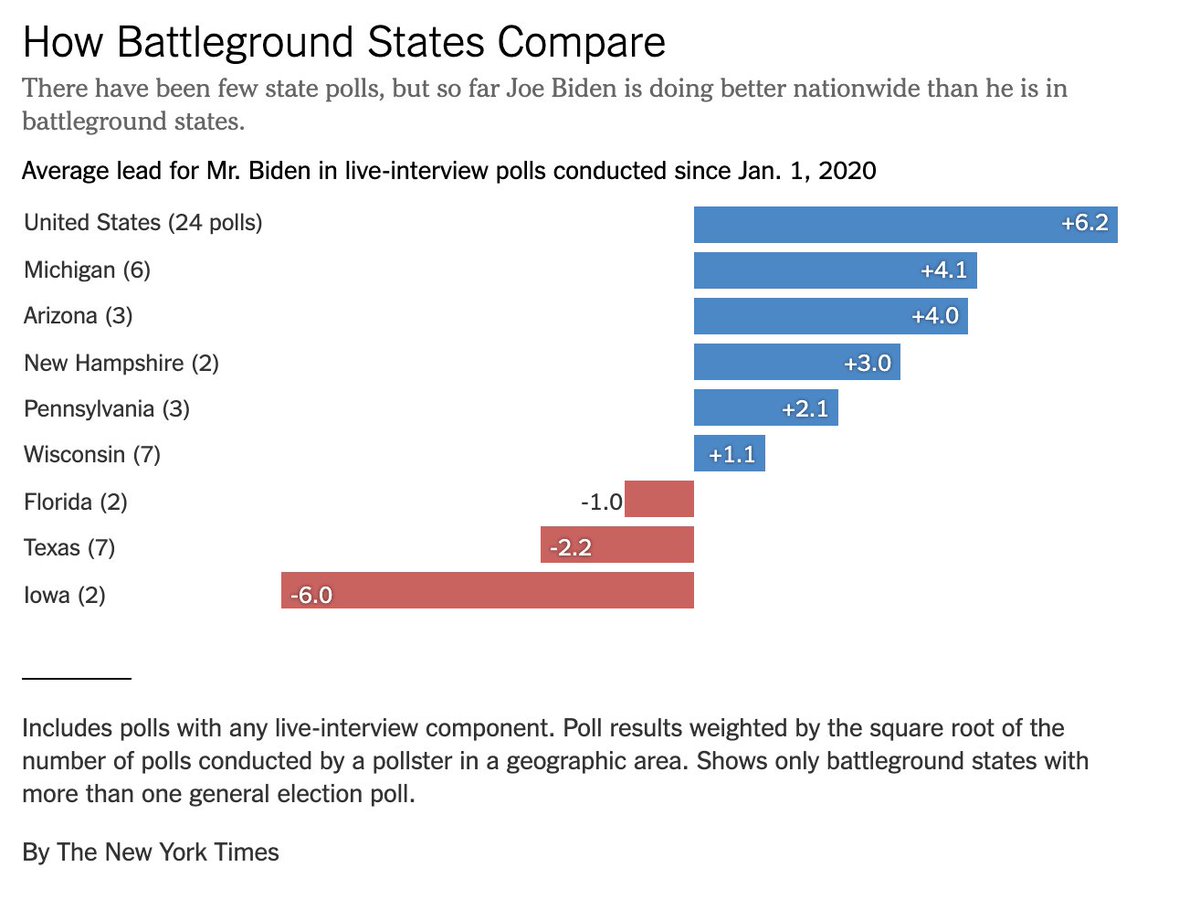
Our 10/19 battleground polls were... pretty accurate!
So were the state polls conducted from Jan-Mar 20.
Now, maybe these polls were just as bad--and Trump actually led big back then!
Or maybe... the bias started since then
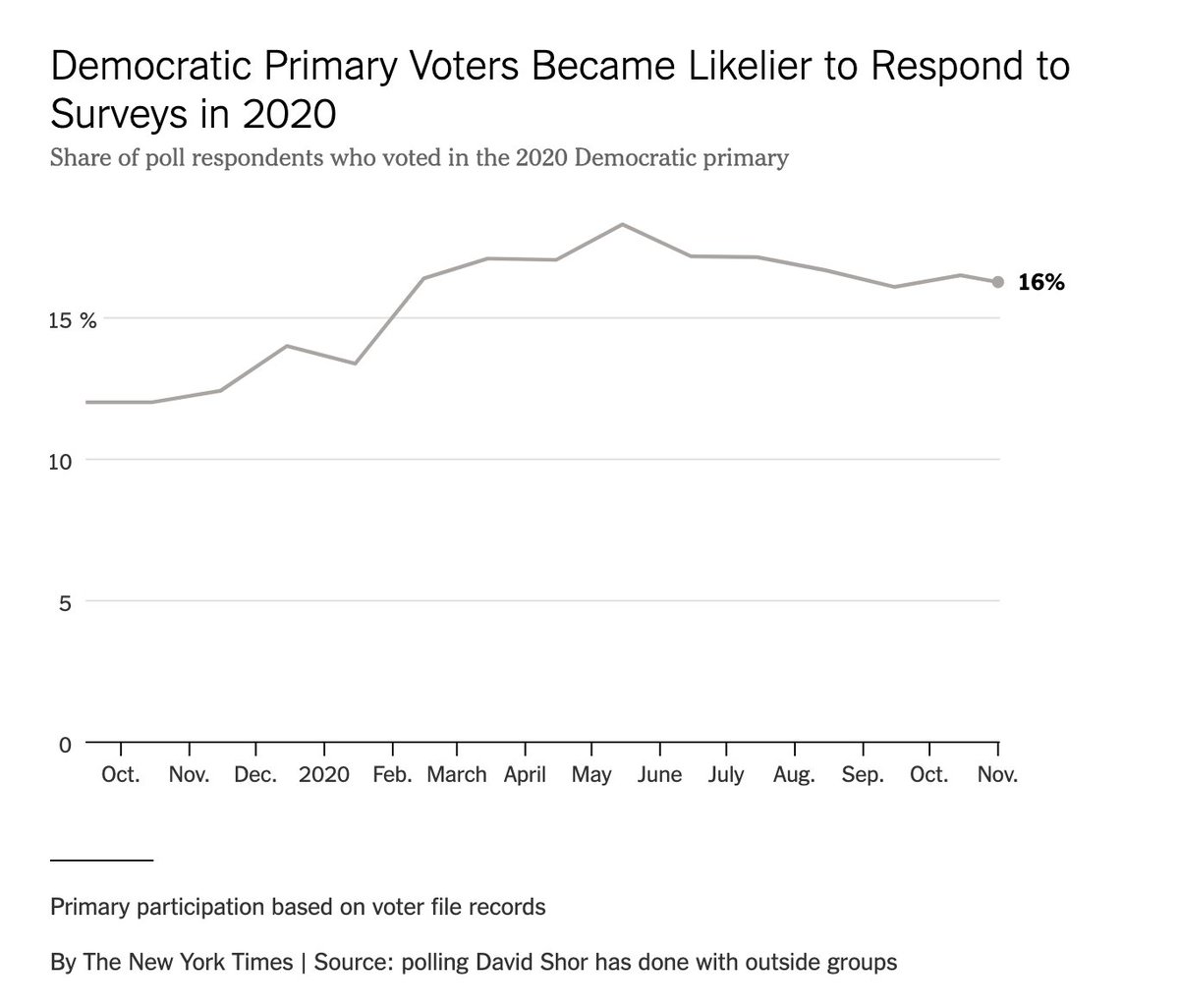
It's possible that four more years of Trump did four more years worth of damage to the credibility of media/polls, creating a 'hidden Trump' vote that didn't really exist in 2016
There were a lot of polls showing no LV/RV gap or even a D turnout edge. Not sure that will hold up with final data.
It certainly didn't hold up in FL, where we have great data already.
More from Nate Cohn
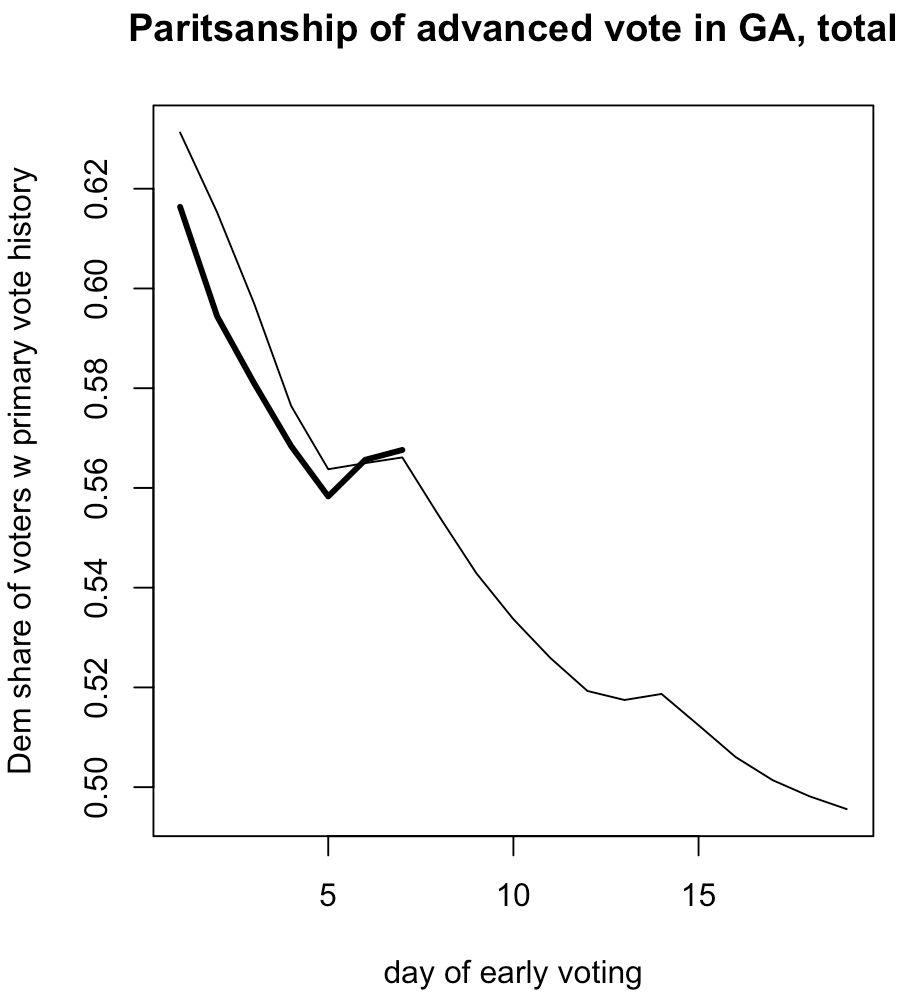
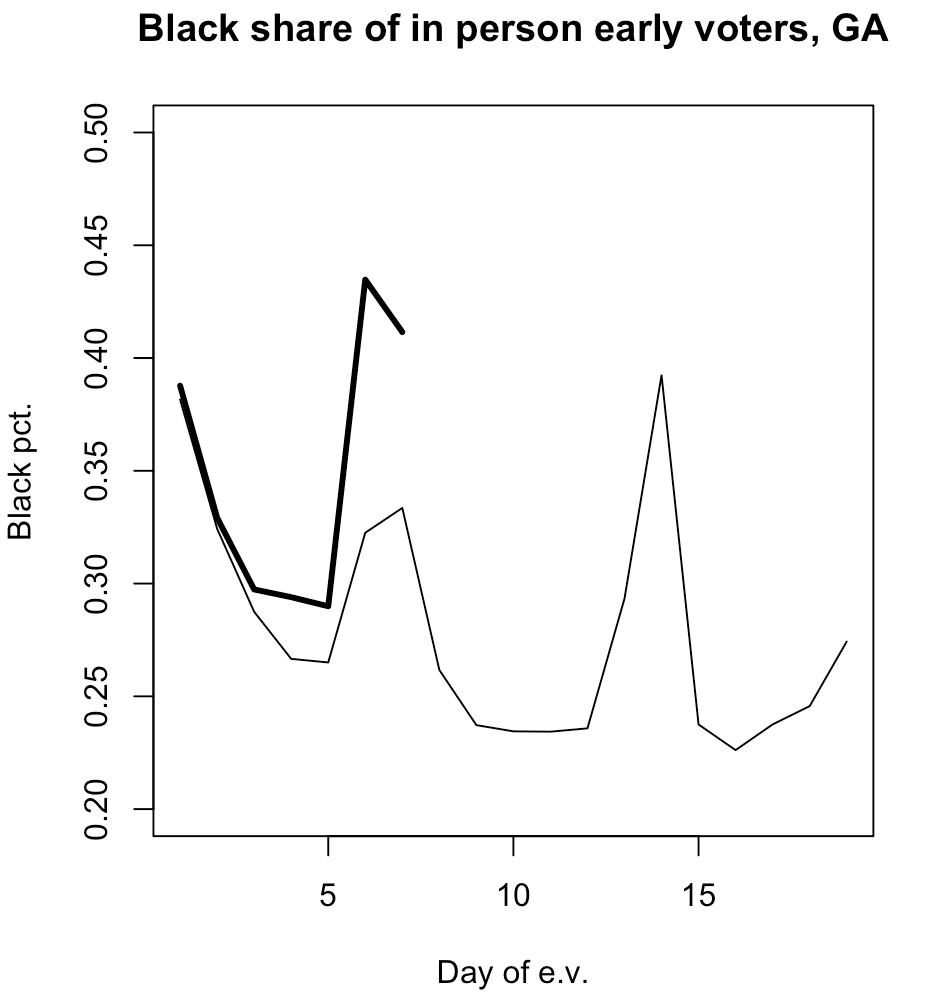
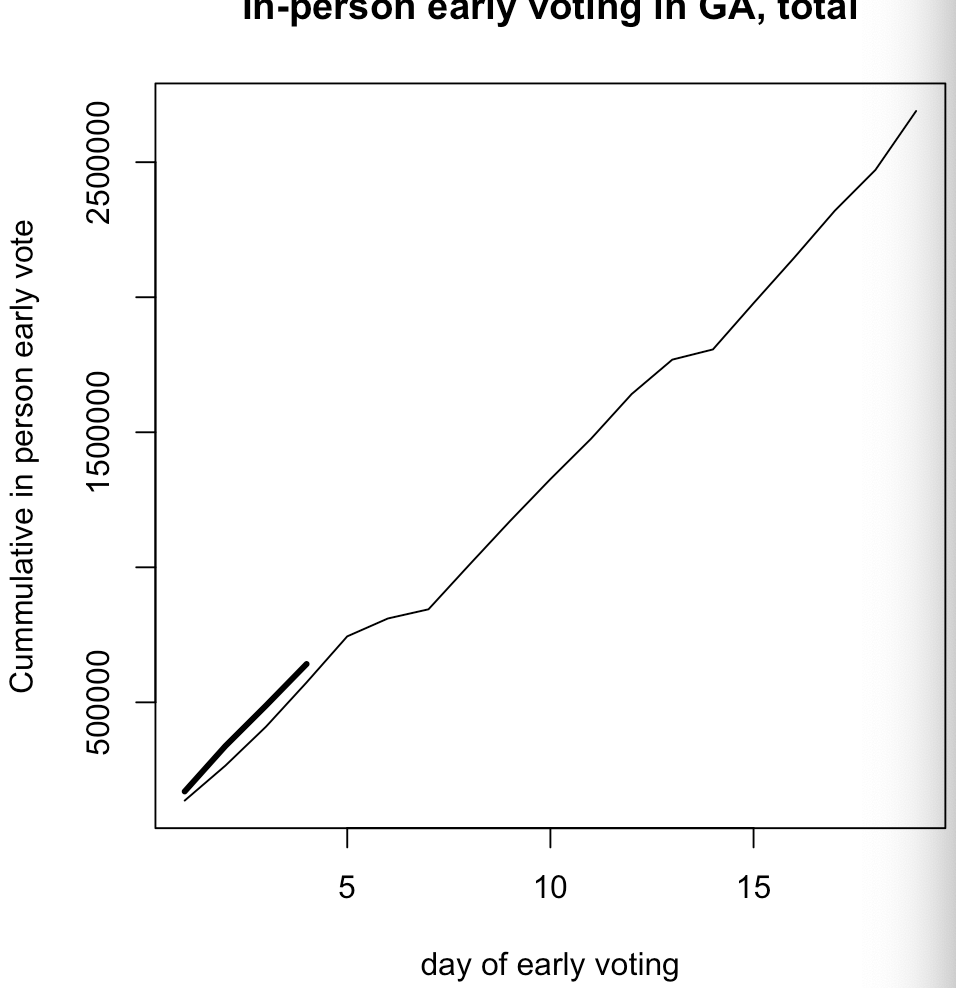
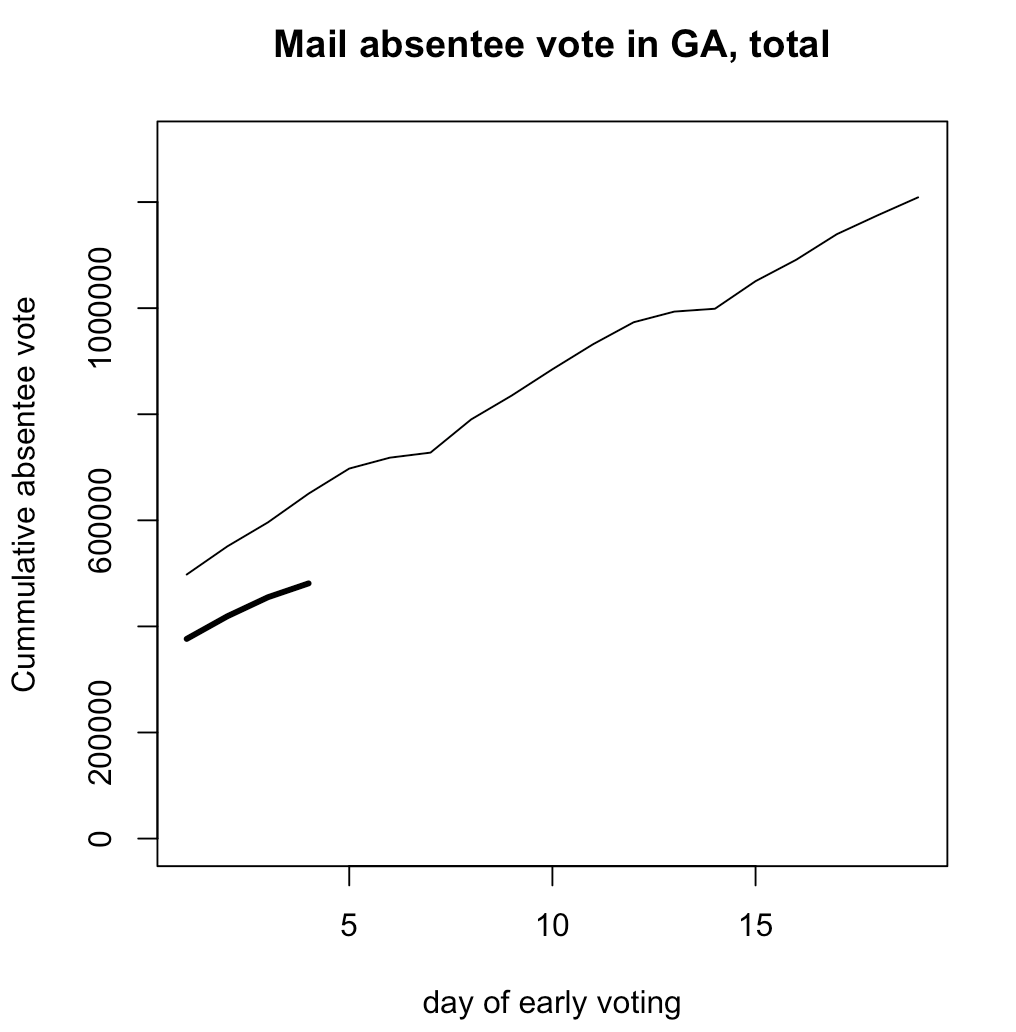
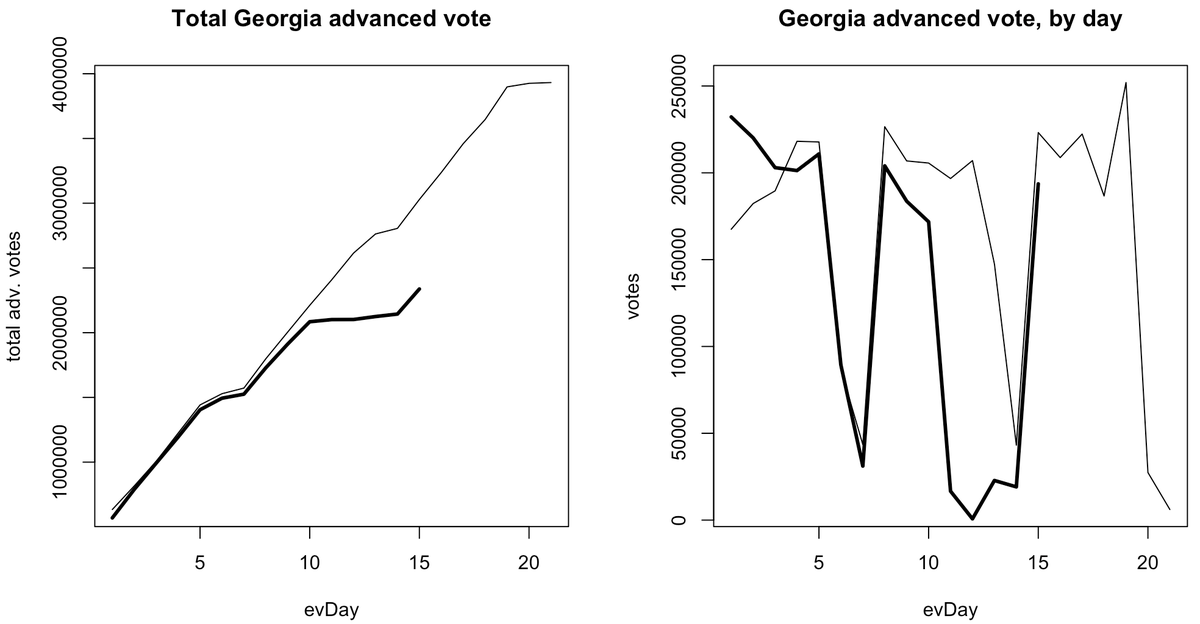
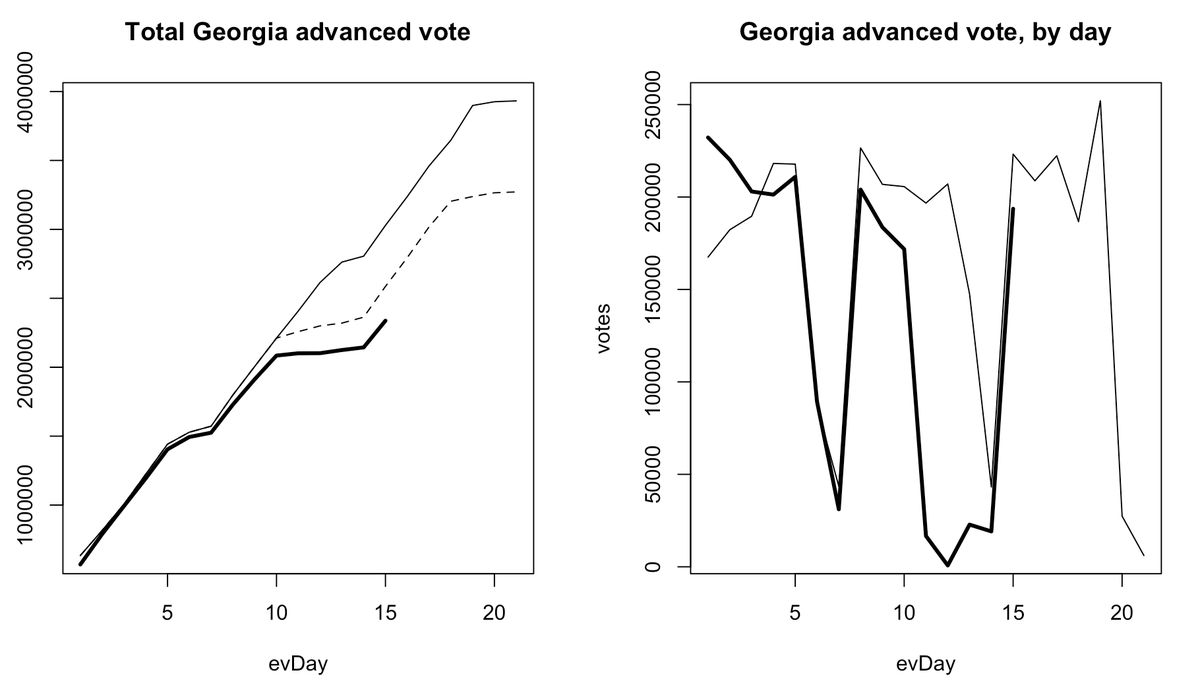
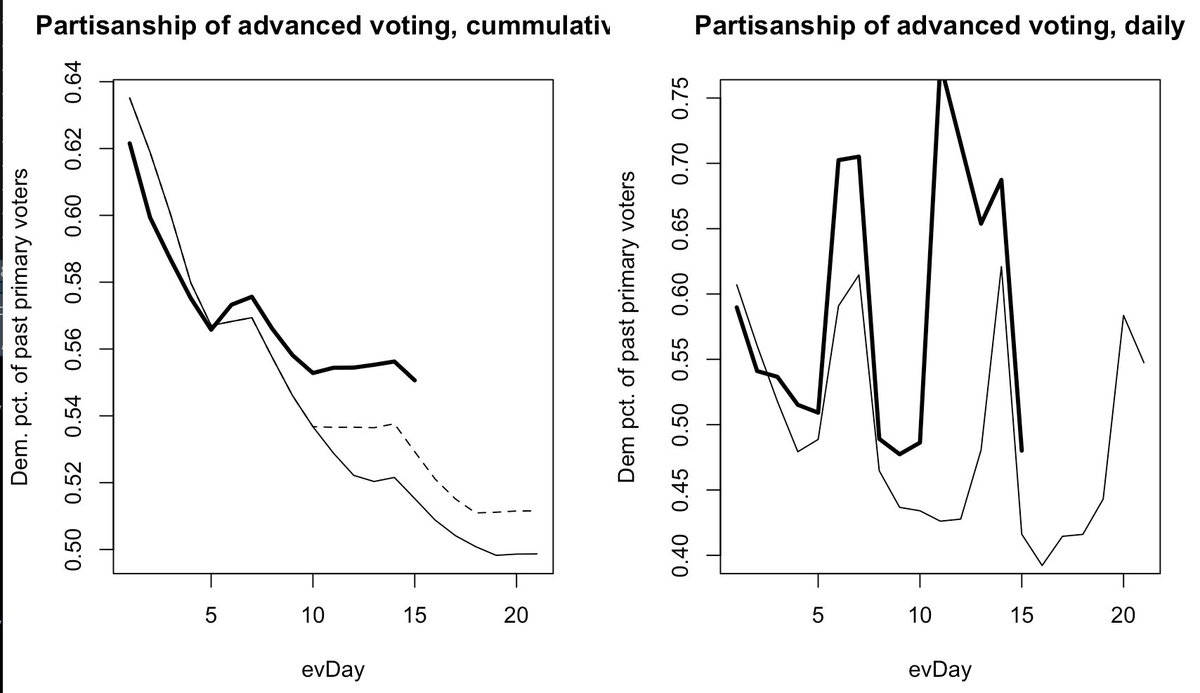
One question I keep getting about the Georgia early voting is about age: isn't the electorate older, and how much does it hurt the Democrats?
So far the answer is 'not really' and 'not at all.'
The first question is easy enough. As of today, youth turnout is basically keeping pace with the general, controlling for the slightly reduced opportunities to vote. This augurs for an unusually young
The second question is more interesting: are the Democrats hurt by lower youth turnout? So far the answer is no, and there are two reasons.
One reason: there's not a *huge* gen. gap. Maybe young voters are D+20 while >65 are R+15. You need a big gap for modest changes to matter.
The second reason is maybe more interesting: the young voters who have voted are just a lot more Democratic than the young voters who turned out at this stage of the general election
By party primary vote history, the 18-29 year olds who have voted so far are D 38, R 12. They were D 33, R 14 in the general at this stage.
So far the answer is 'not really' and 'not at all.'
The first question is easy enough. As of today, youth turnout is basically keeping pace with the general, controlling for the slightly reduced opportunities to vote. This augurs for an unusually young
it's not a very material difference pic.twitter.com/ygdD3hb8b7
— Nate Cohn (@Nate_Cohn) December 29, 2020
The second question is more interesting: are the Democrats hurt by lower youth turnout? So far the answer is no, and there are two reasons.
One reason: there's not a *huge* gen. gap. Maybe young voters are D+20 while >65 are R+15. You need a big gap for modest changes to matter.
The second reason is maybe more interesting: the young voters who have voted are just a lot more Democratic than the young voters who turned out at this stage of the general election
By party primary vote history, the 18-29 year olds who have voted so far are D 38, R 12. They were D 33, R 14 in the general at this stage.
More from Politics


This is partly what makes it impossible to have a constructive conversation nowadays. The stubborn refusal to accept that opposition to Trumpism and GOP nationalism is about more than simply holding different beliefs about things in and of itself. 👇
It's fine for people to hold different beliefs. But that doesn't mean all beliefs deserve equal treatment or tolerance and it doesn't mean intolerance of some beliefs makes a person intolerant of every belief which they don't share.
So if I said I don't think Trumpism deserves to be tolerated because it's just a fresh 21st century coat of cheap paint on a failed, dangerous 20th century ideology (fascism) that doesn't mean I'm intolerant of all beliefs with which I disagree. You'd think this would be obvious.
Another important facet. People who support fascist movements tend to give what they think are valid reasons for supporting them. That doesn't mean anyone is obliged to tolerate fascism or accept their proffered excuse.
Say you joined a neighborhood group that sets up community gardens and does roadside beautification projects. All good, right? Say one day you're having a meeting and you notice the President and exec board of this group are saying some bizarre things about certain neighbors.
No, but you can\u2019t keep labeling half of the country Nazis just because their beliefs are different than yours. Trump has fucked this whole country up in a matter of a few years. No one can even have a constructive conversation without someone getting triggered
— Joshua Savoy (@JoshuaSavoy2) February 11, 2021
It's fine for people to hold different beliefs. But that doesn't mean all beliefs deserve equal treatment or tolerance and it doesn't mean intolerance of some beliefs makes a person intolerant of every belief which they don't share.
So if I said I don't think Trumpism deserves to be tolerated because it's just a fresh 21st century coat of cheap paint on a failed, dangerous 20th century ideology (fascism) that doesn't mean I'm intolerant of all beliefs with which I disagree. You'd think this would be obvious.
Another important facet. People who support fascist movements tend to give what they think are valid reasons for supporting them. That doesn't mean anyone is obliged to tolerate fascism or accept their proffered excuse.
Just because some of the politicians act that way doesn\u2019t mean the whole party are Nazis. Some Republicans just vote that way because of abortion. You can\u2019t keep calling all of them Nazis and expect them to just start listening to your points.
— Joshua Savoy (@JoshuaSavoy2) February 11, 2021
Say you joined a neighborhood group that sets up community gardens and does roadside beautification projects. All good, right? Say one day you're having a meeting and you notice the President and exec board of this group are saying some bizarre things about certain neighbors.

You May Also Like


On the occasion of youtube 20k and Twitter 70k members
A small tribute/gift to members
Screeners
technical screeners - intraday and positional both
before proceeding - i have helped you , can i ask you so that it can help someone else too
thank you
positional one
run - find #stock - draw chart - find levels
1- Stocks closing daily 2% up from 5 days
https://t.co/gTZrYY3Nht
2- Weekly breakout
https://t.co/1f4ahEolYB
3- Breakouts in short term
https://t.co/BI4h0CdgO2
4- Bullish from last 5
intraday screeners
5- 15 minute Stock Breakouts
https://t.co/9eAo82iuNv
6- Intraday Buying seen in the past 15 minutes
https://t.co/XqAJKhLB5G
7- Stocks trading near day's high on 5 min chart with volume BO intraday
https://t.co/flHmm6QXmo
Thank you
A small tribute/gift to members
Screeners
technical screeners - intraday and positional both
before proceeding - i have helped you , can i ask you so that it can help someone else too
thank you
positional one
run - find #stock - draw chart - find levels
1- Stocks closing daily 2% up from 5 days
https://t.co/gTZrYY3Nht
2- Weekly breakout
https://t.co/1f4ahEolYB
3- Breakouts in short term
https://t.co/BI4h0CdgO2
4- Bullish from last 5
intraday screeners
5- 15 minute Stock Breakouts
https://t.co/9eAo82iuNv
6- Intraday Buying seen in the past 15 minutes
https://t.co/XqAJKhLB5G
7- Stocks trading near day's high on 5 min chart with volume BO intraday
https://t.co/flHmm6QXmo
Thank you
