1. Would you agree to a law that required you to get a blood test every time you used the bathroom?
How about a law that required you to slice one millimeter off your penis every time you used ketchup?
I bet you’re thinking “But those laws have no point.”
EXACTLY
Every single large-scale peer reviewed study ever conducted says voter fraud does not exist on a meaningful scale.
Dating back to 1982, there have been less than 500 prosecutions. If we multiplied that by the literal billions of votes cast...
There are LITERALLY more people who claim to be abducted by aliens than there are convictions for in-person voter fraud (Seriously, there was a study)
https://t.co/Uq31NK6zkZ
When Richard Hasen, a law professor and author of the 2012 book “The Voting Wars” looked at 30 years of data in search of voter fraud changing the outcome of an election, he couldn’t find a single instance
https://t.co/61mxuDCqsL
Harvard calculated the probability of of non-citizens voting. Guess what the probablity was?
Zero.
https://t.co/llBVTVPviD
There were 2068 ALLEGATIONS over the last 12 years out of 146 million registered voters.
Zero would have been stopped by voter ID
Which begs the question, why do voter ID laws exist?
To keep Black people from voting
This isn’t my opinion. A federal court said this was the intent of Texas’s voter ID law
https://t.co/RMA9mCJlwf
An entirely different federal court said this about NC’s voter ID law:
Or I’ll let Brian Kemp, who ran elections in Georgia explain it:
https://t.co/ggBxQv2g25
Or maybe Wisconsin Rep Glen Grothman can explain it
https://t.co/9T6JSkHywy
After Black turnout fell in Wisconsin’s 2016 election, the state’s attorney general said he fought to get voter ID ON THE BALLOT TO HELP TRUMP WIN.
https://t.co/951XZbUkjh
3. Just in case you need data-based proof, how about some academic research? Peer-reviewed studies at state universities in Georgia, Kansas, Tex, Indiana, Md, Miss, Ala., Fla and SC all show that Voter ID laws equal voter suppression, specifically for non-white voters
4. Why do they do it?
Well, conventional wisdom is that when fewer people vote, Republicans win and when more people vote, Democrats win.
That is not NECESSARILY true, but...
If you can restrict poor people and minorities from voting it helps Republicans.
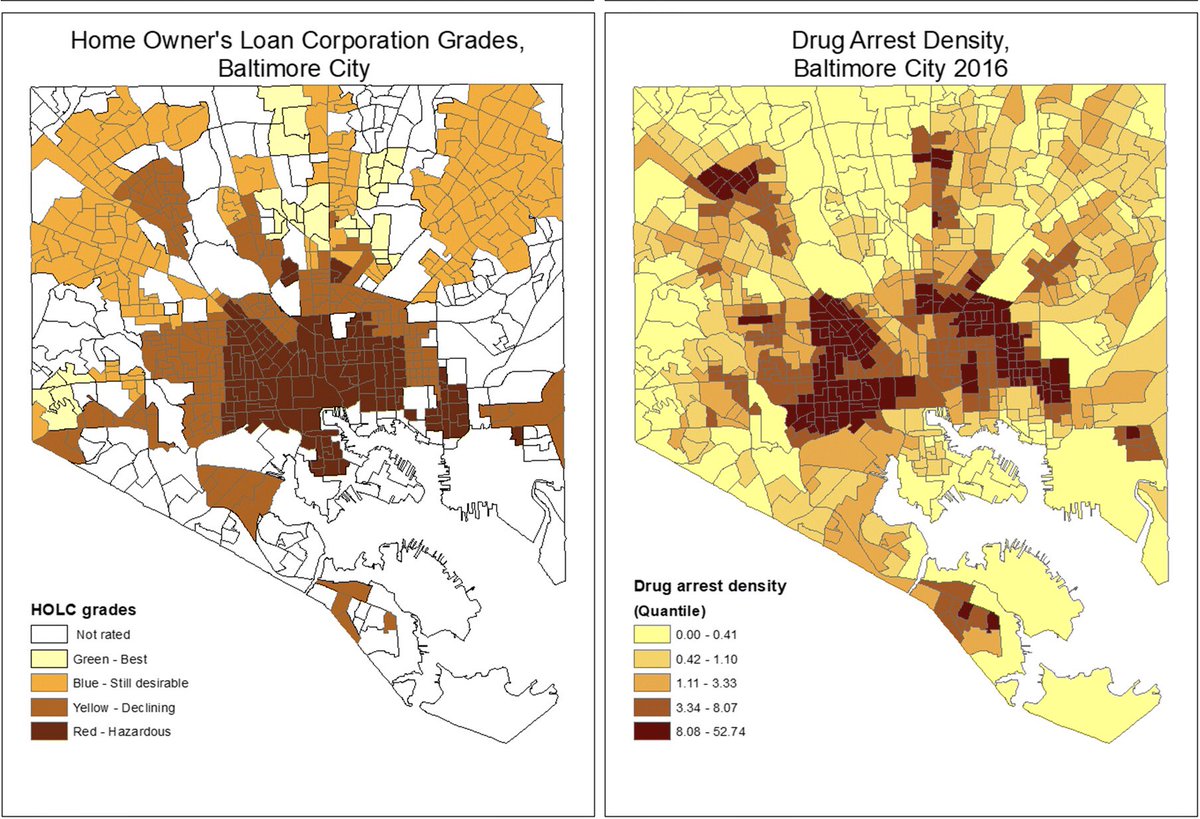
Also, urban residents are less likely to drive. Those areas lean Democratic and skew non-white.
5. But who doesn’t have an ID IN 2020.
See, here’s where your problem lies. You are focused on ID when voter ID specify WHICH KIND of ID.
Most only accept Government issued ID or possibly a student ID from a state school, which means MOST HBCUs are excluded
So whites are most likely to have the CORRECT ID, not just an ID.
5. Finally, this:
I grew up in Hartsville, SC. My mother is/was legally blind so she didn’t have a DL or a car. She literally had no use force an ID.
And
There was no DL office in my hometown
I left for college at 15 which meant I wasn’t old enough to drive. I had a college ID, but had no use for a state ID.
Now I live in Ala.
In 2015, just after enacting voter ID, the state closed MOST of its DMVs. Where did it close them?
In places where Black people live
So to answer your question:
Why do Democrats hate voter ID?
They don’t hate voter ID any more than you hate ketchup.
So why don’t you give up a slice of your dick every time you eat a hamburger?
By the way, I get that
@Mr_Teekay was asking rhetorically, for clarification.
I was being an asshole by using the Royal “you”
Don’t ketchup me, please
Oh, and I didn’t come up with this off the top of my head.
I’ve written about this before:
https://t.co/3YlFVI6djV