
My two cents on the political economics of the first political crisis in Italy… with a shrinking Parliament. What are the incentives for Italian Senators, if they put themselves first and the country’s welfare next? Take the 2018 elected Senate, no subsequent party change
More from Politics


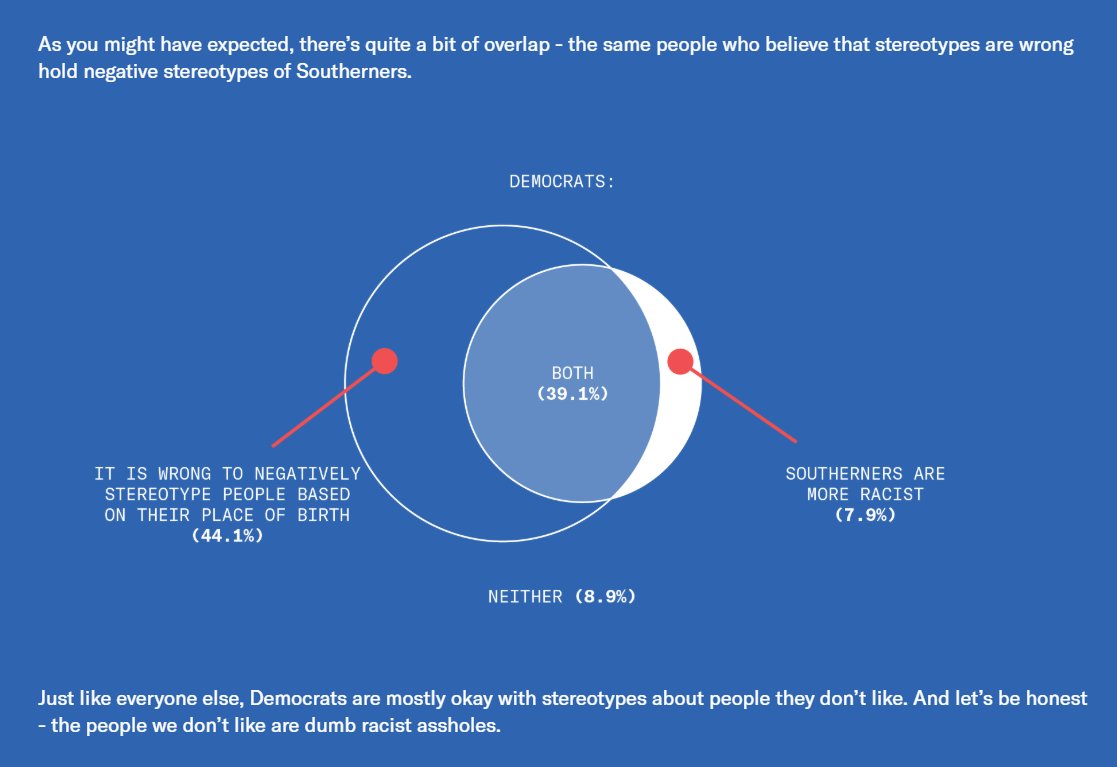
39.1% of Democrats think that it's wrong to negatively stereotype people based on their place of birth... AND that Southerners are more racist. https://t.co/yp1hviLuBB
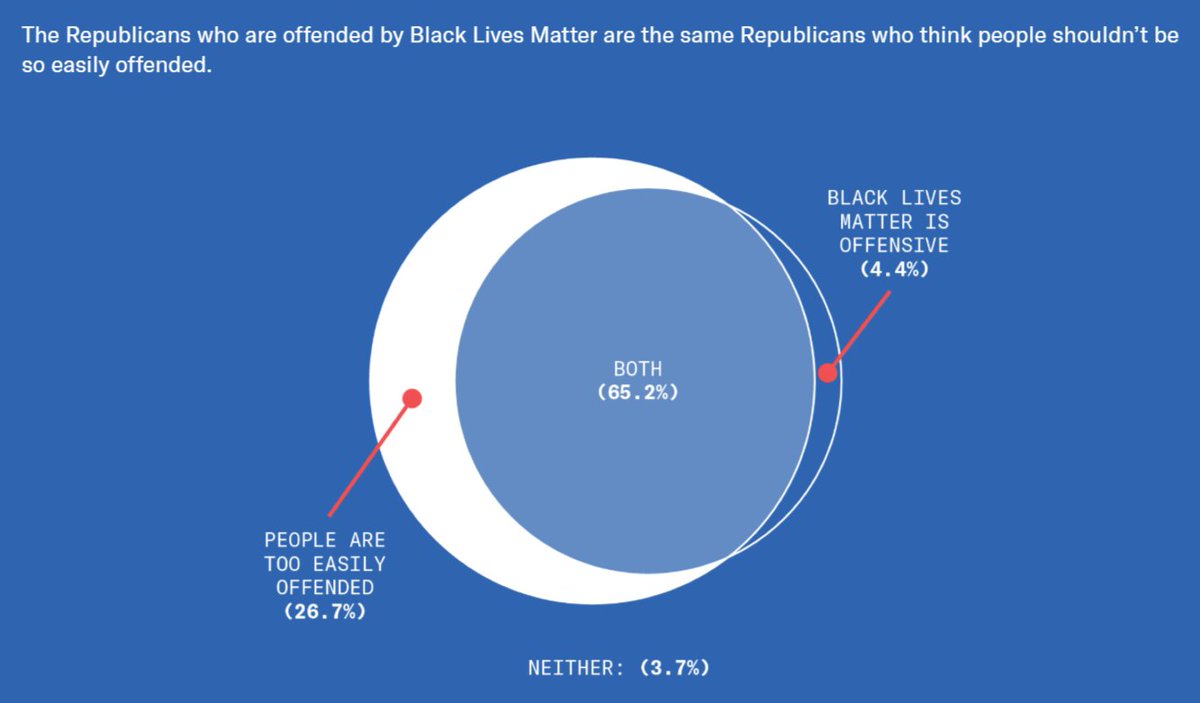
65.2% of Republicans think that people shouldn't be so easily offended... AND that Black Lives Matter is offensive. https://t.co/znmVhqIaL8
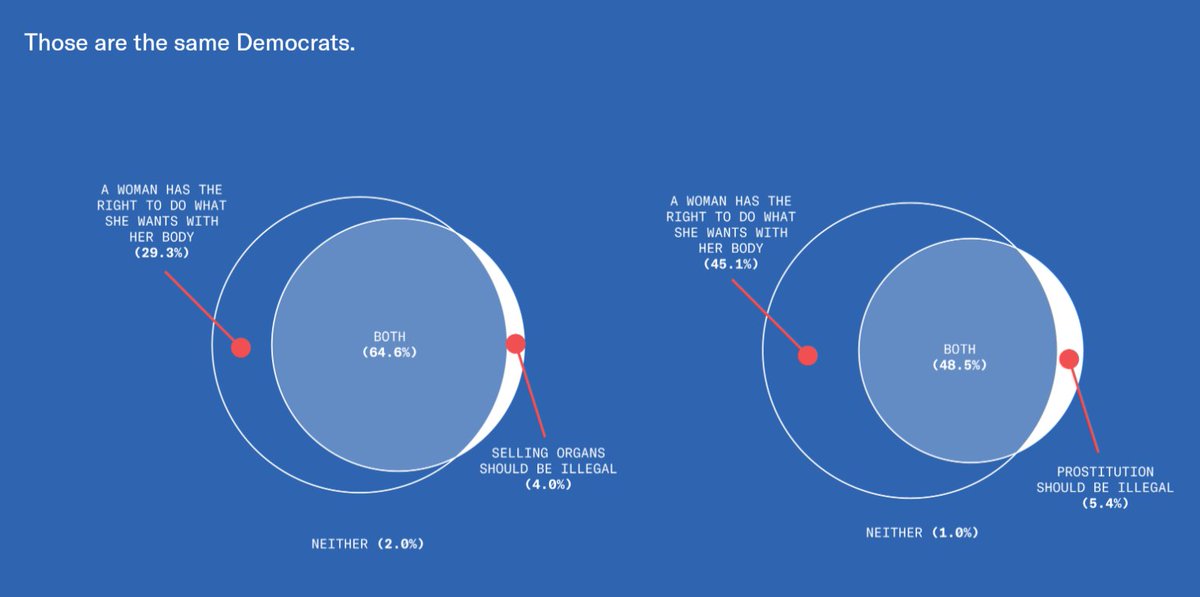
64.6% of Democrats think that a woman has the right to do what she wants with her body... AND that selling organs should be illegal.
48.5% of Democrats think that a woman has the right to do what she wants with her body... AND that prostitution should be illegal.
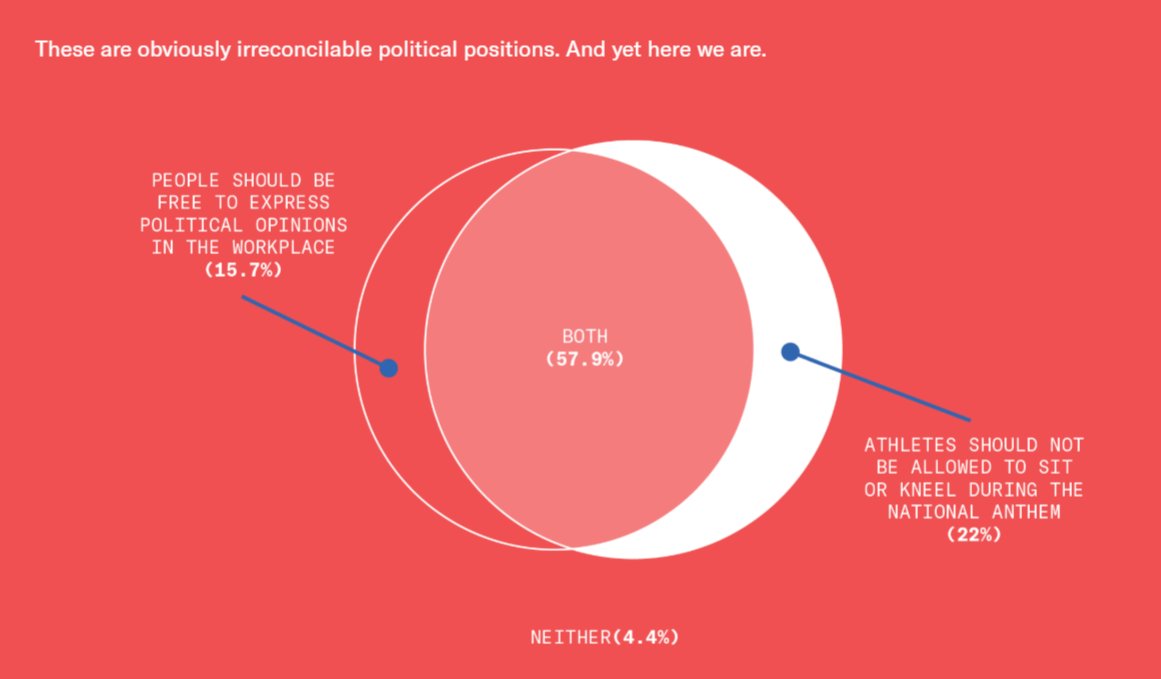
57.9% of Republicans think that people should be free to express their opinions in the workplace... AND that athletes should not be allowed to sit or kneel during the national anthem. https://t.co/ds2ig1NJFr
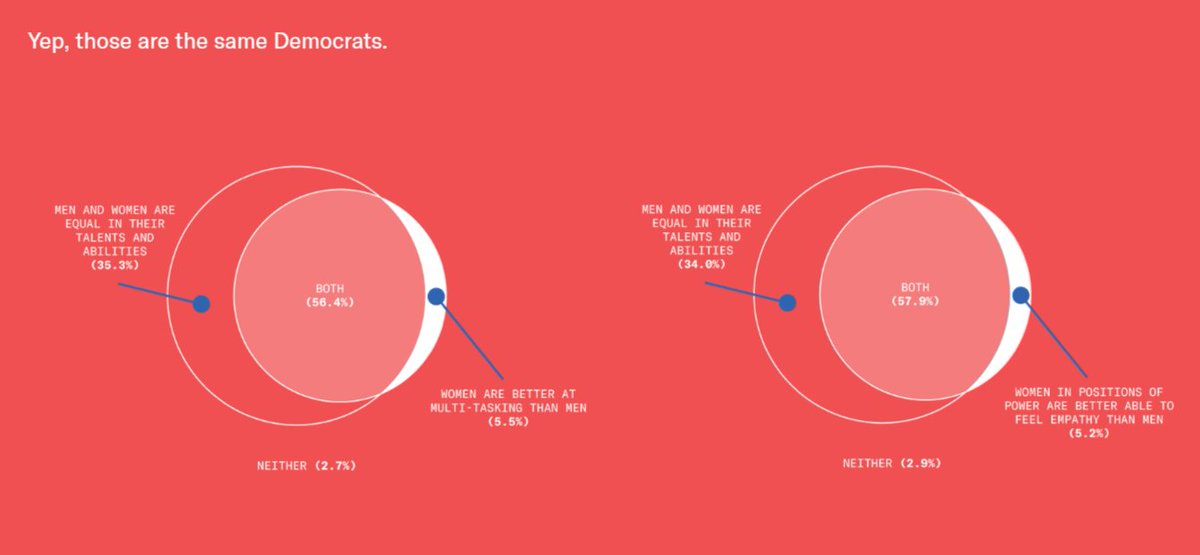
Democrats: Men and women are equal in their talents and abilities. Also, women are superior. https://t.co/bEFSmqQguo
65.2% of Republicans think that people shouldn't be so easily offended... AND that Black Lives Matter is offensive. https://t.co/znmVhqIaL8
64.6% of Democrats think that a woman has the right to do what she wants with her body... AND that selling organs should be illegal.
48.5% of Democrats think that a woman has the right to do what she wants with her body... AND that prostitution should be illegal.
57.9% of Republicans think that people should be free to express their opinions in the workplace... AND that athletes should not be allowed to sit or kneel during the national anthem. https://t.co/ds2ig1NJFr
Democrats: Men and women are equal in their talents and abilities. Also, women are superior. https://t.co/bEFSmqQguo


You May Also Like












To people who are under the impression that you can get rich quickly by working on an app, here are the stats for https://t.co/az8F12pf02
📈 ~12000 vistis
☑️ 109 transactions
💰 353€ profit (285 after tax)
I have spent 1.5 months on this app. You can make more $ in 2 days.
🤷♂️

I'm still happy that I launched a paid app bcs it involved extra work:
- backend for processing payments (+ permissions, webhooks, etc)
- integration with payment processor
- UI for license activation in Electron
- machine activation limit
- autoupdates
- mailgun emails
etc.
These things seemed super scary at first. I always thought it was way too much work and something would break. But I'm glad I persisted. So far the only problem I have is that mailgun is not delivering the license keys to certain domains like https://t.co/6Bqn0FUYXo etc. 👌
omg I just realized that me . com is an Apple domain, of course something wouldn't work with these dicks
📈 ~12000 vistis
☑️ 109 transactions
💰 353€ profit (285 after tax)
I have spent 1.5 months on this app. You can make more $ in 2 days.
🤷♂️
I'm still happy that I launched a paid app bcs it involved extra work:
- backend for processing payments (+ permissions, webhooks, etc)
- integration with payment processor
- UI for license activation in Electron
- machine activation limit
- autoupdates
- mailgun emails
etc.
These things seemed super scary at first. I always thought it was way too much work and something would break. But I'm glad I persisted. So far the only problem I have is that mailgun is not delivering the license keys to certain domains like https://t.co/6Bqn0FUYXo etc. 👌
omg I just realized that me . com is an Apple domain, of course something wouldn't work with these dicks