Regarding the MFI divergence indicator those who are asking :
1. Link not working on TV
2. Not showing on spot Nifty/BankNifty
3. Code showing errors
All your answers are there in the original thread. Kindly do not expect spoon feeding .
SOLVE YOUR PROBLEMS ON YOUR OWN
More from Subhadip Nandy
This friend had trouble making money in options though he was directionally right. Let us see how a basic understanding of greeks would have helped him, This thread will be about two attributes of option pricing, extrinsic value and theta
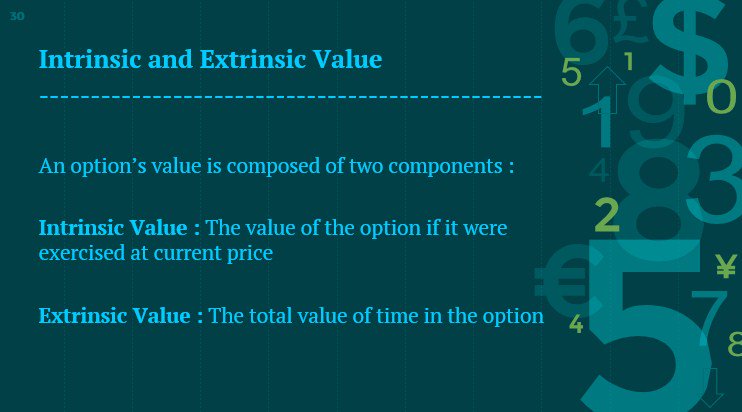
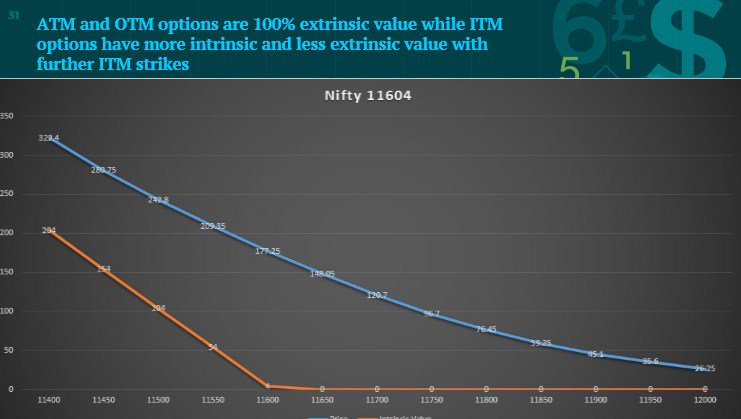
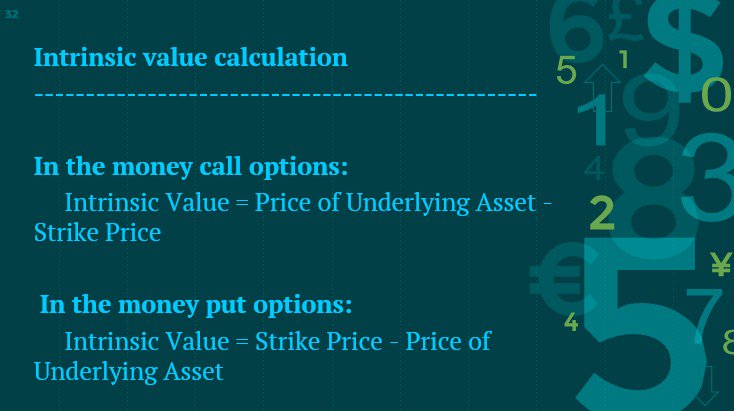
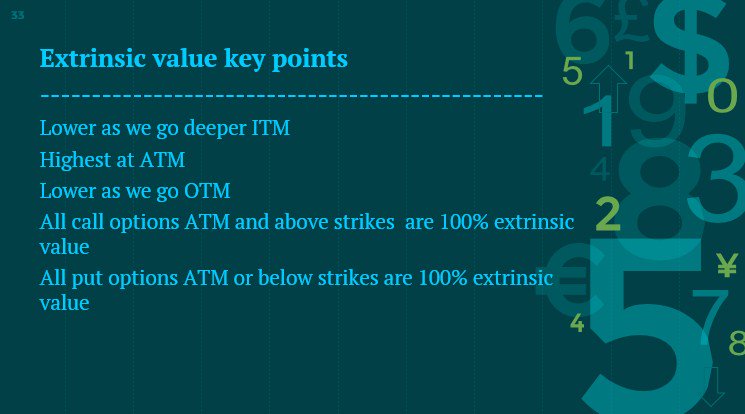
An option has two parts, intrinsic and extrinsic value. Think of a pack of Lay's potato chips. When you buy and open the pack, what you find is some chips and a lot of air. Intrinsic value is the chips, extrinsic value is air
https://t.co/8ZPv4ZnCiL
https://t.co/icWmqSLENW
https://t.co/vHA6azEmbQ
Sir, today #niftybank was continue making new high, but 31700 CE was struggling to go up. I bought at 140, some how managed to sell it at 200. I m ok, in identifying directional edge but options behave differently.
— Vikash Shrivastava\U0001f1ee\U0001f1f3 (@VikashS28) May 27, 2019
An option has two parts, intrinsic and extrinsic value. Think of a pack of Lay's potato chips. When you buy and open the pack, what you find is some chips and a lot of air. Intrinsic value is the chips, extrinsic value is air
https://t.co/8ZPv4ZnCiL
https://t.co/icWmqSLENW
https://t.co/vHA6azEmbQ
Ok here is the explanation. Grab a cup of coffee and read on. If you have not read/noticed this, you will see intraday options movement in a new light.
Say we have two options, one 50 delta ATM options and another 30 delta OTM option. Normally for a 100 point move, the ATM option will move 50 points and the OTM option will move 30 points. But in a high volatile environment, the OTM option will also move nearly 50 points
To understand why this happens, first understand why an ATM option is 50 delta. An ATM option has the probability of 50% of expiring as ITM. The price just has to close a rupee above the strike for the CE to be ITM and vice versa for PEs
Now think of a highly volatile day like today. If someone is asked where the BNF will close for the day or expiry, no one can answer. BNF can close freakin anywhere, That makes every option of an equal probability of being ITM. So all options have a 50% probability of being ITM
Hence, when a huge volatile move starts, all OTM options behave like ATM options. This phenomenon was first observed in the Black Monday crash of 1987 at Wall Street, which also gave rise to the volatility skew/smirk
In a high IV environment or when the market is very volatile
— Subhadip Nandy (@SubhadipNandy16) January 21, 2022
" OTM options will behave like ATM options", one will get almost the same delta movement
Say we have two options, one 50 delta ATM options and another 30 delta OTM option. Normally for a 100 point move, the ATM option will move 50 points and the OTM option will move 30 points. But in a high volatile environment, the OTM option will also move nearly 50 points
To understand why this happens, first understand why an ATM option is 50 delta. An ATM option has the probability of 50% of expiring as ITM. The price just has to close a rupee above the strike for the CE to be ITM and vice versa for PEs
Now think of a highly volatile day like today. If someone is asked where the BNF will close for the day or expiry, no one can answer. BNF can close freakin anywhere, That makes every option of an equal probability of being ITM. So all options have a 50% probability of being ITM
Hence, when a huge volatile move starts, all OTM options behave like ATM options. This phenomenon was first observed in the Black Monday crash of 1987 at Wall Street, which also gave rise to the volatility skew/smirk
This is actually an interesting question and a correct observation. Many people before you also have made this observation, so I am going to explain this the best I can
I am trading since badla days. There being long meant you had to pay badla / interest and being short meant you received badla. Similar to an options buyer having theta burn and an options seller being theta positive. So the bias among pros were being short bit
Now, as of now I am an options buyer. All my strategies are geared towards options buying, so I have a theta burn continuosly. I do use strategies to cover that a bit, but still the burn is there
Now, let's consider how an options buyer makes money. His enemy is theta, vega can be friend or enemy ( coming to this in next tweet) , Delta is whether his view is right or wrong
Now say I am bullish on BNF and I buy calls and I am directionally correct . As BNF goes up, generally IV will decrease. This leads to a double whammy.
1. Vega hurts me
2. Theta decay increases.
So, the position does give money, but slowly
Ek baat to hai dada, u like mandi over teji.. Don't u... I mean u play both sides bt still... Im ryt \U0001f911\U0001f911
— VaibhavSharma (@vaibhav2631) September 23, 2022
I am trading since badla days. There being long meant you had to pay badla / interest and being short meant you received badla. Similar to an options buyer having theta burn and an options seller being theta positive. So the bias among pros were being short bit
Now, as of now I am an options buyer. All my strategies are geared towards options buying, so I have a theta burn continuosly. I do use strategies to cover that a bit, but still the burn is there
Now, let's consider how an options buyer makes money. His enemy is theta, vega can be friend or enemy ( coming to this in next tweet) , Delta is whether his view is right or wrong
Now say I am bullish on BNF and I buy calls and I am directionally correct . As BNF goes up, generally IV will decrease. This leads to a double whammy.
1. Vega hurts me
2. Theta decay increases.
So, the position does give money, but slowly