⚡️ The SaaS SEO MBA ⚡️
The internet's best resources of SEO for SaaS companies.
https://t.co/ojxkjoPoRP
Here's what's inside...
More from Marketing

Here's a public list of marketing tools I recommend:
↓
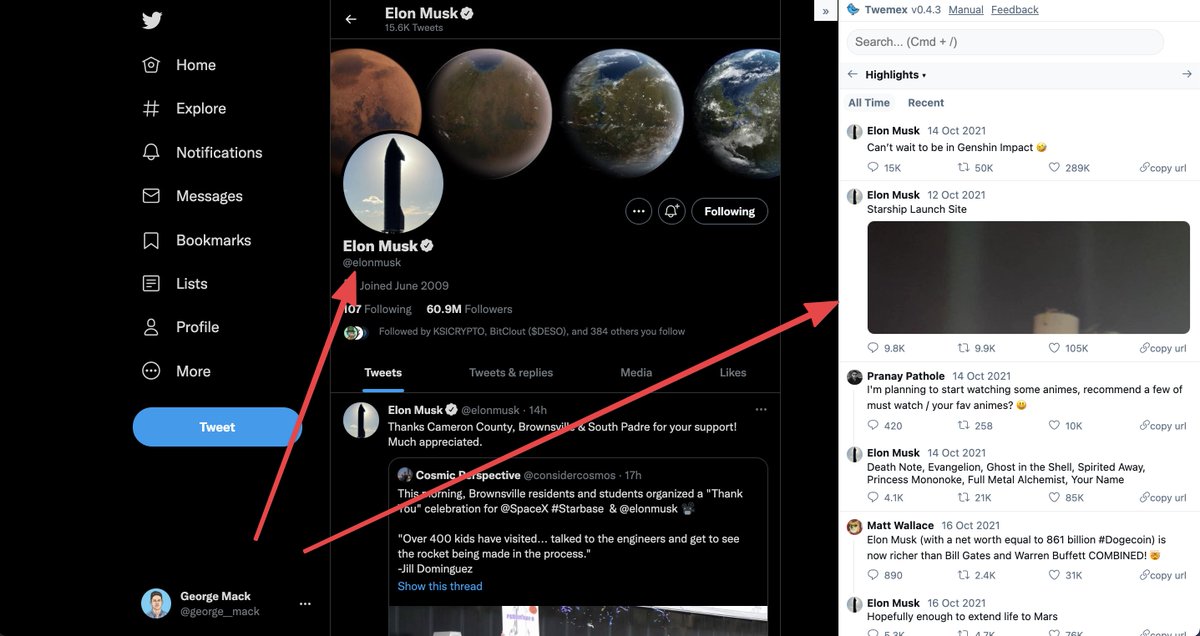
1. Twemex
Twitter Advanced search on steroids.
Whenever you visit someone's account, see their most popular Tweets of all time in order.
H/T @Julian for this
https://t.co/8P2YJ3Jrf0
2. Good UI
Historical log of successful and failed A/B tests from the likes of Amazon, Netflix, Google
3. Blisk
See how your website looks across every device.
Got an Android user complaining how your website looks but you only have an iPhone? Use Blisk.
4. Really Good Emails
Struggling with email ideas?
Library of thousands of quality emails to get inspo from.


And in 1982 he writes a 38 lesson manifesto titled
"How to create advertising that sells"
Here are the top 7 tips that you can use today:
We Make the Wrong Promise
A promise is not a random claim or stupid slogan.
It is a benefit for the consumer.
And the product delivers that benefit.
Awards are Dumb
"Pursuing creative awards seduces creative people from pursuing sales."
Translation:
If your job is to sell, focus 100% of your energy on selling the product.
Not selling yourself to voters to win an award.
"Nobody was ever bored into buying a product."
Give it some magic and charm.
The iPhone vs. Blackberry is a modern
Steve Jobs killed BlackBerry.
— Chris Hladczuk (@chrishlad) December 7, 2021
By creating a cult and inventing new rules
Here's the breakdown and why it matters\U0001f447
Hit the Headline
"On average, 5 times as many people read the headline vs. the body."
People are scared of writing clickbait titles.
But the truth is that clickbait exists only when you fail to keep your promise to the reader.
h/t @nicolascole77
You May Also Like

Like company moats, your personal moat should be a competitive advantage that is not only durable—it should also compound over time.
Characteristics of a personal moat below:
I'm increasingly interested in the idea of "personal moats" in the context of careers.
— Erik Torenberg (@eriktorenberg) November 22, 2018
Moats should be:
- Hard to learn and hard to do (but perhaps easier for you)
- Skills that are rare and valuable
- Legible
- Compounding over time
- Unique to your own talents & interests https://t.co/bB3k1YcH5b
2/ Like a company moat, you want to build career capital while you sleep.
As Andrew Chen noted:
People talk about \u201cpassive income\u201d a lot but not about \u201cpassive social capital\u201d or \u201cpassive networking\u201d or \u201cpassive knowledge gaining\u201d but that\u2019s what you can architect if you have a thing and it grows over time without intensive constant effort to sustain it
— Andrew Chen (@andrewchen) November 22, 2018
3/ You don’t want to build a competitive advantage that is fleeting or that will get commoditized
Things that might get commoditized over time (some longer than
Things that look like moats but likely aren\u2019t or may fade:
— Erik Torenberg (@eriktorenberg) November 22, 2018
- Proprietary networks
- Being something other than one of the best at any tournament style-game
- Many "awards"
- Twitter followers or general reach without "respect"
- Anything that depends on information asymmetry https://t.co/abjxesVIh9
4/ Before the arrival of recorded music, what used to be scarce was the actual music itself — required an in-person artist.
After recorded music, the music itself became abundant and what became scarce was curation, distribution, and self space.
5/ Similarly, in careers, what used to be (more) scarce were things like ideas, money, and exclusive relationships.
In the internet economy, what has become scarce are things like specific knowledge, rare & valuable skills, and great reputations.