
#MahaPeriyava Narrated by Prof S.Kalyanaraman, Neurosurgeon, Chennai
Compiled by Jagadguru Sri Maha Periyava - Kanchi Paramacharya/Fb
By the blessings of Sri Maha Periyava, I have been able to do brain operations in India continuously in the government General Hospital in Madras
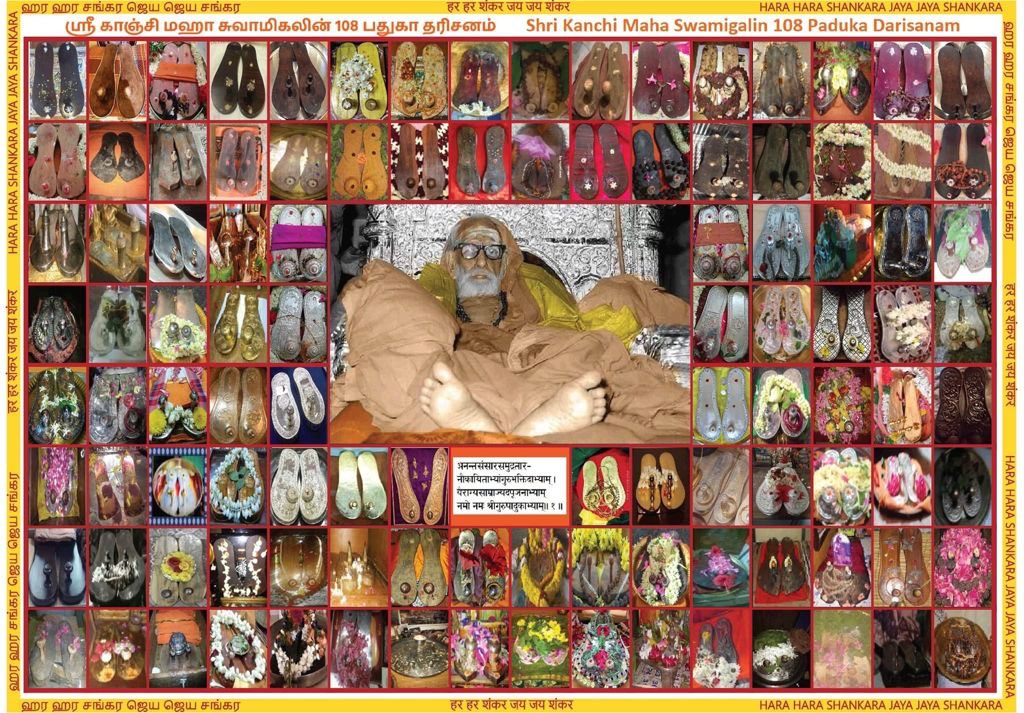
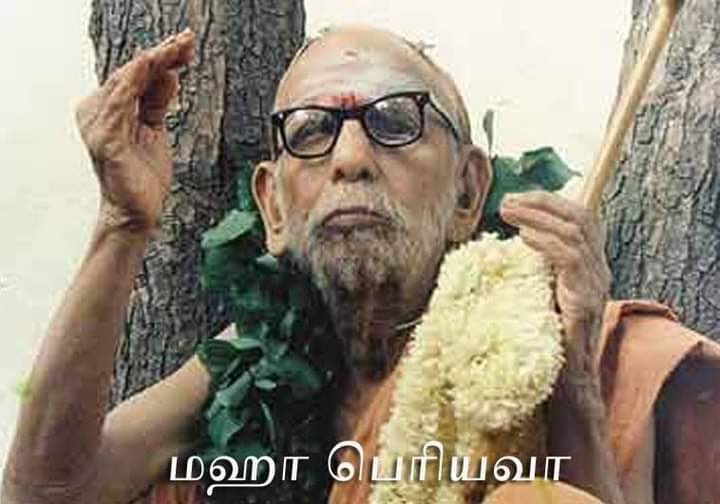
His Holiness, while addressing the crowd of devotees: “This elderly gentleman had come from Nigeria to ask me if he
His Holiness: “How many versions of Ramayanam are there in India?”
SKR: “Probably
His Holiness: “There are about 300 languages and dialects in this country and probably an equal number of versions of Ramayanam. How did Rama and Sita return from Lanka to Ayodhya?”
SKR: By Pushpakavimanam.
His Holiness: “That is right. It is very interesting
Then He
His Holiness: “This man was a historian. He lived in India at the time of early Chola kings. At that time one of the daughters of the reigning King could not get suitable bridegroom in
SKR: Yes.
HH: “Have you been to the famous Buddha temple there, which contains many pictures depicting the story of Ramayana in the
SKR: Yes.
HH: “So the Chola king in south India chose a prince in Cambodia as his son-in-law. The prince came to India and married the princess. The royal couple accompanied by a large retinue of purohits, maids in waiting and servants returned by ship
Then His Holiness asked me: “How long does it take to go to America nowadays?”
SKR: It would take about eighteen hours and if there is a break of journey in London about twenty four hours.
Then His Holiness enlightened us:
“That is the real
This is again a remarkable example of how His Holiness interprets the scriptures and gives simple anecdotes step by step to illustrate the point discussed, to a lay audience. Needless to say I was very much relieved
His Holiness continued:
“Some people say that you should do prayaschittam only if you go to another
SKR: Yes.
His Holiness: “No, Africa and Asia form single large mass of land. Only about a hundred years ago when the Suez Canal was dug by the Englishman, it technically became an island. In fact Australia, Asia, Africa and Europe were all one large
Here again was another example of the vast knowledge of history, geography and geology that His Holiness
More from அன்பெழில்


You May Also Like




1/ Some initial thoughts on personal moats:
Like company moats, your personal moat should be a competitive advantage that is not only durable—it should also compound over time.
Characteristics of a personal moat below:
2/ Like a company moat, you want to build career capital while you sleep.
As Andrew Chen noted:
3/ You don’t want to build a competitive advantage that is fleeting or that will get commoditized
Things that might get commoditized over time (some longer than
4/ Before the arrival of recorded music, what used to be scarce was the actual music itself — required an in-person artist.
After recorded music, the music itself became abundant and what became scarce was curation, distribution, and self space.
5/ Similarly, in careers, what used to be (more) scarce were things like ideas, money, and exclusive relationships.
In the internet economy, what has become scarce are things like specific knowledge, rare & valuable skills, and great reputations.
Like company moats, your personal moat should be a competitive advantage that is not only durable—it should also compound over time.
Characteristics of a personal moat below:
I'm increasingly interested in the idea of "personal moats" in the context of careers.
— Erik Torenberg (@eriktorenberg) November 22, 2018
Moats should be:
- Hard to learn and hard to do (but perhaps easier for you)
- Skills that are rare and valuable
- Legible
- Compounding over time
- Unique to your own talents & interests https://t.co/bB3k1YcH5b
2/ Like a company moat, you want to build career capital while you sleep.
As Andrew Chen noted:
People talk about \u201cpassive income\u201d a lot but not about \u201cpassive social capital\u201d or \u201cpassive networking\u201d or \u201cpassive knowledge gaining\u201d but that\u2019s what you can architect if you have a thing and it grows over time without intensive constant effort to sustain it
— Andrew Chen (@andrewchen) November 22, 2018
3/ You don’t want to build a competitive advantage that is fleeting or that will get commoditized
Things that might get commoditized over time (some longer than
Things that look like moats but likely aren\u2019t or may fade:
— Erik Torenberg (@eriktorenberg) November 22, 2018
- Proprietary networks
- Being something other than one of the best at any tournament style-game
- Many "awards"
- Twitter followers or general reach without "respect"
- Anything that depends on information asymmetry https://t.co/abjxesVIh9
4/ Before the arrival of recorded music, what used to be scarce was the actual music itself — required an in-person artist.
After recorded music, the music itself became abundant and what became scarce was curation, distribution, and self space.
5/ Similarly, in careers, what used to be (more) scarce were things like ideas, money, and exclusive relationships.
In the internet economy, what has become scarce are things like specific knowledge, rare & valuable skills, and great reputations.
1/ Here’s a list of conversational frameworks I’ve picked up that have been helpful.
Please add your own.
2/ The Magic Question: "What would need to be true for you
3/ On evaluating where someone’s head is at regarding a topic they are being wishy-washy about or delaying.
“Gun to the head—what would you decide now?”
“Fast forward 6 months after your sabbatical--how would you decide: what criteria is most important to you?”
4/ Other Q’s re: decisions:
“Putting aside a list of pros/cons, what’s the *one* reason you’re doing this?” “Why is that the most important reason?”
“What’s end-game here?”
“What does success look like in a world where you pick that path?”
5/ When listening, after empathizing, and wanting to help them make their own decisions without imposing your world view:
“What would the best version of yourself do”?
Please add your own.
2/ The Magic Question: "What would need to be true for you
1/\u201cWhat would need to be true for you to\u2026.X\u201d
— Erik Torenberg (@eriktorenberg) December 4, 2018
Why is this the most powerful question you can ask when attempting to reach an agreement with another human being or organization?
A thread, co-written by @deanmbrody: https://t.co/Yo6jHbSit9
3/ On evaluating where someone’s head is at regarding a topic they are being wishy-washy about or delaying.
“Gun to the head—what would you decide now?”
“Fast forward 6 months after your sabbatical--how would you decide: what criteria is most important to you?”
4/ Other Q’s re: decisions:
“Putting aside a list of pros/cons, what’s the *one* reason you’re doing this?” “Why is that the most important reason?”
“What’s end-game here?”
“What does success look like in a world where you pick that path?”
5/ When listening, after empathizing, and wanting to help them make their own decisions without imposing your world view:
“What would the best version of yourself do”?