A list of questions and checks to help you see if you should automate a process or not.

I've had a lot of people asking for this.

This is just what I use.

1st half are open-ended questions for exploration
2nd half are rankings for prioritization.

Hope this helps you!

1. Do I understand what I am automating?

Often times we think we are automating a process, but instead, we may be automating a destructive pattern.

Do it manually for a few weeks.

Dont perpetuate bad actions.

Go through the learning as a person, automate what you learned.
Example:

If you are filtering people for hire, and you automate right off the bat, you may automate based on the wrong criteria.

Its better to filter manually, do some calls, have some interviews, and adjust the process a bit until you are automating the right thing.
2. What do I gain?

Automating, just to automate is not useful. It just creates another system to maintain without any upside.

Each automation adds to the complexity of your business process. As complexity increases, so does areas for breakage and unintended consequences.
3. What do I lose?

Every automation results in loss.

Proximity to the process.

You may miss a "regime shift" as things change.

You may lose closeness to your customers and personal interaction.

You miss an understanding of your operation as it grows or changes.
4. What learning will I miss?

Related to the above. When you do something manually, you auto-adjust based on changes.

When automated, the environment, rules, practices, culture, or something else slowly moves over time.

You won't be there to learn and adjust.

Have a plan.
-- If after all of this you still wish to automate, move to prioritizing and filtering your ideas and potential projects --

For this I focus on

Impact
Strategy
Risk
Cost
Return
1. What is the impact?

- What operational function is being affected
- How much of a difference/impact will this make for stakeholders? (employees, customers, suppliers)
- What is the targeted outcome for the stakeholders? (otherwise, you won't know if its working or not)
2. Does it align with the Strategy?

Every company should have a few targetted strategic outcomes they are working towards?

If the automation doesn't further these, it could be a distraction. Rank how well it fits in with the few strategic objectives you have.

Rank for each obj
3. Does it increase value?

Will this impact any of the levers for value?

- EBITDA / Cash Flow
- Multiple Expansion
- Customer Perception
- Competitiveness / Moat
4. What are the costs?

- Time Required
- Maintenance time and energy required to keep up and running
- Upfront investment required
- ongoing costs required?
5. What are the risks?

- Distraction or a focusing agent?
- How much specialization is needed, and does it exist in-house?
Based on these, you can
1. Rank
2. Combine into ratings for each category
3. Rank projects

Work on those that are
- strategically aligned
- impactful
- increase value
- are low risk/cost related to the upside

You can really use this for any operational enhancement project!

More from Life

"I lied about my basic beliefs in order to keep a prestigious job. Now that it will be zero-cost to me, I have a few things to say."


We know that elite institutions like the one Flier was in (partial) charge of rely on irrelevant status markers like private school education, whiteness, legacy, and ability to charm an old white guy at an interview.

Harvard's discriminatory policies are becoming increasingly well known, across the political spectrum (see, e.g., the recent lawsuit on discrimination against East Asian applications.)

It's refreshing to hear a senior administrator admits to personally opposing policies that attempt to remedy these basic flaws. These are flaws that harm his institution's ability to do cutting-edge research and to serve the public.

Harvard is being eclipsed by institutions that have different ideas about how to run a 21st Century institution. Stanford, for one; the UC system; the "public Ivys".

You May Also Like

Rig Ved 1.36.7

To do a Namaskaar or bow before someone means that you are humble or without pride and ego. This means that we politely bow before you since you are better than me. Pranipaat(प्राणीपात) also means the same that we respect you without any vanity.

1/9


Surrendering False pride is Namaskaar. Even in devotion or bhakti we say the same thing. We want to convey to Ishwar that we have nothing to offer but we leave all our pride and offer you ourselves without any pride in our body. You destroy all our evil karma.

2/9

We bow before you so that you assimilate us and make us that capable. Destruction of our evils and surrender is Namaskaar. Therefore we pray same thing before and after any big rituals.

3/9

तं घे॑मि॒त्था न॑म॒स्विन॒ उप॑ स्व॒राज॑मासते ।
होत्रा॑भिर॒ग्निं मनु॑षः॒ समिं॑धते तिति॒र्वांसो॒ अति॒ स्रिधः॑॥

Translation :

नमस्विनः - To bow.

स्वराजम् - Self illuminating.

तम् - His.

घ ईम् - Yours.

इत्था - This way.

उप - Upaasana.

आसते - To do.

स्त्रिधः - For enemies.

4/9

अति तितिर्वांसः - To defeat fast.

मनुषः - Yajman.

होत्राभिः - In seven numbers.

अग्निम् - Agnidev.

समिन्धते - Illuminated on all sides.

Explanation : Yajmans bow(do Namaskaar) before self illuminating Agnidev by making the offerings of Havi.

5/9
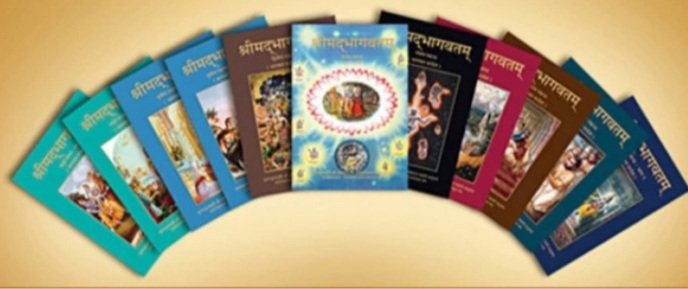
IMPORTANCE, ADVANTAGES AND CHARACTERISTICS OF BHAGWAT PURAN

It was Ved Vyas who edited the eighteen thousand shlokas of Bhagwat. This book destroys all your sins. It has twelve parts which are like kalpvraksh.

In the first skandh, the importance of Vedvyas


and characters of Pandavas are described by the dialogues between Suutji and Shaunakji. Then there is the story of Parikshit.
Next there is a Brahm Narad dialogue describing the avtaar of Bhagwan. Then the characteristics of Puraan are mentioned.

It also discusses the evolution of universe.(
https://t.co/2aK1AZSC79 )

Next is the portrayal of Vidur and his dialogue with Maitreyji. Then there is a mention of Creation of universe by Brahma and the preachings of Sankhya by Kapil Muni.


In the next section we find the portrayal of Sati, Dhruv, Pruthu, and the story of ancient King, Bahirshi.
In the next section we find the character of King Priyavrat and his sons, different types of loks in this universe, and description of Narak. ( https://t.co/gmDTkLktKS )


In the sixth part we find the portrayal of Ajaamil ( https://t.co/LdVSSNspa2 ), Daksh and the birth of Marudgans( https://t.co/tecNidVckj )

In the seventh section we find the story of Prahlad and the description of Varnashram dharma. This section is based on karma vaasna.