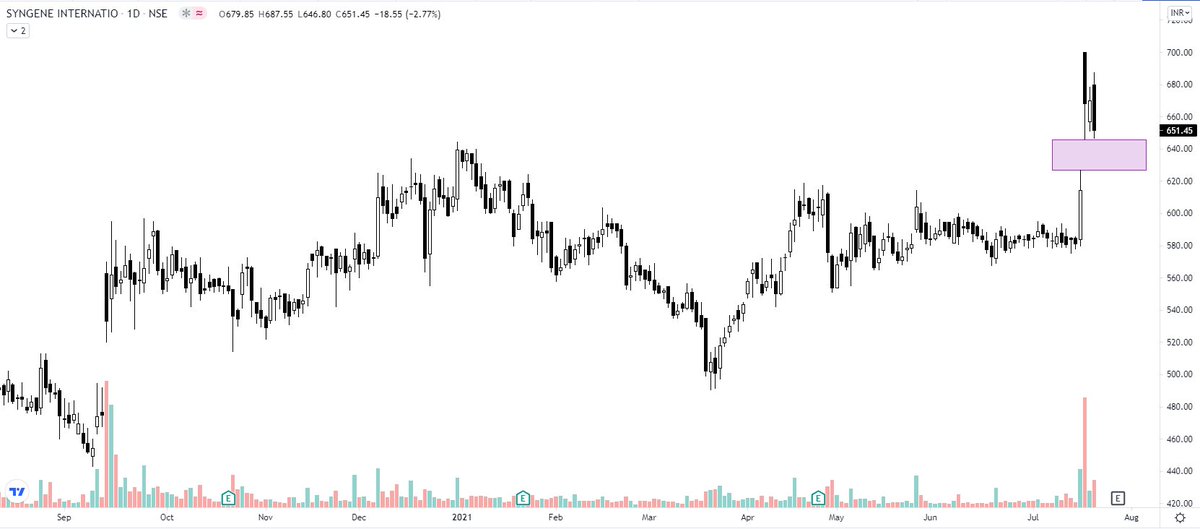
Jubilant Ingrevia - updated chart. No rocket science.
695 to 730 https://t.co/MbxPEvUYgl

Jubilant Ingrevia - will be looking to scale this up further. Pyramiding. Coming back once more near 20 MA. https://t.co/mulUpbf4Mn pic.twitter.com/vL1oKc92nL
— The_Chartist \U0001f4c8 (@nison_steve) September 7, 2021
More from The_Chartist 📈

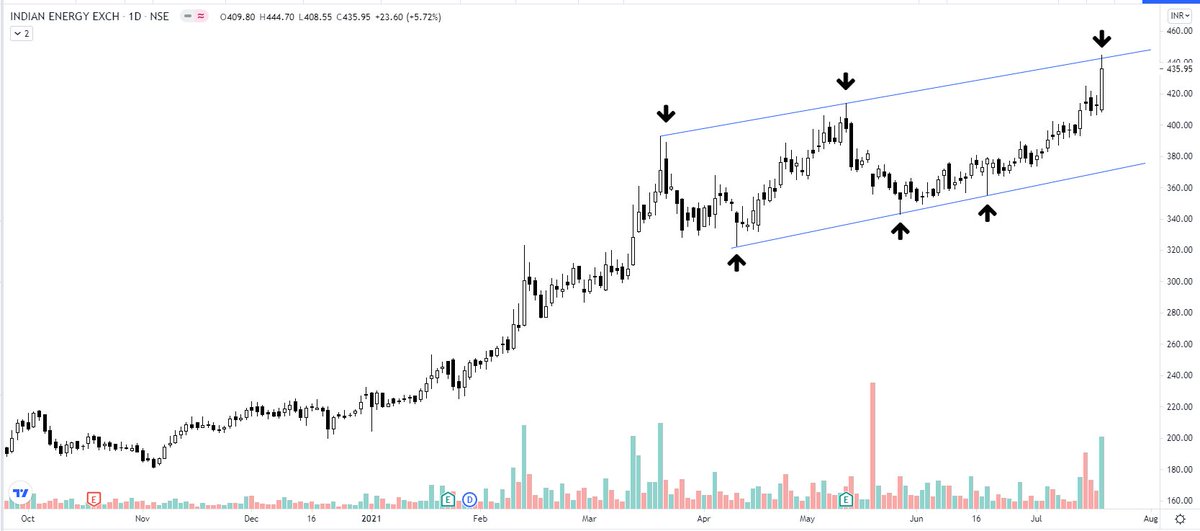
although a must-have portfolio stock. Faced resistance right at the upper channel boundary. Volumes high. Any retracement back to the lower boundary will be an opportunity to accumulate. https://t.co/5uDsUXsbPP
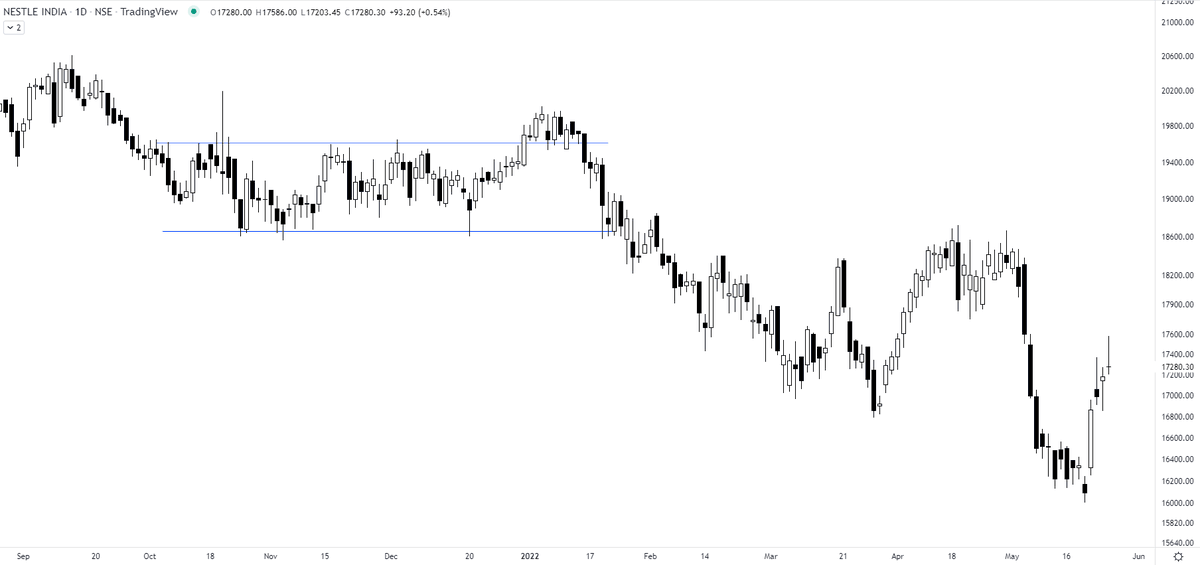
IEX - the resistance turning support. Kindly review, please. @nishkumar1977 @suru27 @rohanshah619 @indian_stockss @sanstocktrader @BissaGauravB @RajarshitaS @PAVLeader @Rishikesh_ADX @VijayThk @Investor_Mohit @TrendTrader85 pic.twitter.com/7CCzmee5If
— Steve Nison (@nison_steve) December 18, 2020
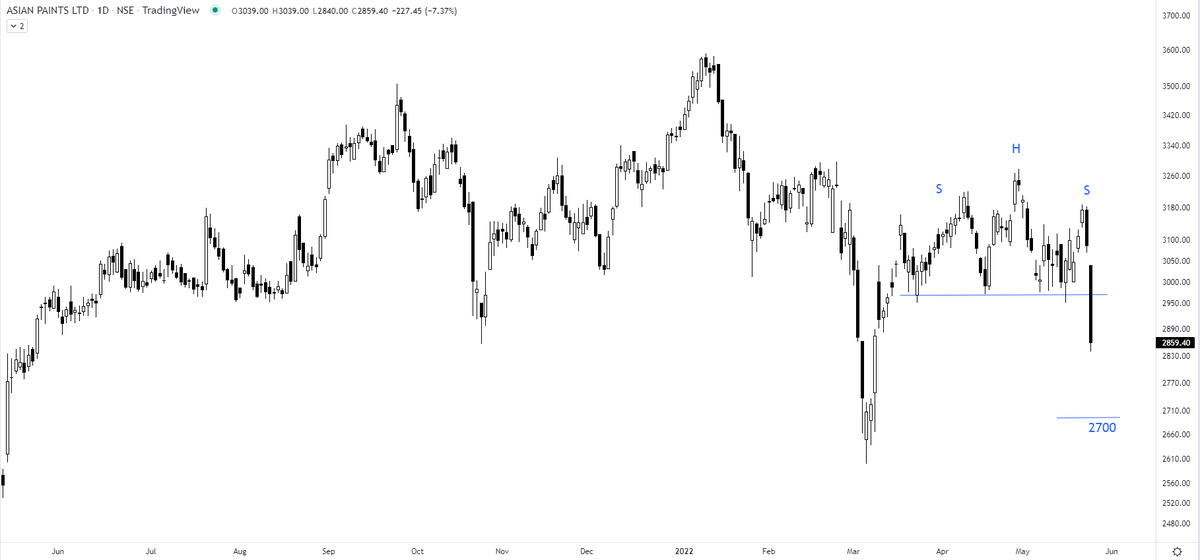
More from Jubliantingrevia


💥 11% Up
Trading at ATH
#jubilantingrevia #jubilingrea
— Sk Parbesh\U0001f1ee\U0001f1f3\U0001f4ca\U0001f4c8\U0001f4c9 (@Chart_View) July 21, 2021
Breakout from tight consolidation with highest daily volume exactly from support
Posted Excellent Q1 Result
Good Setup to go long
CMP: 589
Weakness below: 540 DCB@nid_rockz https://t.co/03RvbA2oZy pic.twitter.com/Vl6Rk52noY
#JUBLINGREA
Updated Chart

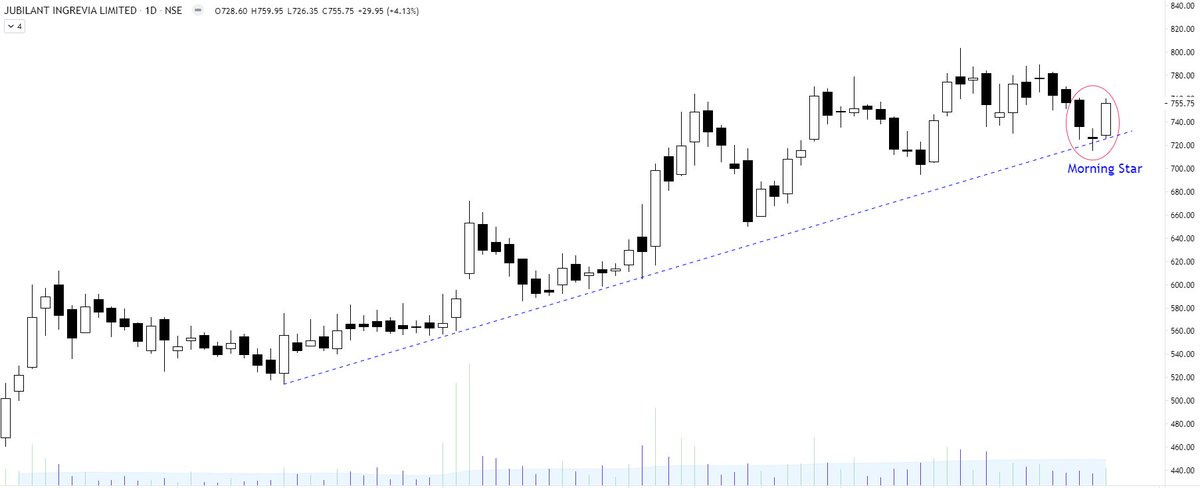
Also on my radar for today:
— The_Chartist \U0001f4c8 (@nison_steve) July 29, 2021
1. ACE (Entry already done & SL is 230)
2. Jubilant Ingrevia (SL 550) - stock re-tested support pic.twitter.com/3S9UdDhhHL

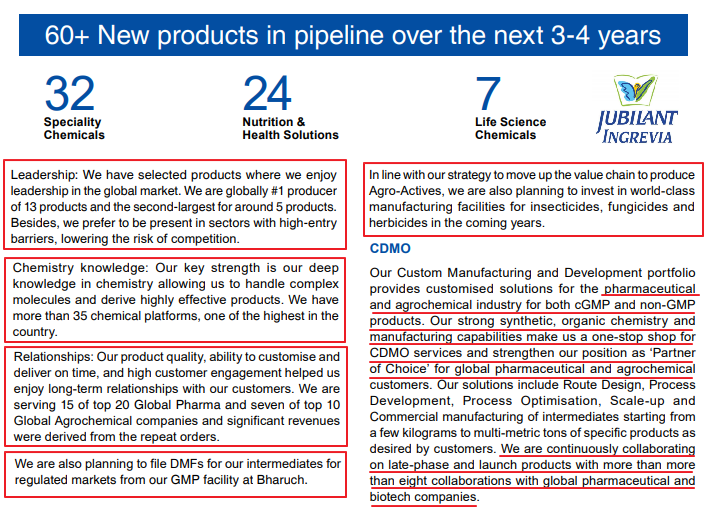
Its an extremely informative AR with broad industry & segment wise overview. MUST READ
Lot of moving parts but looks very optimistic & strong growth outlook.
https://t.co/MxuTZDUfFT
https://t.co/ejcXEAQTHH
#JubilantIngrevia Planned Capex of Rs. 900 Cr. in next 3 yrs.
— Mouzam (@mmali09) March 30, 2021
Entry into Diketene derivatives -game changer.
- Import substitution opp. (40% is imported)
- used in Pharma & Agro Chem
- currently at 50% discount to competitor in India
- one of the leading Int. supplier Exit https://t.co/etPtndC1xN pic.twitter.com/WRQUFXHAtR
https://t.co/7YanRjNE8i
#JubilantIngrevia
— Mouzam (@mmali09) June 24, 2021
\U0001f44cAcquisition of 385,100 equity shares worth Rs 21.36 Cr by the promoter group.
Promoter buying is a Big Positive\U0001f3af
Shows that he is confident about its prospects and believes that investing in the company is better than putting money somewhere else.\U0001f4aa\U0001f4c8 https://t.co/vNYcSr3RgV pic.twitter.com/0WnXGN0UYZ
https://t.co/IW0GRBXi7h
#JUBLINGREA
— Mouzam (@mmali09) July 20, 2021
Super Result\U0001f680QoQ/YoY
Despite covid issues
YoY
Rev 1145Cr vs 737cr (+55%)
EBTDA 25% vs 17%
PAT 168cr vs 53cr (+220%)
EPS 10.6 vs 3.3
\U0001f525All 3 engines
\U0001f9eaInteresting Key CAPEX:
- Dietene on schedule
- CDMO GMP - new
- 2 Multipurpose Spl. Chemical plants new https://t.co/vNYcSr3RgV pic.twitter.com/0rcmB1YMfM
https://t.co/GqcV0GbaLD
Bio-Acetaldehyde - Bio based \U0001f9ec, World\u2019s largest manufacturer from \U0001f1ee\U0001f1f3
— Punit (@punitbansal14) July 28, 2021
Image 1: Benefit in carbon footprint as compared to the conventional petroleum route
Image 2: Bio-Acetaldehyde business overview pic.twitter.com/7M2Eqz5maS

You May Also Like


i wonder if you can make a thread bout witchcraft in malaysia.. or list of our own local gods/deites..
— r a y a \U0001f319 (@lcvelylilith) February 20, 2020
Before I begin, it might be worth explaining the Malay conception of the spirit world. At its deepest level, Malay religious belief is animist. All living beings and even certain objects are said to have a soul. Natural phenomena are either controlled by or personified as spirits
Although these beings had to be respected, not all of them were powerful enough to be considered gods. Offerings would be made to the spirits that had greater influence on human life. Spells and incantations would invoke their
Animist ceremonies of a religious or magical nature were normally held for the purpose of divination or making a request. This would either be done at a keramat or at a shrine similar to the Thai spirit houses or Chinese roadside shrines pic.twitter.com/I1hliyi0x3
— \u2745\u1710\u170b\u1713\u170e (@uglyluhan) June 16, 2019
Two known examples of such elemental spirits that had god-like status are Raja Angin (king of the wind) and Mambang Tali Arus (spirit of river currents). There were undoubtedly many more which have been lost to time
Contact with ancient India brought the influence of Hinduism and Buddhism to SEA. What we now call Hinduism similarly developed in India out of native animism and the more formal Vedic tradition. This can be seen in the multitude of sacred animals and location-specific Hindu gods