IRCTC
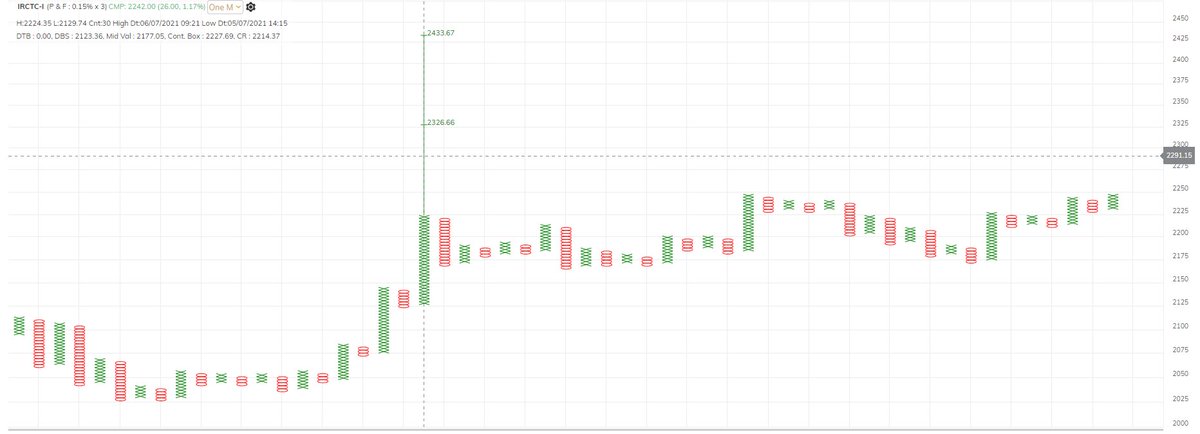
Double Top Buy above 3899.97 daily close on 1% Box size chart.

More from Saket Reddy
Today's closing is a monthly close and this is done & dusted, we now have a solid monthly close above the 10 year supply zone.
If the stock has broken out from a 10 year supply zone & a 20 year peak, surely something would've changed!
Do study the industry structure! https://t.co/zA3qztFzon
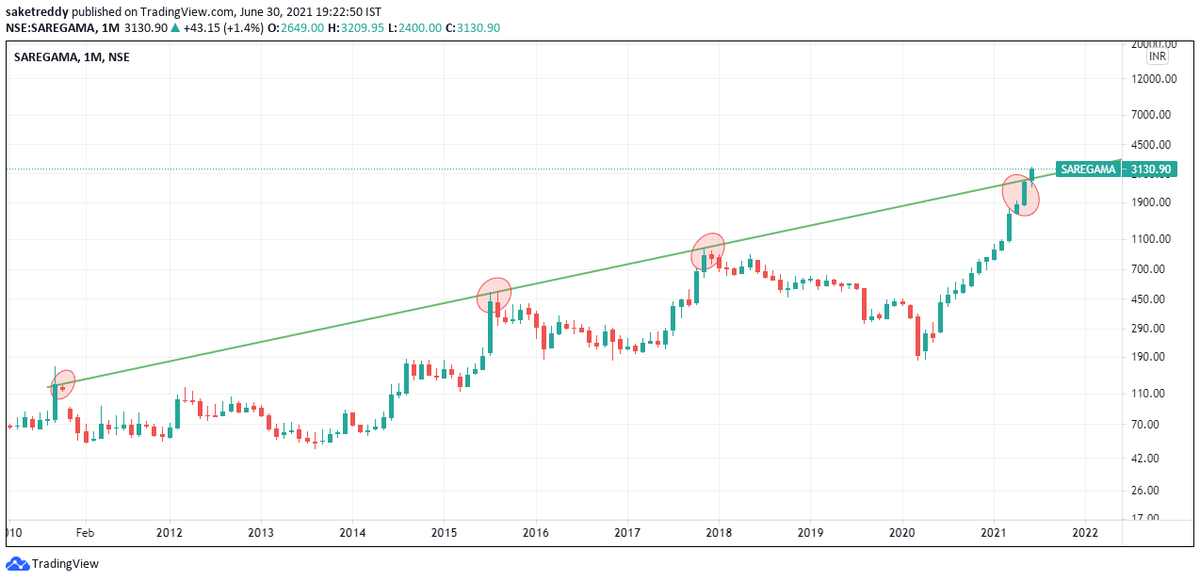
SAREGAMA at a very important juncture now on the monthly chart considering today's close is also a monthly close.
— Saket Reddy (@saketreddy) May 31, 2021
Nearing a breakout from over a 10 year supply zone! https://t.co/qpsSn3obrE pic.twitter.com/1xTmB6WvhK
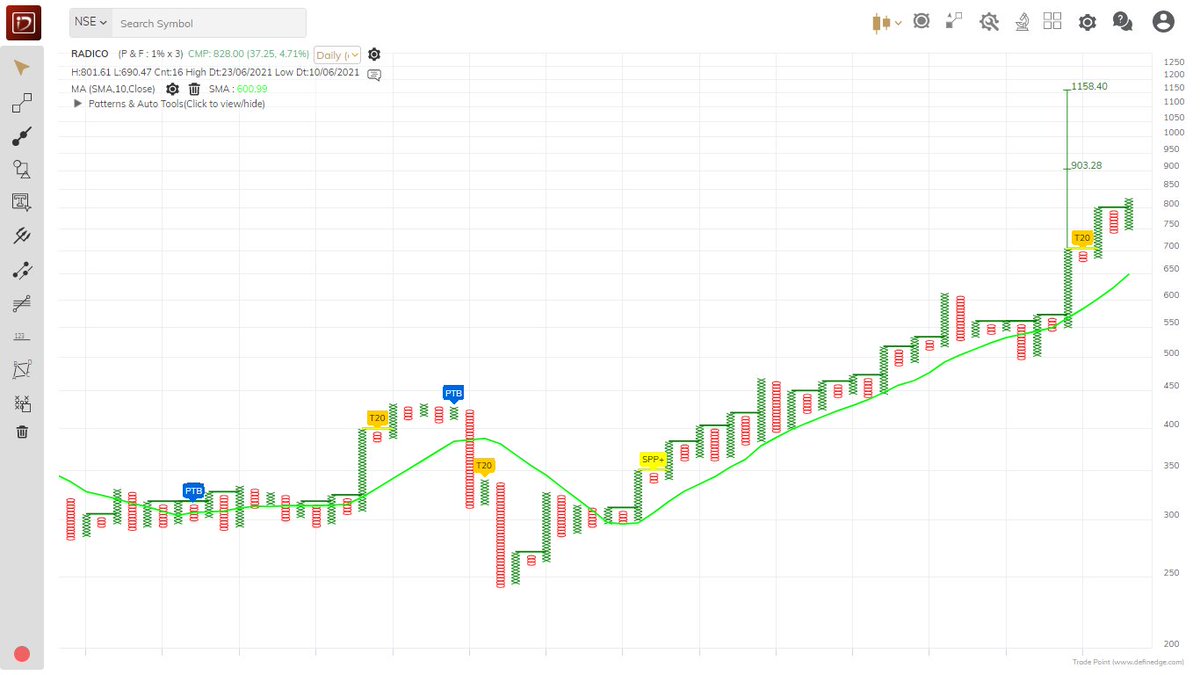
Double Top Buy triggered above 1933.43 daily close on 3% Box size chart. https://t.co/eELxOeNmvg
JBCHEPHARM
— Saket Reddy (@saketreddy) July 16, 2021
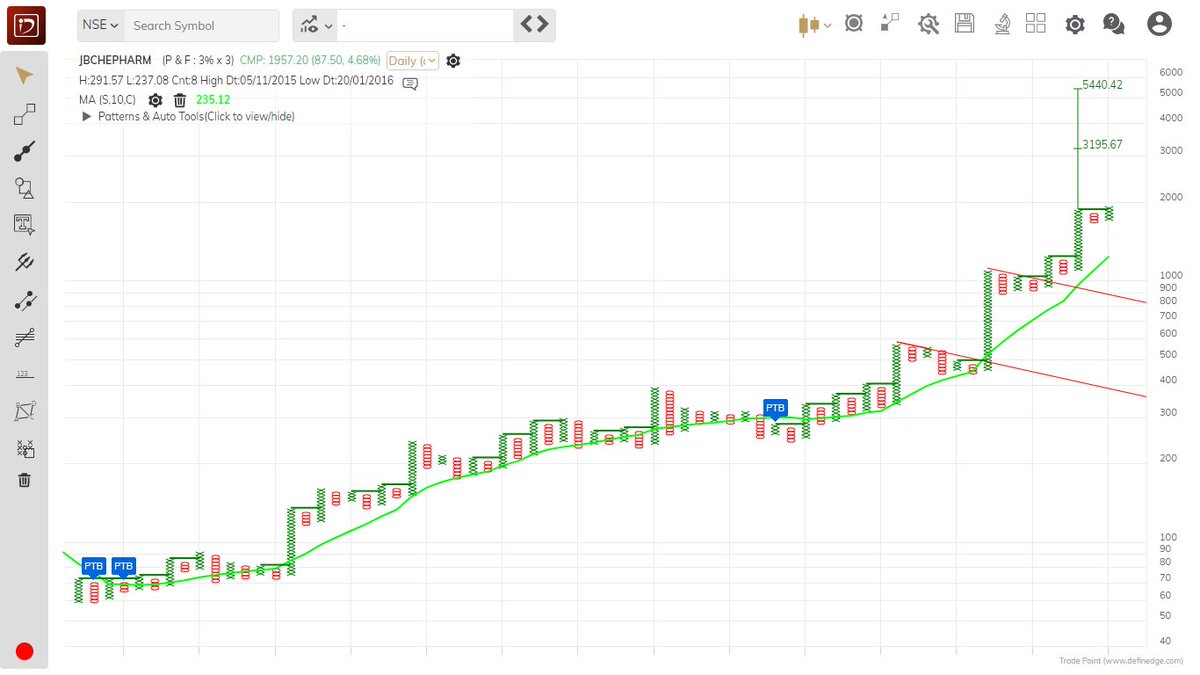
Double Top Buy, Super Pattern - Bullish and T20 Pattern - Bullish triggered above 1886.26 daily close on 1% Box Size chart. https://t.co/bzIsbWjbEP pic.twitter.com/JQVkao635V
Double Top Buy triggered above 459.17 (2295 Pre Split) daily close on 1% Box Size chart. https://t.co/0jUBx6hKMI
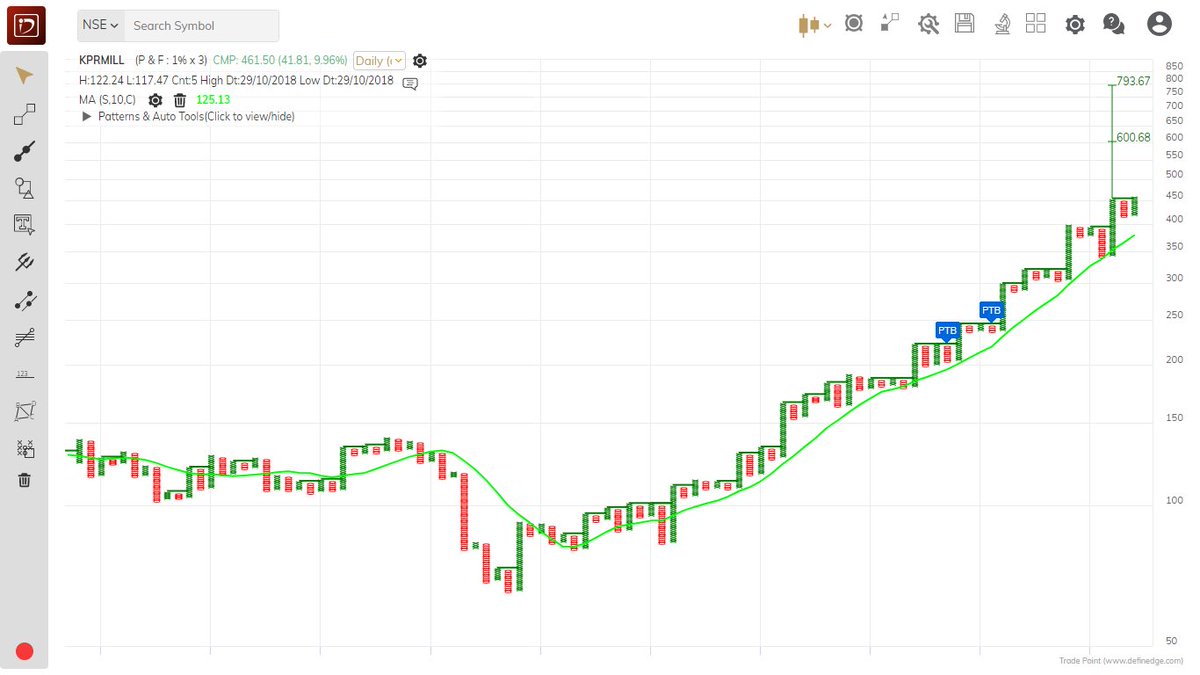
KPRMILL
— Saket Reddy (@saketreddy) September 3, 2021
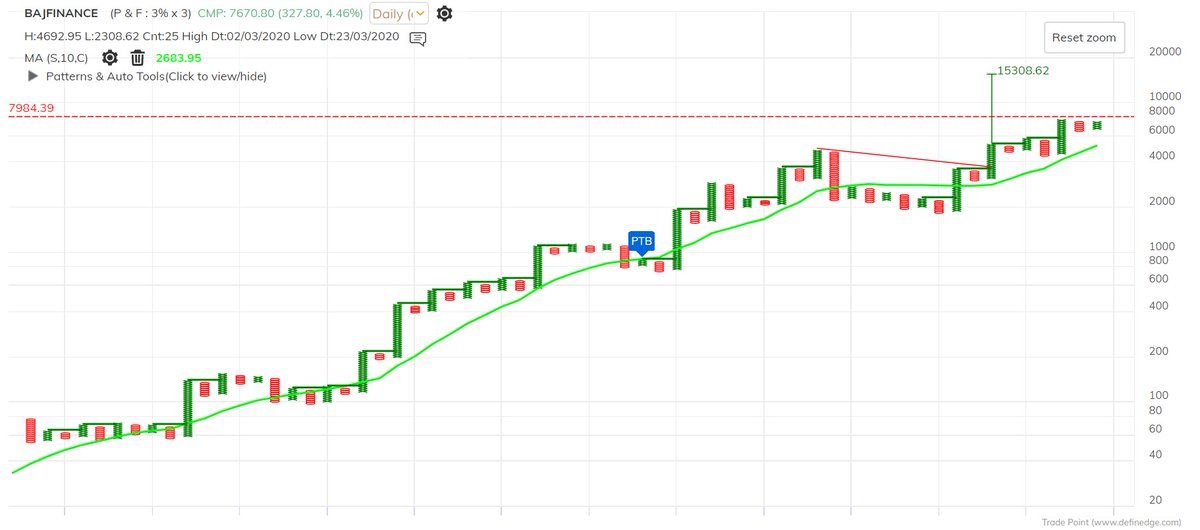
Double Top Buy & T20 Pattern - Bullish above 2051.18 daily close on 3% Box Size chart. https://t.co/bJgLA1BGuv pic.twitter.com/xpTKy6vnBT
More from Irctc


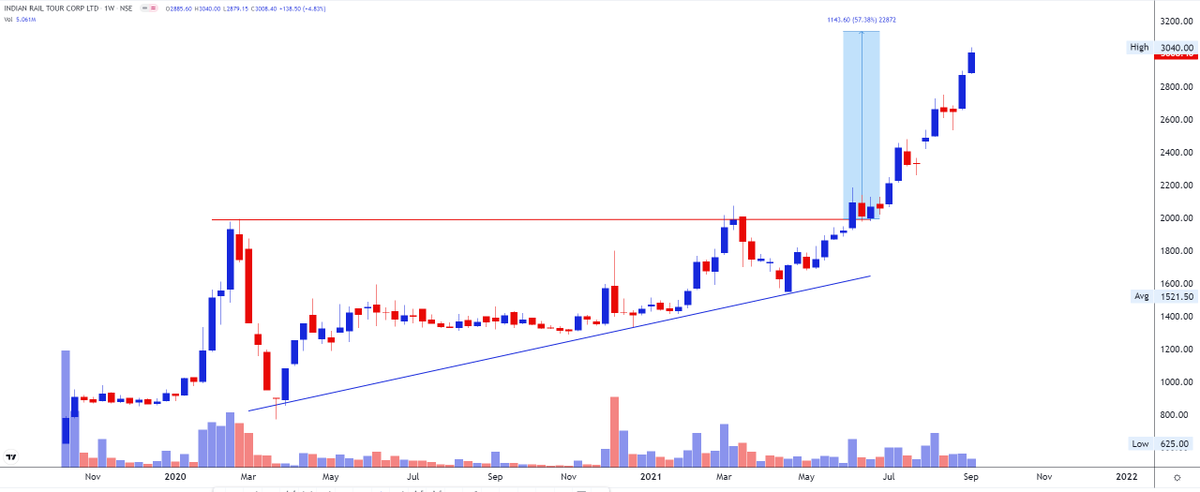
1. Still 200/400 point movement left as per Ascending Triangle Pattern.
2. Stock perfectly moved according to the classic pattern.
3. Next level to watch now 3500-4000
4. Support near 2600-2800 https://t.co/VrUhS85Rml
NSE:IRCTC 1775 +2.78%
— Mr. Chartist (@Mr_Chartist) February 26, 2021
-Cup and Handle breakout
-Support at 1600/1650
-Next levels at 1900/2000/2100++#TA pic.twitter.com/LxpPTI0rB6

approching upper trendine , might took a small pause or need to break resistance with good volumes
target was 2900 , made high 2897 , with just 3 points short.
booking some positions as reached near resistance , will add near supportive trendline,
holding rest for 3600 https://t.co/2H0myGPgu5
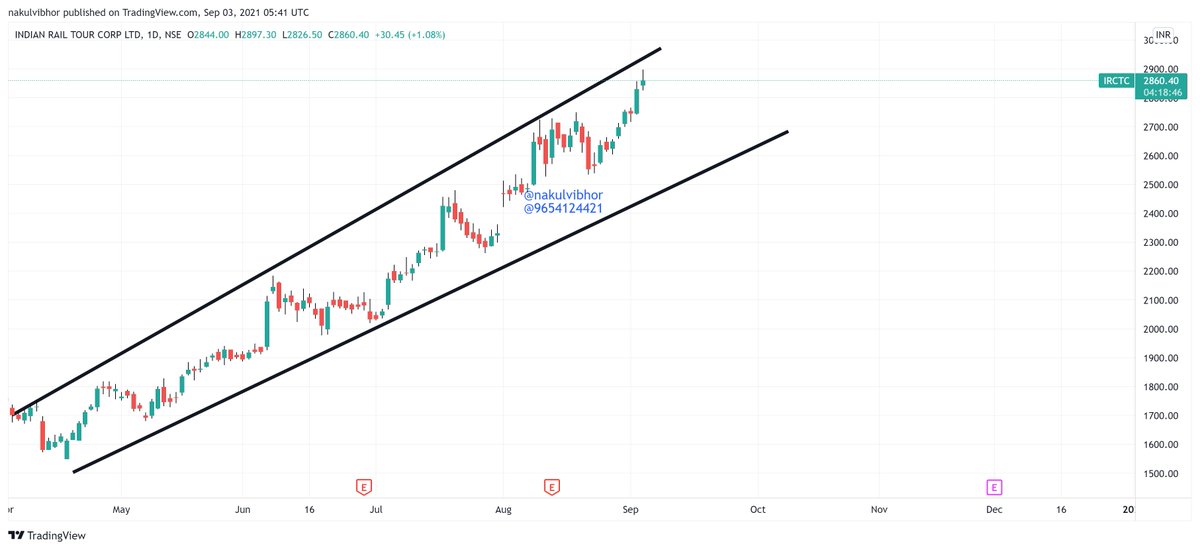
Itctc
— Vibhor Varshney (@nakulvibhor) September 2, 2021
Entered 2800 \u2705
Heading towards 2900 target
Then 3600
Holding personally in folio \U0001f44d https://t.co/jd2OOQTSLs


patience is virtue
no exit. though its slightly overbought, any retracement could be chance
2700 level brings more strength
#IRCTC 1% x 3 cmp 1759
— Sunil Dhawan\U0001f6a9 \U0001f1ee\U0001f1f3 (@SunilDhawan13) February 28, 2021
chart to level mapping@Definedge https://t.co/nP50vq4PJb pic.twitter.com/tzUq1ICIMb
You May Also Like


LifeLog, via DARPA, terminated on Feb 4th, 2004.
Facebook was launched on Feb 4th, 2004.
Many of the LifeLog team became execs at FB.
Zuckerberg is a figurehead.
CIA allowed Cambridge to help Trump win
https://t.co/enzOXDCogV

Project: Lifelog
— Robert Horan (@Robby12692) December 13, 2018
Started by DARPA in 1999, the goal of Lifelog was to create a database on civilians without their knowledge, and track everything they do.
The project "ended" on Feb 4th, 2004.
Facebook began the exact same day.
The CIA funneled tens of millions into Facebook. pic.twitter.com/r7hwF0v9kh
Pentagon Kills LifeLog