bcz from day one @republic z with us
More from India





Now this is provoking me to write!
The schism of BJP- RSS ideology.
Full blown Schizophrenia if one wants to psychoanalyze BJP.
#doublebind where a parent keeps giving double messages to their confused children. They adore the parent for one thing and hate them for another.
How can BJP sustain itself with this kind of internal schism? In other words no samanjas or clarity of what they stand for?
Its exploding now. The madness.
People airing out Gandhi's sexuality out of context and irrelevant to him being killed by Godse.Supporting Godse's action
But not understanding that the same reasons why Godse was killed are the reasons why BJP leaders today hail Gandhi as Bapu or Mahatma. On #MartyrsDay
Very dangerous mind or #headgames being played out here. Our country is a large scale mental asylum with broken psyche.
Sanatana Dharma does not need more Nathuram Godses. We need more Shri Vidyaranyas and Adi Shankaras who would build Hindu Rajya through Raja and kshatriya Dharma.
Nathuram Godse as a Brahmana weakened his brahmanatwam by adopting a Nationalist ideology.
Instead he could have used his pourusham to garber a Sanatani movement to fight against INC and Gandhian ideology.
He dissented from RSS and started his own Hindu Rashtra Dal and also was a member of Hindu Mahasabha. However he did not fall back on our darshana s to understand
The schism of BJP- RSS ideology.
Full blown Schizophrenia if one wants to psychoanalyze BJP.
#doublebind where a parent keeps giving double messages to their confused children. They adore the parent for one thing and hate them for another.
BJP-RSS ideology
— Dr. Latha (@DrlathaC) January 30, 2021
Lower rank workers worship #NathuramGodse, but leaders worship Mahatma Gandhi.
True meaning of #SabkaSaath \U0001f606
How can BJP sustain itself with this kind of internal schism? In other words no samanjas or clarity of what they stand for?
Its exploding now. The madness.
People airing out Gandhi's sexuality out of context and irrelevant to him being killed by Godse.Supporting Godse's action
But not understanding that the same reasons why Godse was killed are the reasons why BJP leaders today hail Gandhi as Bapu or Mahatma. On #MartyrsDay
Very dangerous mind or #headgames being played out here. Our country is a large scale mental asylum with broken psyche.
Sanatana Dharma does not need more Nathuram Godses. We need more Shri Vidyaranyas and Adi Shankaras who would build Hindu Rajya through Raja and kshatriya Dharma.
Nathuram Godse as a Brahmana weakened his brahmanatwam by adopting a Nationalist ideology.
Instead he could have used his pourusham to garber a Sanatani movement to fight against INC and Gandhian ideology.
He dissented from RSS and started his own Hindu Rashtra Dal and also was a member of Hindu Mahasabha. However he did not fall back on our darshana s to understand

You May Also Like




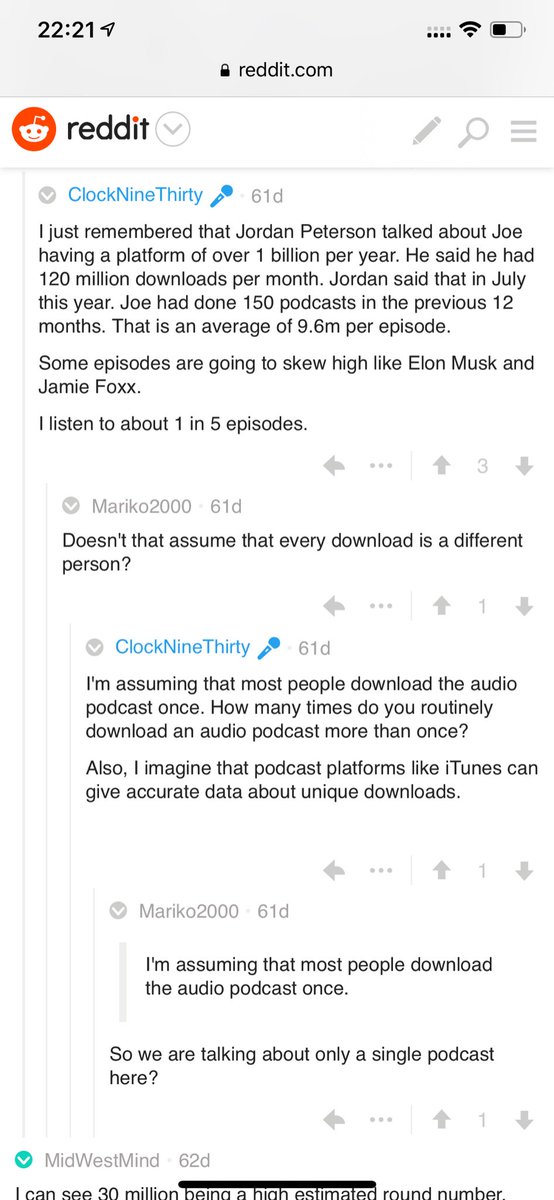
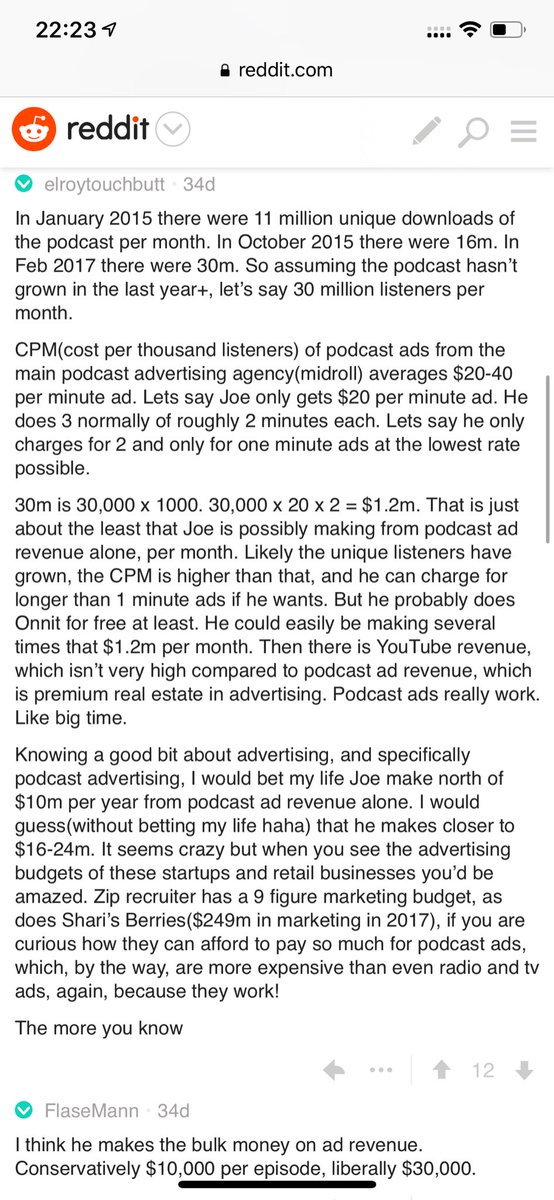
Joe Rogan's podcast is now is listened to 1.5+ billion times per year at around $50-100M/year revenue.
Independent and 100% owned by Joe, no networks, no middle men and a 100M+ people audience.
👏
https://t.co/RywAiBxA3s
Joe is the #1 / #2 podcast (depends per week) of all podcasts
120 million plays per month source https://t.co/k7L1LfDdcM
https://t.co/aGcYnVDpMu
Independent and 100% owned by Joe, no networks, no middle men and a 100M+ people audience.
👏
https://t.co/RywAiBxA3s
Joe is the #1 / #2 podcast (depends per week) of all podcasts
120 million plays per month source https://t.co/k7L1LfDdcM
https://t.co/aGcYnVDpMu

1/Politics thread time.
To me, the most important aspect of the 2018 midterms wasn't even about partisan control, but about democracy and voting rights. That's the real battle.
2/The good news: It's now an issue that everyone's talking about, and that everyone cares about.
3/More good news: Florida's proposition to give felons voting rights won. But it didn't just win - it won with substantial support from Republican voters.
That suggests there is still SOME grassroots support for democracy that transcends
4/Yet more good news: Michigan made it easier to vote. Again, by plebiscite, showing broad support for voting rights as an
5/OK, now the bad news.
We seem to have accepted electoral dysfunction in Florida as a permanent thing. The 2000 election has never really
To me, the most important aspect of the 2018 midterms wasn't even about partisan control, but about democracy and voting rights. That's the real battle.
2/The good news: It's now an issue that everyone's talking about, and that everyone cares about.
3/More good news: Florida's proposition to give felons voting rights won. But it didn't just win - it won with substantial support from Republican voters.
That suggests there is still SOME grassroots support for democracy that transcends
4/Yet more good news: Michigan made it easier to vote. Again, by plebiscite, showing broad support for voting rights as an
5/OK, now the bad news.
We seem to have accepted electoral dysfunction in Florida as a permanent thing. The 2000 election has never really
Bad ballot design led to a lot of undervotes for Bill Nelson in Broward Co., possibly even enough to cost him his Senate seat. They do appear to be real undervotes, though, instead of tabulation errors. He doesn't really seem to have a path to victory. https://t.co/utUhY2KTaR
— Nate Silver (@NateSilver538) November 16, 2018