Why Reading and observing different trends matter.
Time for a thread with a live example that is playing out in front of us! 🎵🎵
🧵🧵🧵🧵🧵

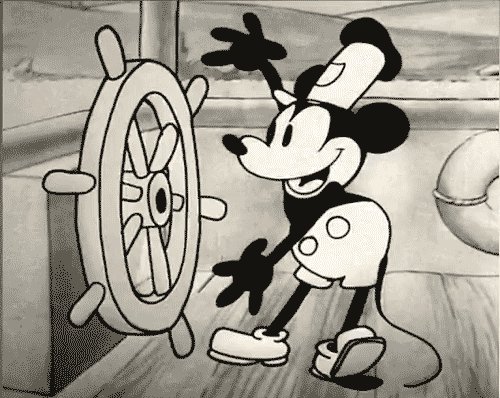
"Disney is an amazing example of autocatalysis. They had all those movies in the can.
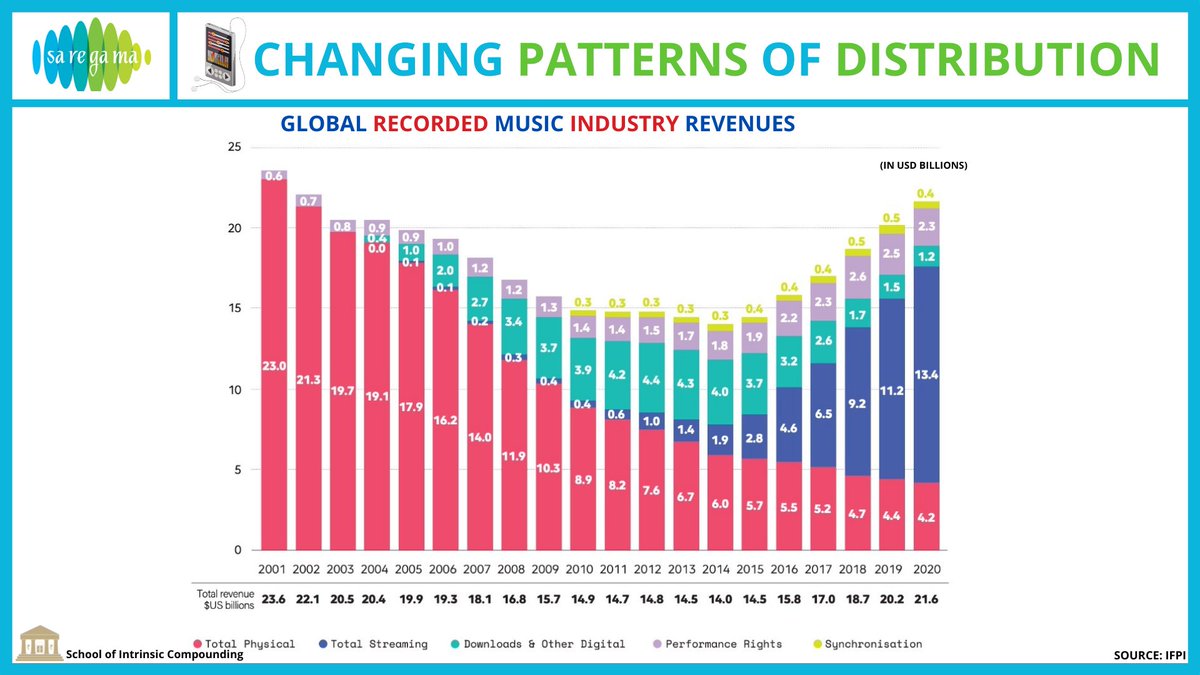
A live example is the Music Licensing Businesses like Saregama and TIPS. Both the businesses suffered
https://t.co/ukl1HUYCOI
Multiple Lollapalooza come together to create extremely strong trends.
https://t.co/zdusVUBEIe
1. Growth of streaming business
2. Growth of Youtube viewership in India
3. Increasing internet penetration
4. Usage of retro music and remix in sitcoms, and by OTTs.
5. Insta reels
6. Finally, an optionality of Audio NFT!
Watch our Saregama Video🎵🎵 to know more about how autocatalysis is playing out! (positively biased)
https://t.co/hfe6zfy8lt
More from Intrinsic Compounding

More from Ideas


The cold hard truth:
Why do companies like Quibi raise billions, while companies like Peloton get nothing?
Because fundraising is a GAME
And the insiders keep the rules to themselves.
Here are 100 tips the insiders don’t want you to see but will help you win the game:
1. You can’t play the game without nailing the basics.
There are 5 core ingredients to a startup pitch.
Most have 2.
Good ones have 4.
The best have all 5.
2. Now that you have a grasp of the basics, it’s time to level up.
Good news - most founders make the same mistakes as each other.
Bad news - these mistakes are really easy to make.
Here's what not to do:
3. Ok so you told me what not to do.
So what should I do?
Read below.
4. We’re in a really unique fundraising environment right now.
It’s important to contextualize all these tips in the “here and now” of what’s going on in the landscape.
Why do companies like Quibi raise billions, while companies like Peloton get nothing?
Because fundraising is a GAME
And the insiders keep the rules to themselves.
Here are 100 tips the insiders don’t want you to see but will help you win the game:
1. You can’t play the game without nailing the basics.
There are 5 core ingredients to a startup pitch.
Most have 2.
Good ones have 4.
The best have all 5.
There\u2019s a lot of bad advice out there on how to pitch your startup.
— Romeen Sheth (@RomeenSheth) April 10, 2021
Last year, I invested $1M+ and heard 200 companies pitch.
Every great pitch I've heard nails 5 ingredients.
In this thread, we'll go through each to help maximize your chances when fundraising
Let's dig in\U0001f447 pic.twitter.com/FBaUUWHz8L
2. Now that you have a grasp of the basics, it’s time to level up.
Good news - most founders make the same mistakes as each other.
Bad news - these mistakes are really easy to make.
Here's what not to do:
0/ After evaluating 200+ startups this year, I've been in some awesome and not so awesome pitches.
— Romeen Sheth (@RomeenSheth) December 28, 2020
Here are the top 10 mistakes I see Founders make that routinely derail fundraising \U0001f447\U0001f447\U0001f447
3. Ok so you told me what not to do.
So what should I do?
Read below.
0/ Last night I tweeted about the top 10 things Founders do that derail fundraising. It struck a chord. 2,500+ liked the tweet.
— Romeen Sheth (@RomeenSheth) December 30, 2020
I got a ton of DMs asking the opposite question: \u201cWhat are the top things Founders do well when fundraising?\u201d
Here's my top 10 \U0001f447\U0001f447\U0001f447
4. We’re in a really unique fundraising environment right now.
It’s important to contextualize all these tips in the “here and now” of what’s going on in the landscape.
Raising money for startups is wild right now. I\u2019ve never seen anything like it.
— Romeen Sheth (@RomeenSheth) May 5, 2021
Lots of Founders are wondering how to approach it and who they should partner with.
Here are 10 observations / practical tips I've shared with 100+ Founders in the last few months \U0001f447\U0001f447\U0001f447

You May Also Like

So it's now October 10, 2018 and....Rod Rosenstein is STILL not fired.
He's STILL in charge of the Mueller investigation.
He's STILL refusing to hand over the McCabe memos.
He's STILL holding up the declassification of the #SpyGate documents & their release to the public.
I love a good cover story.......
The guy had a face-to-face with El Grande Trumpo himself on Air Force One just 2 days ago. Inside just about the most secure SCIF in the world.
And Trump came out of AF1 and gave ol' Rod a big thumbs up!
And so we're right back to 'that dirty rat Rosenstein!' 2 days later.
At this point it's clear some members of Congress are either in on this and helping the cover story or they haven't got a clue and are out in the cold.
Note the conflicting stories about 'Rosenstein cancelled meeting with Congress on Oct 11!"
First, rumors surfaced of a scheduled meeting on Oct. 11 between Rosenstein & members of Congress, and Rosenstein just cancelled it.
He's STILL in charge of the Mueller investigation.
He's STILL refusing to hand over the McCabe memos.
He's STILL holding up the declassification of the #SpyGate documents & their release to the public.
I love a good cover story.......
The guy had a face-to-face with El Grande Trumpo himself on Air Force One just 2 days ago. Inside just about the most secure SCIF in the world.
And Trump came out of AF1 and gave ol' Rod a big thumbs up!
And so we're right back to 'that dirty rat Rosenstein!' 2 days later.
At this point it's clear some members of Congress are either in on this and helping the cover story or they haven't got a clue and are out in the cold.
Note the conflicting stories about 'Rosenstein cancelled meeting with Congress on Oct 11!"
First, rumors surfaced of a scheduled meeting on Oct. 11 between Rosenstein & members of Congress, and Rosenstein just cancelled it.
Rep. Andy Biggs and Rep. Matt Gaetz say DAG Rod Rosenstein cancelled an Oct. 11 appearance before the judiciary and oversight committees. They are now calling for a subpoena. pic.twitter.com/TknVHKjXtd
— Ivan Pentchoukov \U0001f1fa\U0001f1f8 (@IvanPentchoukov) October 10, 2018
![Peter McCormack [Jan/3\u279e\u20bf \U0001f511\u220e]](https://pbs.twimg.com/profile_images/1524287442307723265/_59ITDbJ_normal.jpg)

My top 10 tweets of the year
A thread 👇
https://t.co/xj4js6shhy
https://t.co/b81zoW6u1d
https://t.co/1147it02zs
https://t.co/A7XCU5fC2m
A thread 👇
https://t.co/xj4js6shhy
Entrepreneur\u2019s mind.
— James Clear (@JamesClear) August 22, 2020
Athlete\u2019s body.
Artist\u2019s soul.
https://t.co/b81zoW6u1d
When you choose who to follow on Twitter, you are choosing your future thoughts.
— James Clear (@JamesClear) October 3, 2020
https://t.co/1147it02zs
Working on a problem reduces the fear of it.
— James Clear (@JamesClear) August 30, 2020
It\u2019s hard to fear a problem when you are making progress on it\u2014even if progress is imperfect and slow.
Action relieves anxiety.
https://t.co/A7XCU5fC2m
We often avoid taking action because we think "I need to learn more," but the best way to learn is often by taking action.
— James Clear (@JamesClear) September 23, 2020