
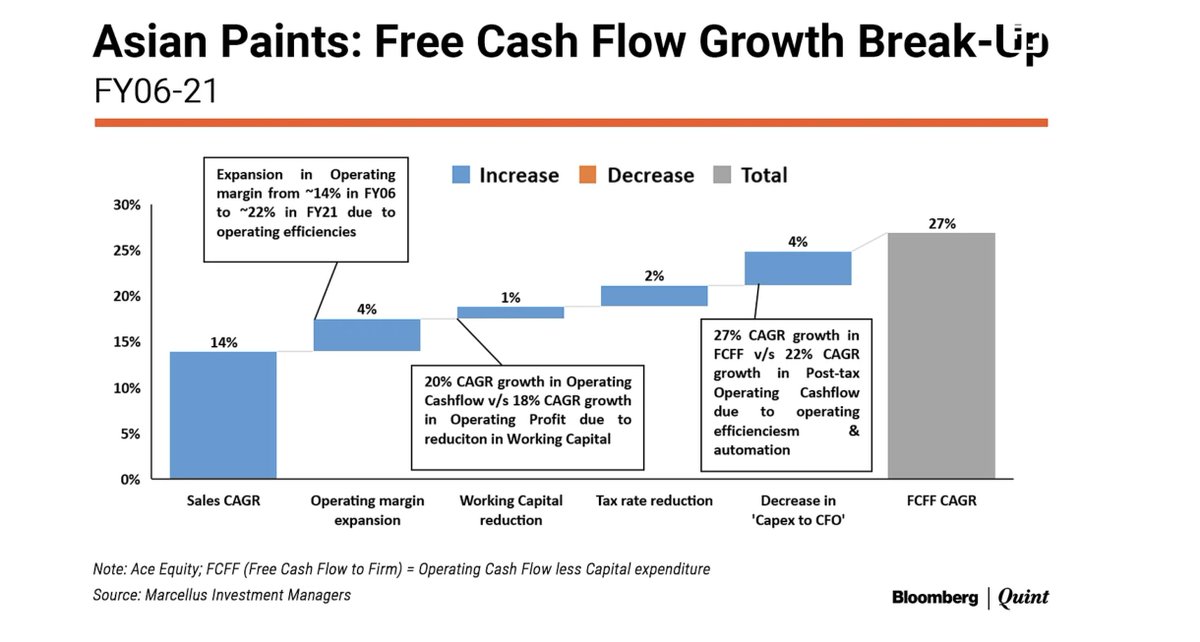
Free cash flow means the cash that is left over after a company pays for its operating expenses and capital expenditures (Capex) like purchasing new machinery, equipment, land & building, etc. and satisfying all its working capital needs.
Everything about Free cash Flow Simplified!
What we will talk about in this 🧵🧵:
1⃣What is Free Cash Flow
2⃣How to calculate Free Cash Flow
3⃣Types of Free Cash Flow
4⃣Importance & Limitations of Free Cash Flow
Let's dive in ⤵️⤵️

Free cash flow means the cash that is left over after a company pays for its operating expenses and capital expenditures (Capex) like purchasing new machinery, equipment, land & building, etc. and satisfying all its working capital needs.
1⃣Give investors higher dividends
2⃣Do share buybacks
3⃣Build a war chest for acquisitions or Capex.
4⃣Reinvest in the business when opportunity arises with lesser dependence on debt.
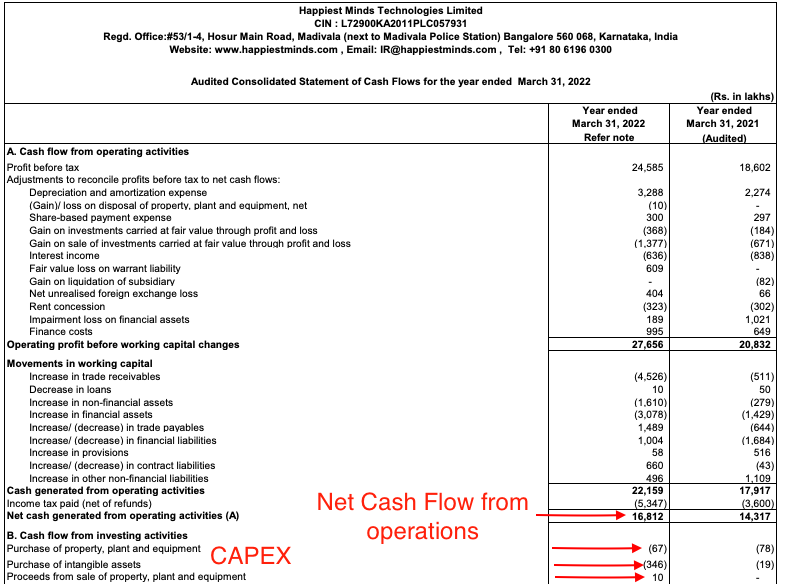
To calculate free cash flow, all you need to do is open the Cash Flow Statement and subtract "Net Capital expenditure" from "net cash from operating activities".

As we can see from the financials its cash flow from operating activities is 168 cr and its net capital expenditure is = 67Lakhs+3.46cr-(10Lakhs)
=168 Cr-4.03 crores= 163.97 crores is the FCF!

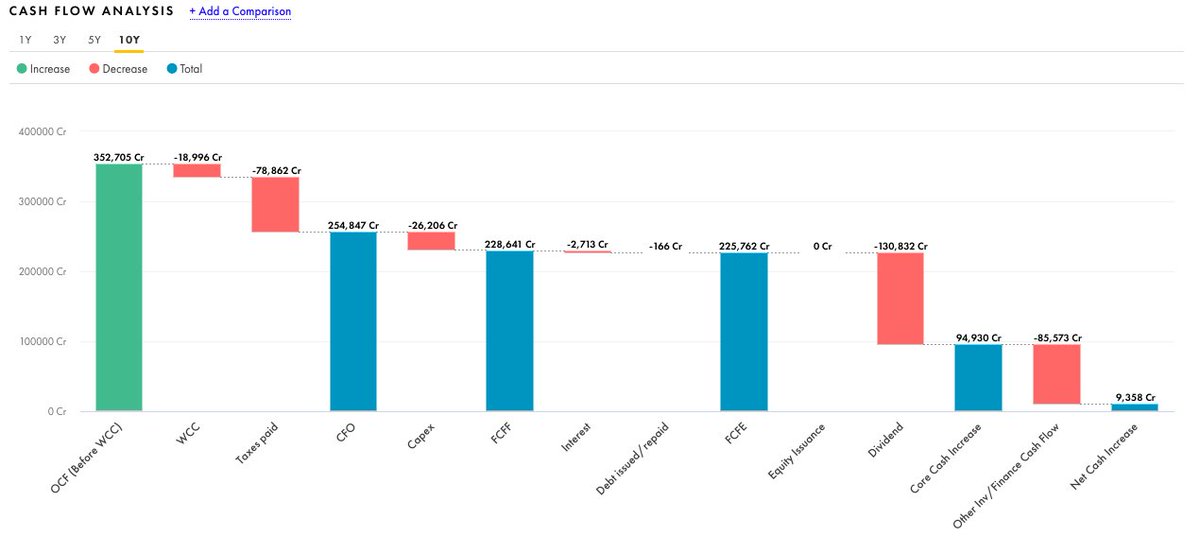
FCFF is the same FCF which we have discussed above, FCFF means the ability of the business to produce cash after deducting all its capital expenditures which is calculated as CFO - Capex.
Thus, the free cash flow that is left to the Firm

Free cash flow to equity (FCFE) is the amount of cash a business generates that is available to be distributed to the company’s equity shareholders as dividends or stock buybacks after all expenses, reinvestments, and debt repayments.
It is calculated as follows:
FCFE = Cash from Operating Activities – Capital Expenditures + Net Debt Issued (Proceeds from borrowings-Repayment of borrowings)
The main difference between the two is that Free cash flow to firm represents the Cash flow that is available to both the Debt and Equity holders.
FCFE only represents the cash flow that is available to the shareholders!
Company with high free cash flow can expand, develop new products, have a safety cushion, be in control of its own destiny, can expand without debt and pay dividends etc. Positive free cash flow is indicative of overall business health.
Out of 2.25 Lakh crores of Cumulative Cash flows generated by TCS, they have paid almost 1.4 Lakh crores of dividend in the last decade. As the business can grow without Capex.
@Tijori1
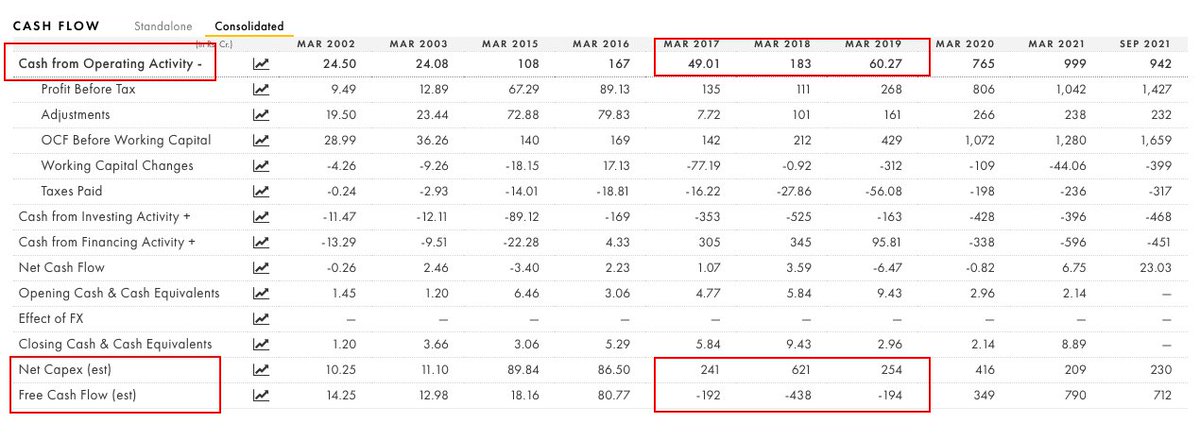
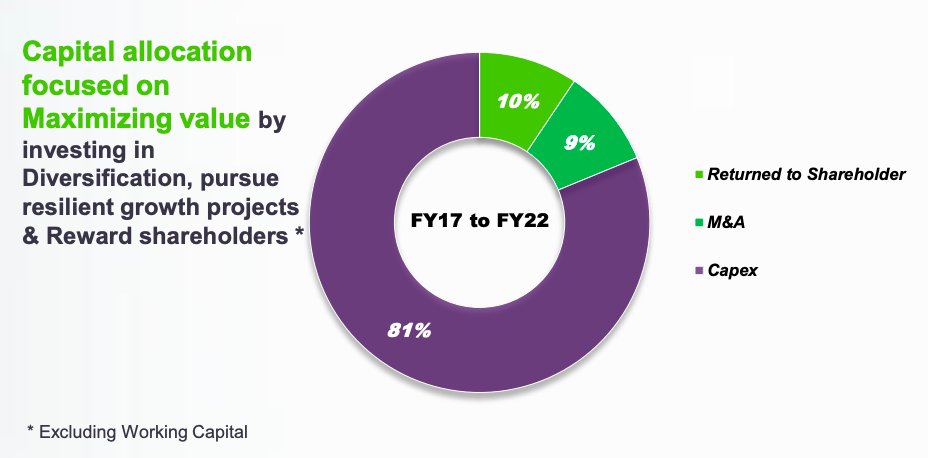
Low free cash flow is not always indicative of a failing business. Even healthy companies see a dip in free cash flow when they're actively doing Capex for pursuing growth.
We can see the same from some examples where companies were doing high capex to leverage growth resulting in negative free cash flow for a few years ⤵️⤵️
(Credits @Tijori1 )
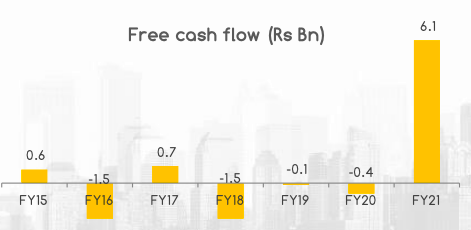
Linking the concept of change in working capital and its impact on Free Cash Flow. Those who understand can make a killing if they see working capital improving in a company.
In FY 2020 they switched to a cash and carry model from normal credit period business of 20 days which resulted in the reduction in net working capital days from 25 to 8 in FY 2021.
Just look at the working capital days:-
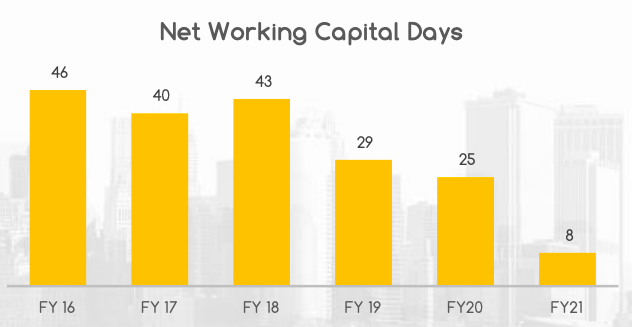
1. Massive deleveraging as lesser working capital loans were required to run the business.
2. Generation of solid free cash flow that can be paid out dividends or be used for Capacity expansion through internal accruals.
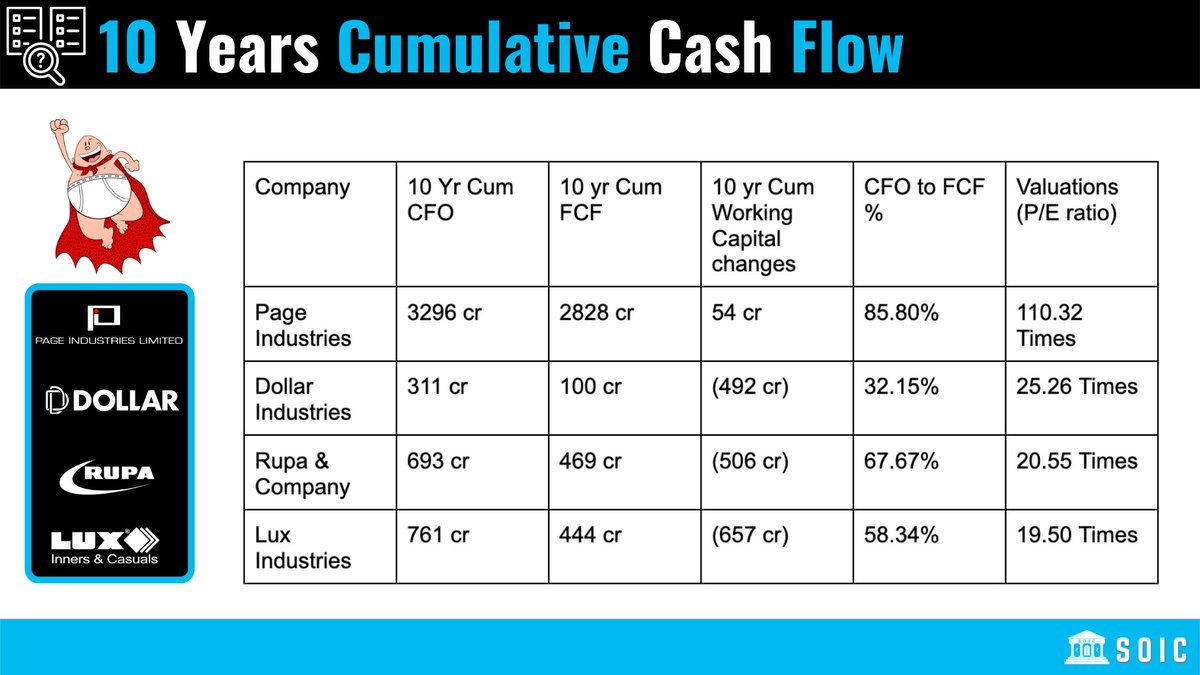
If we look at the 10 Years cumulative cash flow of the companies, it is as follows:
Look at the Working capital and this where Page wins!!
Thank you for reading!

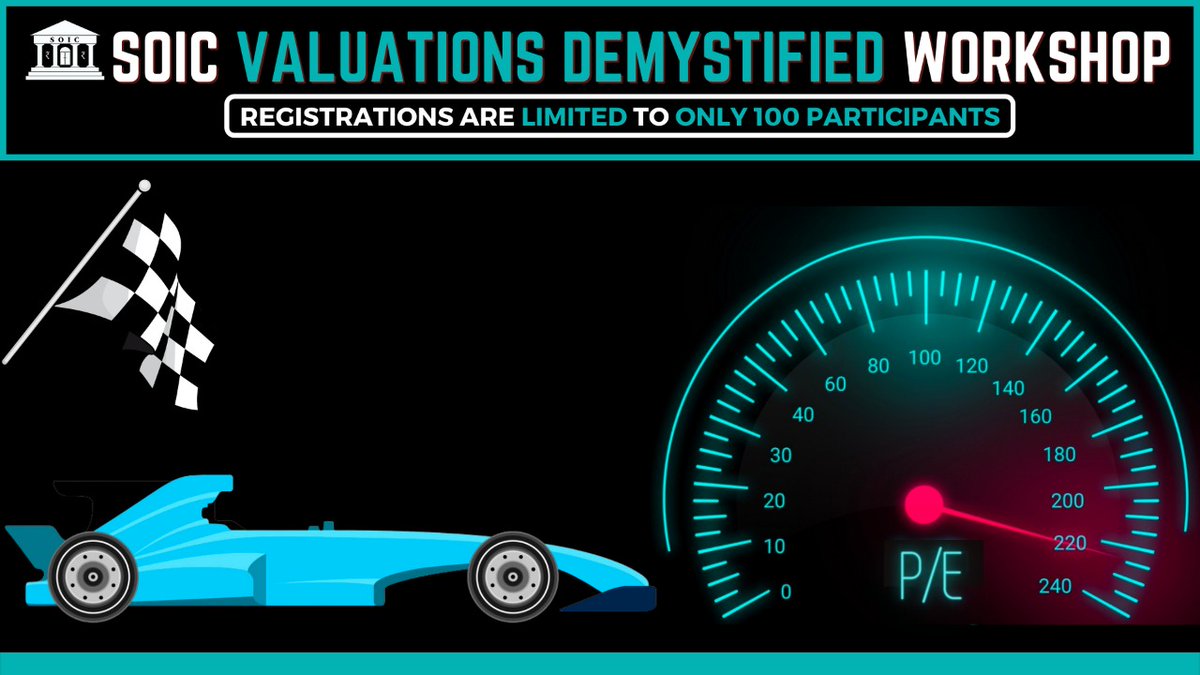
Link to register 🔗: https://t.co/fTr7JYgszn
More from Intrinsic Compounding




More from Accounting



MCap is a function of market sentiments. Balance sheet, cash flows, R&D execution, talent acquisition, regulatory compliance, M&As and so on....are a function of management/governance. Never mix the business with the stock. Stock is not the business. Business is not the stock :)
It's simple, if ""FY23 PAT of this API to CDMO = FY21 PAT of largest pure-play CDMO/API"" then the FY23 Mcap of this API/CDMO= FY21 Mcap of largest pure-play CDMO/API, am I correct Sajal saab??
— richman (@greatrichman3) June 14, 2021

You May Also Like








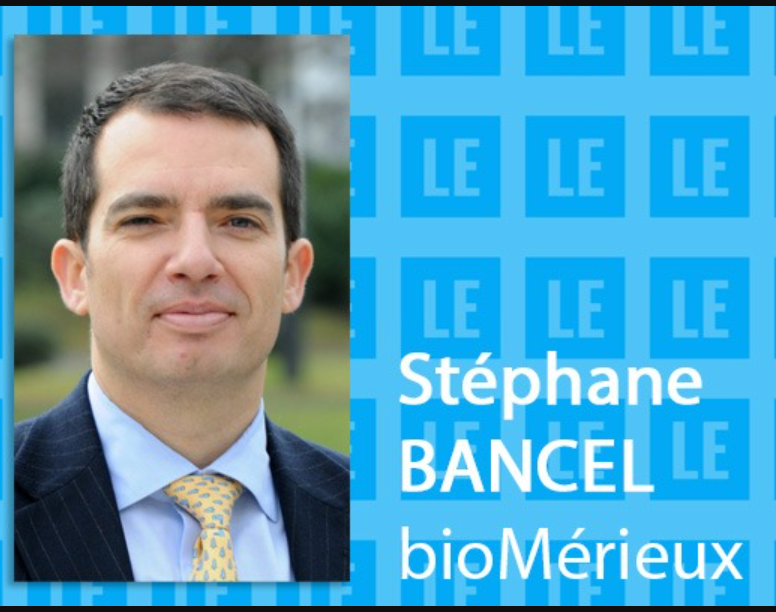
Moderna CEO Stephane Bancel was previously CEO of bioMerieux in France from 07-10.
Alain Merieux, who owns bioMerieux, was instrumental in the creation of the Wuhan Institute of Virology P4 Lab.
The same people who helped create the virus, also helped to create the vaccines...
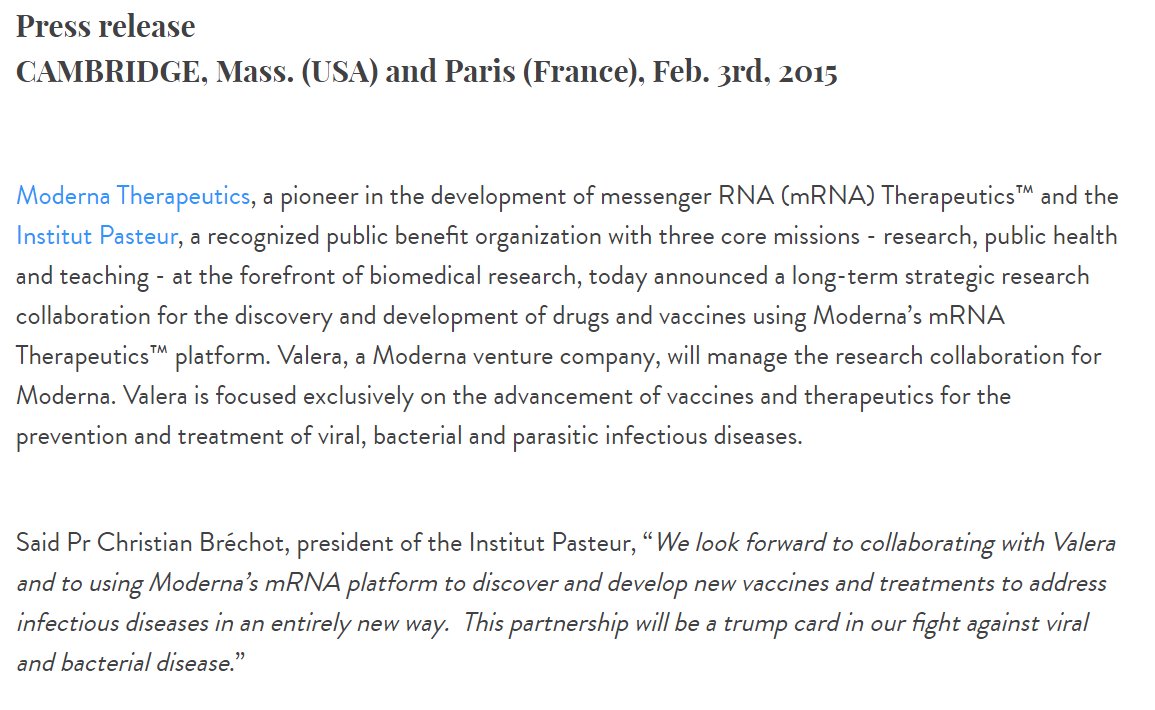
Moderna partnered with French Pasteur Institute in 2015 to develop mRNA vaccine technology.
Pasteur Institute partnered with the Wuhan P4 Laboratory in 2017 along with the Merieux Foundation to study emerging viruses...
https://t.co/yFsHwrNYaK
https://t.co/9M5lydBKhM
Nobel prize winning scientist Luc Montagnier asserts that Sars-Cov-2 is man-made and originated from the Wuhan Institute of Virology.
Montagnier did extensive work with the Pasteur Institute in France which was partnered with the Wuhan P4.
Merieux Foundation & the Chinese government have worked together since 1965, and partnered to study emerging pathogens in Africa in 2015.
Their research included "PATHOGENS CARRIED BY BATS" that provoke respiratory diseases.
🚨🚨🚨
https://t.co/gVwpT0ssqI

Alain Merieux, who owns bioMerieux, was instrumental in the creation of the Wuhan Institute of Virology P4 Lab.
The same people who helped create the virus, also helped to create the vaccines...
Moderna partnered with French Pasteur Institute in 2015 to develop mRNA vaccine technology.
Pasteur Institute partnered with the Wuhan P4 Laboratory in 2017 along with the Merieux Foundation to study emerging viruses...
https://t.co/yFsHwrNYaK
https://t.co/9M5lydBKhM
Nobel prize winning scientist Luc Montagnier asserts that Sars-Cov-2 is man-made and originated from the Wuhan Institute of Virology.
Montagnier did extensive work with the Pasteur Institute in France which was partnered with the Wuhan P4.
Merieux Foundation & the Chinese government have worked together since 1965, and partnered to study emerging pathogens in Africa in 2015.
Their research included "PATHOGENS CARRIED BY BATS" that provoke respiratory diseases.
🚨🚨🚨
https://t.co/gVwpT0ssqI