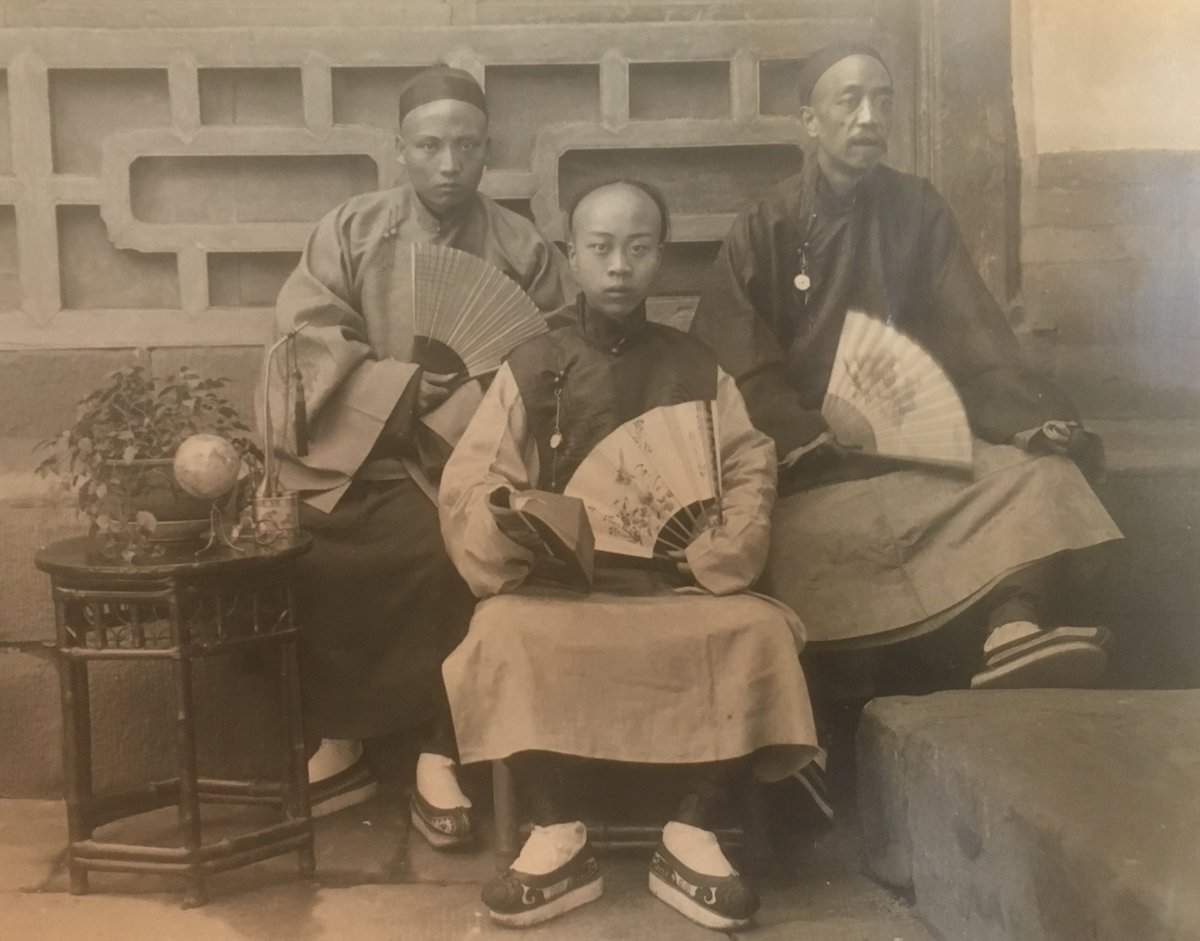
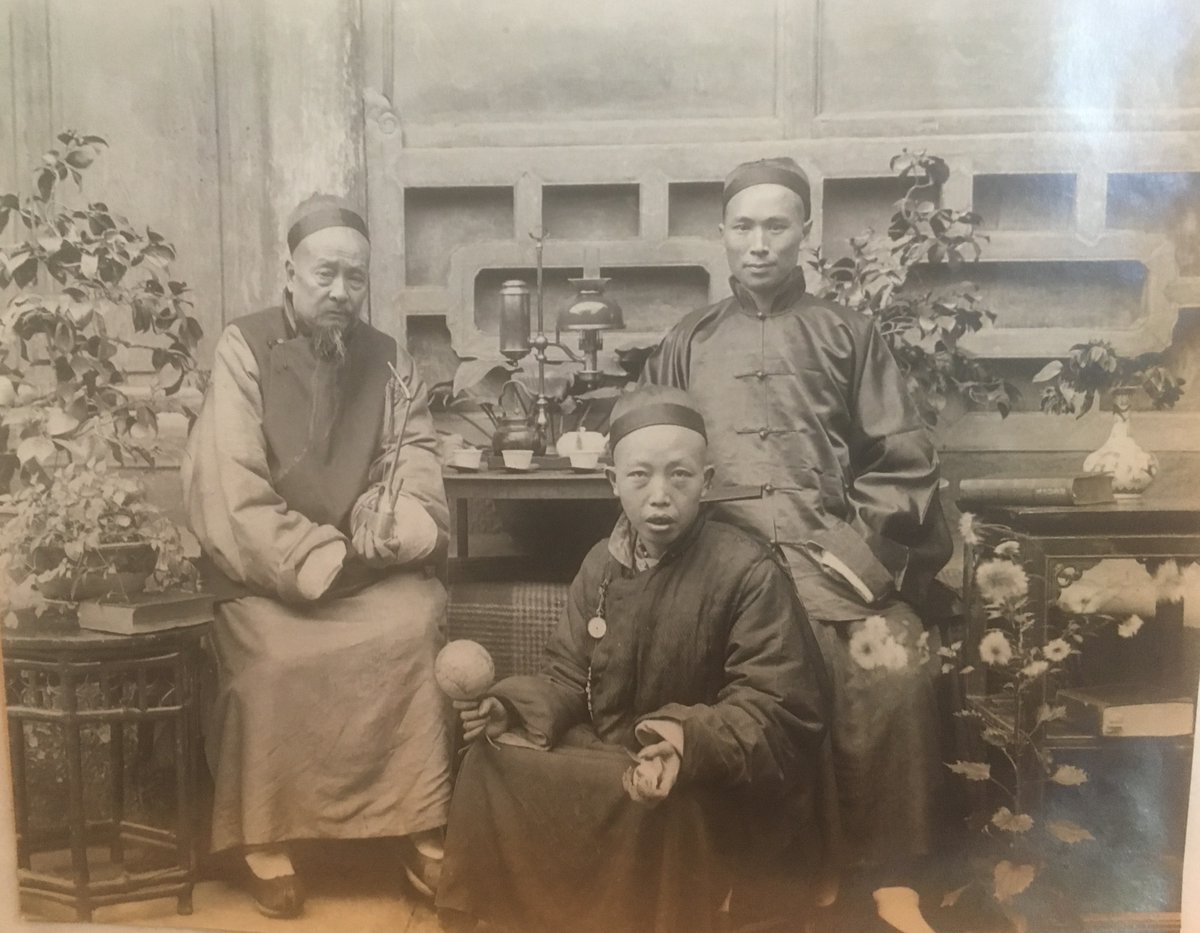
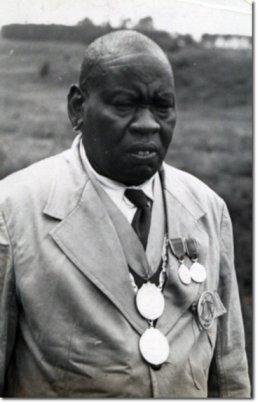
Faces of Guangyuan. Here are some (previously unseen) photographs from late-nineteenth century Sichuan, China. They come from the unpublished journals of missionary Florence Beauchamp, and I’ll add some more when I can. [1/?]

[2/?] Florence and Montagu Beauchamp were missionaries for the (Protestant) China Inland Mission. The story of how they got there is pretty special, but you may need to wait for my forthcoming book to see what I mean! For now, there’s this:
https://t.co/rPwXUt25Vy
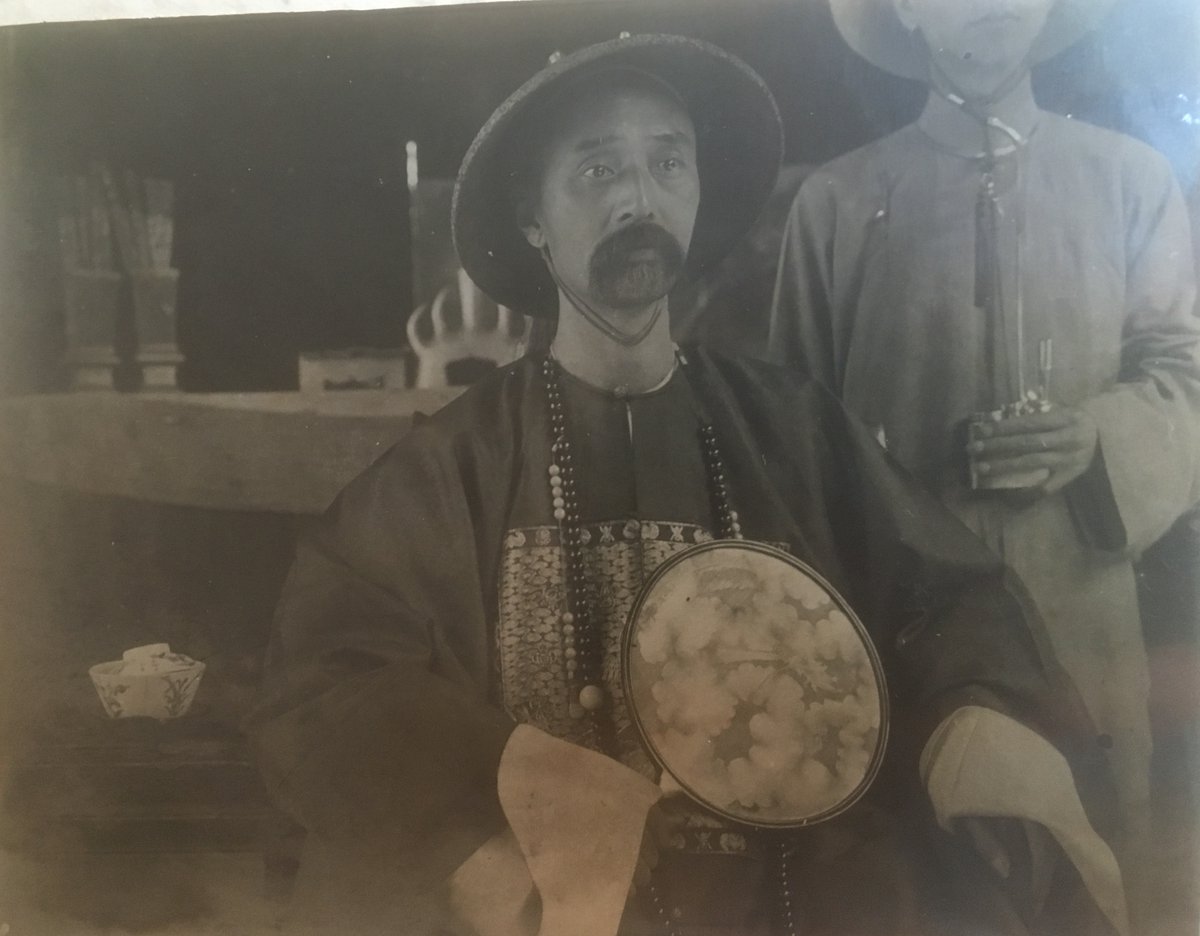
Florence had guests pose for photos in their courtyard. This is Song Dalaoye [宋(?)大老爷], the ‘mayor’ of Guanyuan: ‘He is in his robe of office and chain of official rank, and is holding his hand painted silk fan. His man servant holds his tobacco pipe ready for use.’ [3/?]
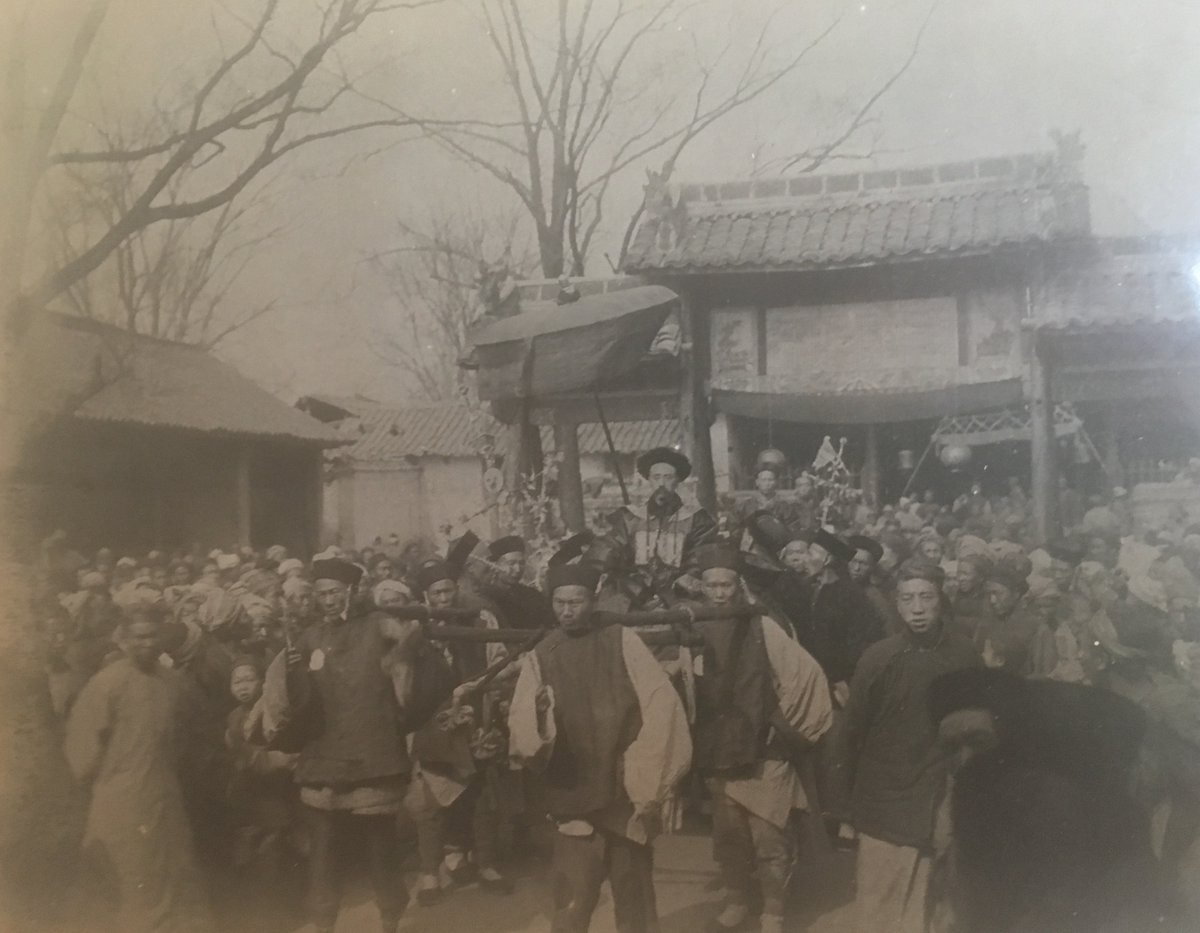
At Spring Festival, Montagu went to the Yamen (official residence) 'to photo the 'big man' as he came out in his open chair… At the riverside amidst the letting off of crackers, [he] gets out of his chair and prostrates himself in worship of the coming Spring.’ [4/?]
These men might (might!) be Yamen ‘runners’, (probably unpaid) assistants of Song Dalaoye or the magistrate. Runners were despised by foreigners and Chinese alike, ‘squeeze’ (i.e. corruption) being their only means of survival. [5/?]
In Zhaohua (昭化, to the south), Mrs & Mrs ‘Thunder’ were working as evangelists. We ‘had a good time among the people. Mrs Thunder and I spent our mornings and afternoons visiting in the houses and everywhere we received a hearty welcome from the women.’ [6/?]
Mr. Tian 'used to be a gaoler in the prison here. According to his own account he used to be a very bad character, torturing the prisoners to extract money from them. He was an opium smoker and came here in the first place to break off… Do pray for him.’ [7/?]
‘There are a great many Mahomedans in this city… they never intermarry with the heathen, nor will they eat with them. In dress and general manner of life they are quite Chinese and only their religious customs and ceremonies differ.’ [8/?]
A ‘party of Tibetans came through [Guangyuan] on their way to [Beijing] to pay tribute. A few of the suite came here… The Chinese thought we must be able to understand his words because they sounded exactly like ours - English and Tibetan being equally outlandish…’ [9/?]
More from History

You May Also Like

A brief analysis and comparison of the CSS for Twitter's PWA vs Twitter's legacy desktop website. The difference is dramatic and I'll touch on some reasons why.

Legacy site *downloads* ~630 KB CSS per theme and writing direction.

6,769 rules
9,252 selectors
16.7k declarations
3,370 unique declarations
44 media queries
36 unique colors
50 unique background colors
46 unique font sizes
39 unique z-indices

https://t.co/qyl4Bt1i5x


PWA *incrementally generates* ~30 KB CSS that handles all themes and writing directions.

735 rules
740 selectors
757 declarations
730 unique declarations
0 media queries
11 unique colors
32 unique background colors
15 unique font sizes
7 unique z-indices

https://t.co/w7oNG5KUkJ


The legacy site's CSS is what happens when hundreds of people directly write CSS over many years. Specificity wars, redundancy, a house of cards that can't be fixed. The result is extremely inefficient and error-prone styling that punishes users and developers.

The PWA's CSS is generated on-demand by a JS framework that manages styles and outputs "atomic CSS". The framework can enforce strict constraints and perform optimisations, which is why the CSS is so much smaller and safer. Style conflicts and unbounded CSS growth are avoided.