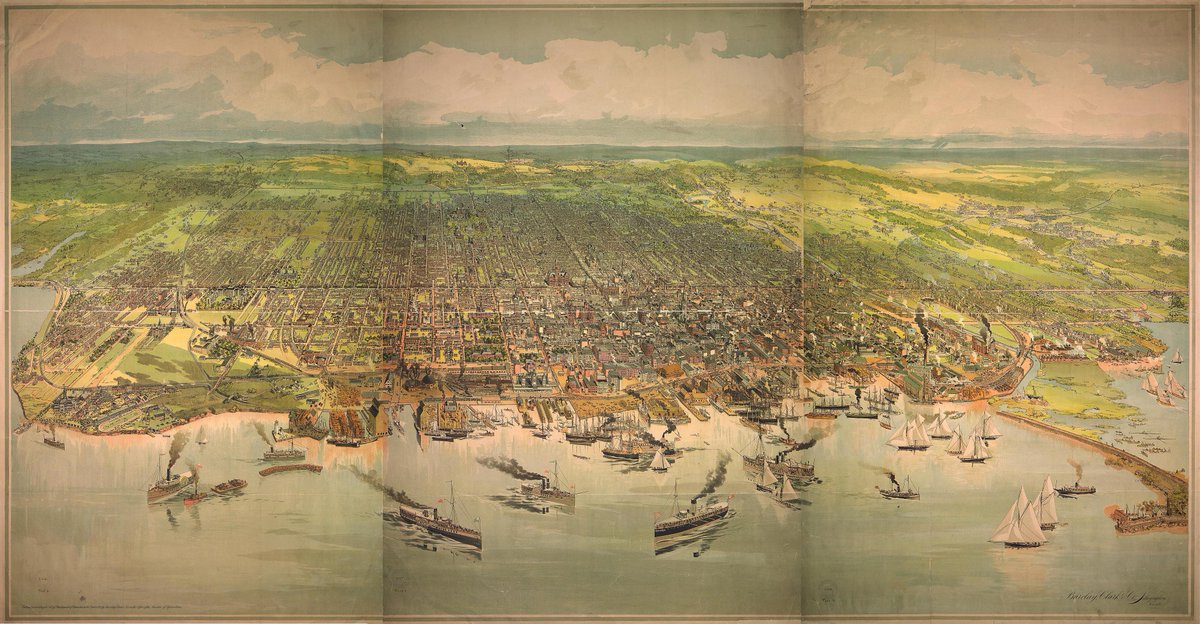
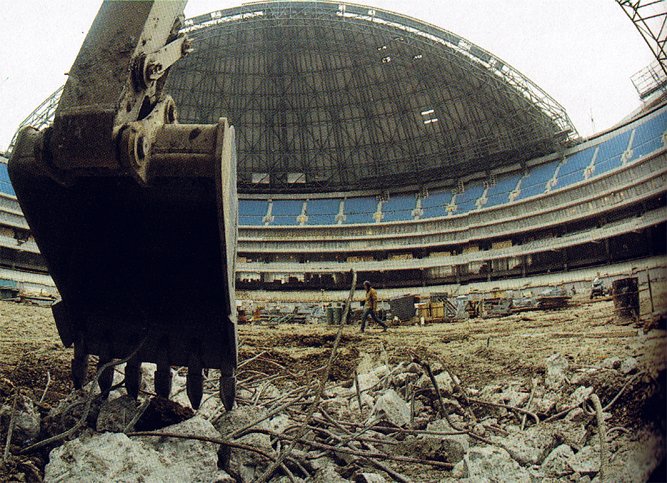
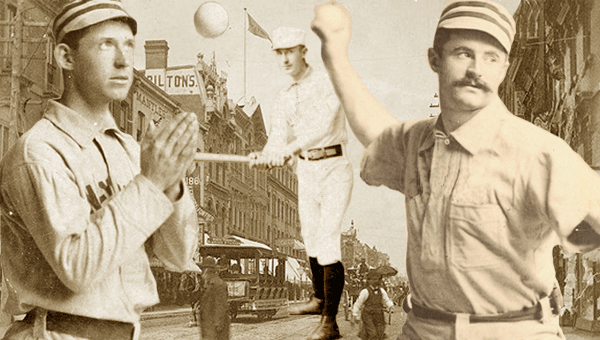
1. Well this seems like the perfect day for a thread about old baseball stadiums in Toronto.

It's a history that stretches all the way back to the 1800s and a place called the Toronto Baseball Grounds…

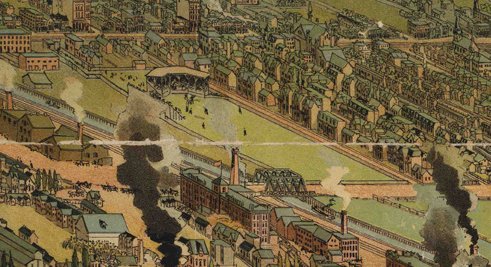
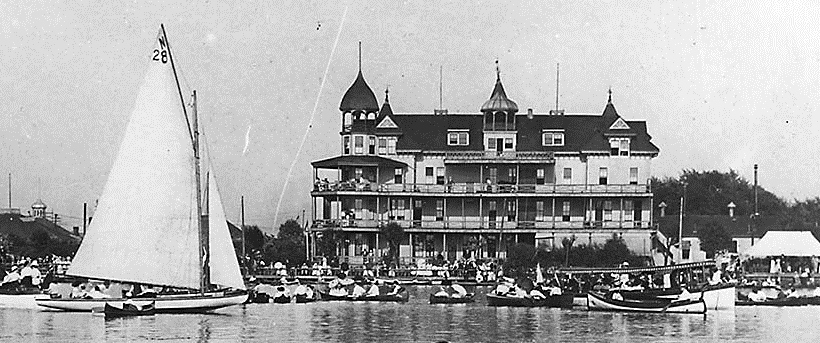
2. It might not look like it, but this is the very oldest image we have of a baseball stadium in Toronto — the only surviving visual representation of the city's first ballpark.

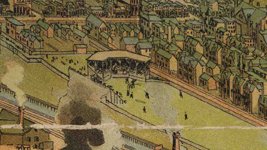
You have to zoom way, way in to see it…
3. …but here it is, standing on Queen Street on a spot overlooking the Don Valley.

It was originally known as the Toronto Baseball Grounds, but would soon be nicknamed Sunlight Park — in honour of the nearby Sunlight Soap Works factory.
4. Spectators could walk in off Queen St or ride up & park their carriage on the grounds. Admission was a quarter — plus an extra dime for the best seats in the house.

The sheltered grandstand could seat 2,000 people & there was standing room for another 10,000 beyond that.
5. A sellout at Sunlight Park meant that 10% of the city's entire population was at the ballgame that day.

When the stadium opened in 1886, even the Lieutenant Governor came out for the event. Someone in his entourage had their hat knocked off by a foul ball.
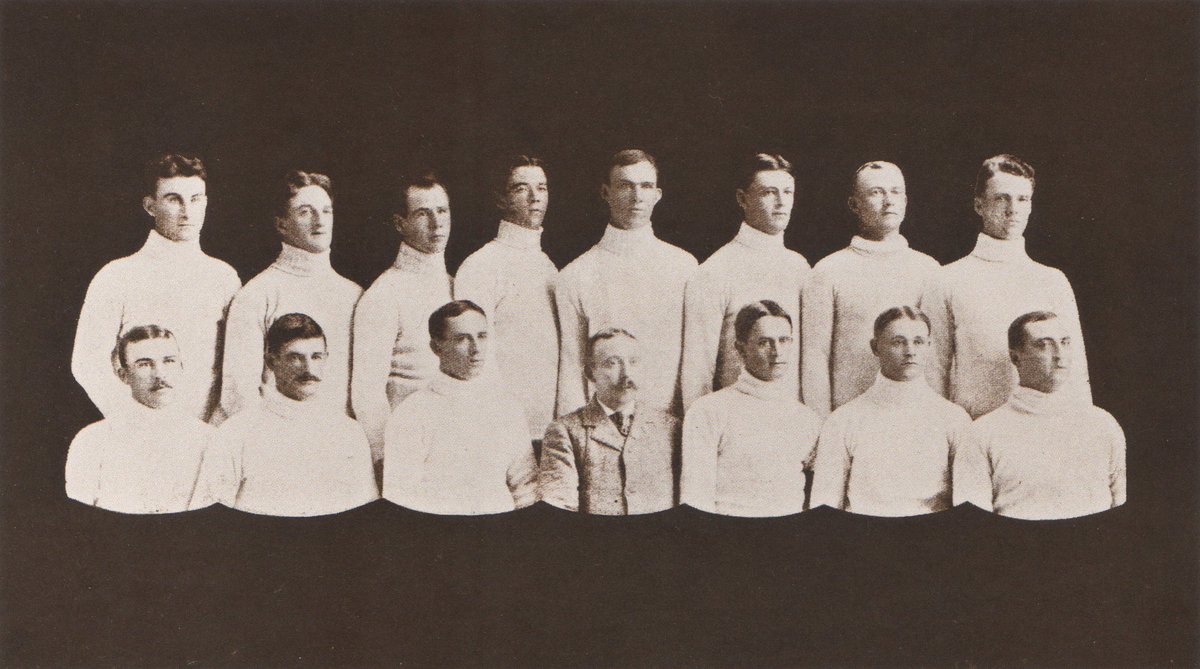
6. The Torontos got off to a great start, winning the city's first baseball championship in 1887

They were led by their alcoholic ace/slugger Cannonball Crane — who would soon be invited on an all-star world tour, getting drunk with his pet monkey in cities around the globe…
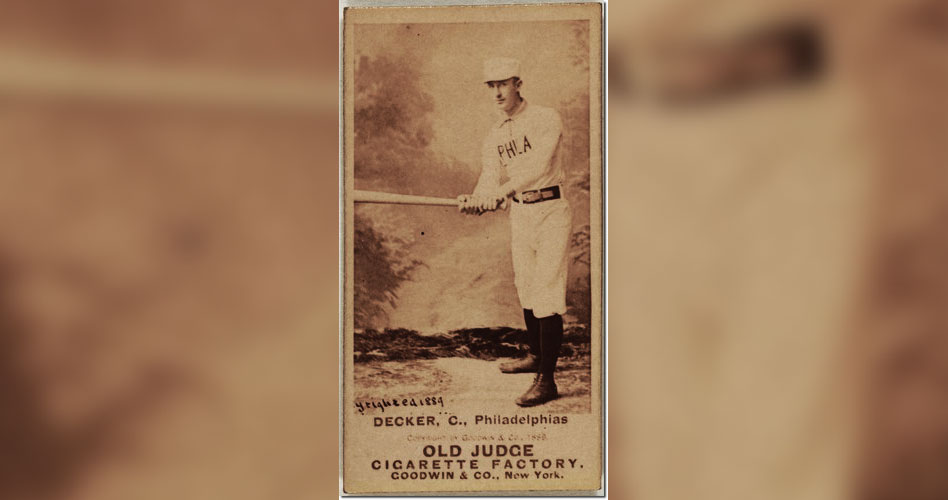
7. And catcher Harry Decker, a notorious con man who would go on to the become the star of the baseball team at San Quentin Prison.
8. By the end of the 1800s, the Torontos had morphed into a new team with a new name.

They called themselves the Maple Leafs — four decades before the city’s hockey team started calling themselves the same thing.

And the team was now owned by the Toronto Ferry Company.
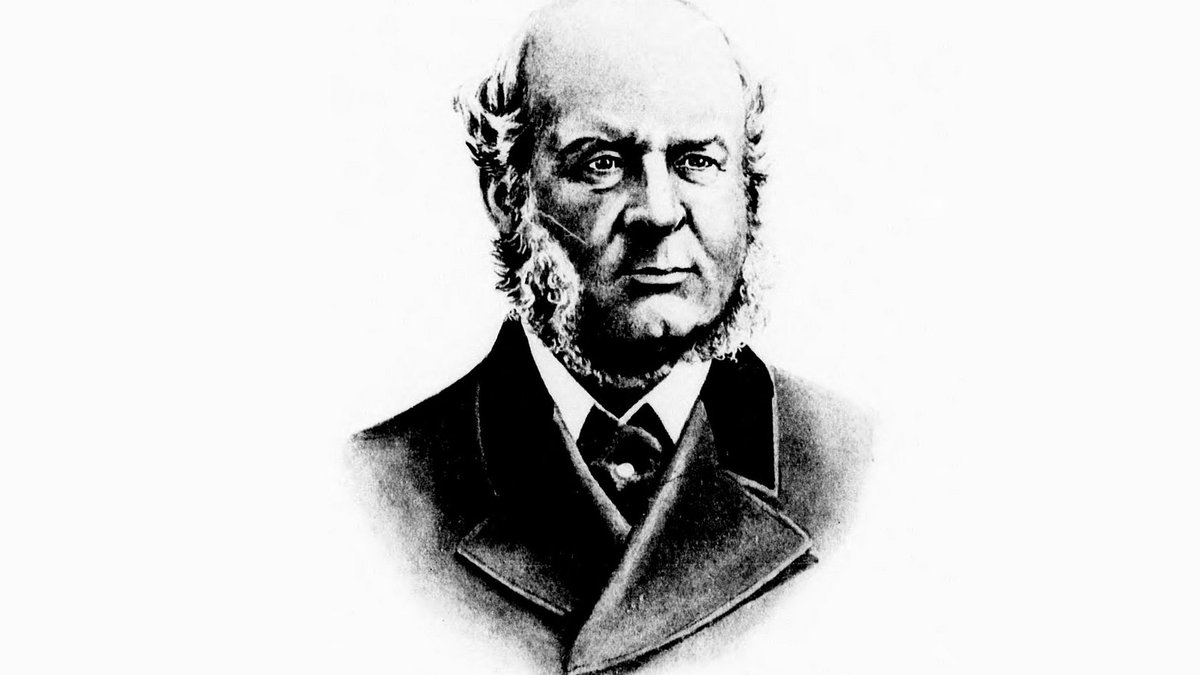
9. The company was run by Lol Solman — brother-in-law & business partner of the famous rower Ned Hanlan, whose family had been living on the islands for years.

Solman was always looking for new ways to lure customers to the islands.
10. The Toronto Ferry Company already owned an old-timey amusement park at Hanlan’s Point as well as the beautiful Hotel Hanlan.

Now, they added a sports stadium to their empire.
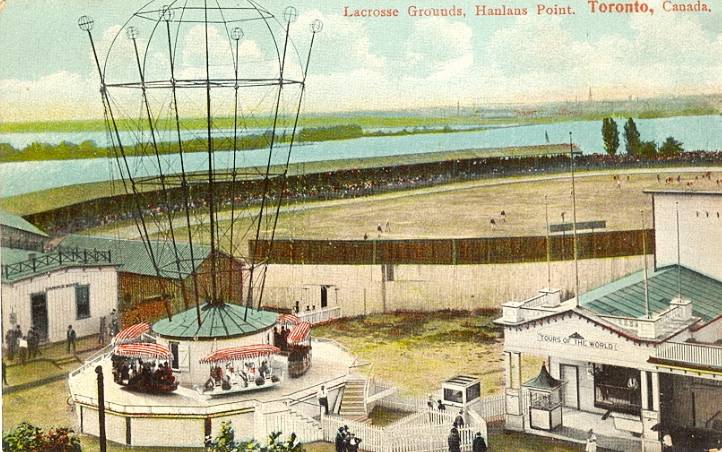
11. So it was at Hanlan’s Point that the Toronto Maple Leafs played most of their home games for the next 30 years, playing right beside the amusement park's Circle Swing ride:
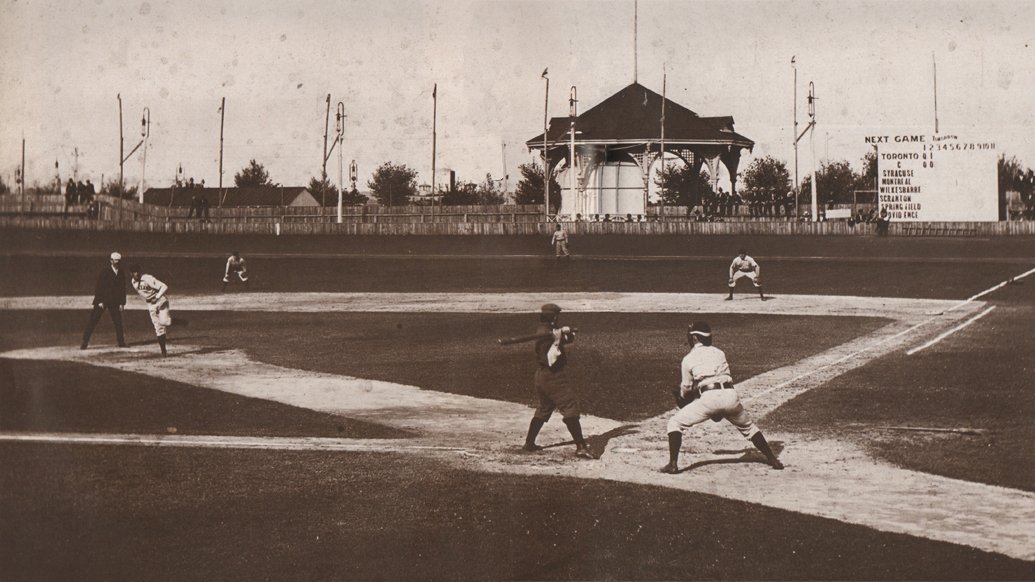
12. In this game played at an earlier version of the Hanlan's Point Stadium in 1897, you can still see evidence of the old Victorian era rules.

The umpire stood behind the pitcher. And there was no mound either — the pitchers threw off flat ground:

More from History

THREAD: With #silversqueeze trending on Twitter, it appears that this week's market spectacle may well be in the silver market.

A perfect moment for a thread on the Hunt Brothers and their alleged attempt to corner the silver market...


1/ First, let's set the stage.

The Hunt Brothers - Nelson Bunker Hunt, William Herbert Hunt, and Lamar Hunt - were the sons of Texas tycoon H.L. Hunt.

H.L. Hunt had amassed a billion-dollar fortune in the oil industry.

He died in 1974 and left that fortune to his family.


2/ After H.L.'s passing, the Hunt Brothers had taken over the family holdings and successfully managed to expand the Hunt empire.

By the late 1970s, the family's fortune was estimated to be ~$5 billion.

In the financial world, the Hunt name was as good as gold (or silver!).

3/ But the 1970s were a turbulent time in America.

Following the oil crisis of the early 1970s, the U.S. had entered a period of stagflation - a dire macroeconomic condition characterized by high inflation, low growth, and high unemployment.


4/ The Hunt Brothers - particularly Nelson Bunker and William Herbert - believed that the inflationary environment would persist and destroy the value of their family's holdings.

To hedge this risk, they turned to silver.

They began buying the metal at ~$3 per ounce in 1973.

You May Also Like

1/“What would need to be true for you to….X”

Why is this the most powerful question you can ask when attempting to reach an agreement with another human being or organization?

A thread, co-written by @deanmbrody:


2/ First, “X” could be lots of things. Examples: What would need to be true for you to

- “Feel it's in our best interest for me to be CMO"
- “Feel that we’re in a good place as a company”
- “Feel that we’re on the same page”
- “Feel that we both got what we wanted from this deal

3/ Normally, we aren’t that direct. Example from startup/VC land:

Founders leave VC meetings thinking that every VC will invest, but they rarely do.

Worse over, the founders don’t know what they need to do in order to be fundable.

4/ So why should you ask the magic Q?

To get clarity.

You want to know where you stand, and what it takes to get what you want in a way that also gets them what they want.

It also holds them (mentally) accountable once the thing they need becomes true.

5/ Staying in the context of soliciting investors, the question is “what would need to be true for you to want to invest (or partner with us on this journey, etc)?”

Multiple responses to this question are likely to deliver a positive result.
@franciscodeasis https://t.co/OuQaBRFPu7
Unfortunately the "This work includes the identification of viral sequences in bat samples, and has resulted in the isolation of three bat SARS-related coronaviruses that are now used as reagents to test therapeutics and vaccines." were BEFORE the


chimeric infectious clone grants were there.https://t.co/DAArwFkz6v is in 2017, Rs4231.
https://t.co/UgXygDjYbW is in 2016, RsSHC014 and RsWIV16.
https://t.co/krO69CsJ94 is in 2013, RsWIV1. notice that this is before the beginning of the project

starting in 2016. Also remember that they told about only 3 isolates/live viruses. RsSHC014 is a live infectious clone that is just as alive as those other "Isolates".

P.D. somehow is able to use funds that he have yet recieved yet, and send results and sequences from late 2019 back in time into 2015,2013 and 2016!

https://t.co/4wC7k1Lh54 Ref 3: Why ALL your pangolin samples were PCR negative? to avoid deep sequencing and accidentally reveal Paguma Larvata and Oryctolagus Cuniculus?