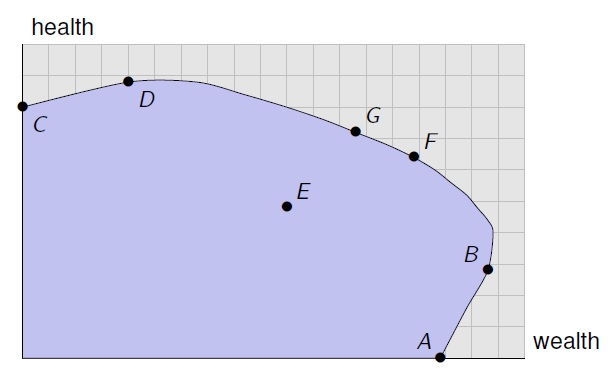
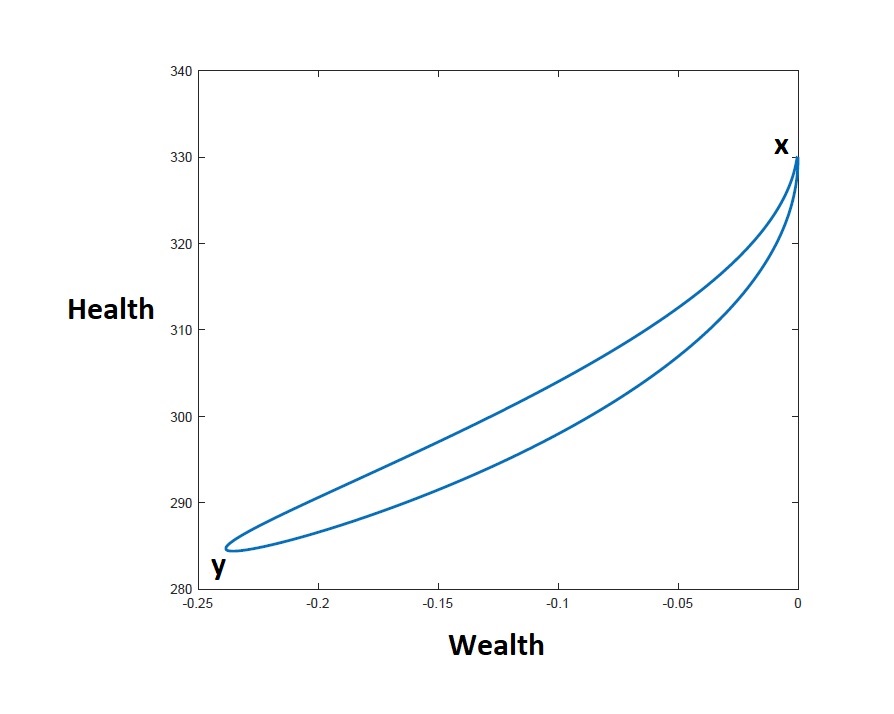
The health-wealth tradeoff of lockdowns is still hotly debated. Here are some thoughts that may help untangle the issues. 1/17 #EconTwitter #EpiTwitter
Figure courtesy of @luismbcabral
More from Health

No-regret #hydrogen:
Charting early steps for H₂ infrastructure in Europe.
👉Summary of conclusions of a new study by @AgoraEW @AFRY_global @Ma_Deutsch @gnievchenko (1/17)
https://t.co/YA50FA57Em
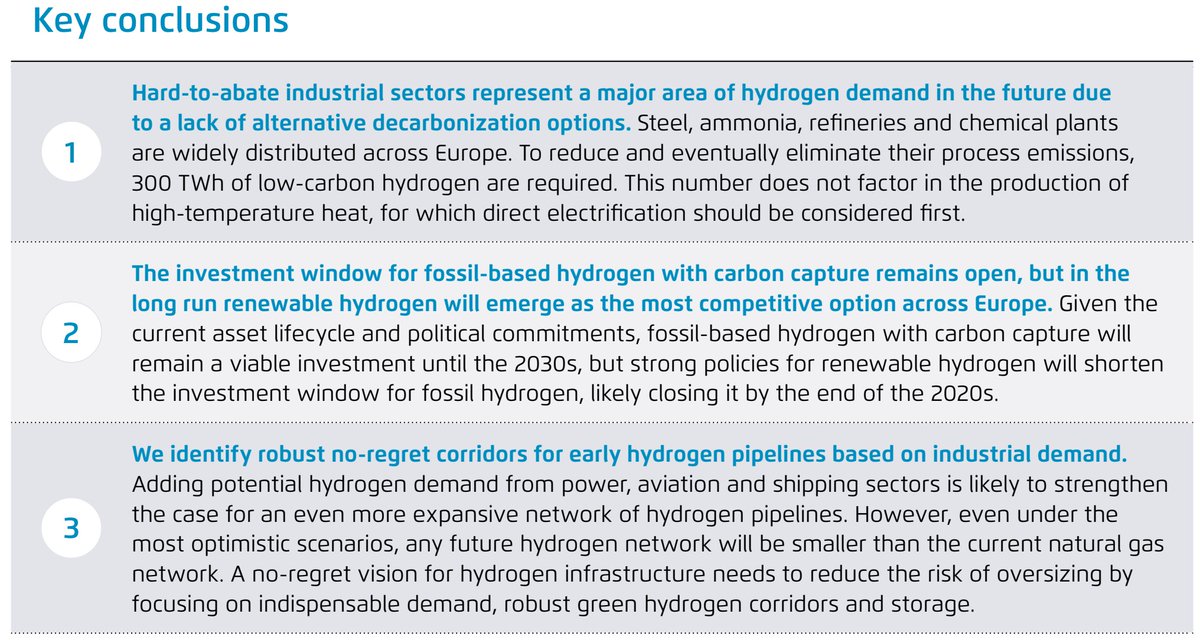
The idea behind this study is that future hydrogen demand is highly uncertain and we don’t want to spend tens of billions of euros to repurpose a network which won’t be needed. For instance, hydrogen in ground transport is a hotly debated topic https://t.co/RlnqDYVzpr (2/17)
Similar things can be said about heat. 40% of today’s industrial natural gas use in the EU goes to heat below 100°C and therefore is within range of electric heat pumps – whose performance factors far exceed 100%. (3/17)

Even for higher temperatures, a range of power-to-heat (PtH) options can be more energy-efficient than hydrogen and should be considered first. Available PtH technologies can cover all temperature levels needed in industrial production (e.g. electric arc furnace: 3500°C). (4/17)
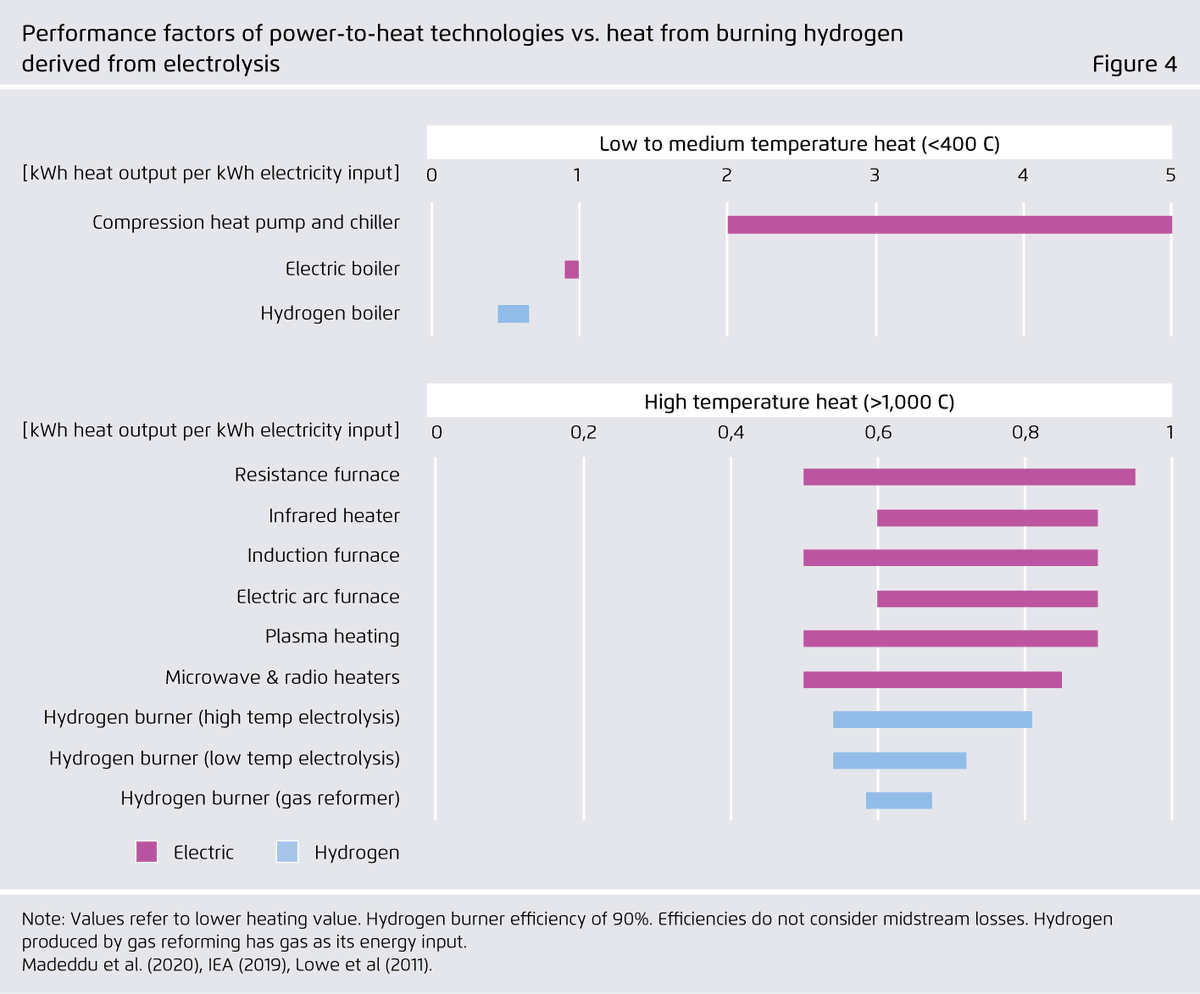
In our view, hydrogen use for feedstock and chemical reactions is the only inescapable source of industrial hydrogen demand in Europe that does not lend itself to electrification. Examples include ammonia, steel, and petrochemical industries. (5/17)
Charting early steps for H₂ infrastructure in Europe.
👉Summary of conclusions of a new study by @AgoraEW @AFRY_global @Ma_Deutsch @gnievchenko (1/17)
https://t.co/YA50FA57Em
The idea behind this study is that future hydrogen demand is highly uncertain and we don’t want to spend tens of billions of euros to repurpose a network which won’t be needed. For instance, hydrogen in ground transport is a hotly debated topic https://t.co/RlnqDYVzpr (2/17)
Similar things can be said about heat. 40% of today’s industrial natural gas use in the EU goes to heat below 100°C and therefore is within range of electric heat pumps – whose performance factors far exceed 100%. (3/17)
Even for higher temperatures, a range of power-to-heat (PtH) options can be more energy-efficient than hydrogen and should be considered first. Available PtH technologies can cover all temperature levels needed in industrial production (e.g. electric arc furnace: 3500°C). (4/17)
In our view, hydrogen use for feedstock and chemical reactions is the only inescapable source of industrial hydrogen demand in Europe that does not lend itself to electrification. Examples include ammonia, steel, and petrochemical industries. (5/17)


I think @SamAdlerBell in his quest to be the contrarian on Fauci gets several things wrong here. 1/
First, the failure last year actually was driven by the White House, the #Trump inner circle. Watch what's happening now, the US' scientific and public health infrastructure is creaking back to life. 2/
I think Sam underestimates the decimation of many of our health agencies over the past four years and the establishment of ideological control over them during the pandemic. 3/
I also am puzzled why Tony gets the blame for not speaking up, etc. Robert Redfield, Brett Giroir, Deb Birx, Jerome Adams, Alex Azar all could have done the same. 4/
Several of these people Bob Redfield, Brett Giroir, Alex Azar were led by craven ambition, Jerome Adams by cowardice, but I do think Deb Birx and Tony tried as institutionalists, insiders to make a difference. 5/
— Matthew Yglesias (@mattyglesias) January 30, 2021
First, the failure last year actually was driven by the White House, the #Trump inner circle. Watch what's happening now, the US' scientific and public health infrastructure is creaking back to life. 2/
I think Sam underestimates the decimation of many of our health agencies over the past four years and the establishment of ideological control over them during the pandemic. 3/
I also am puzzled why Tony gets the blame for not speaking up, etc. Robert Redfield, Brett Giroir, Deb Birx, Jerome Adams, Alex Azar all could have done the same. 4/
Several of these people Bob Redfield, Brett Giroir, Alex Azar were led by craven ambition, Jerome Adams by cowardice, but I do think Deb Birx and Tony tried as institutionalists, insiders to make a difference. 5/

This is the $1mln question still without an answer: why were these workers cleaning bat guano from that abandoned mine?
Surprisingly we simply don't know.
China would have all interest in clarifying that point if for instance they were prospecting or selling guano. It did not.
What we know is that EcoHealth + WIV were sampling bat sites in the vicinity at the exact time of the workers being in that mine.
#DRASTIC wrote about this and about other oddities in the official story:
Maybe it's just one of these coincidences.
Then it gets interesting: about a year after the miners death, Olival & Epstein from EcoHealth Alliance co-authored a paper about the coronavirus risk infection from bat guano collection.
No mention of the
That paper oddly used some old bat samples collected by DARPA in 2006/7 at the famous Thai bat cave.
It never mentioned that the Thai monks have been doing this every Sunday for many many years without infection.
But most interestingly it never mentioned the Mojiang mine accident, even if the perfect timing and recycling of old DARPA bat samples seem to point to a likely knowledge of it.
Anyway, the idea was to ask for more money, as you correctly
Surprisingly we simply don't know.
China would have all interest in clarifying that point if for instance they were prospecting or selling guano. It did not.
The miners were tasked with removing bat feces. AFAIK it hasn't been established why they were doing this. Given that EcoHealth was collecting bat fecal samples in the same province around the same time, is it possible these miners were actually collecting guano for EcoHealth?
— The Great Gumbino (@gumby4christ) February 15, 2021
What we know is that EcoHealth + WIV were sampling bat sites in the vicinity at the exact time of the workers being in that mine.
#DRASTIC wrote about this and about other oddities in the official story:
Maybe it's just one of these coincidences.
Then it gets interesting: about a year after the miners death, Olival & Epstein from EcoHealth Alliance co-authored a paper about the coronavirus risk infection from bat guano collection.
No mention of the
That paper oddly used some old bat samples collected by DARPA in 2006/7 at the famous Thai bat cave.
It never mentioned that the Thai monks have been doing this every Sunday for many many years without infection.
But most interestingly it never mentioned the Mojiang mine accident, even if the perfect timing and recycling of old DARPA bat samples seem to point to a likely knowledge of it.
Anyway, the idea was to ask for more money, as you correctly