Our most comprehensive article on IPOs is finally here!
Complete IPO Lifecycle
FAQs answered
SEBI Norms
IPO Participants
IPO investors + allotment rules
IPO Funding
Allotment chances myths + tips
Reading RHP
Other Myths debunked
Fun
More from Aditya Kondawar


Paytmmmmm Karooooooo! Most of us have heard this jingle right?
After the much-celebrated #IPO of Zomato, all eyes are now on #PayTM!
So let's not wait and let's understand everything about PayTM in the below thread 👇
1/
- The DRHP mentions a Rs 16,600 Cr Fundraise
- Split - 50% Fresh, 50% OFS
- Valuation of $25-30 billion targeted from this IPO
Let’s put all of these numbers into perspective here –
2/
Some big numbers, right? Ok back to PayTM now –
What does it do?
Well, it does a lot of things but at the core of it let's term it a fintech company.
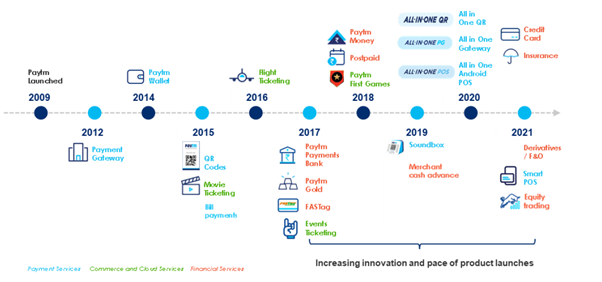
- It started as a digital wallet-based platform focused on mobile SIM top-ups and utility payments in 2010
3/
- They pivoted to marketing, mobile phone top-ups, payments, e-comm, then a full-scale fintech services company – The avatar that we see today
- The Paytm ecosystem has payments (wallet / UPI), merchant acquiring, credit, savings, broking, wealth management, and insurance.
4/
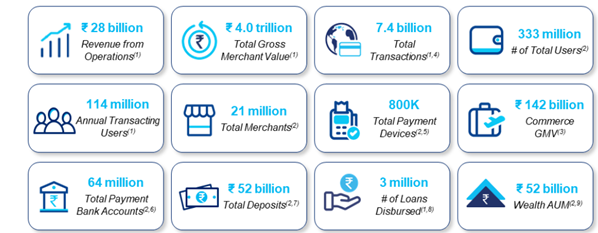
Total users - 333 mn
Monthly active users - 50 mn
Merchants - 21.1 mn
RedSeer - Paytm has a payments transaction volume market share of ~40% and wallet payments transaction mkt share of 65-70% in India for FY21
After the much-celebrated #IPO of Zomato, all eyes are now on #PayTM!
So let's not wait and let's understand everything about PayTM in the below thread 👇
1/
- The DRHP mentions a Rs 16,600 Cr Fundraise
- Split - 50% Fresh, 50% OFS
- Valuation of $25-30 billion targeted from this IPO
Let’s put all of these numbers into perspective here –
Paytm Pre IPO info -
— Aditya Kondawar (@aditya_kondawar) July 7, 2021
Unlisted price - \u20b92450-2500
Valuation - \u20b9151,250 Cr
Targeting 25-30bn$ as per various news sources
25 bn $ - \u20b9185,925 Cr
30 bn $ - \u20b9223,110 Cr
6.05 cr shares - FY21 (FV\u20b910)
Recent split to \u20b91 FV, 60.5 Cr shares
Exchange rate 74.37 taken
No reco!
2/
Some big numbers, right? Ok back to PayTM now –
What does it do?
Well, it does a lot of things but at the core of it let's term it a fintech company.
- It started as a digital wallet-based platform focused on mobile SIM top-ups and utility payments in 2010
3/
- They pivoted to marketing, mobile phone top-ups, payments, e-comm, then a full-scale fintech services company – The avatar that we see today
- The Paytm ecosystem has payments (wallet / UPI), merchant acquiring, credit, savings, broking, wealth management, and insurance.
4/
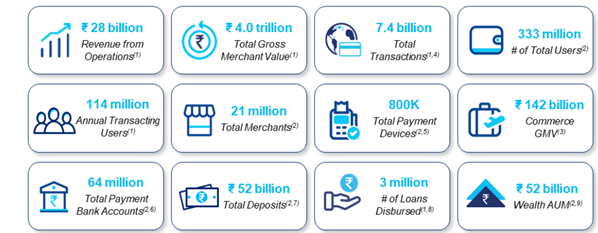
Total users - 333 mn
Monthly active users - 50 mn
Merchants - 21.1 mn
RedSeer - Paytm has a payments transaction volume market share of ~40% and wallet payments transaction mkt share of 65-70% in India for FY21
A list of all the articles that we have created - From Banking to Fiber!
The content in the articles has been written in a very simple language which will help you learn everything about the sector and/or the company!
Do Retweet and help your fellow tweeples learn!
Let's go 👇
Starting with Financials -
A to Z of Banking, all basics of banking explained -
https://t.co/tMfB73CHYs
Top 5 Banks and their strategies -
https://t.co/aivfUtuw9g
Large Bank - HDFC Bank - How did HDFC Bank become HDFC Bank -
Mid Sized Bank - Kotak Mahindra Bank
How did they avoid all NPAs from 1999? What makes Uday Kotak's Concalls a goldmine of information on the Banking sector? Everything explained!
We have given details from 1999! The most comprehensive article ever!
Large NBFC - Consumer Durables Play - Bajaj Finance
From its origins to how it gives 0% EMI to how it earns money from manufacturers - everything explained!
More - Origins, Products, Loan Book, Cross-Selling, Risk management, Concalls of 8 Years,
Gold NBFC - Manappuram Finance
Origins (with fun facts)
Products, 10Y Financials, Business model and how do they make money, How does a gold loan work, Operational efficiency, peer comparison, mgmt commentary, why we don't like the stock, and much
The content in the articles has been written in a very simple language which will help you learn everything about the sector and/or the company!
Do Retweet and help your fellow tweeples learn!
Let's go 👇
Starting with Financials -
A to Z of Banking, all basics of banking explained -
https://t.co/tMfB73CHYs
Top 5 Banks and their strategies -
https://t.co/aivfUtuw9g
Large Bank - HDFC Bank - How did HDFC Bank become HDFC Bank -
Mid Sized Bank - Kotak Mahindra Bank
How did they avoid all NPAs from 1999? What makes Uday Kotak's Concalls a goldmine of information on the Banking sector? Everything explained!
We have given details from 1999! The most comprehensive article ever!
Large NBFC - Consumer Durables Play - Bajaj Finance
From its origins to how it gives 0% EMI to how it earns money from manufacturers - everything explained!
More - Origins, Products, Loan Book, Cross-Selling, Risk management, Concalls of 8 Years,
Gold NBFC - Manappuram Finance
Origins (with fun facts)
Products, 10Y Financials, Business model and how do they make money, How does a gold loan work, Operational efficiency, peer comparison, mgmt commentary, why we don't like the stock, and much
All the books (50 books) I read this year and a one-line review on them!
A Mega thread!
My last thread for 2021 🧵
#Books #Reading
Let's get started 👇
A few years back, I used to read articles which used to say a CEO read 40 books this year and I always thought how?
It's all about consistently reading a few pages every day!
2020- I read 15-25 pages(not every day) - I read 34 books in 2020
2021- I read 25-35 pages every night before sleeping and 100-150 pages every weekend
Ok, now let’s go through those 50 books 👇
1/n
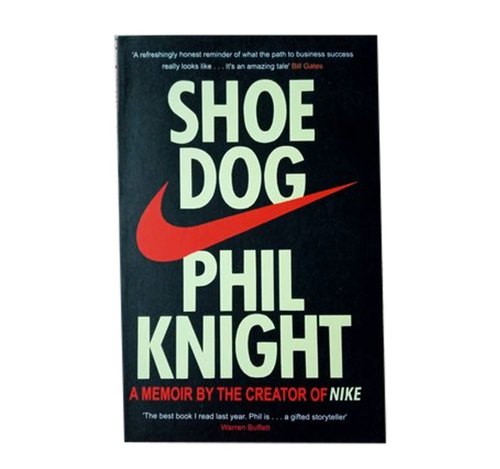
Shoe Dog by Phil Knight
Nike started off by importing high-quality, low-cost running shoes from Japan
What’s shocking is the number of times the business came to an end but came out stronger every time!
Never Giving up – The one key lesson from the book!{{ img:6c137d }}
2/n
Ankur Warikoo's 6 Ebooks
Failure Resume
Mistakes I made with my money
mistakes I made in my 30s
Leadership
Time Management
Mistakes I made in my 20s
Read here - https://t.co/utSzYtS3CV
PS - He is someone I follow very closely, I learn a lot from his content!
@warikoo
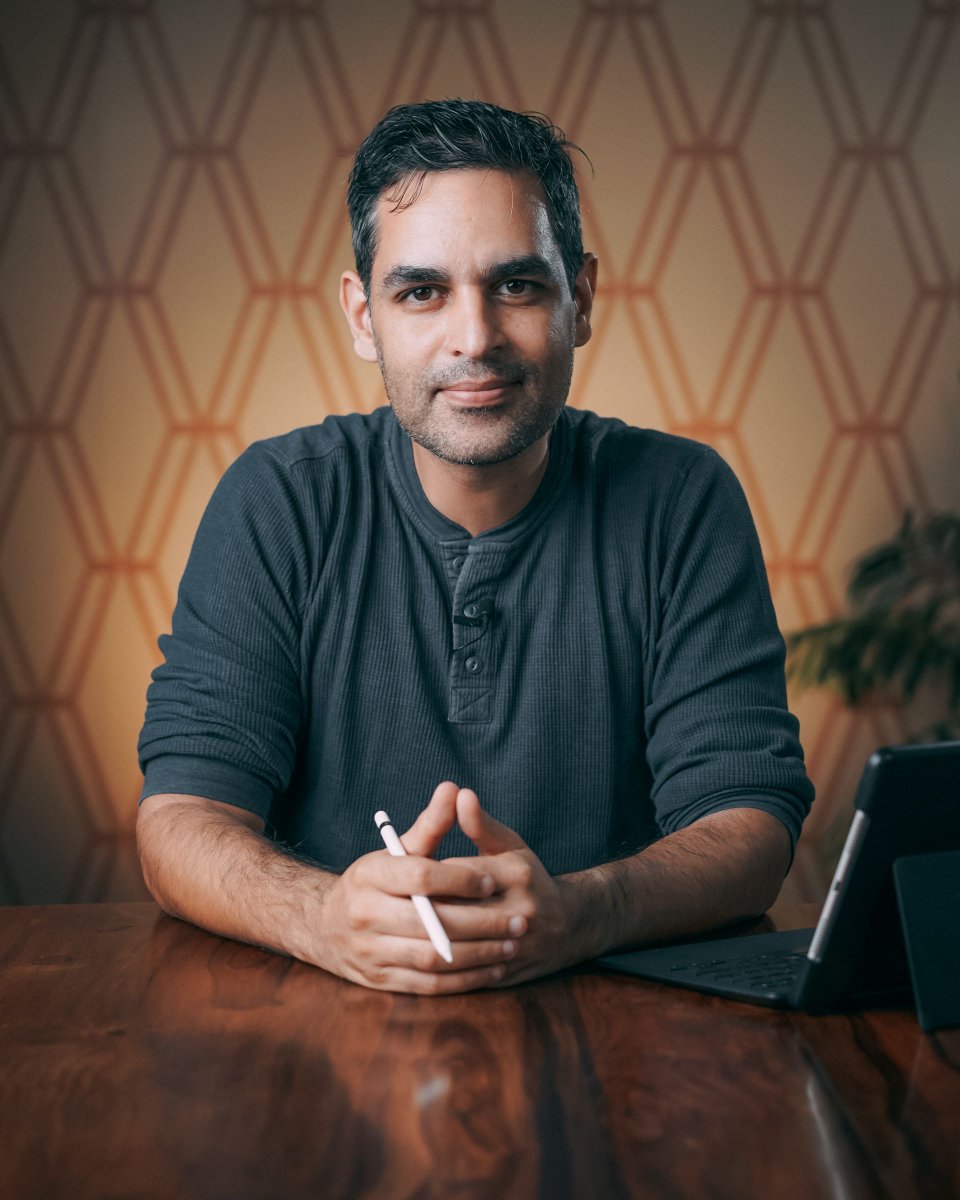
Not just the above but his threads, videos, newsletters and podcasts are also amazing!
His new book ‘Do Epic shit’ is out, I would strongly recommend you to order that. I have done that already on Day 1 and I am starting my 2022 with that book 😊
A Mega thread!
My last thread for 2021 🧵
#Books #Reading
Let's get started 👇
A few years back, I used to read articles which used to say a CEO read 40 books this year and I always thought how?
It's all about consistently reading a few pages every day!
2020- I read 15-25 pages(not every day) - I read 34 books in 2020
2021- I read 25-35 pages every night before sleeping and 100-150 pages every weekend
Ok, now let’s go through those 50 books 👇
1/n
Shoe Dog by Phil Knight
Nike started off by importing high-quality, low-cost running shoes from Japan
What’s shocking is the number of times the business came to an end but came out stronger every time!
Never Giving up – The one key lesson from the book!{{ img:6c137d }}
2/n
Ankur Warikoo's 6 Ebooks
Failure Resume
Mistakes I made with my money
mistakes I made in my 30s
Leadership
Time Management
Mistakes I made in my 20s
Read here - https://t.co/utSzYtS3CV
PS - He is someone I follow very closely, I learn a lot from his content!
@warikoo
Not just the above but his threads, videos, newsletters and podcasts are also amazing!
His new book ‘Do Epic shit’ is out, I would strongly recommend you to order that. I have done that already on Day 1 and I am starting my 2022 with that book 😊








![Peter McCormack [Jan/3\u279e\u20bf \U0001f511\u220e]](https://pbs.twimg.com/profile_images/1524287442307723265/_59ITDbJ_normal.jpg)