
But that’s kind of the point, once you realise the film is about depression, and how depression works.
Not sure we need anymore It’s A Wonderful Life discourse but I’ve seen a couple of professional critics in my timeline completely misunderstanding the point of the film so I feel I must intervene for the sake of reason.

But that’s kind of the point, once you realise the film is about depression, and how depression works.


More from For later read


Hi @EdinburghUni @EHRC @EHRCChair @KishwerFalkner @RJHilsenrath @trussliz @GEOgovuk
The DIVERSITY INFORMATION section in yr job application mentions 'legal equality duties'. You then ask "What is your gender identity?" with options
Female
Male
Non-binary
Not-listed
Other
1/13
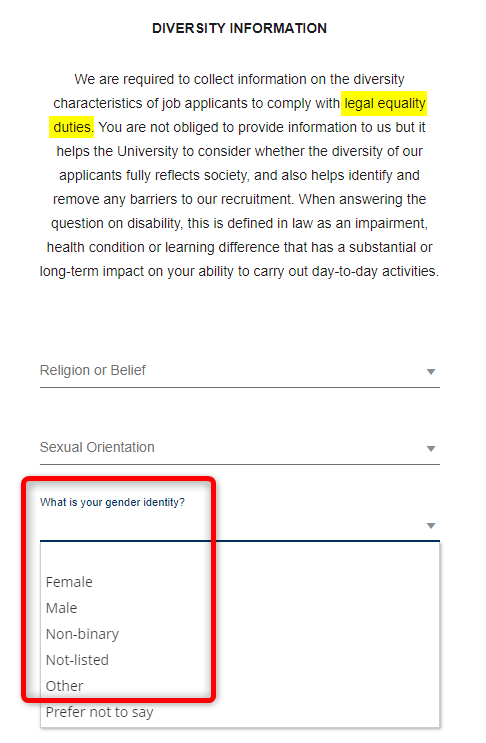
'Gender identity' is not a protected characteristic under the Equality Act 2010 and is not defined in the Act.
https://t.co/qisFhCiV1u
2/13
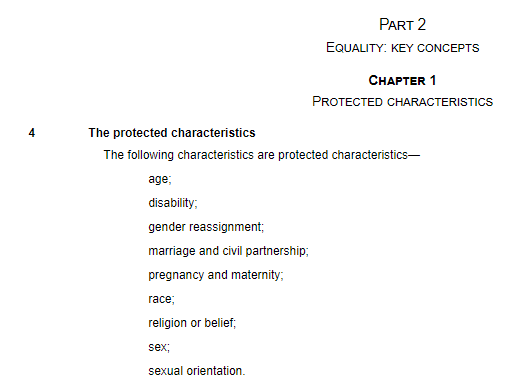
Sex is the protected characteristic and the only two possible options for sex are 'Female' and 'Male' as defined in the Act and consistent with biology - 'non-binary' and 'other' are not valid options.
https://t.co/CEJ0gkr6nF
'Gender identity' is not a synonym for sex.
3/13

You then ask "Does your gender identity match your sex registered at birth?"
4/13
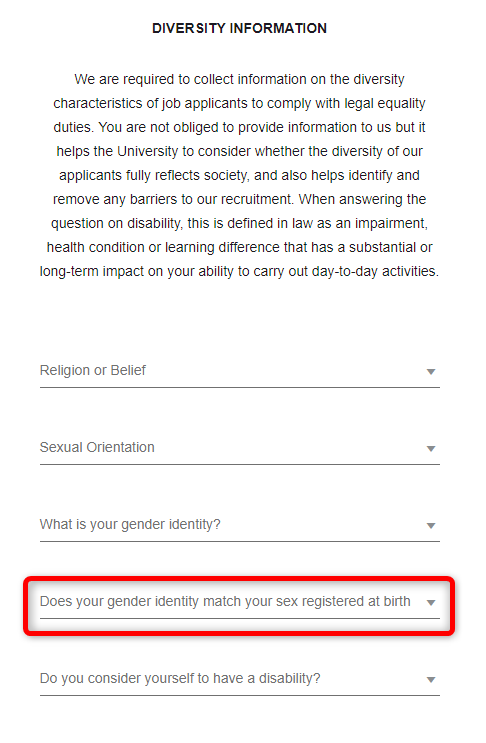
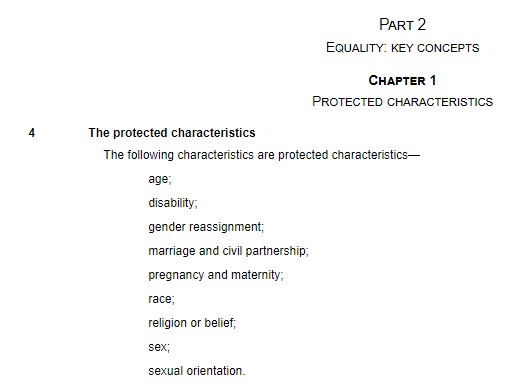
Again, 'gender identity' is not a protected characteristic under the Equality Act 2010 and is not defined in the Act.
https://t.co/qisFhCiV1u
5/13
The DIVERSITY INFORMATION section in yr job application mentions 'legal equality duties'. You then ask "What is your gender identity?" with options
Female
Male
Non-binary
Not-listed
Other
1/13
'Gender identity' is not a protected characteristic under the Equality Act 2010 and is not defined in the Act.
https://t.co/qisFhCiV1u
2/13
Sex is the protected characteristic and the only two possible options for sex are 'Female' and 'Male' as defined in the Act and consistent with biology - 'non-binary' and 'other' are not valid options.
https://t.co/CEJ0gkr6nF
'Gender identity' is not a synonym for sex.
3/13
You then ask "Does your gender identity match your sex registered at birth?"
4/13
Again, 'gender identity' is not a protected characteristic under the Equality Act 2010 and is not defined in the Act.
https://t.co/qisFhCiV1u
5/13

I’ve been frustrated by the tweets I’ve seen of this as a Canadian. Because the facts are being misrepresented.
We’re not under some sort of major persecution. That’s not what this is. A thread. 1/8
This church was fined for breaking health orders in Dec. They continued to break them. So the pastor was arrested and released on conditions of... you guessed it, not breaking health orders. And then they broke the health orders. 2/8
So then he was arrested and told he couldn’t hold church services in person if he was to be released. He refused. He’s still in custody.
Here is my frustration as a Christian in Canada:
1. They were able to gather, with some conditions. They didn’t like those. 3/8
2. He is not actually unable to preach. He is just unable to hold church services because they broke the conditions given by the public health office in Alberta. He says he can’t in good conscience do that, so they are keeping him in jail (because he will break the law). 4/8
3. This is the 1st article of The Canadian Charter of Rights and Freedoms: “guarantees the rights and freedoms set out in it subject only to such reasonable limits prescribed by law as can be demonstrably justified in a free and democratic society.” 5/8
We’re not under some sort of major persecution. That’s not what this is. A thread. 1/8
BREAKING: Pastor James Coates of GraceLife Church of Edmonton was just carried off to jail in hand and ankle cuffs. The condition of his release is that he cannot preach. His wife/kids are not allowed to see him.
— Jeremy (on Theology) (@TheologyJeremy) February 17, 2021
The 1st Canadian pastor to be jailed for holding a church service pic.twitter.com/AKMPVWgFXw
This church was fined for breaking health orders in Dec. They continued to break them. So the pastor was arrested and released on conditions of... you guessed it, not breaking health orders. And then they broke the health orders. 2/8
So then he was arrested and told he couldn’t hold church services in person if he was to be released. He refused. He’s still in custody.
Here is my frustration as a Christian in Canada:
1. They were able to gather, with some conditions. They didn’t like those. 3/8
2. He is not actually unable to preach. He is just unable to hold church services because they broke the conditions given by the public health office in Alberta. He says he can’t in good conscience do that, so they are keeping him in jail (because he will break the law). 4/8
3. This is the 1st article of The Canadian Charter of Rights and Freedoms: “guarantees the rights and freedoms set out in it subject only to such reasonable limits prescribed by law as can be demonstrably justified in a free and democratic society.” 5/8

You May Also Like








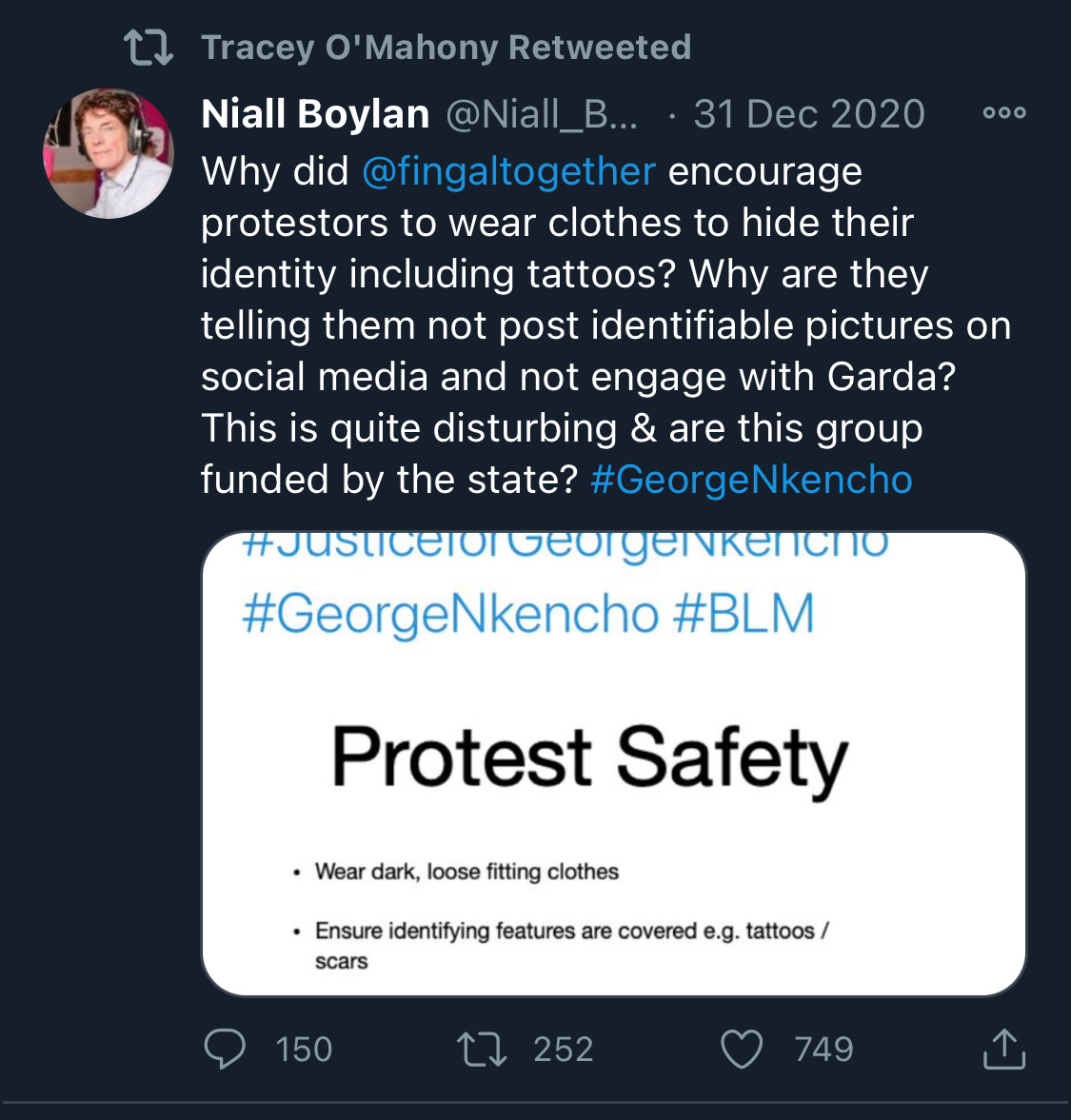
Fake chats claiming to be from the Irish African community are being disseminated by the far right in order to suggest that violence is imminent from #BLM supporters. This is straight out of the QAnon and Proud Boys playbook. Spread the word. Protest safely. #georgenkencho

There is co-ordination across the far right in Ireland now to stir both left and right in the hopes of creating a race war. Think critically! Fascists see the tragic killing of #georgenkencho, the grief of his community and pending investigation as a flashpoint for action.
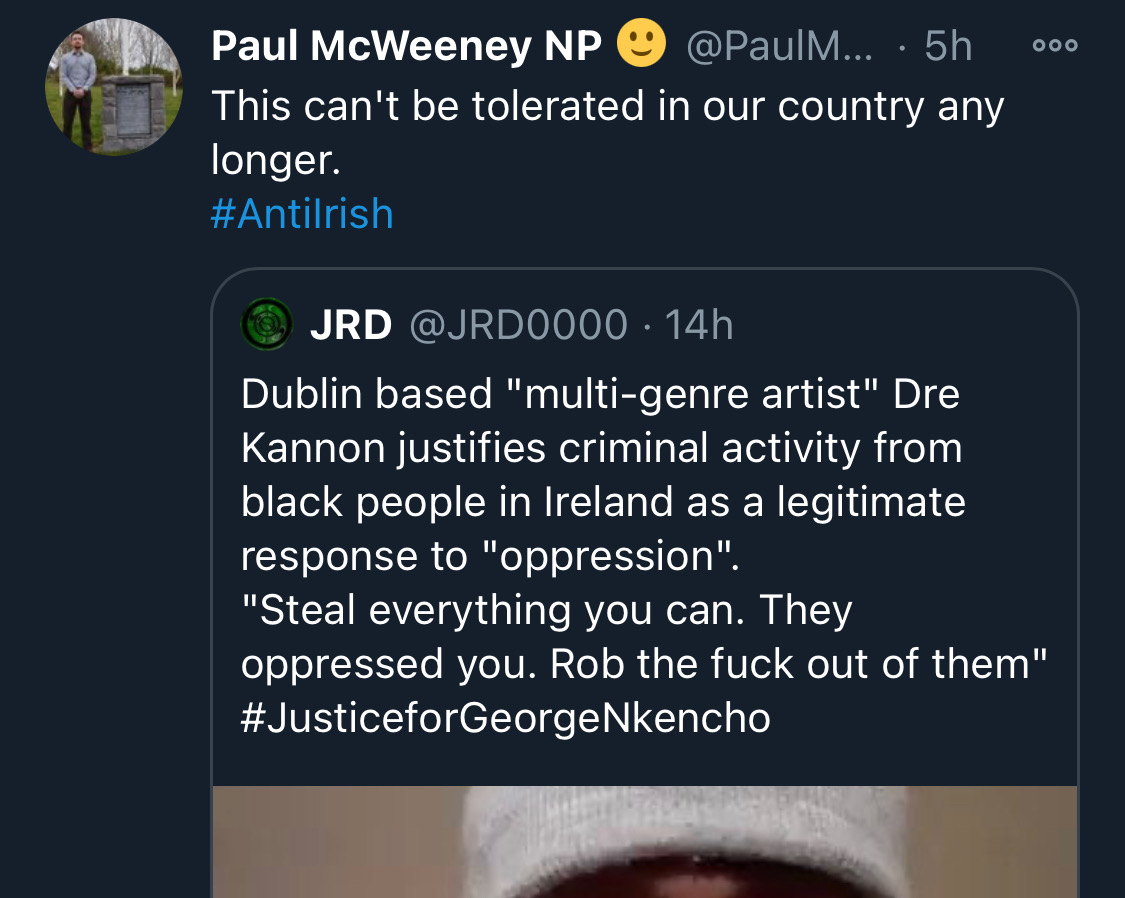
Across Telegram, Twitter and Facebook disinformation is being peddled on the back of these tragic events. From false photographs to the tactics ofwhite supremacy, the far right is clumsily trying to drive hate against minority groups and figureheads.
Declan Ganley’s Burkean group and the incel wing of National Party (Gearóid Murphy, Mick O’Keeffe & Co.) as well as all the usuals are concerted in their efforts to demonstrate their white supremacist cred. The quiet parts are today being said out loud.
The best thing you can do is challenge disinformation and report posts where engagement isn’t appropriate. Many of these are blatantly racist posts designed to drive recruitment to NP and other Nationalist groups. By all means protest but stay safe.
There is co-ordination across the far right in Ireland now to stir both left and right in the hopes of creating a race war. Think critically! Fascists see the tragic killing of #georgenkencho, the grief of his community and pending investigation as a flashpoint for action.
Across Telegram, Twitter and Facebook disinformation is being peddled on the back of these tragic events. From false photographs to the tactics ofwhite supremacy, the far right is clumsily trying to drive hate against minority groups and figureheads.
Be aware, the images the #farright are sharing in the hopes of starting a race war, are not of the SPAR employee that was punched. They\u2019re older photos of a Everton fan. Be aware of the information you\u2019re sharing and that it may be false. Always #factcheck #GeorgeNkencho pic.twitter.com/4c9w4CMk5h
— antifa.drone (@antifa_drone) December 31, 2020
Declan Ganley’s Burkean group and the incel wing of National Party (Gearóid Murphy, Mick O’Keeffe & Co.) as well as all the usuals are concerted in their efforts to demonstrate their white supremacist cred. The quiet parts are today being said out loud.
There is a concerted effort in far-right Telegram groups to try and incite violence on street by targetting people for racist online abuse following the killing of George Nkencho
— Mark Malone (@soundmigration) January 1, 2021
This follows on and is part of a misinformation campaign to polarise communities at this time.
The best thing you can do is challenge disinformation and report posts where engagement isn’t appropriate. Many of these are blatantly racist posts designed to drive recruitment to NP and other Nationalist groups. By all means protest but stay safe.