Lemme do some quick back of the envelope math about wages.

On a busy day at the pizza place, we'd have the following crew:

Drivers: $2/hr Tip Wage - 44 man-hours
Insiders: $8/hr - 20 man-hours
Managers: $12/hr - 22 man-hours

For a total of ~$512. Aiming for ~15-20% of sales. /

That works out to ~17% on a ~$3000 night, so that's bang-on target.

Let's say we raised everybody there to a $15/hr wage.

We'd end up adding $778 to labor for the day.

More than doubling! That sure sounds like a lot!

But hang on a second.
Let's assume for easy math that what we're selling is $10 one-topping large pizzas.

For 3k, we're selling 300. We've got to divide up that 778 between the pizzas.

That raises the price of each pizza from $10 to $12.59.

"That's... well, not huge, but it's still more money!"
Definitely! But, here's something important.

The price of a pizza has actually gone down.
Remember, money isn't real! It's a representation of the time worked.

The vast majority of the people we had been selling that pizza to weren't making $15 an hour before. We were in a college town, that manager wage of $12/hour was a /good/ wage. WE were buying that pizza.
So, in terms of value:

The cost of the pizza is lower for a driver.

The driver was probably, with tips, making 10-15/hour, but that depends on how good the night is - some nights, it might not be minimum wage.

So, $7-15/hour. The pizza costs probably more than an hour of work.
Now, if they're making 15, it costs 50 minutes of work. Reliably.

Likewise, for the manager, 50 minutes of labor. It's a few seconds more expensive now, but it's still right about ~83% of an hour.
For the insider, the cost of that pizza went from 75 minutes worth of labor, to 50 minutes of labor. It's 33% cheaper.
There are some externalities - the price of the things we use to make the pizza will go up a bit, but not by much; farms are efficient as fuck, and farm workers process a truly staggering amount of ingredients per hour. It's ameliorated.
The workers are making substantially more money. Their lives are better. They're happier.

And all for an extra $2.59 per pizza, if the only place we're shunting this cost is direct to the customer.

If we get rid of tips? 20% was pretty standard. So now, it's only .59 more.
And now, those workers with more money - they're not putting it into savings accounts. They're buying the things they've just been making do without. Repairing their cars. Buying shit for their leisure time. Hell, FOOD - I /never/ went out to eat when I was working restaurants.
I couldn't justify it! I couldn't afford to!

Hey look at that. More sales.

More from Finance

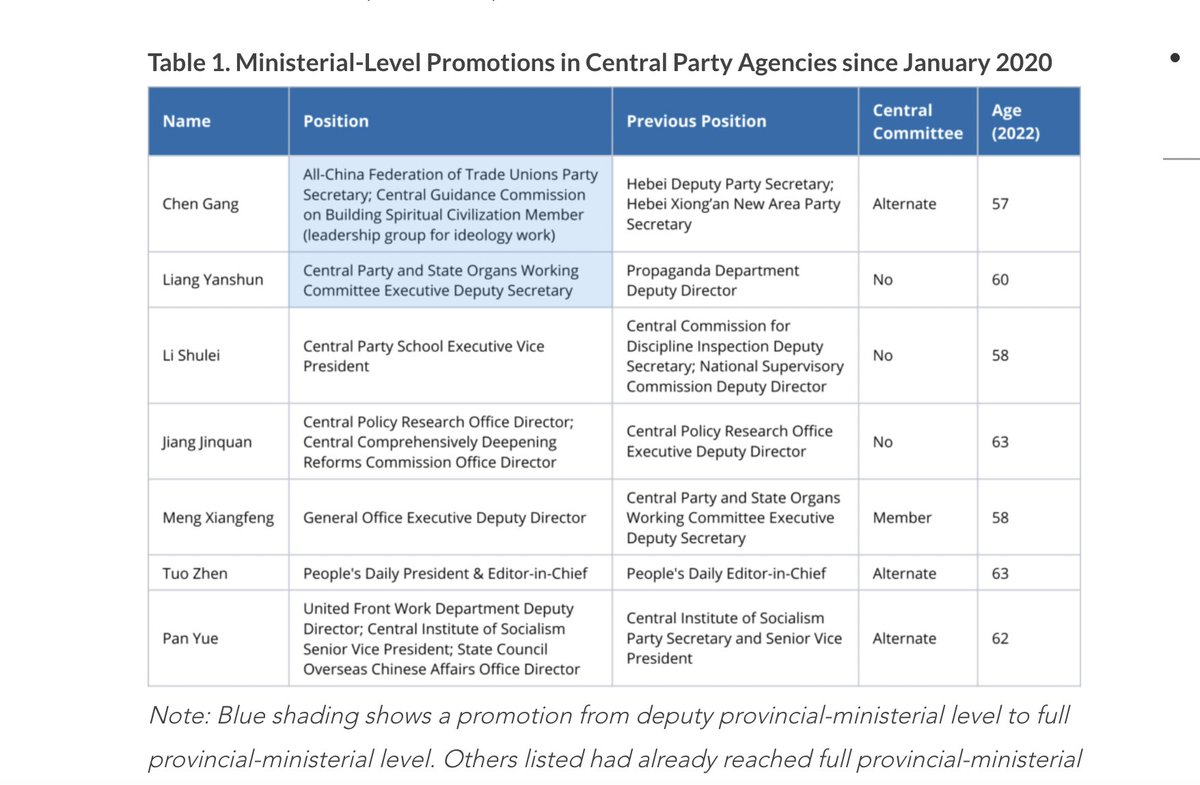
THREAD: Who are the rising stars of Chinese elite politics in the central Party-State bureaucracy?

For @MacroPoloChina I analyzed last year's ministerial-level promotions to posts in Beijing

TLDR: Ties to Xi Jinping—or a Xi ally—are very helpful! (1/14)

https://t.co/kO2A0Efyq2


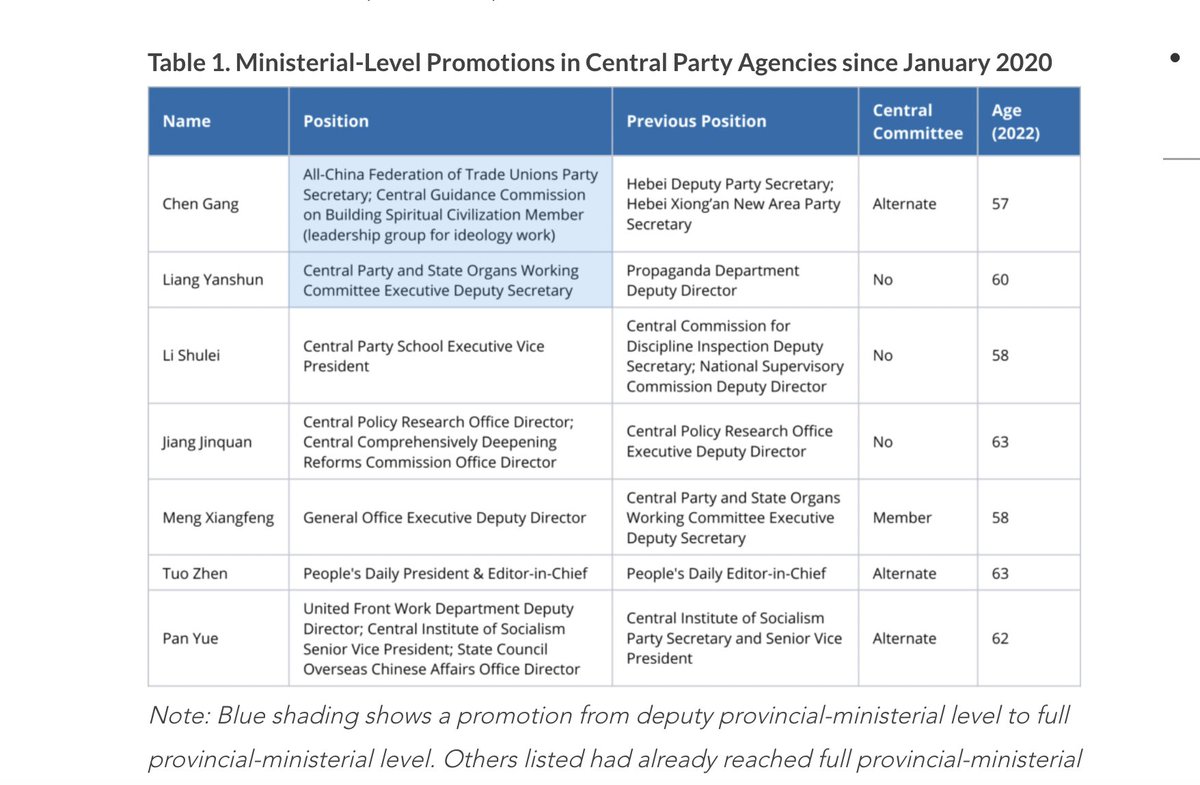
Seven politicians were promoted to ministerial-level positions in central Party agencies last year

All are likely to feature on the next Central Committee selected at the 2022 Party Congress

Some could make the CCP's elite 25-person Politburo (2/14)

https://t.co/kO2A0Efyq2


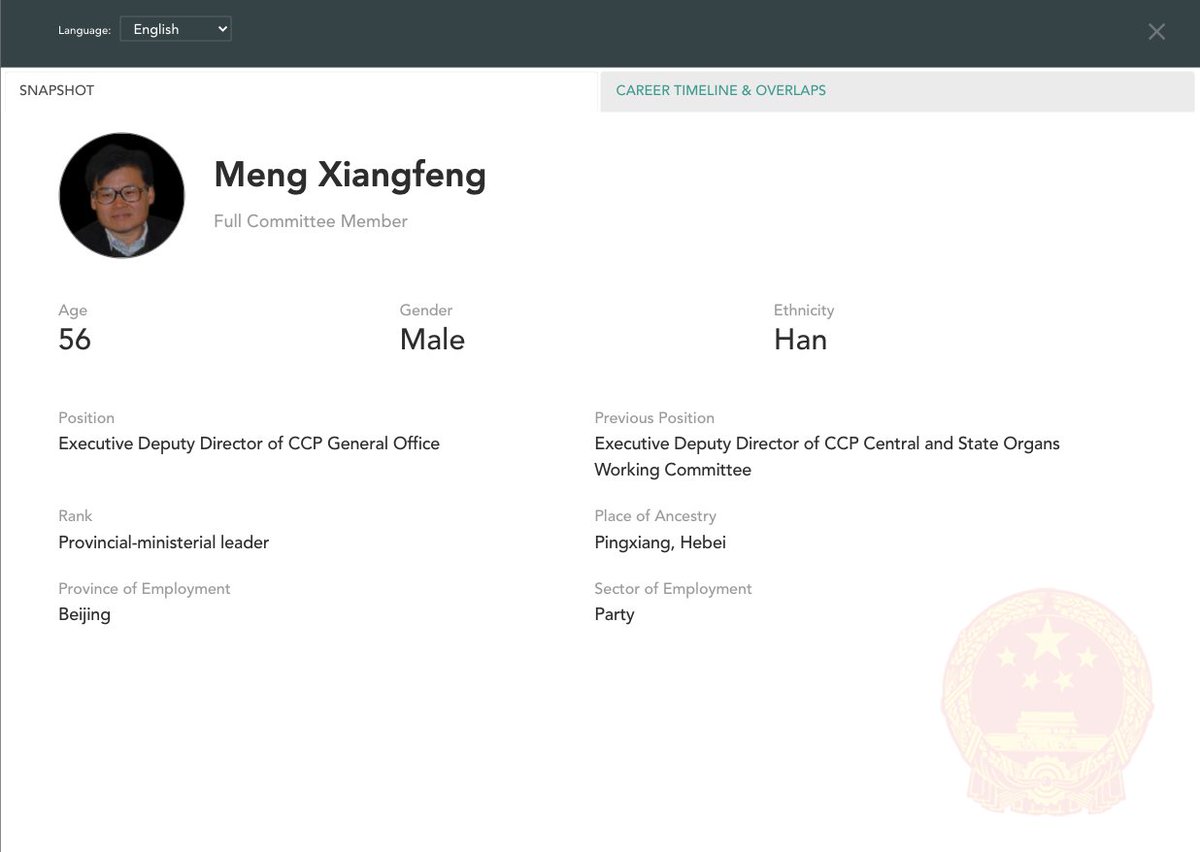
Likeliest for the Politburo is Meng Xiangfeng, new Executive Deputy Director of the CCP General Office

He would replace Xi ally Ding Xuexiang as CCP chief-of-staff if Ding is promoted further in 2022

Meng worked under Xi allies Cai Qi in Hangzhou and Chen Xi in Liaoning (3/14)


Less likely for the Politburo but still important is Jiang Jinquan, new Director of the CCP Policy Research Office

He replaces 5th-ranked leader Wang Huning who led the Party's brains trust for 18 years

Wang remains prominent and will be <68 in 2022, so he'll stay around (4/14)


Other notable central Party promotions include Li Shulei and Liang Yanshun, who both assisted Xi when he led the Central Party School from 2007-2012

Li is a political conservative who is said to be quite close with Xi, even drafting his 2014 speech on culture and art (5/14)

You May Also Like

1/“What would need to be true for you to….X”

Why is this the most powerful question you can ask when attempting to reach an agreement with another human being or organization?

A thread, co-written by @deanmbrody:


2/ First, “X” could be lots of things. Examples: What would need to be true for you to

- “Feel it's in our best interest for me to be CMO"
- “Feel that we’re in a good place as a company”
- “Feel that we’re on the same page”
- “Feel that we both got what we wanted from this deal

3/ Normally, we aren’t that direct. Example from startup/VC land:

Founders leave VC meetings thinking that every VC will invest, but they rarely do.

Worse over, the founders don’t know what they need to do in order to be fundable.

4/ So why should you ask the magic Q?

To get clarity.

You want to know where you stand, and what it takes to get what you want in a way that also gets them what they want.

It also holds them (mentally) accountable once the thing they need becomes true.

5/ Staying in the context of soliciting investors, the question is “what would need to be true for you to want to invest (or partner with us on this journey, etc)?”

Multiple responses to this question are likely to deliver a positive result.