If you don't have firsthand experience with how traditional financial institutions (pensions, corporate treasuries etc) administratively permission the moving of assets, it's hard to understand why it's still very difficult for an institution to own bitcoin. Here's why: /1
More from Finance






Buffett's letters taught me more about investing than any business school ever could.
Even after investing for 14 years, I uncover new insights every time I reread his letters.
Recently, I reread his letters from 1977 to 2020 for a third time.
Here are my key insights:

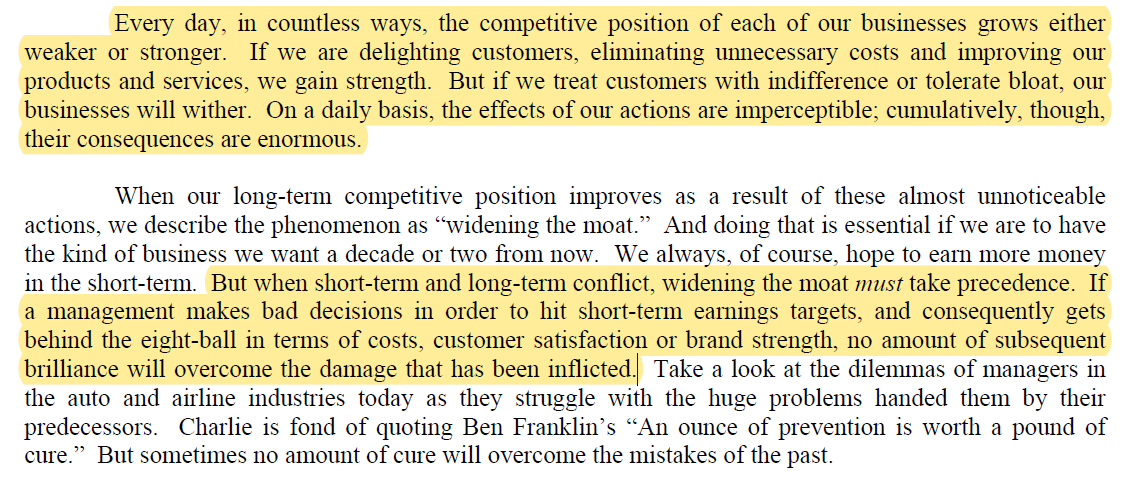
1. Moat is NEVER stagnant
A company's competitive position either grows stronger or weaker each day.
Widening the moat must always take precedence over short-term targets.
2. Commodity businesses
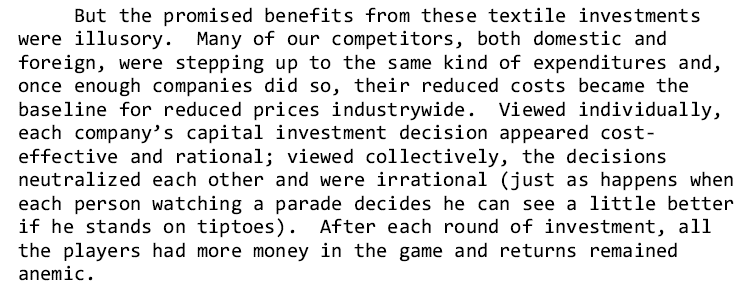
A business without moat will have its returns competed away.
Regardless of improvement, your competitors will quickly copy your advantage away.
Where returns on capital is dismal, reinvestment will only destroy value.
3. The flywheel effect
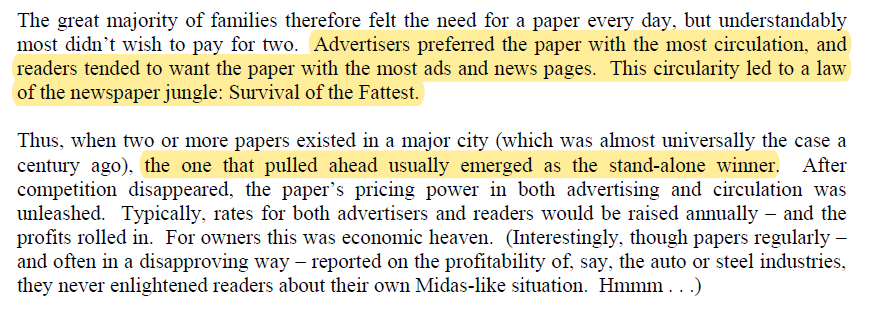
Buffett was preaching about the flywheel effect before it became cool.
Back then, newspapers were similar to today's platform businesses like Amazon, Meta, and App Store.
More readers beget more advertisers beget more readers.
4. Operating leverage
Companies with high fixed costs and low variable costs will see earnings rise faster than revenue.
However, it cuts both ways.
It becomes a disaster when revenue is declining.
Check out my article on how operating leverage works: https://t.co/Nv747oBAK0

Even after investing for 14 years, I uncover new insights every time I reread his letters.
Recently, I reread his letters from 1977 to 2020 for a third time.
Here are my key insights:
1. Moat is NEVER stagnant
A company's competitive position either grows stronger or weaker each day.
Widening the moat must always take precedence over short-term targets.
2. Commodity businesses
A business without moat will have its returns competed away.
Regardless of improvement, your competitors will quickly copy your advantage away.
Where returns on capital is dismal, reinvestment will only destroy value.
3. The flywheel effect
Buffett was preaching about the flywheel effect before it became cool.
Back then, newspapers were similar to today's platform businesses like Amazon, Meta, and App Store.
More readers beget more advertisers beget more readers.
4. Operating leverage
Companies with high fixed costs and low variable costs will see earnings rise faster than revenue.
However, it cuts both ways.
It becomes a disaster when revenue is declining.
Check out my article on how operating leverage works: https://t.co/Nv747oBAK0

Here are all the threads posted by @AdityaTodmal and @niki_poojary in January: 🧵
• 8 powerful ways to use Twitter
• Power of Stocks
• 14 Trading Strategies
• Basics of Derivatives (3 parts)
• Technical Analysis for all sectors
• Tweets of the week
• Books on Futures
All the Top 10 tweets threads I have ever posted to date:
Basics of Derivatives Part 1:
8 powerful ways to use Twitter:
Basics of Derivatives Part 2:
• 8 powerful ways to use Twitter
• Power of Stocks
• 14 Trading Strategies
• Basics of Derivatives (3 parts)
• Technical Analysis for all sectors
• Tweets of the week
• Books on Futures
All the Top 10 tweets threads I have ever posted to date:
Every week, I post a thread with the top ten tweets.
— Aditya Todmal (@AdityaTodmal) January 7, 2022
People seem to enjoy these a lot.
\U0001f9f5 Here's a list of all of them in order of appearance: \U0001f9f5
Basics of Derivatives Part 1:
\U0001d401\U0001d41a\U0001d42c\U0001d422\U0001d41c\U0001d42c \U0001d428\U0001d41f \U0001d403\U0001d41e\U0001d42b\U0001d422\U0001d42f\U0001d41a\U0001d42d\U0001d422\U0001d42f\U0001d41e\U0001d42c
— Nikita Poojary (@niki_poojary) January 8, 2022
\u2022 What is a derivative
\u2022 Various derivative products
\u2022 Participants in derivatives market
\u2022 Uses of derivative instruments
\u2022 Beta & hedge ratio
\u2022 Option Greeks
Time for a Thread \U0001f9f5
Curated in collaboration with @AdityaTodmal pic.twitter.com/x6IHoQubOT
8 powerful ways to use Twitter:
Most of the Trading community doesn\u2019t know how to use Twitter effectively.
— Aditya Todmal (@AdityaTodmal) January 15, 2022
Here are 8 powerful ways to use Twitter: \U0001f9f5
Collaborated with @niki_poojary pic.twitter.com/TuZt72PIzd
Basics of Derivatives Part 2:
\U0001d401\U0001d41a\U0001d42c\U0001d422\U0001d41c\U0001d42c \U0001d428\U0001d41f \U0001d403\U0001d41e\U0001d42b\U0001d422\U0001d42f\U0001d41a\U0001d42d\U0001d422\U0001d42f\U0001d41e\U0001d42c - \U0001d40f\U0001d41a\U0001d42b\U0001d42d \U0001d408\U0001d408
— Nikita Poojary (@niki_poojary) January 15, 2022
\u2022 How options can be used
\u2022 How to trade in options & exit strategy- buyers
\u2022 Imp of theta decay
\u2022 How to trade in options & exit strategy -sellers
Time for a Thread\U0001f9f5
Curated in collaboration with@AdityaTodmal pic.twitter.com/Ebd99afDKB
You May Also Like





The UN just voted to condemn Israel 9 times, and the rest of the world 0.
View the resolutions and voting results here:
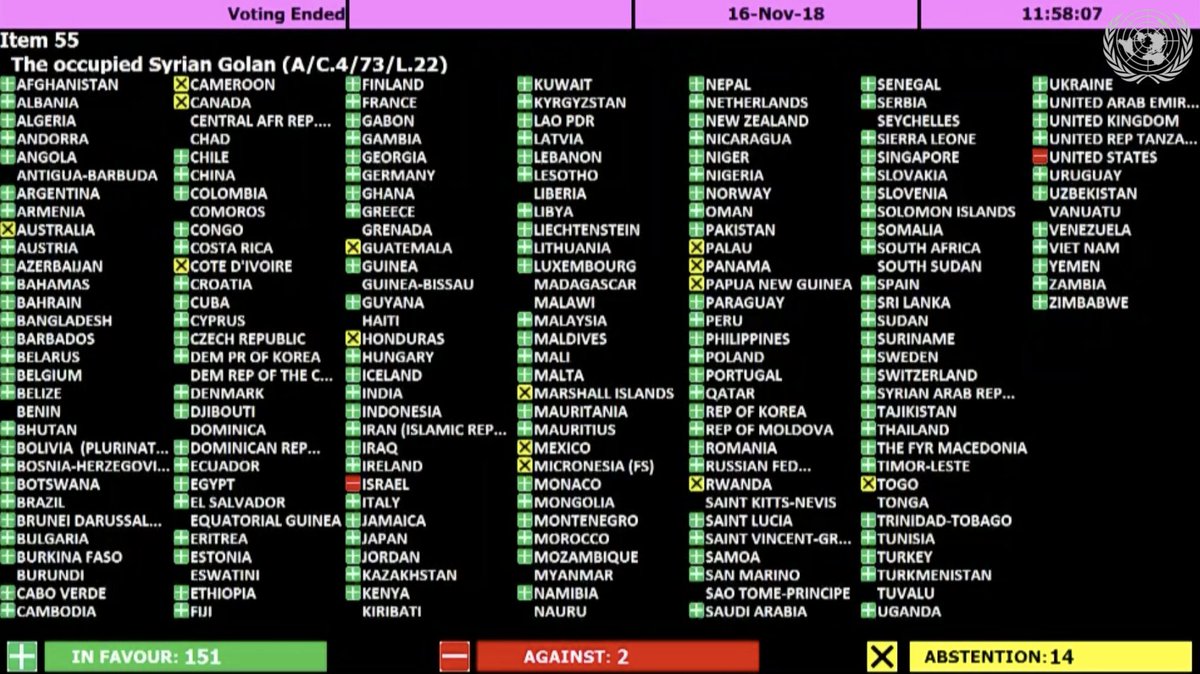
The resolution titled "The occupied Syrian Golan," which condemns Israel for "repressive measures" against Syrian citizens in the Golan Heights, was adopted by a vote of 151 - 2 - 14.
Israel and the U.S. voted 'No' https://t.co/HoO7oz0dwr
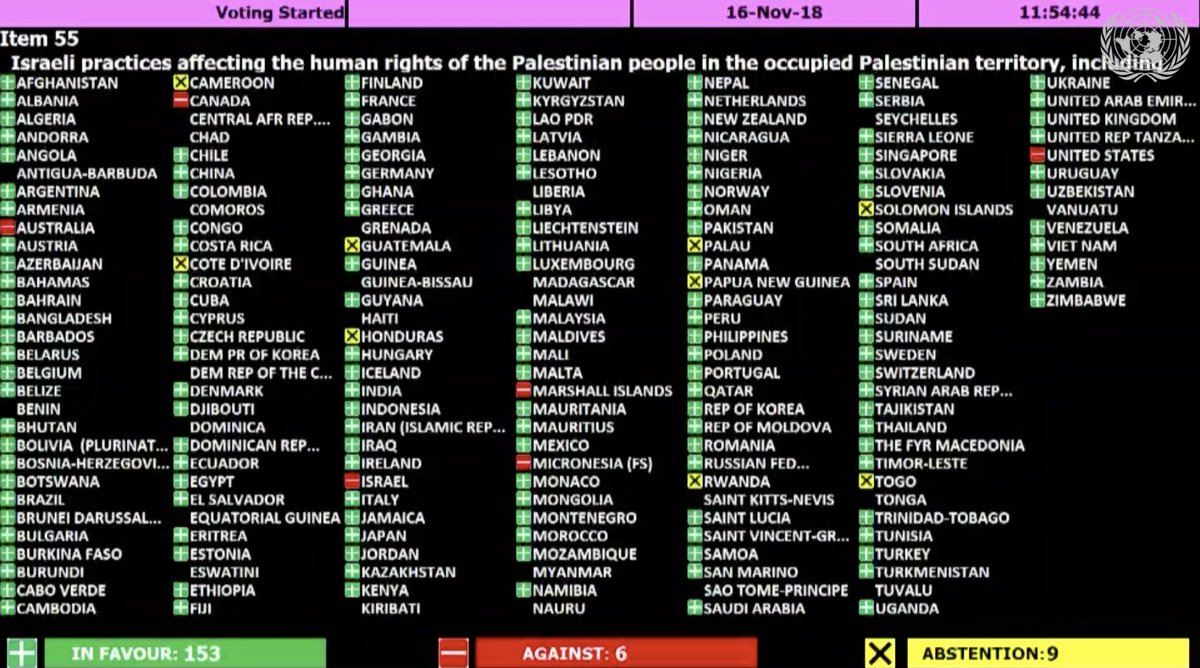
The resolution titled "Israeli practices affecting the human rights of the Palestinian people..." was adopted by a vote of 153 - 6 - 9.
Australia, Canada, Israel, Marshall Islands, Micronesia, and the U.S. voted 'No' https://t.co/1Ntpi7Vqab
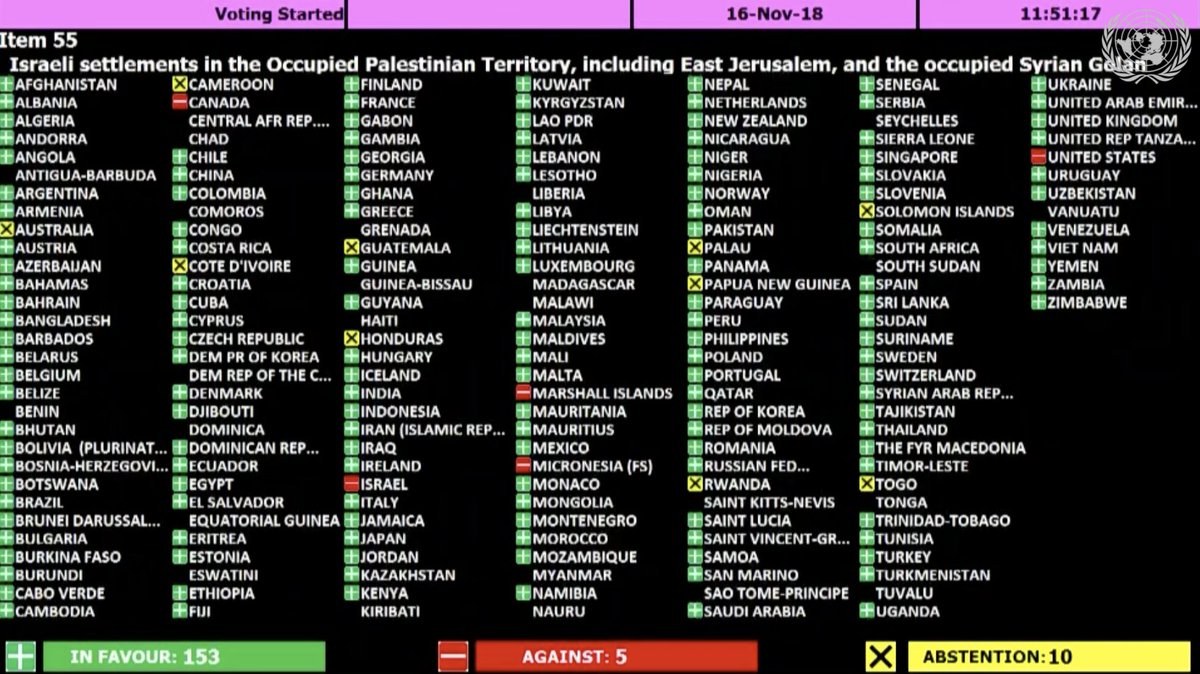
The resolution titled "Israeli settlements in the Occupied Palestinian Territory, including East Jerusalem, and the occupied Syrian Golan" was adopted by a vote of 153 – 5 – 10.
Canada, Israel, Marshall Islands, Micronesia, and the U.S. voted 'No'
https://t.co/REumYgyRuF
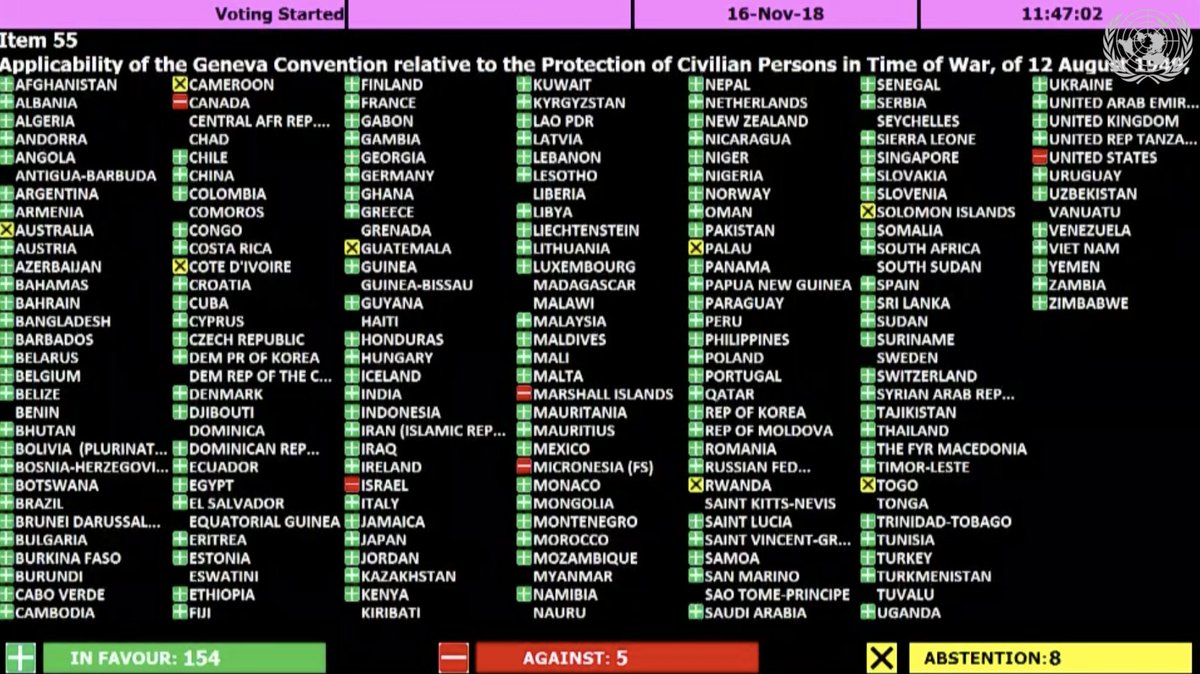
The resolution titled "Applicability of the Geneva Convention... to the
Occupied Palestinian Territory..." was adopted by a vote of 154 - 5 - 8.
Canada, Israel, Marshall Islands, Micronesia, and the U.S. voted 'No'
https://t.co/xDAeS9K1kW
View the resolutions and voting results here:
The resolution titled "The occupied Syrian Golan," which condemns Israel for "repressive measures" against Syrian citizens in the Golan Heights, was adopted by a vote of 151 - 2 - 14.
Israel and the U.S. voted 'No' https://t.co/HoO7oz0dwr
The resolution titled "Israeli practices affecting the human rights of the Palestinian people..." was adopted by a vote of 153 - 6 - 9.
Australia, Canada, Israel, Marshall Islands, Micronesia, and the U.S. voted 'No' https://t.co/1Ntpi7Vqab
The resolution titled "Israeli settlements in the Occupied Palestinian Territory, including East Jerusalem, and the occupied Syrian Golan" was adopted by a vote of 153 – 5 – 10.
Canada, Israel, Marshall Islands, Micronesia, and the U.S. voted 'No'
https://t.co/REumYgyRuF
The resolution titled "Applicability of the Geneva Convention... to the
Occupied Palestinian Territory..." was adopted by a vote of 154 - 5 - 8.
Canada, Israel, Marshall Islands, Micronesia, and the U.S. voted 'No'
https://t.co/xDAeS9K1kW