Inflation is coming, inflation is coming!

Last month I wrote about the distinction between long-term secular inflation and shorter-term cyclical inflation

It has been clear for several months that we are in the middle of a cyclical rise in

The full thread can be reviewed here:

https://t.co/0jBvHOWuHw

2/
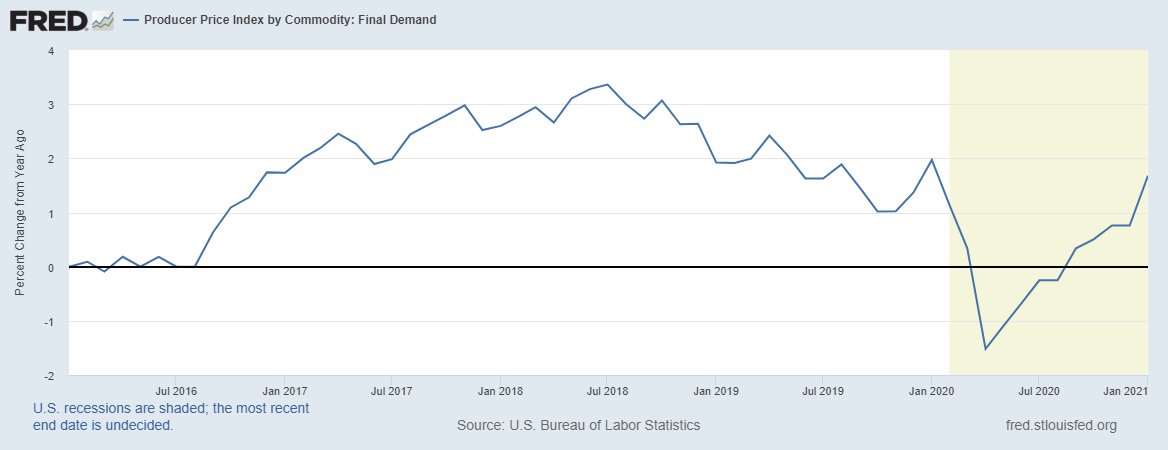
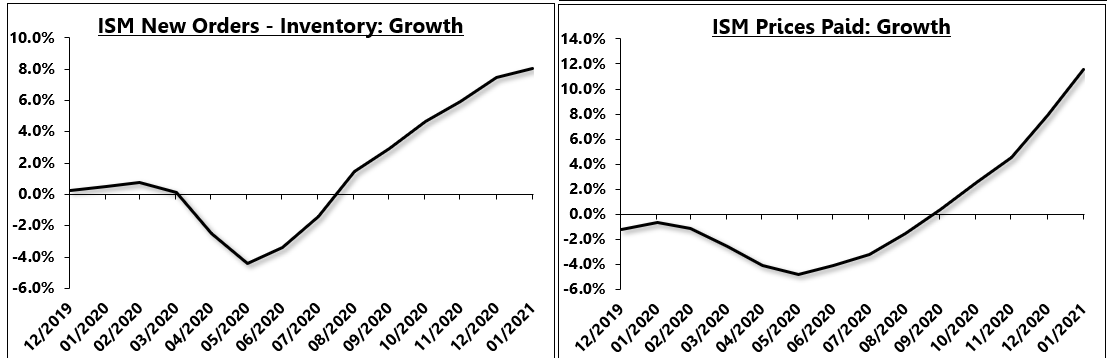
Today's PPI report should have been expected to surprise to the upside as the leading indicators of inflation have been screaming to the upside for months!

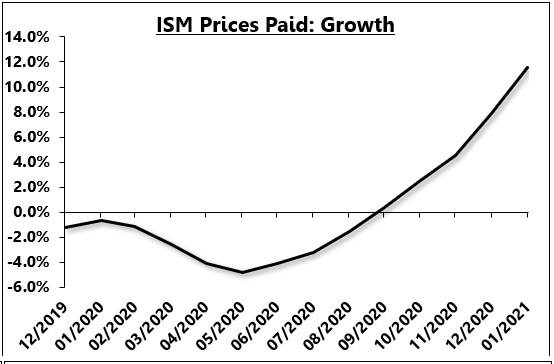
Here is the ISM prices paid index, cumulated into a growth rate

3/
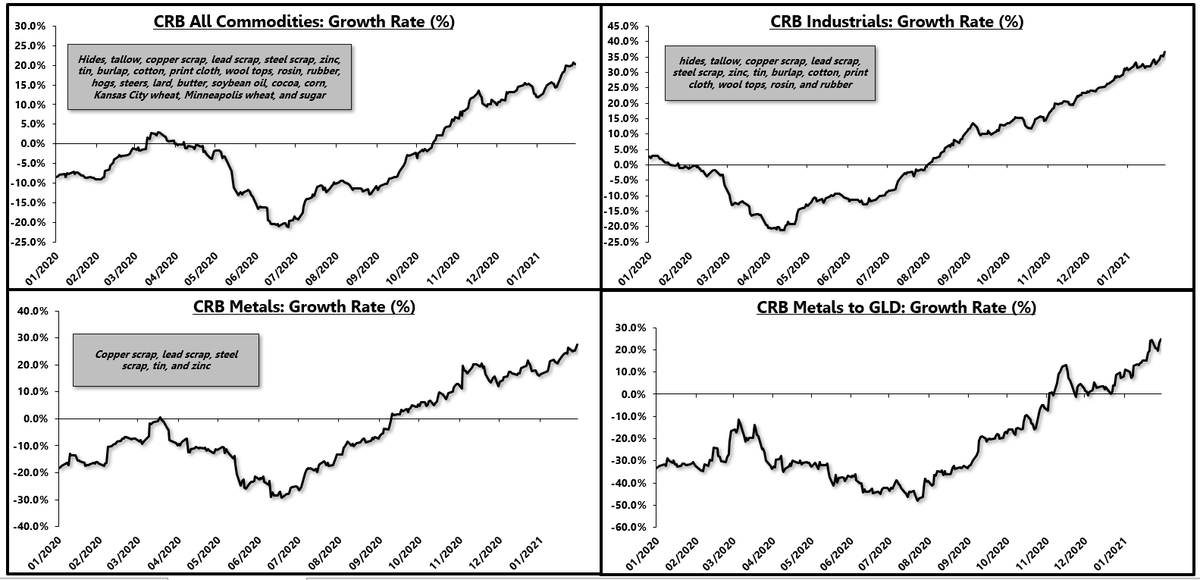
Industrial commodity prices have also seen a major acceleration for months.

4/
So today's PPI report was in line with the leads, suggesting that we have a cyclical upturn in inflation that is * primarily concentrated in the manufacturing sector *

This is a key point.

5/
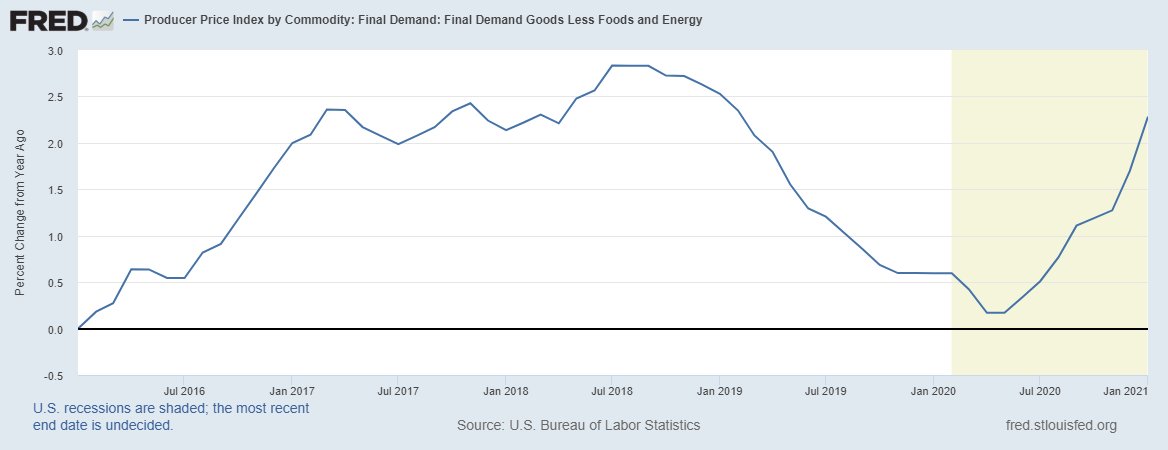
Core PPI showed an increase in year over year terms to nearly 2.5%.

6/
To be very clear, this cyclical upturn in inflation will continue for the next several months and should not be expected to fall apart imminently

This does not mean the secular disinflationary trend is over. We have had 4-5 of these upturns since 2010. They happen. They fade

7/
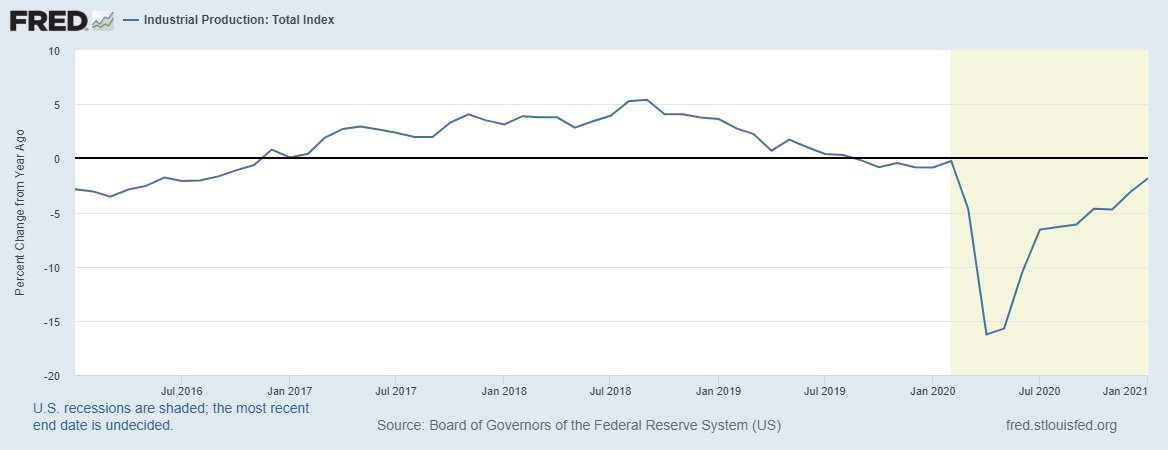
Sticking with the trend of a general manufacturing-based upturn, what else surprised to the upside (shouldn't have been a surprise)...industrial production.

IP growth increased to -1.83% y/y

8/
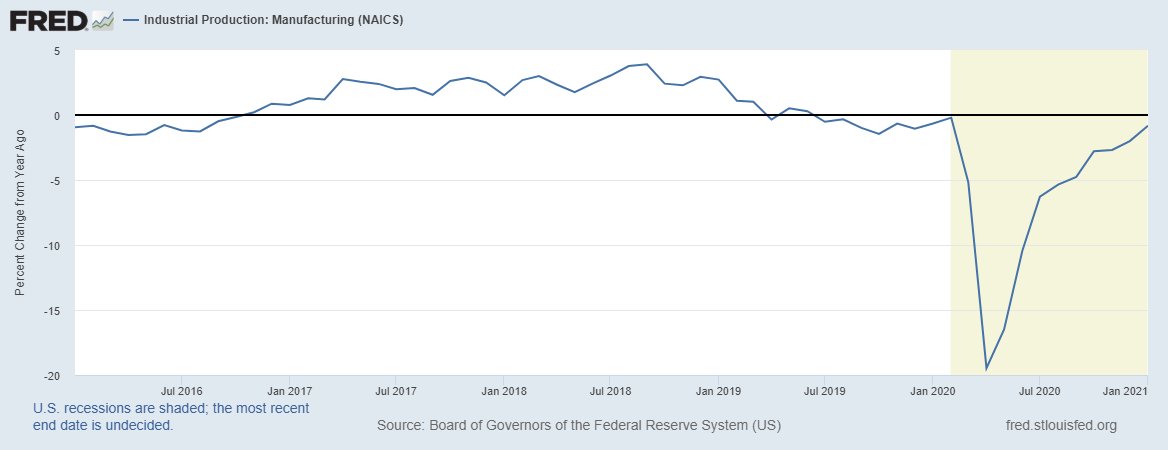
Industrial production for manufacturing specifically is almost back to positive growth on a year over year basis.

9/
Should we expect the manufacturing-based growth and inflation upturn to continue?

Yes.

But remember to differentiate cyclical for secular.

10/
We're not changing this trend anytime soon.

11/
TLDR:

Play the cyclical trend. Don't lose sight of the long-term fundamentals.

12/12

More from Finance

You May Also Like

https://t.co/6cRR2B3jBE
Viruses and other pathogens are often studied as stand-alone entities, despite that, in nature, they mostly live in multispecies associations called biofilms—both externally and within the host.

https://t.co/FBfXhUrH5d


Microorganisms in biofilms are enclosed by an extracellular matrix that confers protection and improves survival. Previous studies have shown that viruses can secondarily colonize preexisting biofilms, and viral biofilms have also been described.


...we raise the perspective that CoVs can persistently infect bats due to their association with biofilm structures. This phenomenon potentially provides an optimal environment for nonpathogenic & well-adapted viruses to interact with the host, as well as for viral recombination.


Biofilms can also enhance virion viability in extracellular environments, such as on fomites and in aquatic sediments, allowing viral persistence and dissemination.