50 Common Mistakes most developers make while starting out

A thread🧵👇

⚡️1. Focusing on completing courses instead of coding (or completing projects) .

⚡️2. Skipping the fundamentals.

⚡️3. Not joining a developer community.

⚡️4. Not creating projects from scratch.

⚡️5. Skipping Data Structures.
⚡️6. Not reading the documentation.

⚡️7. Trying to learn everything in one day.

⚡️8. Blindly following the tutorial and not extending the code or making their own version of code.

⚡️9. Not asking for help when needed.

⚡️10. Never commenting the code (In required places).
⚡️11. Endlessly Planning instead of Building.

⚡️12. Learning different technologies instead of mastering one.

⚡️13. Not reading stuff (books/articles/documentation).

⚡️14. Not maintaining a balance between programming and not programming.

⚡️15. Not finishing what they started
⚡️16. Not building stuff they care about.

⚡️17. Getting overwhelmed by others' progress/headstart

⚡️18. Not knowing when to quite and start over.

⚡️19. Not practising enough.

⚡️20. Endlessly buying Udemy courses.
⚡️21. Not trying new stuff (frameworks etc).

⚡️22. Not sleeping enough.

⚡️23. Getting addicted to caffeine.

⚡️24. Being afraid to experimentation.

⚡️25. Letting Impostor syndrome take over.
⚡️26. Overworking.

⚡️27. Sacrificing Social life.

⚡️28. Rushing through a problem/course/book/project

⚡️29. Not being curious.

⚡️30. Sacrificing Mental Health.
⚡️31. Not having fun.

⚡️32. Getting stuck on one technology because of stubbornness.

⚡️33. Lacking self motivation.

⚡️34. Not talking to other developers.

⚡️35. Quiting after failing.
⚡️36. Not building personal projects.

⚡️37. Not showing your projects to others.

⚡️38. Not asking others for feedback.

⚡️39. Trying to learn everything at once.

⚡️40. Blindly following others advise without researching on your own.
⚡️41. Not having a strategy.

⚡️42. Waiting until everything is perfect.

⚡️43. Not learning from one's mistakes.

⚡️44. Feeling dumb.

⚡️45. Comparing yourself to others.
⚡️46. Not reading theory.

⚡️47. Not maintaining a balance in life.

⚡️48. Being a perfectionist.(Conditions apply)

⚡️49. Not accepting uncertainty.

⚡️50. Not finding mentors/dev friends

Don't make these mistakes.
Happy Coding ♥️🧑‍💻👨‍💻👩‍💻
I am soo sorry everyone😆

Btw follow me for more programming experience/content⚡️
https://t.co/jYdLWemPhu

More from Nirbhay Vashisht

Want to learn JavaScript ?

Here's a Detailed Roadmap for you 🧵👇

1. Start with
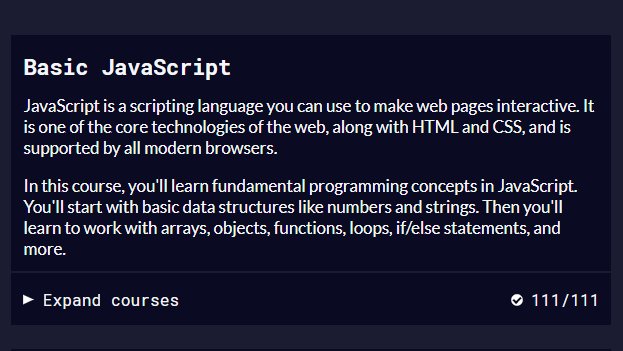
https://t.co/LUATAaPiaW's - JavaScript Algorithms and Data Structures Certification and finish the "Basic JavaScript" module.

You'll get a basic understanding of JavaScript and Programming in general.


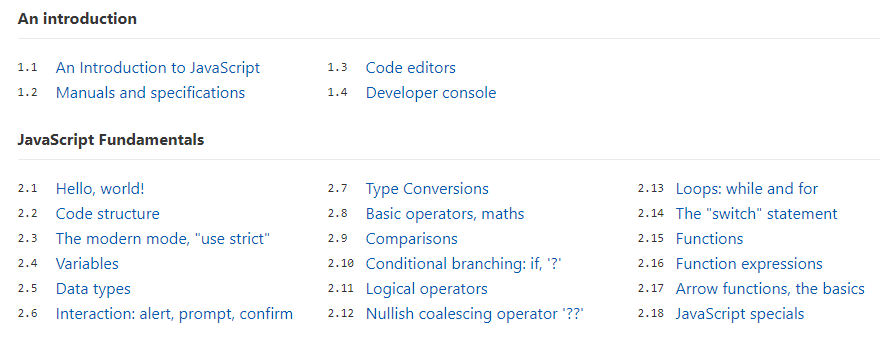
2. Move to https://t.co/ZDqK2dT8Iz and complete the following parts:
- An Introduction
- JavaScript Fundamentals
You'll start to understand Basic JavaScript concepts and their details.


3. Complete "Objects: the basics" section in https://t.co/ZDqK2dT8Iz

By this point you'll have a decent understanding of JavaScript Objects

4. Time to return to freeCodeCamp. Finish the following sections:
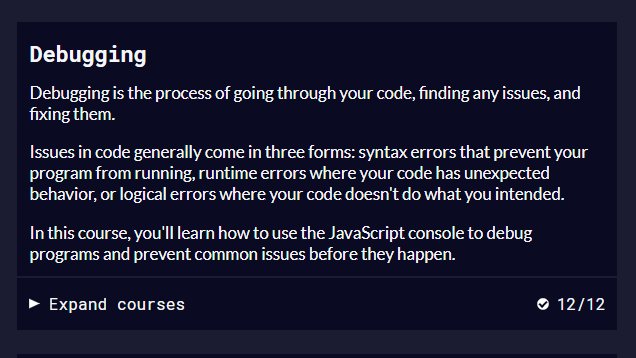
1. Debugging
2. Basic Data Structure

More from Education

You May Also Like

Master Thread of all my threads!

Hello!! 👋

• I have curated some of the best tweets from the best traders we know of.

• Making one master thread and will keep posting all my threads under this.

• Go through this for super learning/value totally free of cost! 😃

1. 7 FREE OPTION TRADING COURSES FOR


2. THE ABSOLUTE BEST 15 SCANNERS EXPERTS ARE USING

Got these scanners from the following accounts:

1. @Pathik_Trader
2. @sanjufunda
3. @sanstocktrader
4. @SouravSenguptaI
5. @Rishikesh_ADX


3. 12 TRADING SETUPS which experts are using.

These setups I found from the following 4 accounts:

1. @Pathik_Trader
2. @sourabhsiso19
3. @ITRADE191
4.


4. Curated tweets on HOW TO SELL STRADDLES.

Everything covered in this thread.
1. Management
2. How to initiate
3. When to exit straddles
4. Examples
5. Videos on
A THREAD ON @SarangSood

Decoded his way of analysis/logics for everyone to easily understand.

Have covered:
1. Analysis of volatility, how to foresee/signs.
2. Workbook
3. When to sell options
4. Diff category of days
5. How movement of option prices tell us what will happen

1. Keeps following volatility super closely.

Makes 7-8 different strategies to give him a sense of what's going on.

Whichever gives highest profit he trades in.


2. Theta falls when market moves.
Falls where market is headed towards not on our original position.


3. If you're an options seller then sell only when volatility is dropping, there is a high probability of you making the right trade and getting profit as a result

He believes in a market operator, if market mover sells volatility Sarang Sir joins him.


4. Theta decay vs Fall in vega

Sell when Vega is falling rather than for theta decay. You won't be trapped and higher probability of making profit.
I just finished Eric Adler's The Battle of the Classics, and wanted to say something about Joel Christiansen's review linked below. I am not sure what motivates the review (I speculate a bit below), but it gives a very misleading impression of the book. 1/x


The meat of the criticism is that the history Adler gives is insufficiently critical. Adler describes a few figures who had a great influence on how the modern US university was formed. It's certainly critical: it focuses on the social Darwinism of these figures. 2/x

Other insinuations and suggestions in the review seem wildly off the mark, distorted, or inappropriate-- for example, that the book is clickbaity (it is scholarly) or conservative (hardly) or connected to the events at the Capitol (give me a break). 3/x

The core question: in what sense is classics inherently racist? Classics is old. On Adler's account, it begins in ancient Rome and is revived in the Renaissance. Slavery (Christiansen's primary concern) is also very old. Let's say classics is an education for slaveowners. 4/x

It's worth remembering that literacy itself is elite throughout most of this history. Literacy is, then, also the education of slaveowners. We can honor oral and musical traditions without denying that literacy is, generally, good. 5/x