
1/ A thread on why universities need to keep teaching online for the rest of this term.
https://t.co/TuPIKYu4AZ
Even at the current rates of decline, national prevalence is likely to be at least as high mid-March as in mid-September:
https://t.co/KA5KJGjxNa
@UniversitiesUK @USSEmployers @ucu
More from Education


I was a recipient of KGSP for my Msc from 2013-2016
Korean Government Scholarship Program (KGSP) Application made easy
Application period- 1 February 2021- 31 March, 2021
MS- 3yrs (1 year Korean language + 2 years MS)
PhD- 4yrs (1 year Korean language + 3 years PhD)
How to navigate the https://t.co/6Ne99JDfyv page
1. Type https://t.co/ow51lWVKcQ in your browser and hit the enter button
2. Click on scholarships and select GKS notice as attached in the picture👇
3. Play with the notice dashboard to see various announcements from NIIED.
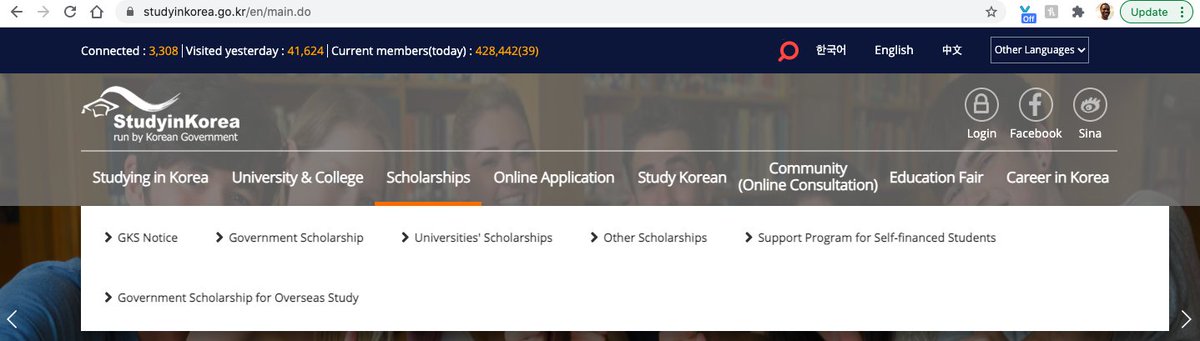
4. E.g in 2020, the Global Korea Scholarship for Graduate Degrees was announced on 11, February as indicated by no 205. You can click to download the application materials to get familiar with what is expected. I attached series of links in this thread to assist too.
Category- All fields
Benefits
1. Visa fee
2. Airfare: Actual cost (To and fro from your home country to Korea and upon completion to your home country)
3. Resettlement Allowance: KRW 200,000 (Given upon arrival in Korea)
4. Monthly stipend: Graduate (MS/PhD)-KRW 1000,000 (362,610.35 Nigerian Naira) per month ,Research Program including Postdoctoral fellow and visiting Professors - 1,500,000 KRW (542,824.78 Nigerian Naira) per month
Korean Government Scholarship Program (KGSP) Application made easy
Application period- 1 February 2021- 31 March, 2021
MS- 3yrs (1 year Korean language + 2 years MS)
PhD- 4yrs (1 year Korean language + 3 years PhD)
How to navigate the https://t.co/6Ne99JDfyv page
1. Type https://t.co/ow51lWVKcQ in your browser and hit the enter button
2. Click on scholarships and select GKS notice as attached in the picture👇
3. Play with the notice dashboard to see various announcements from NIIED.
4. E.g in 2020, the Global Korea Scholarship for Graduate Degrees was announced on 11, February as indicated by no 205. You can click to download the application materials to get familiar with what is expected. I attached series of links in this thread to assist too.
Category- All fields
Benefits
1. Visa fee
2. Airfare: Actual cost (To and fro from your home country to Korea and upon completion to your home country)
3. Resettlement Allowance: KRW 200,000 (Given upon arrival in Korea)
4. Monthly stipend: Graduate (MS/PhD)-KRW 1000,000 (362,610.35 Nigerian Naira) per month ,Research Program including Postdoctoral fellow and visiting Professors - 1,500,000 KRW (542,824.78 Nigerian Naira) per month

The outrage is not that she fit better. The outrage is that she stated very firmly on national television with no caveat, that there are no conditions not improved by exercise. Many people with viral sequelae have been saying for years that exercise has made them more disabled 1/
And the new draft NICE guidelines for ME/CFS which often has a viral onset specifically say that ME/CFS patients shouldn't do graded exercise. Clare is fully aware of this but still made a sweeping and very firm statement that all conditions are improved by exercise. This 2/
was an active dismissal of the lived experience of hundreds of thousands of patients with viral sequelae. Yes, exercise does help so many conditions. Yes, a very small number of people with an ME/CFS diagnosis are helped by exercise. But the vast majority of people with ME, a 3/
a quintessential post-viral condition, are made worse by exercise. Many have been left wheelchair dependent of bedbound by graded exercise therapy when they could walk before. To dismiss the lived experience of these patients with such a sweeping statement is unethical and 4/
unsafe. Clare has every right to her lived experience. But she can't, and you can't justifiably speak out on favour of listening to lived experience but cherry pick the lived experiences you are going to listen to. Why are the lived experiences of most people with ME dismissed?
Why is it such a source of collective outrage that a person with fatigue following a viral illness gets better?https://t.co/5lcwQBPLU5
— Trisha Greenhalgh \U0001f637 #CovidIsAirborne (@trishgreenhalgh) January 30, 2021
And the new draft NICE guidelines for ME/CFS which often has a viral onset specifically say that ME/CFS patients shouldn't do graded exercise. Clare is fully aware of this but still made a sweeping and very firm statement that all conditions are improved by exercise. This 2/
was an active dismissal of the lived experience of hundreds of thousands of patients with viral sequelae. Yes, exercise does help so many conditions. Yes, a very small number of people with an ME/CFS diagnosis are helped by exercise. But the vast majority of people with ME, a 3/
a quintessential post-viral condition, are made worse by exercise. Many have been left wheelchair dependent of bedbound by graded exercise therapy when they could walk before. To dismiss the lived experience of these patients with such a sweeping statement is unethical and 4/
unsafe. Clare has every right to her lived experience. But she can't, and you can't justifiably speak out on favour of listening to lived experience but cherry pick the lived experiences you are going to listen to. Why are the lived experiences of most people with ME dismissed?


You May Also Like










**Thread on Bravery of Sikhs**
(I am forced to do this due to continuous hounding of Sikh Extremists since yesterday)
Rani Jindan Kaur, wife of Maharaja Ranjit Singh had illegitimate relations with Lal Singh (PM of Ranjit Singh). Along with Lal Singh, she attacked Jammu, burnt - https://t.co/EfjAq59AyI

Hindu villages of Jasrota, caused rebellion in Jammu, attacked Kishtwar.
Ancestors of Raja Ranjit Singh, The Sansi Tribe used to give daughters as concubines to Jahangir.

The Ludhiana Political Agency (Later NW Fronties Prov) was formed by less than 4000 British soldiers who advanced from Delhi and reached Ludhiana, receiving submissions of all sikh chiefs along the way. The submission of the troops of Raja of Lahore (Ranjit Singh) at Ambala.
Dabistan a contemporary book on Sikh History tells us that Guru Hargobind broke Naina devi Idol Same source describes Guru Hargobind serving a eunuch
YarKhan. (ref was proudly shared by a sikh on twitter)
Gobind Singh followed Bahadur Shah to Deccan to fight for him.

In Zafarnama, Guru Gobind Singh states that the reason he was in conflict with the Hill Rajas was that while they were worshiping idols, while he was an idol-breaker.
And idiot Hindus place him along Maharana, Prithviraj and Shivaji as saviours of Dharma.

(I am forced to do this due to continuous hounding of Sikh Extremists since yesterday)
Rani Jindan Kaur, wife of Maharaja Ranjit Singh had illegitimate relations with Lal Singh (PM of Ranjit Singh). Along with Lal Singh, she attacked Jammu, burnt - https://t.co/EfjAq59AyI
Tomorrow again same thing happens bcoz fudus like you are creating a narrative oh Khalistan. when farmers are asking MSP. (RSS ki tatti khane wale Kerni sena ke kutte).
— Ancient Economist (@_stock_tips) December 5, 2020
U kill sikhs in 1984 just politics. To BC low IQ fudu Saale entire history was politics.
Hindu villages of Jasrota, caused rebellion in Jammu, attacked Kishtwar.
Ancestors of Raja Ranjit Singh, The Sansi Tribe used to give daughters as concubines to Jahangir.
The Ludhiana Political Agency (Later NW Fronties Prov) was formed by less than 4000 British soldiers who advanced from Delhi and reached Ludhiana, receiving submissions of all sikh chiefs along the way. The submission of the troops of Raja of Lahore (Ranjit Singh) at Ambala.
Dabistan a contemporary book on Sikh History tells us that Guru Hargobind broke Naina devi Idol Same source describes Guru Hargobind serving a eunuch
YarKhan. (ref was proudly shared by a sikh on twitter)
Gobind Singh followed Bahadur Shah to Deccan to fight for him.
In Zafarnama, Guru Gobind Singh states that the reason he was in conflict with the Hill Rajas was that while they were worshiping idols, while he was an idol-breaker.
And idiot Hindus place him along Maharana, Prithviraj and Shivaji as saviours of Dharma.


