https://t.co/gGurZTIcho
🚨🇬🇧🇪🇺💄👠👗💅🏻🕺💃🇪🇺🇬🇧🚨
UK’s £35bn fashion industry warns of “decimation” from #brexit - big names sign open letter to @BorisJohnson urging action. Many of 50,000 SMEs on the rack due to VAT, customs and work permit issues. Stay with me/1
https://t.co/gGurZTIcho
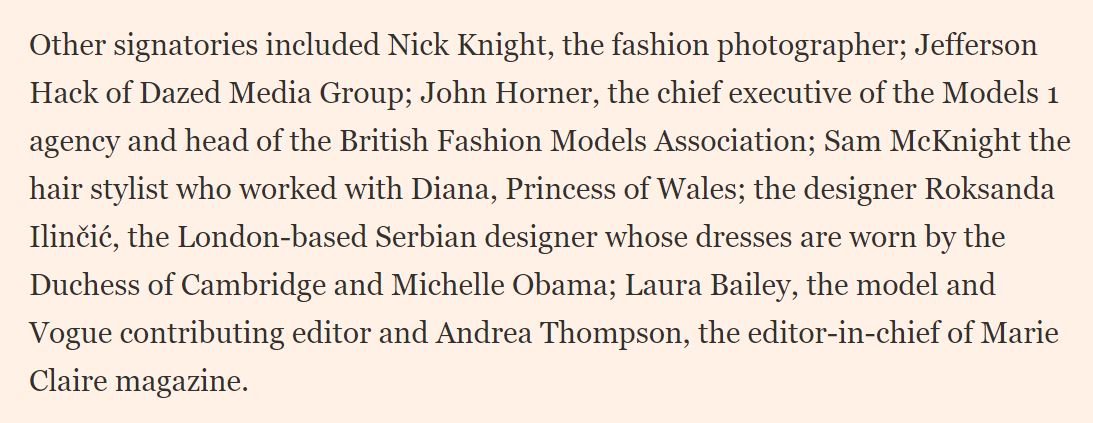
https://t.co/4FftDitAKr
This sums it up well. The rejection of the mobility chapter was indeed crucial. The challenge now is for all those concerned to adjust to the new reality of being outside the EU and its single market, without a mobility chapter in the new agreement. https://t.co/D9ZV7AgeV8
— Stefaan De Rynck (@StefaanDeRynck) January 20, 2021

More from Peter Foster
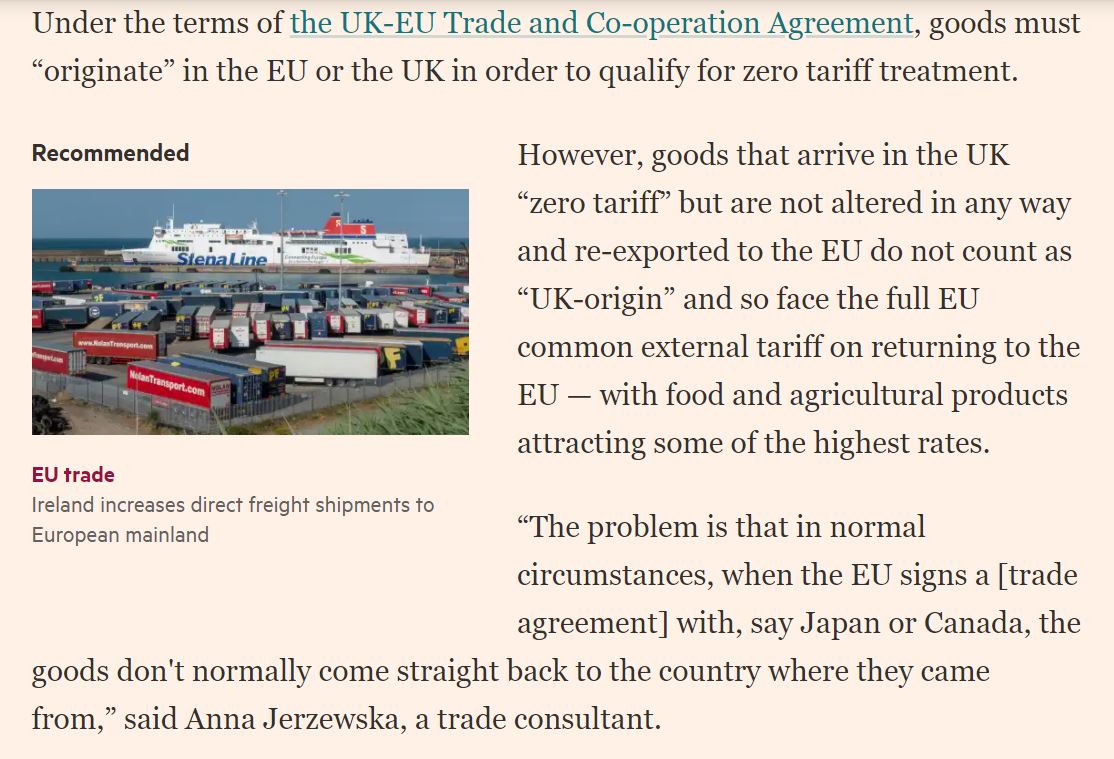
BREAK: 🚨🚨🇫🇷🇬🇧🚗🚙🚗🚙🚗🚙🚗🚙🚗🚙🚗🇫🇷🇬🇧🚢🚢🚢🚨🚨 The UK rejects Dover funding bid to double French passport booths via @FT - long queues ahead...as other ports also don’t get money they asked for to build #brexit border. Stay with me/1 thread
So what is this all about? Well back in October the govt announced a £200m Port Infrastructure Fund - details below - for ports to get ready for the new trade processes for #Brexit border. Dealing with those 215m extra customs decs etc..
Today we find out what everyone got - but it turns out that 54 ports asked for more than £450m - so a LOT have been bitterly disappointed. Not just Dover (on which more in a second)...they are furious the government is not willing to fully fund the very borders they mandated /3
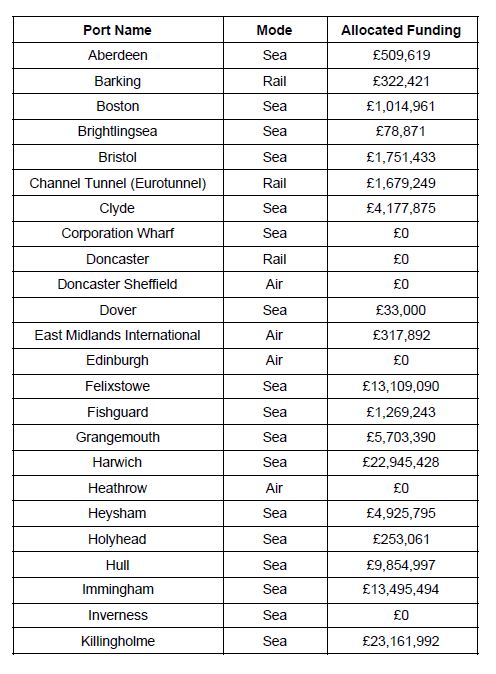
So here is the list of what everyone got - 41 ports had winning bids totaling just over £194m - but you'll note that Dover got...wait for it...£33k. No, that is not a type. Thirty-three thousand pounds. They asked for £33m!! Why? Well to build new passport lanes. /4
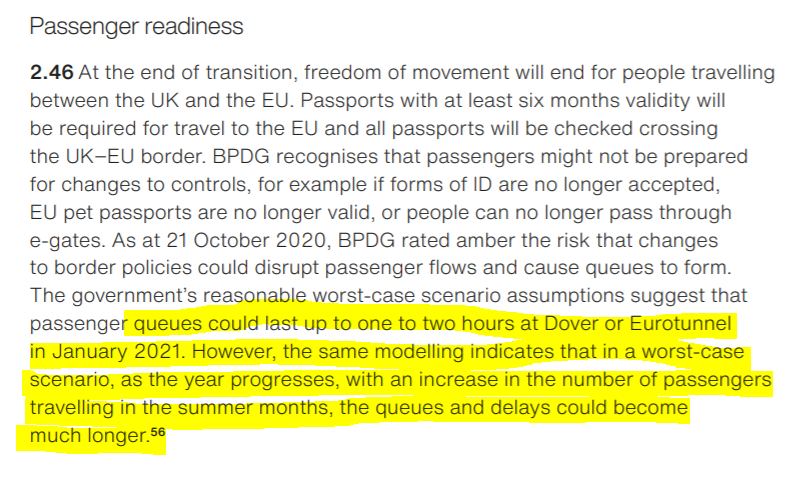
Why? Because as an @NAOorguk report warned in November the Govt's 'reasonable worst case scenario' for delays at Dover for passenger traffic was "one to two hours" and "much longer" in the summer. Eeek. Happy hols everyone! /5
https://t.co/K77Is5tfxk
So what is this all about? Well back in October the govt announced a £200m Port Infrastructure Fund - details below - for ports to get ready for the new trade processes for #Brexit border. Dealing with those 215m extra customs decs etc..
Today we find out what everyone got - but it turns out that 54 ports asked for more than £450m - so a LOT have been bitterly disappointed. Not just Dover (on which more in a second)...they are furious the government is not willing to fully fund the very borders they mandated /3
So here is the list of what everyone got - 41 ports had winning bids totaling just over £194m - but you'll note that Dover got...wait for it...£33k. No, that is not a type. Thirty-three thousand pounds. They asked for £33m!! Why? Well to build new passport lanes. /4
Why? Because as an @NAOorguk report warned in November the Govt's 'reasonable worst case scenario' for delays at Dover for passenger traffic was "one to two hours" and "much longer" in the summer. Eeek. Happy hols everyone! /5
https://t.co/K77Is5tfxk
More from Economy


I really think people have a very short-sighted view of the city and its key role in decades to come for the economy of 🇨🇳. Every so often, people have a handful of misconceptions about the city's future because they lack of basics in strategy 👇
https://t.co/6wuRzXGkYZ The West propaganda seems to make people think we are cracking down on 🇭🇰 people because we no longer need them and we will inevitably suppress their rights. Every now and then, I talk with people in 🇭🇰 who think the Great Firewall will extend to 🇭🇰
🇺🇸-led liberal order is very strong to come across 🇭🇰 people and make them believe what they want. Brainwashed people don't think rationally and fall for the lies and propaganda. This guy is one among so many others I met in 🇭🇰 who told me the same thing, that the city is doomed
They couldn't be more ignorant ! Unfortunately they will end up leaving the city and missing out on incredible opportunities... But they don't know that nothing will eventually change after 2047 ? 🙃Let me explain you why
I bet even after 2047 🇭🇰 will still enjoy a high degree of autonomy and freedoms that its mainland counterpart can’t enjoy : an independent legal and financial system, English as one of the official language, an access to the West internet, its traditional medias, etc.
Most Western countries are already starting to reconsider whether Hong Kong will remain a viable trading centre.
— Isaac Cheung | \U0001f1ed\U0001f1f0 | (@SoAlive0513) February 15, 2021
When the entire world stops trading with HK, how will HK be the financial center of the world?
I doubt tourism would be any better in the next few years either lol
https://t.co/6wuRzXGkYZ The West propaganda seems to make people think we are cracking down on 🇭🇰 people because we no longer need them and we will inevitably suppress their rights. Every now and then, I talk with people in 🇭🇰 who think the Great Firewall will extend to 🇭🇰
🇺🇸-led liberal order is very strong to come across 🇭🇰 people and make them believe what they want. Brainwashed people don't think rationally and fall for the lies and propaganda. This guy is one among so many others I met in 🇭🇰 who told me the same thing, that the city is doomed
They couldn't be more ignorant ! Unfortunately they will end up leaving the city and missing out on incredible opportunities... But they don't know that nothing will eventually change after 2047 ? 🙃Let me explain you why
I bet even after 2047 🇭🇰 will still enjoy a high degree of autonomy and freedoms that its mainland counterpart can’t enjoy : an independent legal and financial system, English as one of the official language, an access to the West internet, its traditional medias, etc.
You May Also Like






Recently, the @CNIL issued a decision regarding the GDPR compliance of an unknown French adtech company named "Vectaury". It may seem like small fry, but the decision has potential wide-ranging impacts for Google, the IAB framework, and today's adtech. It's thread time! 👇
It's all in French, but if you're up for it you can read:
• Their blog post (lacks the most interesting details): https://t.co/PHkDcOT1hy
• Their high-level legal decision: https://t.co/hwpiEvjodt
• The full notification: https://t.co/QQB7rfynha
I've read it so you needn't!
Vectaury was collecting geolocation data in order to create profiles (eg. people who often go to this or that type of shop) so as to power ad targeting. They operate through embedded SDKs and ad bidding, making them invisible to users.
The @CNIL notes that profiling based off of geolocation presents particular risks since it reveals people's movements and habits. As risky, the processing requires consent — this will be the heart of their assessment.
Interesting point: they justify the decision in part because of how many people COULD be targeted in this way (rather than how many have — though they note that too). Because it's on a phone, and many have phones, it is considered large-scale processing no matter what.
It's all in French, but if you're up for it you can read:
• Their blog post (lacks the most interesting details): https://t.co/PHkDcOT1hy
• Their high-level legal decision: https://t.co/hwpiEvjodt
• The full notification: https://t.co/QQB7rfynha
I've read it so you needn't!
Vectaury was collecting geolocation data in order to create profiles (eg. people who often go to this or that type of shop) so as to power ad targeting. They operate through embedded SDKs and ad bidding, making them invisible to users.
The @CNIL notes that profiling based off of geolocation presents particular risks since it reveals people's movements and habits. As risky, the processing requires consent — this will be the heart of their assessment.
Interesting point: they justify the decision in part because of how many people COULD be targeted in this way (rather than how many have — though they note that too). Because it's on a phone, and many have phones, it is considered large-scale processing no matter what.