
I have read through the grooming report from the Home Office.
Here, in this thread, I will take you through the mathematical hoops they have jumped through in this deeply flawed analysis.
Thread 👇
One way to force a conclusion is to only range over a small and carefully chosen set of data points. In this case, the report used a limited number of use cases which largely ignored the high profile grooming gangs of Pakistani origin.
A typical data trick is to only use one troublesome dataset - generally the most high profile one. This gives plausible denial on accusations of manipulation of source data.
A tautology is a statement which is true by virtue of its logical form. I.e. a statement which is inevitably true. Such statements are not worth declaring as they have no statistical significance.
In a broadly white country, this statement is tautological. The real question is, were other groups present in a statistical significant way?
The whole point of data analysis is to uncover statistically significance results - not to restate tautologies.
This trick does, however, produce lovely quotable headlines which will reassure people of their own anecdotal conclusions.
_This is what we call “the pericope trick”_
Whenever you don’t want to use a data item, you can just blame data quality. In this case, they often cited data quality on ethnicity classifications.
The UK ethnicity enumeration is flawed in many areas.
In any given set of statements, there will be a range of values. Each item in the range will then have a corresponding frequency count. So some items might be present once and others hundreds of times.
_This is what we call “the range trick”_
A final trick I will mention is to mix-up the definition of data types and classes. You can, for example, deliberately use nationality in place of ethnicity when it suits your cause.
_This is what we call “the predicate trick”_
More from Economy


I really think people have a very short-sighted view of the city and its key role in decades to come for the economy of 🇨🇳. Every so often, people have a handful of misconceptions about the city's future because they lack of basics in strategy 👇
https://t.co/6wuRzXGkYZ The West propaganda seems to make people think we are cracking down on 🇭🇰 people because we no longer need them and we will inevitably suppress their rights. Every now and then, I talk with people in 🇭🇰 who think the Great Firewall will extend to 🇭🇰
🇺🇸-led liberal order is very strong to come across 🇭🇰 people and make them believe what they want. Brainwashed people don't think rationally and fall for the lies and propaganda. This guy is one among so many others I met in 🇭🇰 who told me the same thing, that the city is doomed
They couldn't be more ignorant ! Unfortunately they will end up leaving the city and missing out on incredible opportunities... But they don't know that nothing will eventually change after 2047 ? 🙃Let me explain you why
I bet even after 2047 🇭🇰 will still enjoy a high degree of autonomy and freedoms that its mainland counterpart can’t enjoy : an independent legal and financial system, English as one of the official language, an access to the West internet, its traditional medias, etc.
Most Western countries are already starting to reconsider whether Hong Kong will remain a viable trading centre.
— Isaac Cheung | \U0001f1ed\U0001f1f0 | (@SoAlive0513) February 15, 2021
When the entire world stops trading with HK, how will HK be the financial center of the world?
I doubt tourism would be any better in the next few years either lol
https://t.co/6wuRzXGkYZ The West propaganda seems to make people think we are cracking down on 🇭🇰 people because we no longer need them and we will inevitably suppress their rights. Every now and then, I talk with people in 🇭🇰 who think the Great Firewall will extend to 🇭🇰
🇺🇸-led liberal order is very strong to come across 🇭🇰 people and make them believe what they want. Brainwashed people don't think rationally and fall for the lies and propaganda. This guy is one among so many others I met in 🇭🇰 who told me the same thing, that the city is doomed
They couldn't be more ignorant ! Unfortunately they will end up leaving the city and missing out on incredible opportunities... But they don't know that nothing will eventually change after 2047 ? 🙃Let me explain you why
I bet even after 2047 🇭🇰 will still enjoy a high degree of autonomy and freedoms that its mainland counterpart can’t enjoy : an independent legal and financial system, English as one of the official language, an access to the West internet, its traditional medias, etc.
You May Also Like

To people who are under the impression that you can get rich quickly by working on an app, here are the stats for https://t.co/az8F12pf02
📈 ~12000 vistis
☑️ 109 transactions
💰 353€ profit (285 after tax)
I have spent 1.5 months on this app. You can make more $ in 2 days.
🤷♂️

I'm still happy that I launched a paid app bcs it involved extra work:
- backend for processing payments (+ permissions, webhooks, etc)
- integration with payment processor
- UI for license activation in Electron
- machine activation limit
- autoupdates
- mailgun emails
etc.
These things seemed super scary at first. I always thought it was way too much work and something would break. But I'm glad I persisted. So far the only problem I have is that mailgun is not delivering the license keys to certain domains like https://t.co/6Bqn0FUYXo etc. 👌
omg I just realized that me . com is an Apple domain, of course something wouldn't work with these dicks
📈 ~12000 vistis
☑️ 109 transactions
💰 353€ profit (285 after tax)
I have spent 1.5 months on this app. You can make more $ in 2 days.
🤷♂️
I'm still happy that I launched a paid app bcs it involved extra work:
- backend for processing payments (+ permissions, webhooks, etc)
- integration with payment processor
- UI for license activation in Electron
- machine activation limit
- autoupdates
- mailgun emails
etc.
These things seemed super scary at first. I always thought it was way too much work and something would break. But I'm glad I persisted. So far the only problem I have is that mailgun is not delivering the license keys to certain domains like https://t.co/6Bqn0FUYXo etc. 👌
omg I just realized that me . com is an Apple domain, of course something wouldn't work with these dicks






Tip from the Monkey
Pangolins, September 2019 and PLA are the key to this mystery
Stay Tuned!

1. Yang
2. A jacobin capuchin dangling a flagellin pangolin on a javelin while playing a mandolin and strangling a mannequin on a paladin's palanquin, said Saladin
More to come tomorrow!

3. Yigang Tong
https://t.co/CYtqYorhzH
Archived: https://t.co/ncz5ruwE2W
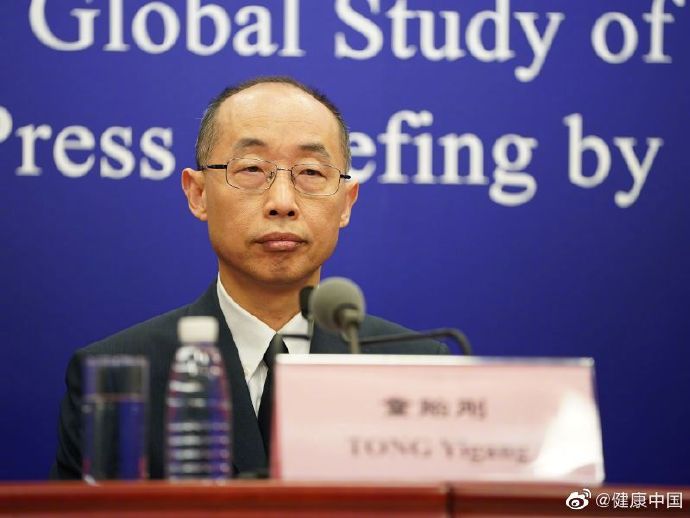
4. YT Interview
Some bats & pangolins carry viruses related with SARS-CoV-2, found in SE Asia and in Yunnan, & the pangolins carrying SARS-CoV-2 related viruses were smuggled from SE Asia, so there is a possibility that SARS-CoV-2 were coming from
Pangolins, September 2019 and PLA are the key to this mystery
Stay Tuned!
1. Yang
Meet Yang Ruifu, CCP's biological weapons expert https://t.co/JjB9TLEO95 via @Gnews202064
— Billy Bostickson \U0001f3f4\U0001f441&\U0001f441 \U0001f193 (@BillyBostickson) October 11, 2020
Interesting expose of China's top bioweapons expert who oversaw fake pangolin research
Paper 1: https://t.co/TrXESKLYmJ
Paper 2:https://t.co/9LSJTNCn3l
Pangolinhttps://t.co/2FUAzWyOcv pic.twitter.com/I2QMXgnkBJ
2. A jacobin capuchin dangling a flagellin pangolin on a javelin while playing a mandolin and strangling a mannequin on a paladin's palanquin, said Saladin
More to come tomorrow!
3. Yigang Tong
https://t.co/CYtqYorhzH
Archived: https://t.co/ncz5ruwE2W
4. YT Interview
Some bats & pangolins carry viruses related with SARS-CoV-2, found in SE Asia and in Yunnan, & the pangolins carrying SARS-CoV-2 related viruses were smuggled from SE Asia, so there is a possibility that SARS-CoV-2 were coming from