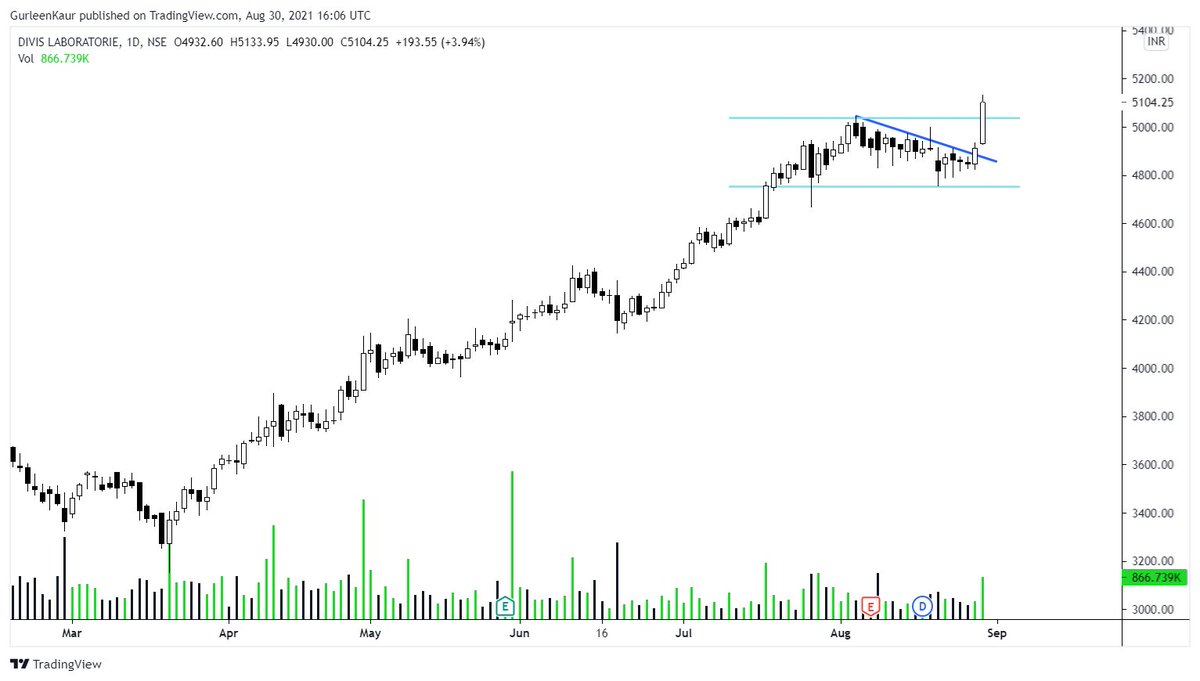
#DIVISLAB
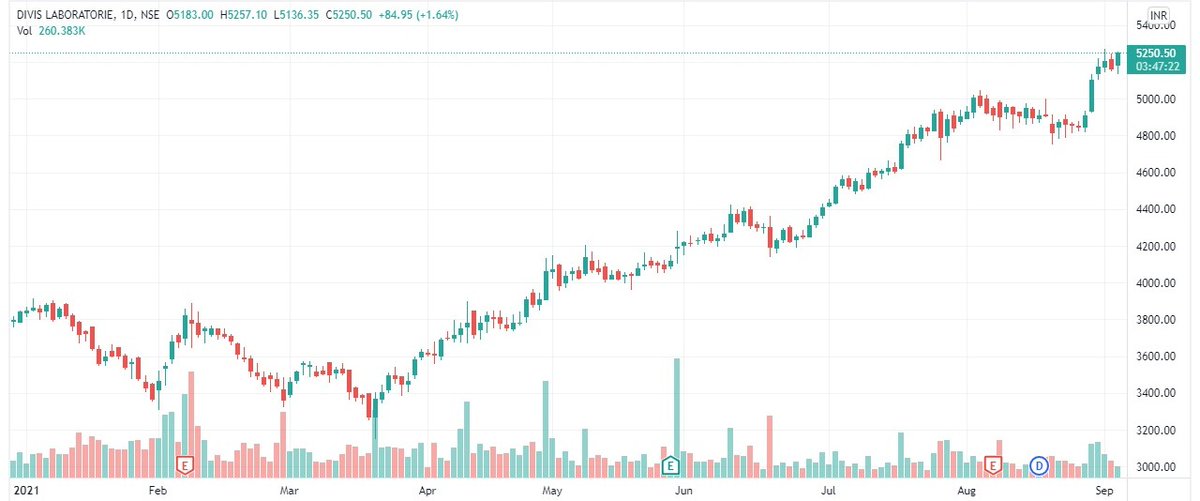
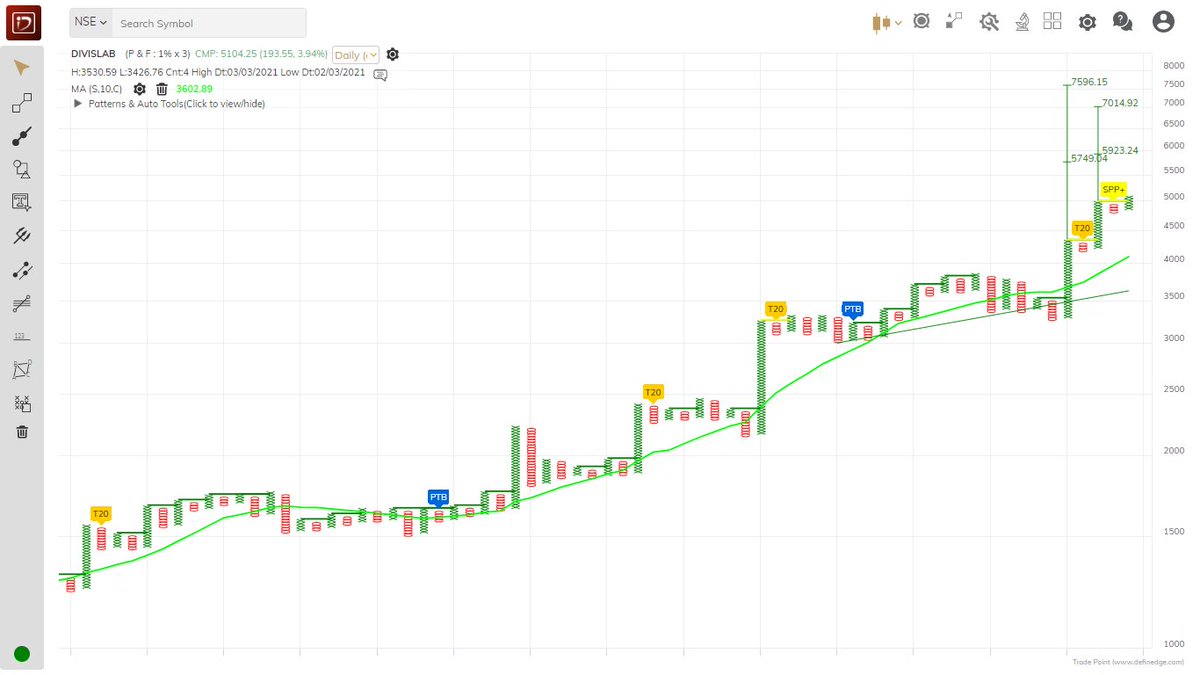
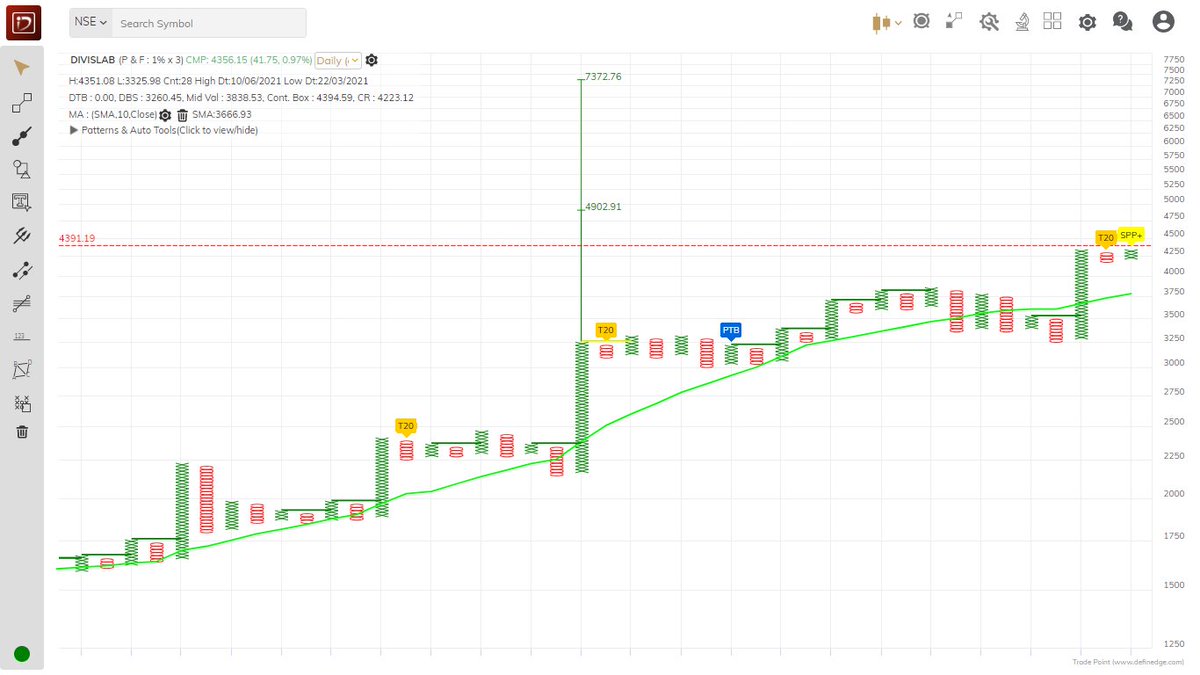
Broken past the descending trendline along with the parallel range of support and resistance on a good volume note.
Sustenance above 5045 would bring in the targets of 5150 followed by 5250 in the short run.
#StockMarket #StocksToTrade
More from Gurleen
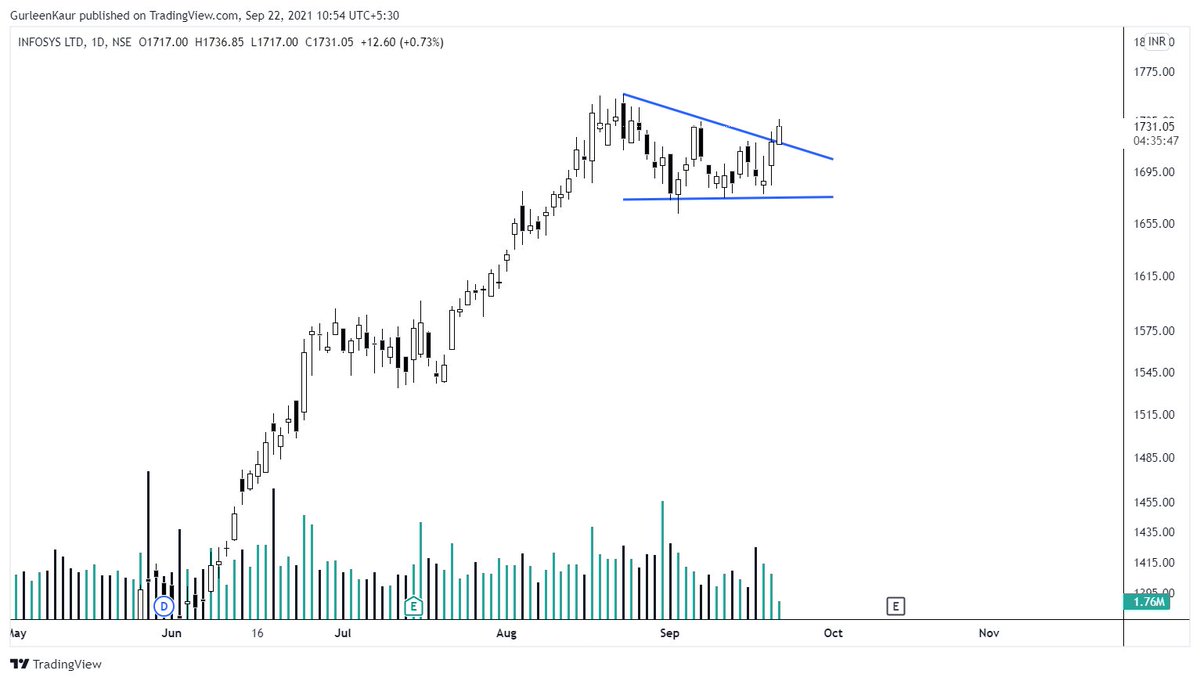
#LAURUSLABS Update
Into a narrow consolidation band post breakout.
Sustained above the zone, Target's intact.
#StockMarket #StocksInFocus https://t.co/lhfemwd4iQ
Into a narrow consolidation band post breakout.
Sustained above the zone, Target's intact.
#StockMarket #StocksInFocus https://t.co/lhfemwd4iQ
#LAURUSLABS Multiple TF Analysis
— Gurleen (@GurleenKaur_19) August 9, 2021
A break-through at ATH.
Sustenance above 698 and a breakout at 705.85 would bring in higher targets of 733 followed by 800 in short term. #StockMarket #StocksToWatch pic.twitter.com/2aaY3BG99D
#DEEPAKNITRITE Update
2150 📍
On weekly log scale; The trend remains intact towards the upside. Next up would be 2340.
[As mentioned; this can be in one's long term portfolio, Targets would keep on becoming elongated.]
#StockMarket #StocksInFocus #investing https://t.co/HJH5XwMRf5
2150 📍
On weekly log scale; The trend remains intact towards the upside. Next up would be 2340.
[As mentioned; this can be in one's long term portfolio, Targets would keep on becoming elongated.]
#StockMarket #StocksInFocus #investing https://t.co/HJH5XwMRf5
#DEEPAKNITRITE Update
— Gurleen (@GurleenKaur_19) July 30, 2021
Reclaimed ATH and fresh at 2052.90
Came up with Great numbers and this can be in one's portfolio for long term. #StockMarket #StocksInFocus https://t.co/dMWyf013Nt pic.twitter.com/vxV6c0Eskp
#ULTRACEM Updated chart
Seems like another retest along with a follow through move. Even the support at 6100 has been taken out.
In swing support placed at 5590 followed by 4960.
#StockMarket #StocksToWatch https://t.co/bekQfLgWEK
Seems like another retest along with a follow through move. Even the support at 6100 has been taken out.
In swing support placed at 5590 followed by 4960.
#StockMarket #StocksToWatch https://t.co/bekQfLgWEK
#ULTRACEM
— Gurleen (@GurleenKaur_19) May 1, 2022
With the breakdown & retest. The major support is placed at 6100 levels. pic.twitter.com/IsoZd1grIx
More from Divis
You May Also Like
Recently, the @CNIL issued a decision regarding the GDPR compliance of an unknown French adtech company named "Vectaury". It may seem like small fry, but the decision has potential wide-ranging impacts for Google, the IAB framework, and today's adtech. It's thread time! 👇
It's all in French, but if you're up for it you can read:
• Their blog post (lacks the most interesting details): https://t.co/PHkDcOT1hy
• Their high-level legal decision: https://t.co/hwpiEvjodt
• The full notification: https://t.co/QQB7rfynha
I've read it so you needn't!
Vectaury was collecting geolocation data in order to create profiles (eg. people who often go to this or that type of shop) so as to power ad targeting. They operate through embedded SDKs and ad bidding, making them invisible to users.
The @CNIL notes that profiling based off of geolocation presents particular risks since it reveals people's movements and habits. As risky, the processing requires consent — this will be the heart of their assessment.
Interesting point: they justify the decision in part because of how many people COULD be targeted in this way (rather than how many have — though they note that too). Because it's on a phone, and many have phones, it is considered large-scale processing no matter what.
It's all in French, but if you're up for it you can read:
• Their blog post (lacks the most interesting details): https://t.co/PHkDcOT1hy
• Their high-level legal decision: https://t.co/hwpiEvjodt
• The full notification: https://t.co/QQB7rfynha
I've read it so you needn't!
Vectaury was collecting geolocation data in order to create profiles (eg. people who often go to this or that type of shop) so as to power ad targeting. They operate through embedded SDKs and ad bidding, making them invisible to users.
The @CNIL notes that profiling based off of geolocation presents particular risks since it reveals people's movements and habits. As risky, the processing requires consent — this will be the heart of their assessment.
Interesting point: they justify the decision in part because of how many people COULD be targeted in this way (rather than how many have — though they note that too). Because it's on a phone, and many have phones, it is considered large-scale processing no matter what.
A brief analysis and comparison of the CSS for Twitter's PWA vs Twitter's legacy desktop website. The difference is dramatic and I'll touch on some reasons why.
Legacy site *downloads* ~630 KB CSS per theme and writing direction.
6,769 rules
9,252 selectors
16.7k declarations
3,370 unique declarations
44 media queries
36 unique colors
50 unique background colors
46 unique font sizes
39 unique z-indices
https://t.co/qyl4Bt1i5x
PWA *incrementally generates* ~30 KB CSS that handles all themes and writing directions.
735 rules
740 selectors
757 declarations
730 unique declarations
0 media queries
11 unique colors
32 unique background colors
15 unique font sizes
7 unique z-indices
https://t.co/w7oNG5KUkJ
The legacy site's CSS is what happens when hundreds of people directly write CSS over many years. Specificity wars, redundancy, a house of cards that can't be fixed. The result is extremely inefficient and error-prone styling that punishes users and developers.
The PWA's CSS is generated on-demand by a JS framework that manages styles and outputs "atomic CSS". The framework can enforce strict constraints and perform optimisations, which is why the CSS is so much smaller and safer. Style conflicts and unbounded CSS growth are avoided.
Legacy site *downloads* ~630 KB CSS per theme and writing direction.
6,769 rules
9,252 selectors
16.7k declarations
3,370 unique declarations
44 media queries
36 unique colors
50 unique background colors
46 unique font sizes
39 unique z-indices
https://t.co/qyl4Bt1i5x
PWA *incrementally generates* ~30 KB CSS that handles all themes and writing directions.
735 rules
740 selectors
757 declarations
730 unique declarations
0 media queries
11 unique colors
32 unique background colors
15 unique font sizes
7 unique z-indices
https://t.co/w7oNG5KUkJ
The legacy site's CSS is what happens when hundreds of people directly write CSS over many years. Specificity wars, redundancy, a house of cards that can't be fixed. The result is extremely inefficient and error-prone styling that punishes users and developers.
The PWA's CSS is generated on-demand by a JS framework that manages styles and outputs "atomic CSS". The framework can enforce strict constraints and perform optimisations, which is why the CSS is so much smaller and safer. Style conflicts and unbounded CSS growth are avoided.