I think we'll see a crypto operating system where everything from your messages, payments, identity, authentication etc will all be on blockchains.
@naval: "The unstoppable and un-snoopable phone"
In the future, there will be one canonical social protocol with all the social data. The future YouTubes, Clubhouses, and Twitters will all be built on the winning social protocol. (We don't know yet which one will win.)
Ultimately, there will only be one Social Protocol.
— Naval (@naval) January 14, 2021
More from Crypto







"Blockchain technology is energy-intensive..." => No, it doesn't have to be.
Let's look at Proof-Of-Stake, an alternative to the energy-intensive Proof-Of-Work algorithm.
🧵🔽
1️⃣ A Quick Recap On Proof-Of-Work
A Proof-Of-Work algorithm requires miners to do a certain amount of work that is compute-intensive to gain access to a service or the right to do something. This algorithm, by design, also requires that the work done shall not ...
... be reusable for anything else than what it was performed for. This lies at the core of the security concept of a blockchain. To gain the right to append a new block to a chain and to get some currency as a reward, there is work to be done, and this work must be verifyable.
That work is a race between different miners. Many miners try to compete and to be the first to find the answer to a problem presented to them. This implies that a lot of energy is wasted as only the first correct solution is accepted.
You can find a more detailed thread on Proof-Of-Work
Let's look at Proof-Of-Stake, an alternative to the energy-intensive Proof-Of-Work algorithm.
🧵🔽
1️⃣ A Quick Recap On Proof-Of-Work
A Proof-Of-Work algorithm requires miners to do a certain amount of work that is compute-intensive to gain access to a service or the right to do something. This algorithm, by design, also requires that the work done shall not ...
... be reusable for anything else than what it was performed for. This lies at the core of the security concept of a blockchain. To gain the right to append a new block to a chain and to get some currency as a reward, there is work to be done, and this work must be verifyable.
That work is a race between different miners. Many miners try to compete and to be the first to find the answer to a problem presented to them. This implies that a lot of energy is wasted as only the first correct solution is accepted.
You can find a more detailed thread on Proof-Of-Work
Proof-Of-Work is the name of a cryptographic algorithm that is used for some blockchains when new blocks are to be appended to the chain.
— Oliver Jumpertz (@oliverjumpertz) April 3, 2021
Let's take a higher-level look at how this one works, shall we?
\U0001f9f5\U0001f53d


You may be wondering why @bristoliver rather cryptically RT’d a chart that I posted last night. The answer is not just that he loves quadratic fits on log axes, but that this chart may –and I stress may– hint at a vaccine effect amongst the over 80s THREAD
WARNING: this is a long thread, and it’s a bit of a roller-coaster. We find some apparently strong patterns in the data, and then start to unpick them a bit. So if you start getting excited half way through you might find you’re less excited at the end. But we’ll see…
First we first have to go back a bit. @bristoliver posted a thread a few days ago explaining why, with a constant vaccination rate, a log plot of cases should show a quadratic form. In other words, it should fit an equation like: a + b.x + c.x^2
I meant to link in the model thread there - here it is
the quadratic coefficient – the ‘c’ in that equation – gives an estimate of the % of the population who are being newly protected by the vaccine each day. Please note ‘protected by the vaccine’, not ‘vaccinated’ – as we don't expect 100% protection after the first dose
ok, I lied. but strictly it's not a new graph, just a new trendline (now a quadratic on the log plot). looks um... quite a good fit. so I'd say that was interesting. pic.twitter.com/qkgyMf1ya8
— James Ward (@JamesWard73) January 27, 2021
WARNING: this is a long thread, and it’s a bit of a roller-coaster. We find some apparently strong patterns in the data, and then start to unpick them a bit. So if you start getting excited half way through you might find you’re less excited at the end. But we’ll see…
First we first have to go back a bit. @bristoliver posted a thread a few days ago explaining why, with a constant vaccination rate, a log plot of cases should show a quadratic form. In other words, it should fit an equation like: a + b.x + c.x^2
I meant to link in the model thread there - here it is
Been thinking about where we are, where we might be going, what effect vaccines might have and how to tell. This thread may not happen all at once, and will get a bit mathematical in a couple of places (sorry!), but I will put in pictures. It's yet another argument for log scales
— Oliver Johnson (@BristOliver) January 24, 2021
the quadratic coefficient – the ‘c’ in that equation – gives an estimate of the % of the population who are being newly protected by the vaccine each day. Please note ‘protected by the vaccine’, not ‘vaccinated’ – as we don't expect 100% protection after the first dose
You May Also Like

So friends here is the thread on the recommended pathway for new entrants in the stock market.
Here I will share what I believe are essentials for anybody who is interested in stock markets and the resources to learn them, its from my experience and by no means exhaustive..
First the very basic : The Dow theory, Everybody must have basic understanding of it and must learn to observe High Highs, Higher Lows, Lower Highs and Lowers lows on charts and their
Even those who are more inclined towards fundamental side can also benefit from Dow theory, as it can hint start & end of Bull/Bear runs thereby indication entry and exits.
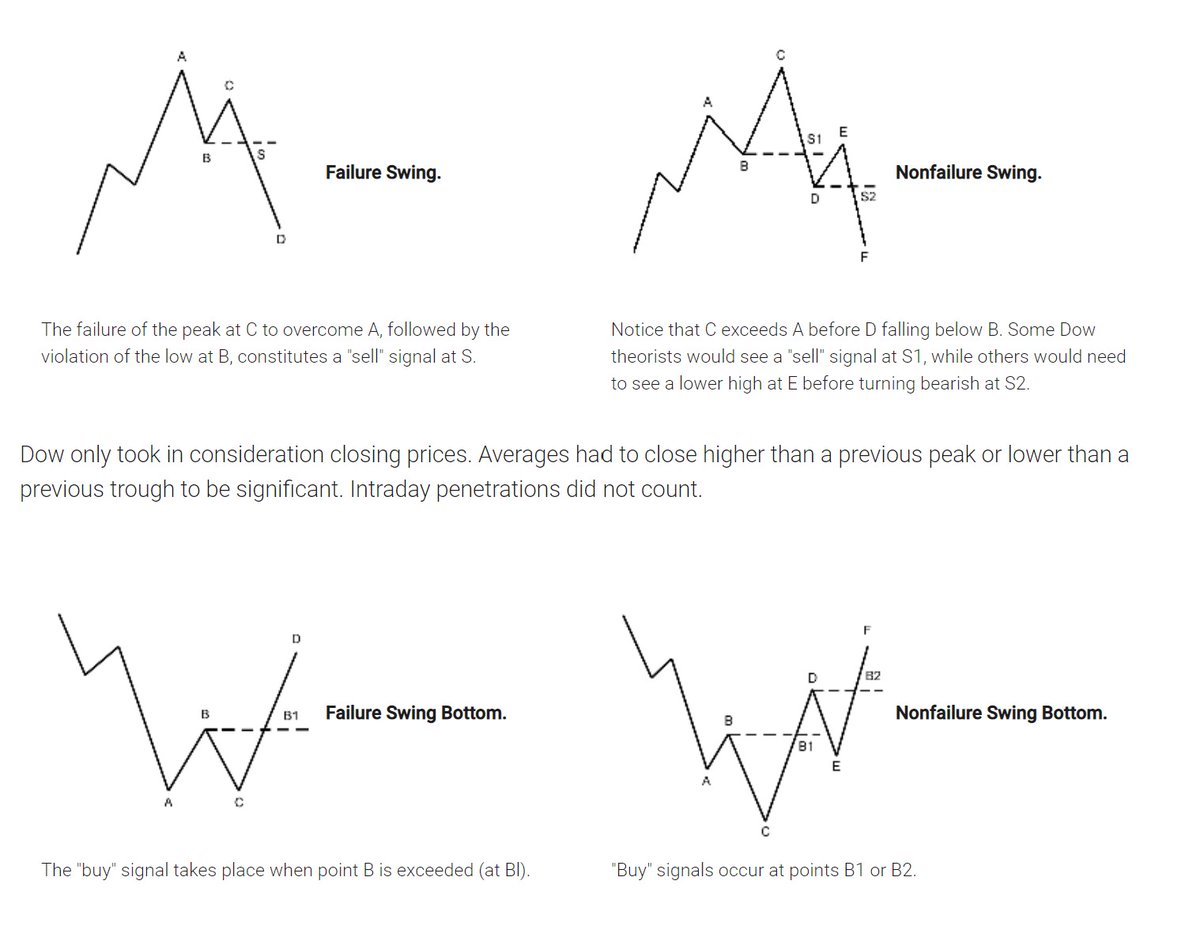
Next basic is Wyckoff's Theory. It tells how accumulation and distribution happens with regularity and how the market actually
Dow theory is old but
Here I will share what I believe are essentials for anybody who is interested in stock markets and the resources to learn them, its from my experience and by no means exhaustive..
First the very basic : The Dow theory, Everybody must have basic understanding of it and must learn to observe High Highs, Higher Lows, Lower Highs and Lowers lows on charts and their
Even those who are more inclined towards fundamental side can also benefit from Dow theory, as it can hint start & end of Bull/Bear runs thereby indication entry and exits.
Next basic is Wyckoff's Theory. It tells how accumulation and distribution happens with regularity and how the market actually
Dow theory is old but
Old is Gold....
— Professor (@DillikiBiili) January 23, 2020
this Bharti Airtel chart is a true copy of the Wyckoff Pattern propounded in 1931....... pic.twitter.com/tQ1PNebq7d