
1. IMP ANNOUNCEMENT
I want to let you know when I made the decision to launch @StrikePac & directly get into electioneering I realized I wasn't going to continue issuing "race ratings" & "forecasts" each cycle- OBV that's a conflict of interest!
The hostility & sexism of
BC if we're not there? If the Ds go into 2022 with the same messaging & electioneering approaches they brought to bear in the 2020 cycle- they lost seats under ideal fundamentals?
Yes, Ds are losing!
More from Rachel "The Doc" Bitecofer 📈🔭🍌
1. I think so. I don't think the issue are plans. The issue is that the ability of our govn't to function-to create & enact policy- has been seriously abridged the past decade to the point where it can't function. We've seen virtually no legislation this past decade & pretty
2. much none relying on just "regular order." Although the Ds spent almost a year trying w the ACA before giving up & using a procedural trick in the end. Keep in mind, McConnell changed the operation of senate so that all bills, ALL, had to reach 60 vote threshold in the senate
3. That was a MASSIVE change to the legislative filibuster (a massive abuse of it). It creates a super majority requirement for laws that the Framers didn't design. And given the issue of misrepresentation the senate, which is causing a Tyranny of the Minority, its really shut
4. down the federal lawmaking apparatus. If Ds flip these 2 GA senate seats, the legislative filibuster will be right back in the spotlight bc McConnell will use it to lockdown Biden's legislative agenda. And we'll have to see how Biden responds. I agree that Biden needs to give
5. McConnell an opp to change his behavior, but if he doesn't Biden will have to go w EOs or ending the legislative filibuster. Either that, or getting nothing done. The GOP will seek to do to him what they did to Obama- use control of the senate OR the filibuster to prevent
Does anyone in DC have an actual plan that would get the American middle class back on its feet and elevate many more of the poor into the middle class? I mean besides trickle down economics, which has been shown to be a joke?
— John Frost (@JohnFrost) December 30, 2020
2. much none relying on just "regular order." Although the Ds spent almost a year trying w the ACA before giving up & using a procedural trick in the end. Keep in mind, McConnell changed the operation of senate so that all bills, ALL, had to reach 60 vote threshold in the senate
3. That was a MASSIVE change to the legislative filibuster (a massive abuse of it). It creates a super majority requirement for laws that the Framers didn't design. And given the issue of misrepresentation the senate, which is causing a Tyranny of the Minority, its really shut
4. down the federal lawmaking apparatus. If Ds flip these 2 GA senate seats, the legislative filibuster will be right back in the spotlight bc McConnell will use it to lockdown Biden's legislative agenda. And we'll have to see how Biden responds. I agree that Biden needs to give
5. McConnell an opp to change his behavior, but if he doesn't Biden will have to go w EOs or ending the legislative filibuster. Either that, or getting nothing done. The GOP will seek to do to him what they did to Obama- use control of the senate OR the filibuster to prevent
1. I think school closures also dragged Ds down in congressional races. To be clear, they wouldn't in a functional democracy not following a herd immunity strategy & normalizing the indifference genocide of up to a half million of its citizens. That "conditional" is a necessary
2. component of the "pandemic backlash effect that we have in the U.S. other countries don't have sizable anti-mask movements, ones so large it impedes states like North Dakota who governor @DougForDakota has "led" them to a point where every single county in his large;y rural
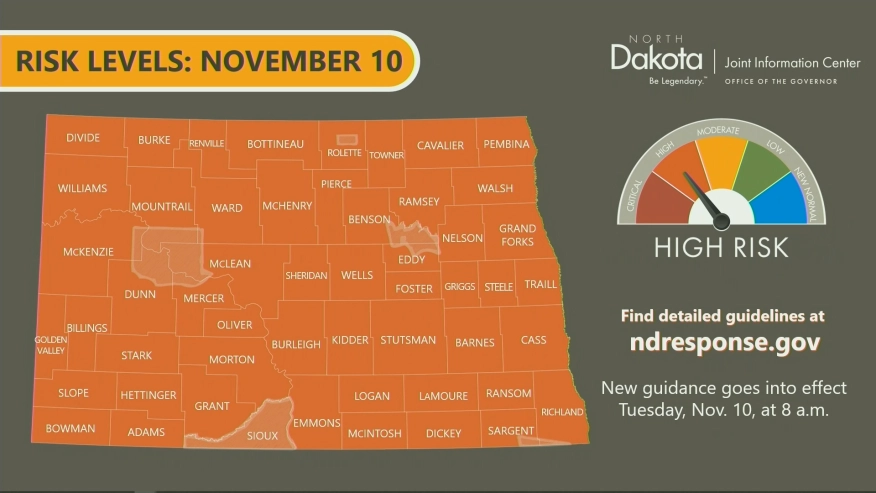
3. state has been governed to "high" infection rates. He must feel so successful that liberty & freedom is so abundantly clear all around him! So yes, in a country that has normalized murdering via indifference its old, medical compromised & in the case of
4. COVID- which is a random killer, which sometimes kills young healthy mothers whose own mothers couldn't let their daughter forgo a baby shower bc its such a special part of the birth experience or bc how do you skip the "1 year" baby party when the baby smashes her cake all
5. over her own head? I get it. Those are once in a lifetime events that can't be replaced. So people have been doing them bc their governors & their president esp has told them to do so, that its no big deal, that actually they'd be FOOLS not to hold that gender reveal party,
Every time I see a parent post about how their kids\u2019 school is closing and going virtual, I think of how my kids haven\u2019t physically been to school since early March.
— kim yi dionne (she/her) (@dadakim) November 11, 2020
2. component of the "pandemic backlash effect that we have in the U.S. other countries don't have sizable anti-mask movements, ones so large it impedes states like North Dakota who governor @DougForDakota has "led" them to a point where every single county in his large;y rural
3. state has been governed to "high" infection rates. He must feel so successful that liberty & freedom is so abundantly clear all around him! So yes, in a country that has normalized murdering via indifference its old, medical compromised & in the case of
4. COVID- which is a random killer, which sometimes kills young healthy mothers whose own mothers couldn't let their daughter forgo a baby shower bc its such a special part of the birth experience or bc how do you skip the "1 year" baby party when the baby smashes her cake all
5. over her own head? I get it. Those are once in a lifetime events that can't be replaced. So people have been doing them bc their governors & their president esp has told them to do so, that its no big deal, that actually they'd be FOOLS not to hold that gender reveal party,
More from Crypto



Quick Thread on #Altcoins/ #Altseason
Step 1: $BTC has a huge correction. Every range starts with either a pump (or dump) and then follows with a dump (or pump). In this case, #Bitcoin pumped and is now pulling back. This is
Step 2: $BTC ranges big once it finds a bottom. This will allow it to reaccumulate for a big summer run in 2021. This is HEALTHY IMO.

Step 3: Once $BTC finds a bottom and starts to grind up again, I expect $ALTS to do very very well in both alt/usd and alt/btc pairs. ALTSZN is almost always characterized by strong alt/btc pairs moving- I've already accumulated most and have done my final buying today and more.
$BTC.D typically has a very nice time during this time of the year. I was off on December prediction bc I thought $BTC was going to pull back by then but oh well! #Altcoins will start their pumping time VERY soon now.
More information on what #Altseason is and $ALTS market
Step 1: $BTC has a huge correction. Every range starts with either a pump (or dump) and then follows with a dump (or pump). In this case, #Bitcoin pumped and is now pulling back. This is
If you want #Altseason, you should want $BTC to make a decent sized pullback. Ranges start after huge moves in both directions, IMO we need to see some cooling off before the ranging starts. Plz give 26k. #Bitcoin pic.twitter.com/yLG9xSrbKz
— Altcoin Sherpa (@AltcoinSherpa) January 3, 2021
Step 2: $BTC ranges big once it finds a bottom. This will allow it to reaccumulate for a big summer run in 2021. This is HEALTHY IMO.
Step 3: Once $BTC finds a bottom and starts to grind up again, I expect $ALTS to do very very well in both alt/usd and alt/btc pairs. ALTSZN is almost always characterized by strong alt/btc pairs moving- I've already accumulated most and have done my final buying today and more.
$BTC.D typically has a very nice time during this time of the year. I was off on December prediction bc I thought $BTC was going to pull back by then but oh well! #Altcoins will start their pumping time VERY soon now.
$BTC.D: This is the chart for inverse #Bitcoin Dominance, the macro chart you need to check out for #Altcoins and when they have their runs. Still potentially more pain to go for $ALTS but I'm thinking that they will turn around strong when $BTC is done w. its run. pic.twitter.com/Q8ewTSRywp
— Altcoin Sherpa (@AltcoinSherpa) December 27, 2020
More information on what #Altseason is and $ALTS market
Big #Altcoin thread for $ALTS: Where are we at in the cycle, how long do we have, is this #ALTSEASON, what are the relationships like, all of that. $BTC #Bitcoin $ETH $LINK #Altcoins pic.twitter.com/nwVjgZu4fw
— Altcoin Sherpa (@AltcoinSherpa) November 9, 2020
You May Also Like


1/“What would need to be true for you to….X”
Why is this the most powerful question you can ask when attempting to reach an agreement with another human being or organization?
A thread, co-written by @deanmbrody:
2/ First, “X” could be lots of things. Examples: What would need to be true for you to
- “Feel it's in our best interest for me to be CMO"
- “Feel that we’re in a good place as a company”
- “Feel that we’re on the same page”
- “Feel that we both got what we wanted from this deal
3/ Normally, we aren’t that direct. Example from startup/VC land:
Founders leave VC meetings thinking that every VC will invest, but they rarely do.
Worse over, the founders don’t know what they need to do in order to be fundable.
4/ So why should you ask the magic Q?
To get clarity.
You want to know where you stand, and what it takes to get what you want in a way that also gets them what they want.
It also holds them (mentally) accountable once the thing they need becomes true.
5/ Staying in the context of soliciting investors, the question is “what would need to be true for you to want to invest (or partner with us on this journey, etc)?”
Multiple responses to this question are likely to deliver a positive result.
Why is this the most powerful question you can ask when attempting to reach an agreement with another human being or organization?
A thread, co-written by @deanmbrody:
Next level tactic when closing a sale, candidate, or investment:
— Erik Torenberg (@eriktorenberg) February 27, 2018
Ask: \u201cWhat needs to be true for you to be all in?\u201d
You'll usually get an explicit answer that you might not get otherwise. It also holds them accountable once the thing they need becomes true.
2/ First, “X” could be lots of things. Examples: What would need to be true for you to
- “Feel it's in our best interest for me to be CMO"
- “Feel that we’re in a good place as a company”
- “Feel that we’re on the same page”
- “Feel that we both got what we wanted from this deal
3/ Normally, we aren’t that direct. Example from startup/VC land:
Founders leave VC meetings thinking that every VC will invest, but they rarely do.
Worse over, the founders don’t know what they need to do in order to be fundable.
4/ So why should you ask the magic Q?
To get clarity.
You want to know where you stand, and what it takes to get what you want in a way that also gets them what they want.
It also holds them (mentally) accountable once the thing they need becomes true.
5/ Staying in the context of soliciting investors, the question is “what would need to be true for you to want to invest (or partner with us on this journey, etc)?”
Multiple responses to this question are likely to deliver a positive result.