We should be proud about @0xPolygon. But don't invest if you don't understand what they do just like any other asset class.
Should you invest in Polygon (Matic)?
— LearnApp (@LearnApp_co) June 12, 2021
\U0001f4a1 Here's @PrateekLearnapp's take on #Matic, as shared on @CNBCTV18News.
What are your thoughts on #Polygon (Matic)? \U0001f4ac
Read the full article here \U0001f449 https://t.co/rmLTV0WFo2#crypto #cryptocurrencies pic.twitter.com/9k1lclN7oL
More from Crypto

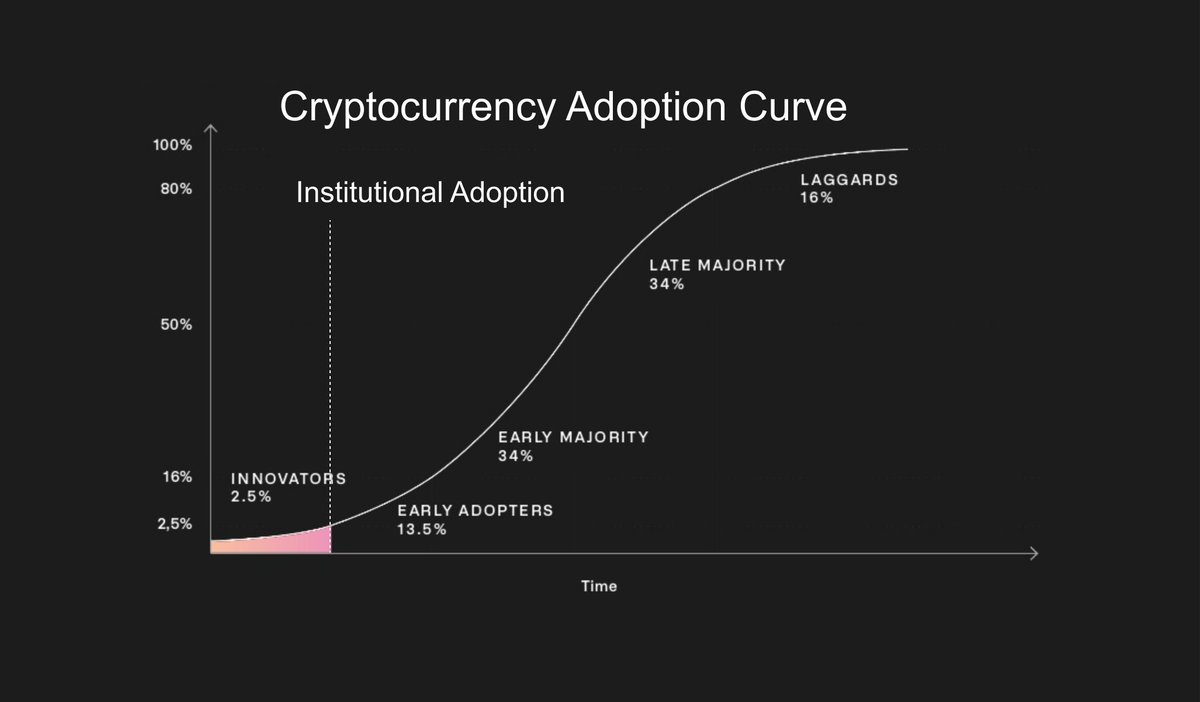
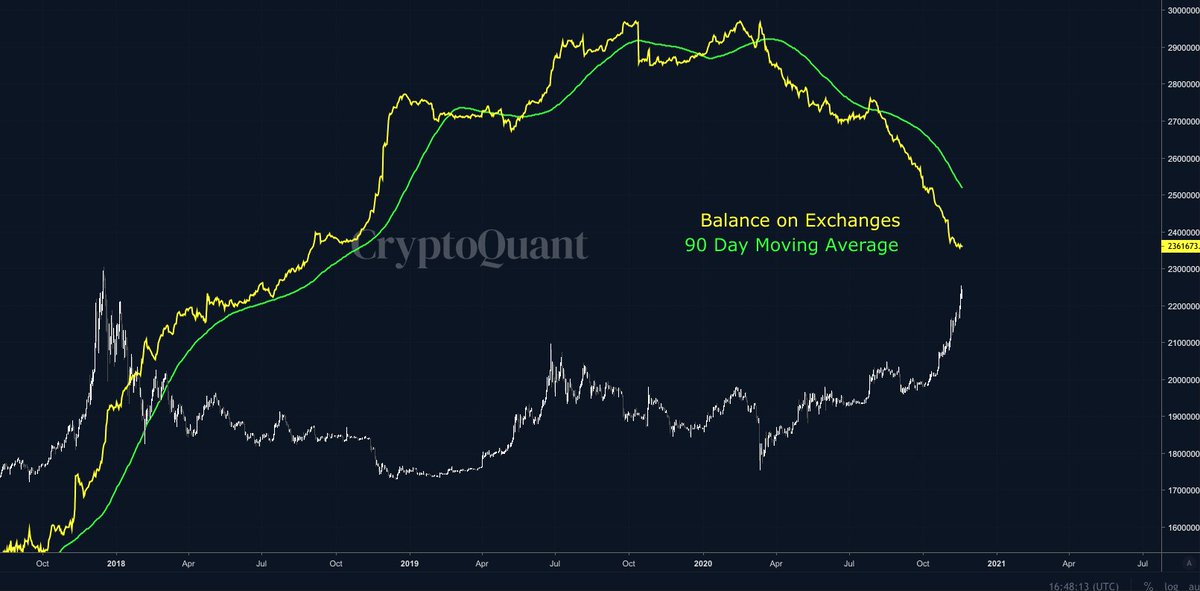

The vast majority of its success was fueled by #DeFi.
Here's what happened in 5 Tweets 🔽
1) Governance Tokens 🪙
Projects gave complete ownership of billion dollar protocols to their users, often using retroactive airdrops.
Early adopters earned tokens for past usage, and token-based voting now dictates all technical
It pays to be a web3 power user.
— Coopahtroopa \U0001f525_\U0001f525 (@Cooopahtroopa) December 9, 2020
Five networks that issued retroactive airdrops to value added actors \U0001f4dd
2) Liquidity Mining ⛏️
Power users were the first to earn on-going distribution by providing liquidity.
$COMP sparked the wave, with $BAL coining the term a few weeks
BAL is live!
— Balancer Labs (@BalancerLabs) June 23, 2020
The 435k BAL for liquidity providers of the first three weeks of liquidity mining (145k per week) have just been sent out to the wallets used to provide liquidity on Balancer.https://t.co/pkXFzwzPVC
3) Yield Faming 🌾
Projects coupled liquidity mining and governance tokens to boost 'yields' by combining lending rates with an incentive layer.
APYs peaked as high as 1M% during 'DeFi summer', leading to a 'food coin' craze like $YAM and
Check out @Cooopahtroopa's latest post for all the #DeFi farmers out there \U0001f468\u200d\U0001f33e
— Zerion \U0001f3e6 (@zerion_io) June 26, 2020
Turns out @synthetix_io & @CurveFinance were ploughing the fields long before $COMP & $BAL came along.
Learn how to put your #crypto to work with this #yieldfarming 101 \U0001f4b8
\U0001f449 https://t.co/zYUKtqx3BK
4) Fair Launches ✅
Who needs investment when you can launch using yield farming?
@iearnfinance debuted $YFI with no formal funding, seeding a community treasury for self-sustainability.
The notion of a core team and community became one and the
2/ What is a Fair Launch?
— fair launch capital (@fairlaunchcap) August 26, 2020
A FL enables founders to bootstrap new crypto networks that are earned, owned, and governed by their community from the outset.
In this dynamic, everyone participates on equal footing\u2014there is no early access, pre-mine, or allocation of tokens.


— Andre Cronje (@AndreCronjeTech) January 15, 2021
So Curve is awesome for swaps between similar assets, right? The fact that they trade very close to each other is a key part about how Curve works, using it's custom swap invariant function.
That's step 1
Step 2 is that Synthetix is awesome for creating "synthetic assets" (aka synths) which are assets that trade like other assets, that are backed by another, entirely different asset. Basically, a plastic banana that I can buy and sell like a real banana.
Synthetix has a feature that lets you swap between any two synths with zero slippage and a flat fee. That's because it is simply converting the sythentic asset into another synthetic asset, the backing for the synth doesn't change it just uses a different price oracle now.
This is important. Absolutely no slippage, at any size
Swap $1m sUSD for $1m sBTC? flat 0.3% fee
Swap $10m sUSD for $10m sBTC? flat 0.3% fee
swap $100m sUSD for $100m sBTC? Well, there isn't that many synths in Curve, yet but you get the point. The only limit is the pool depth

You May Also Like

Covering one of the most unique set ups: Extended moves & Reversal plays
Time for a 🧵 to learn the above from @iManasArora
What qualifies for an extended move?
30-40% move in just 5-6 days is one example of extended move
How Manas used this info to book
The stock exploded & went up as much as 63% from my price.
— Manas Arora (@iManasArora) June 22, 2020
Closed my position entirely today!#BroTip pic.twitter.com/CRbQh3kvMM
Post that the plight of the
What an extended (away from averages) move looks like!!
— Manas Arora (@iManasArora) June 24, 2020
If you don't learn to sell into strength, be ready to give away the majority of your gains.#GLENMARK pic.twitter.com/5DsRTUaGO2
Example 2: Booking profits when the stock is extended from 10WMA
10WMA =
#HIKAL
— Manas Arora (@iManasArora) July 2, 2021
Closed remaining at 560
Reason: It is 40+% from 10wma. Super extended
Total revenue: 11R * 0.25 (size) = 2.75% on portfolio
Trade closed pic.twitter.com/YDDvhz8swT
Another hack to identify extended move in a stock:
Too many green days!
Read
When you see 15 green weeks in a row, that's the end of the move. *Extended*
— Manas Arora (@iManasArora) August 26, 2019
Simple price action analysis.#Seamecltd https://t.co/gR9xzgeb9K