We’ve been around CT for a few years, and while the road still appears curvy, we believe the pieces are moving into place and the destination becomes more clear with each passing day. The following people are all pioneers, when they speak you should listen.
https://t.co/yEP2TSJxPE
https://t.co/P7Tylq3uIF
https://t.co/D89NkIOeei
https://t.co/VQi7e7o38F
https://t.co/xh8ObYReEx
https://t.co/hX7hNICQQN
https://t.co/icYmb8O9sw
https://t.co/52hbhzTVUB
https://t.co/VsUvd4jGmB
More from Crypto

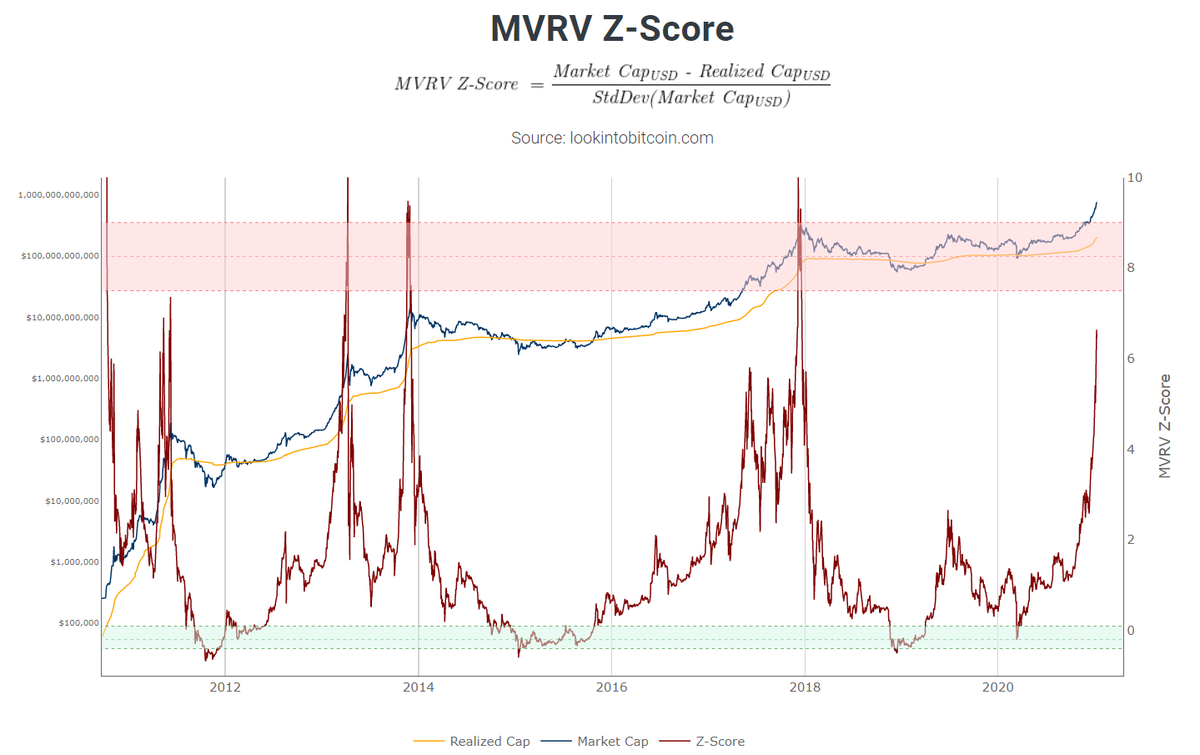




So the cryptocurrency industry has basically two products, one which is relatively benign and doesn't have product market fit, and one which is malignant and does. The industry has a weird superposition of understanding this fact and (strategically?) not understanding it.
The benign product is sovereign programmable money, which is historically a niche interest of folks with a relatively clustered set of beliefs about the state, the literary merit of Snow Crash, and the utility of gold to the modern economy.
This product has narrow appeal and, accordingly, is worth about as much as everything else on a 486 sitting in someone's basement is worth.
The other product is investment scams, which have approximately the best product market fit of anything produced by humans. In no age, in no country, in no city, at no level of sophistication do people consistently say "Actually I would prefer not to get money for nothing."
This product needs the exchanges like they need oxygen, because the value of it is directly tied to having payment rails to move real currency into the ecosystem and some jurisdictional and regulatory legerdemain to stay one step ahead of the banhammer.
If everyone was holding bitcoin on the old x86 in their parents basement, we would be finding a price bottom. The problem is the risk is all pooled at a few brokerages and a network of rotten exchanges with counter party risk that makes AIG circa 2008 look like a good credit.
— Greg Wester (@gwestr) November 25, 2018
The benign product is sovereign programmable money, which is historically a niche interest of folks with a relatively clustered set of beliefs about the state, the literary merit of Snow Crash, and the utility of gold to the modern economy.
This product has narrow appeal and, accordingly, is worth about as much as everything else on a 486 sitting in someone's basement is worth.
The other product is investment scams, which have approximately the best product market fit of anything produced by humans. In no age, in no country, in no city, at no level of sophistication do people consistently say "Actually I would prefer not to get money for nothing."
This product needs the exchanges like they need oxygen, because the value of it is directly tied to having payment rails to move real currency into the ecosystem and some jurisdictional and regulatory legerdemain to stay one step ahead of the banhammer.

Quick Thread on #Altcoins/ #Altseason
Step 1: $BTC has a huge correction. Every range starts with either a pump (or dump) and then follows with a dump (or pump). In this case, #Bitcoin pumped and is now pulling back. This is
Step 2: $BTC ranges big once it finds a bottom. This will allow it to reaccumulate for a big summer run in 2021. This is HEALTHY IMO.

Step 3: Once $BTC finds a bottom and starts to grind up again, I expect $ALTS to do very very well in both alt/usd and alt/btc pairs. ALTSZN is almost always characterized by strong alt/btc pairs moving- I've already accumulated most and have done my final buying today and more.
$BTC.D typically has a very nice time during this time of the year. I was off on December prediction bc I thought $BTC was going to pull back by then but oh well! #Altcoins will start their pumping time VERY soon now.
More information on what #Altseason is and $ALTS market
Step 1: $BTC has a huge correction. Every range starts with either a pump (or dump) and then follows with a dump (or pump). In this case, #Bitcoin pumped and is now pulling back. This is
If you want #Altseason, you should want $BTC to make a decent sized pullback. Ranges start after huge moves in both directions, IMO we need to see some cooling off before the ranging starts. Plz give 26k. #Bitcoin pic.twitter.com/yLG9xSrbKz
— Altcoin Sherpa (@AltcoinSherpa) January 3, 2021
Step 2: $BTC ranges big once it finds a bottom. This will allow it to reaccumulate for a big summer run in 2021. This is HEALTHY IMO.
Step 3: Once $BTC finds a bottom and starts to grind up again, I expect $ALTS to do very very well in both alt/usd and alt/btc pairs. ALTSZN is almost always characterized by strong alt/btc pairs moving- I've already accumulated most and have done my final buying today and more.
$BTC.D typically has a very nice time during this time of the year. I was off on December prediction bc I thought $BTC was going to pull back by then but oh well! #Altcoins will start their pumping time VERY soon now.
$BTC.D: This is the chart for inverse #Bitcoin Dominance, the macro chart you need to check out for #Altcoins and when they have their runs. Still potentially more pain to go for $ALTS but I'm thinking that they will turn around strong when $BTC is done w. its run. pic.twitter.com/Q8ewTSRywp
— Altcoin Sherpa (@AltcoinSherpa) December 27, 2020
More information on what #Altseason is and $ALTS market
Big #Altcoin thread for $ALTS: Where are we at in the cycle, how long do we have, is this #ALTSEASON, what are the relationships like, all of that. $BTC #Bitcoin $ETH $LINK #Altcoins pic.twitter.com/nwVjgZu4fw
— Altcoin Sherpa (@AltcoinSherpa) November 9, 2020

I'm sure someone else has explained this, but it is just so cool and I want to explain how this works.
So Curve is awesome for swaps between similar assets, right? The fact that they trade very close to each other is a key part about how Curve works, using it's custom swap invariant function.
That's step 1
Step 2 is that Synthetix is awesome for creating "synthetic assets" (aka synths) which are assets that trade like other assets, that are backed by another, entirely different asset. Basically, a plastic banana that I can buy and sell like a real banana.
Synthetix has a feature that lets you swap between any two synths with zero slippage and a flat fee. That's because it is simply converting the sythentic asset into another synthetic asset, the backing for the synth doesn't change it just uses a different price oracle now.
This is important. Absolutely no slippage, at any size
Swap $1m sUSD for $1m sBTC? flat 0.3% fee
Swap $10m sUSD for $10m sBTC? flat 0.3% fee
swap $100m sUSD for $100m sBTC? Well, there isn't that many synths in Curve, yet but you get the point. The only limit is the pool depth
— Andre Cronje (@AndreCronjeTech) January 15, 2021
So Curve is awesome for swaps between similar assets, right? The fact that they trade very close to each other is a key part about how Curve works, using it's custom swap invariant function.
That's step 1
Step 2 is that Synthetix is awesome for creating "synthetic assets" (aka synths) which are assets that trade like other assets, that are backed by another, entirely different asset. Basically, a plastic banana that I can buy and sell like a real banana.
Synthetix has a feature that lets you swap between any two synths with zero slippage and a flat fee. That's because it is simply converting the sythentic asset into another synthetic asset, the backing for the synth doesn't change it just uses a different price oracle now.
This is important. Absolutely no slippage, at any size
Swap $1m sUSD for $1m sBTC? flat 0.3% fee
Swap $10m sUSD for $10m sBTC? flat 0.3% fee
swap $100m sUSD for $100m sBTC? Well, there isn't that many synths in Curve, yet but you get the point. The only limit is the pool depth
You May Also Like





Department List of UCAS-China PROFESSORs for ANSO, CSC and UCAS (fully or partial) Scholarship Acceptance
1) UCAS School of physical sciences Professor
https://t.co/9X8OheIvRw
2) UCAS School of mathematical sciences Professor
3) UCAS School of nuclear sciences and technology
https://t.co/nQH8JnewcJ
4) UCAS School of astronomy and space sciences
https://t.co/7Ikc6CuKHZ
5) UCAS School of engineering
6) Geotechnical Engineering Teaching and Research Office
https://t.co/jBCJW7UKlQ
7) Multi-scale Mechanics Teaching and Research Section
https://t.co/eqfQnX1LEQ
😎 Microgravity Science Teaching and Research
9) High temperature gas dynamics teaching and research section
https://t.co/tVIdKgTPl3
10) Department of Biomechanics and Medical Engineering
https://t.co/ubW4xhZY2R
11) Ocean Engineering Teaching and Research
12) Department of Dynamics and Advanced Manufacturing
https://t.co/42BKXEugGv
13) Refrigeration and Cryogenic Engineering Teaching and Research Office
https://t.co/pZdUXFTvw3
14) Power Machinery and Engineering Teaching and Research
1) UCAS School of physical sciences Professor
https://t.co/9X8OheIvRw
2) UCAS School of mathematical sciences Professor
3) UCAS School of nuclear sciences and technology
https://t.co/nQH8JnewcJ
4) UCAS School of astronomy and space sciences
https://t.co/7Ikc6CuKHZ
5) UCAS School of engineering
6) Geotechnical Engineering Teaching and Research Office
https://t.co/jBCJW7UKlQ
7) Multi-scale Mechanics Teaching and Research Section
https://t.co/eqfQnX1LEQ
😎 Microgravity Science Teaching and Research
9) High temperature gas dynamics teaching and research section
https://t.co/tVIdKgTPl3
10) Department of Biomechanics and Medical Engineering
https://t.co/ubW4xhZY2R
11) Ocean Engineering Teaching and Research
12) Department of Dynamics and Advanced Manufacturing
https://t.co/42BKXEugGv
13) Refrigeration and Cryogenic Engineering Teaching and Research Office
https://t.co/pZdUXFTvw3
14) Power Machinery and Engineering Teaching and Research