
My students @maxzks and Tushar Jois spent most of the summer going through every piece of public documentation, forensics report, and legal document we could find to figure out how police were “breaking phone encryption”. 1/
ACLU is suing the FBI over its efforts to break into encrypted devices. https://t.co/TN8X0Slmnf
— Zack Whittaker (@zackwhittaker) December 22, 2020
Authorities don’t need to break phone encryption in most cases, because modern phone encryption sort of sucks. 3/
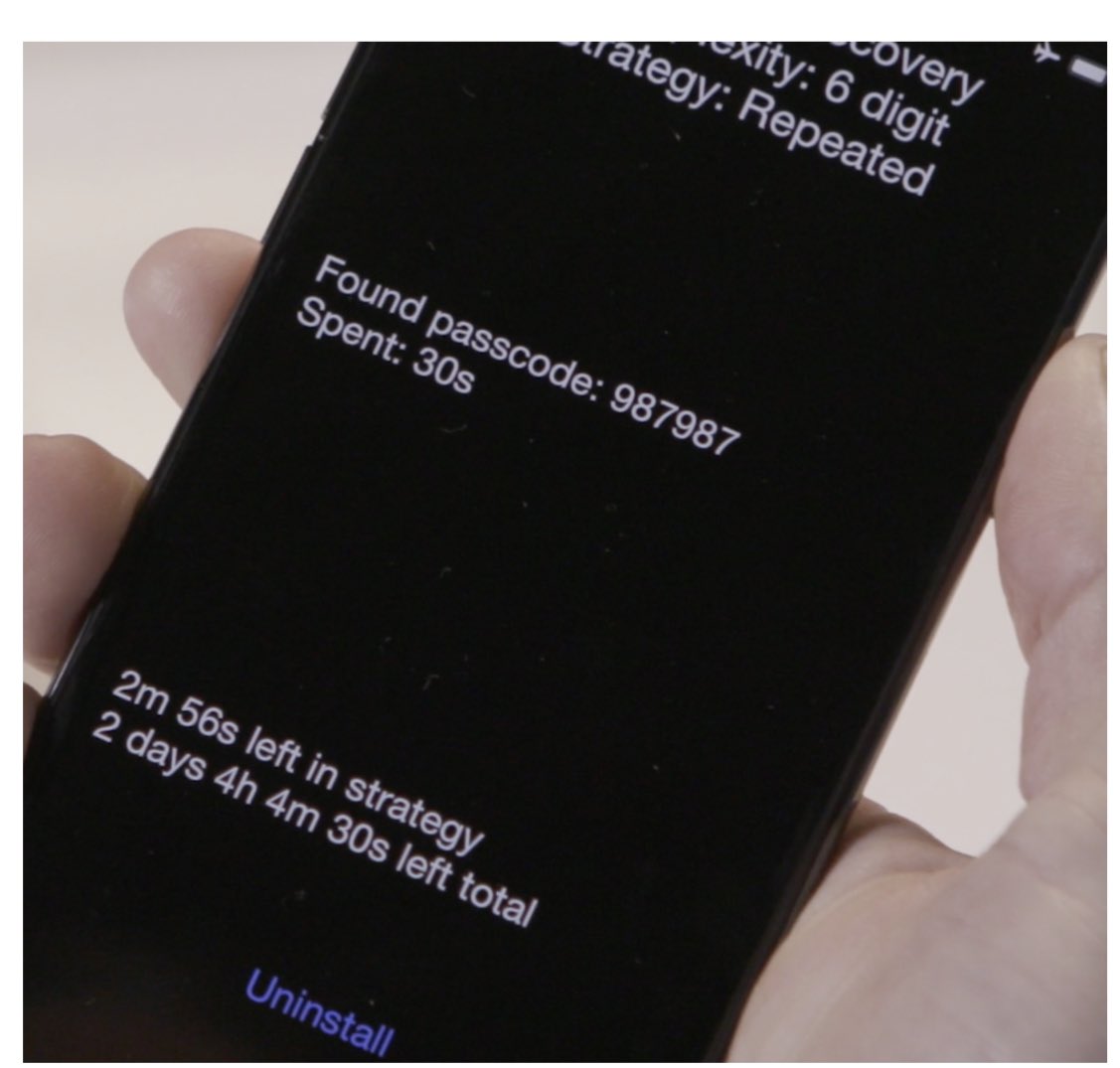
So if they can’t crack the passcode, how is law enforcement still breaking into iPhones (because they definitely are)? 6/
When you turn your phone on and enter the passcode in the morning, you switch your phone from BFU->AFU. 8/
All of the other keys stay in memory. 10/
(This is all well-known so far BTW.) 11/
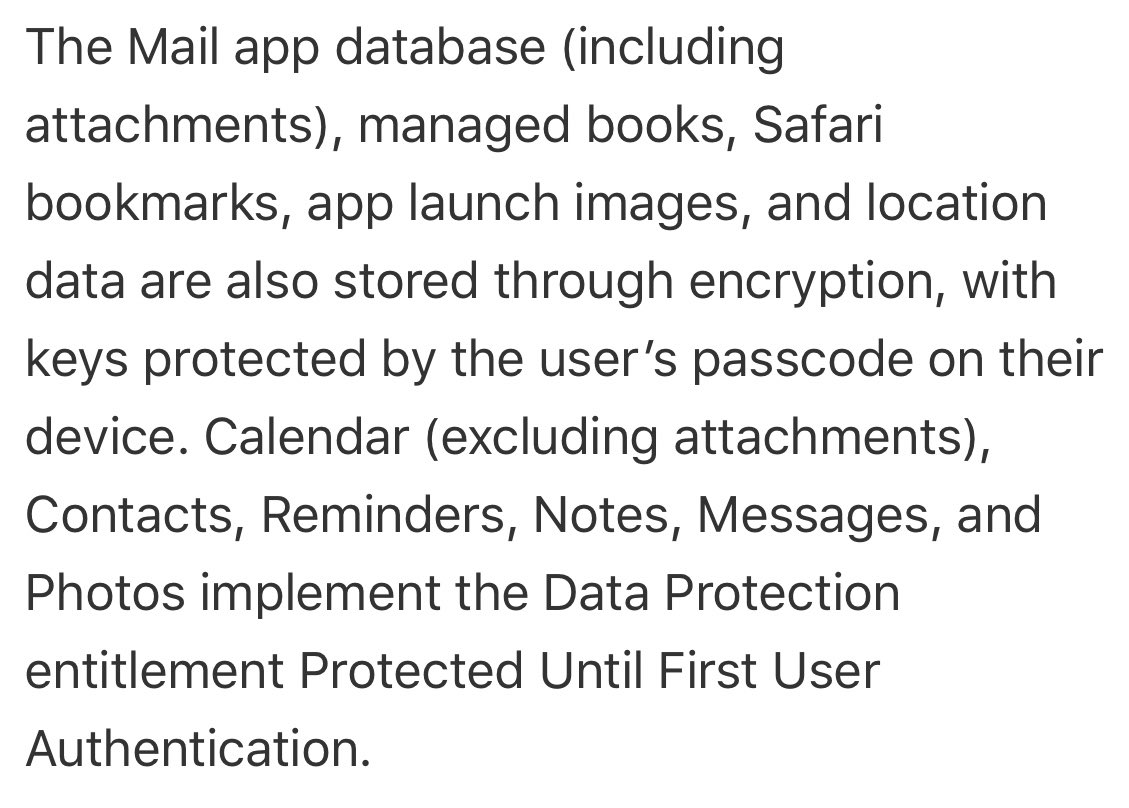
So it seems that Apple is actually protecting *less* data now than in 2012. Yikes. 16/
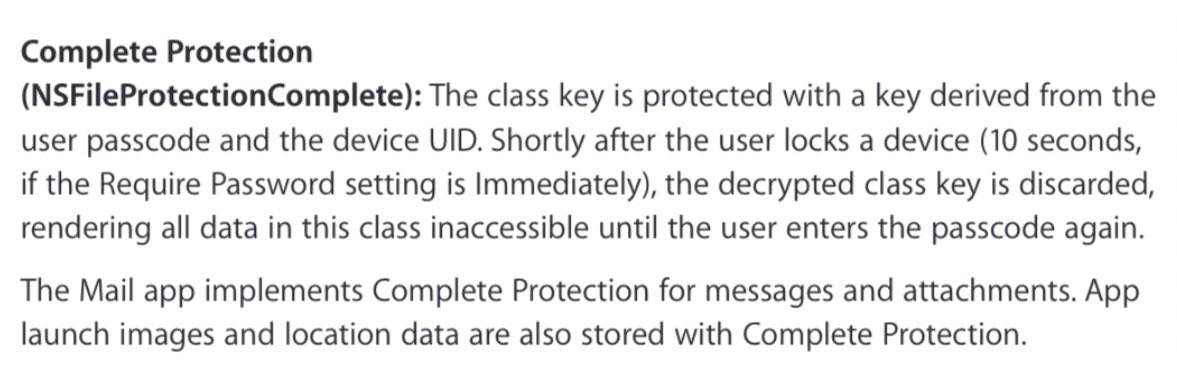
Mail (which probably already exists on a server that police can subpoena, so who cares.)
App launch data (🤷♂️)
That’s not great. 18/
Photos
Texts
Notes
Possibly some location data
Most of what cops want. 19/
Why is so little of this data encrypted when your phone is AFU and locked? And the answer to that is probably obvious to anyone who develops software, but it still sucks. 22/
When you protect files using the strongest protection class and the phone locks, the app can’t do this stuff. It gets an error. 23/
But for the most part it’s annoying for software devs, so they lower protections. And if Apple *isn’t* using strong protection for its in-house apps, who will? 24/
Maybe Apple’s lawyers prefer it this way, but it’s courting disaster. 25/
This will be on a pretty website soon. Thanks for not blocking me after this thread. // fin
More from Crime



You May Also Like

The YouTube algorithm that I helped build in 2011 still recommends the flat earth theory by the *hundreds of millions*. This investigation by @RawStory shows some of the real-life consequences of this badly designed AI.
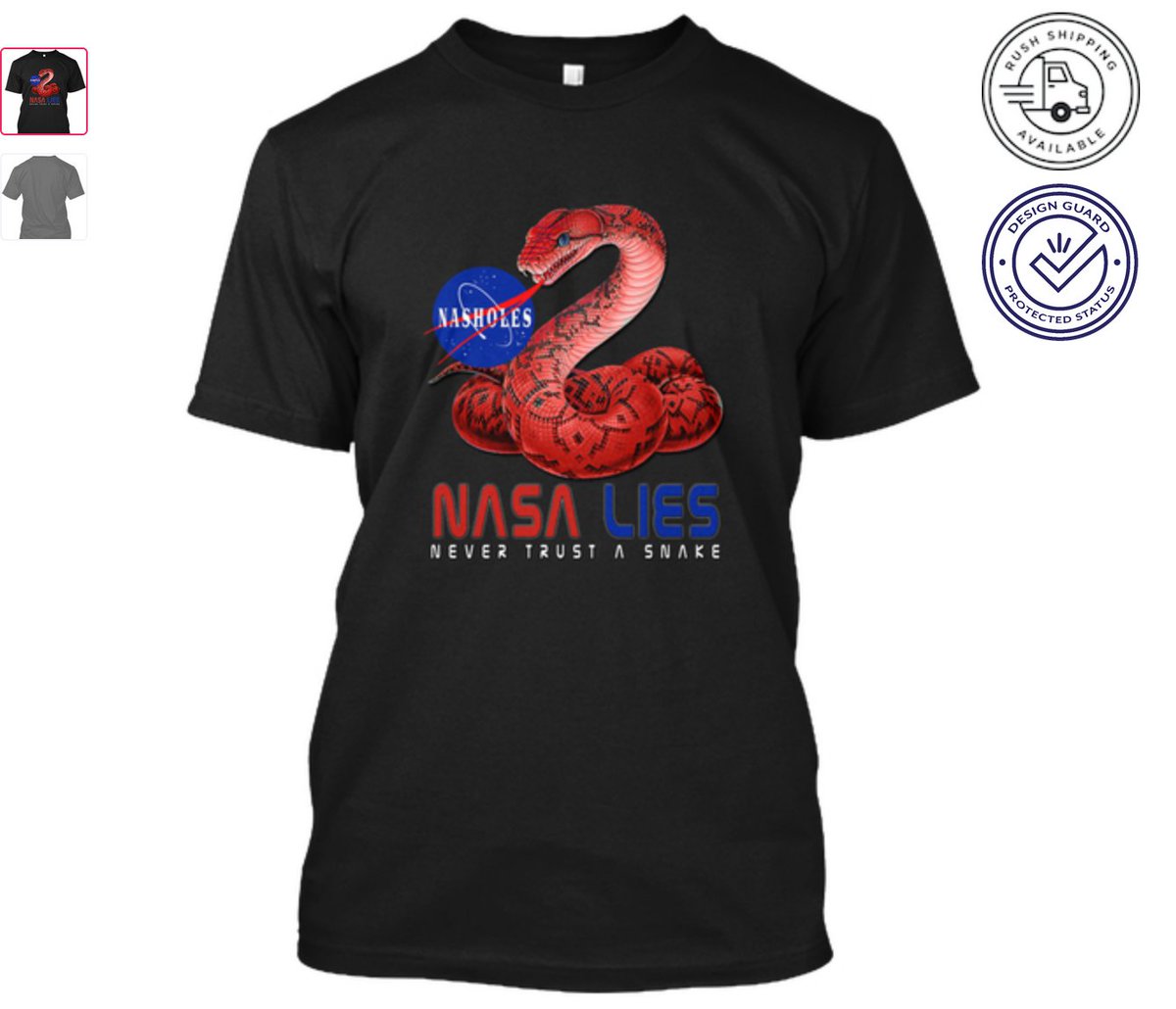
This spring at SxSW, @SusanWojcicki promised "Wikipedia snippets" on debated videos. But they didn't put them on flat earth videos, and instead @YouTube is promoting merchandising such as "NASA lies - Never Trust a Snake". 2/
A few example of flat earth videos that were promoted by YouTube #today:
https://t.co/TumQiX2tlj 3/
https://t.co/uAORIJ5BYX 4/
https://t.co/yOGZ0pLfHG 5/
Flat Earth conference attendees explain how they have been brainwashed by YouTube and Infowarshttps://t.co/gqZwGXPOoc
— Raw Story (@RawStory) November 18, 2018
This spring at SxSW, @SusanWojcicki promised "Wikipedia snippets" on debated videos. But they didn't put them on flat earth videos, and instead @YouTube is promoting merchandising such as "NASA lies - Never Trust a Snake". 2/
A few example of flat earth videos that were promoted by YouTube #today:
https://t.co/TumQiX2tlj 3/
https://t.co/uAORIJ5BYX 4/
https://t.co/yOGZ0pLfHG 5/




Neo-nazi group #PatriotFront held a photo op in #Chicago last weekend & is currently marching around #DC so it's as good time as any to compile a list of their identified members for folks to watch for
Who are these chuds?
Patriot Front broke away from white nationalist org Vanguard America following #unitetheright in #charlottesville after James Alex Fields was seen with a VA shield before driving his car into a crowd, murdering Heather Heyer & injuring dozens of others
Syed Robbie Javid a.k.a. Sayed Robbie Javid or Robbie Javid of Alexandria,
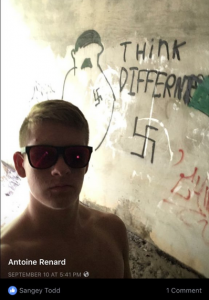
Antoine Bernard Renard (a.k.a. “Charlemagne MD” on Discord) from Rockville, MD.
https://t.co/ykEjdZFDi6
Brandon Troy Higgs, 25, from Reisterstown,
Who are these chuds?
Patriot Front broke away from white nationalist org Vanguard America following #unitetheright in #charlottesville after James Alex Fields was seen with a VA shield before driving his car into a crowd, murdering Heather Heyer & injuring dozens of others
Syed Robbie Javid a.k.a. Sayed Robbie Javid or Robbie Javid of Alexandria,
Happy Monday everyone :-) Let's ring in September by reacquainting ourselves with Virginia neo-Nazi and NSC Dixie affiliate Sayed "Robbie" Javid, now known by "Reform the States". Robbie is an explicitly genocidal neo-Nazi, so lets get to know him a bit better!
— Garfield but Anti-Fascist (@AntifaGarfield) August 31, 2020
CW on this thread pic.twitter.com/3gzxrIo9HD
Antoine Bernard Renard (a.k.a. “Charlemagne MD” on Discord) from Rockville, MD.
https://t.co/ykEjdZFDi6
Brandon Troy Higgs, 25, from Reisterstown,