
I’d never considered the details leading up to an inauguration. I watched this one like a nervous parent, making sure everything went as planned. #velshi
1/13
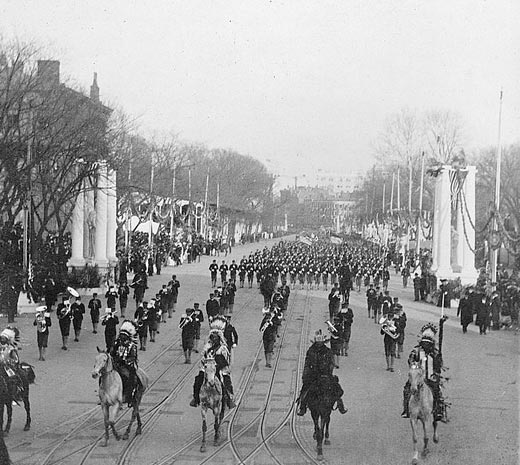
I have watched every presidential inauguration that I can remember, since I was a little boy, and long before I ever imagined I would live in America. But I had never watched one the way I watched the inauguration of Joe Biden. #velshi
I’d never considered the details leading up to an inauguration. I watched this one like a nervous parent, making sure everything went as planned. #velshi
Thanks to the last four years, everything is different, now. Our demons are on full display, our Union is certifiably imperfect. Our nation is divided. #velshi
After a year that takes first place in our history for death, destruction, fear and injustice, normalcy is struggling to regain its place. One thing with which we will struggle in this new day for America is the death of shame. #velshi
In addition to the other norms the former president destroyed, he turned lying - deliberate, casual and often with the force of law - into an art form and, with that, contributed to the death of shame. #velshi
I’ve been a business journalist for most of my career. When I’d interview a CEO and they’d tell me something that wasn’t true, and I’d have the evidence that it wasn’t true, it would make for an awkward moment. #velshi
The CEOs tried to explain it away. Their people would offer clarifications and maybe, there’d be a statement of clarification. Maybe even an apology. #velshi
If the lie - or any kind of wrongdoing pointed out by the press, was significant, someone might resign, a red letter of sorts on their chest. A mark of shame. #velshi
For some people - some liars – there’s no shame now. One reason I haven’t had Trump officials or allies on @VelshiMSNBC for the last several months is that confronting them with the truth stopped mattering. When caught lying or distorting the facts, they lied more. #velshi
To wear a red letter - TWO red letters, in the former president's case - both capitals for impeachment. It means little to him; there is no contrition. #velshi
He explains it away as partisan or calls it a hoax or a witch hunt. A source of shame once again somehow morphed into to a badge of honor. The death of shame - is the real catastrophe. #velshi
If we as humans do not feel shame in doing something wrong, or in getting caught doing something wrong, what guardrails exist? #velshi
More from Ali Velshi
More from Biden




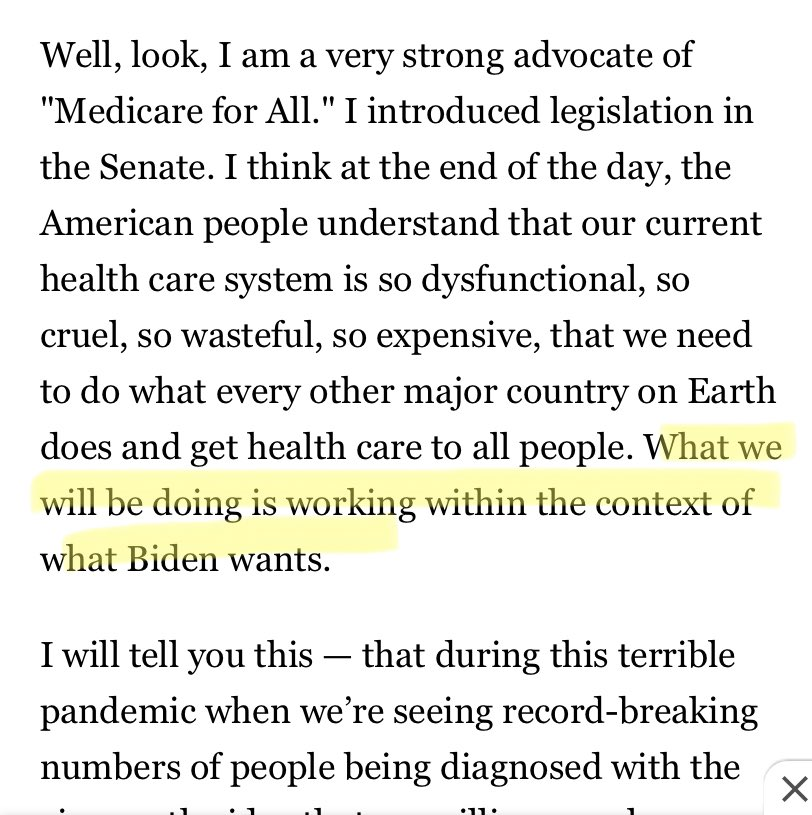
THREAD: There has been a lot of criticism levied against @BernieSanders recently following his comment about "working within the context of what Biden wants" as Chairman of the Senate Budget Committee. This thread will explore why this really isn't all that surprising.
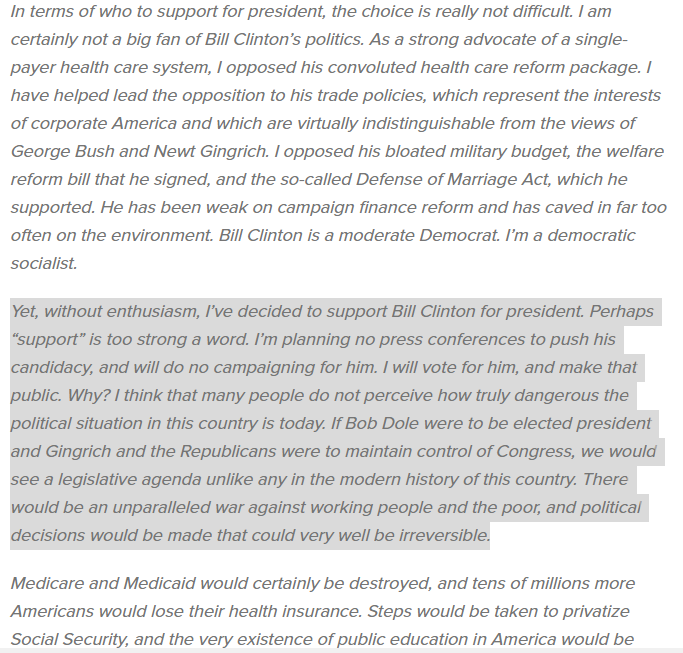
Over the last 20+ years, Bernie has endorsed every establishment Democrat running for President: Bill Clinton, Gore, Kerry, Obama, Hillary, and most recently, Biden. These candidates and what they represent largely contradict much of what Bernie says he stands for.
Chris Hedges theorized in 2015: "...All that energy and all of that money goes back into the Democratic party. [Bernie] functions as a sheepdog to corral progressives, left-leaning progressives, back into the embrace of the Democratic
Bernie's foreign policy positions are also telling. While he *did* vote against the US invasion of Iraq, he still voted to fund it once underway, & also backed the US bombing of Kosovo, US sanctions against Iran & Libya, & the Iraqi Liberation Act of
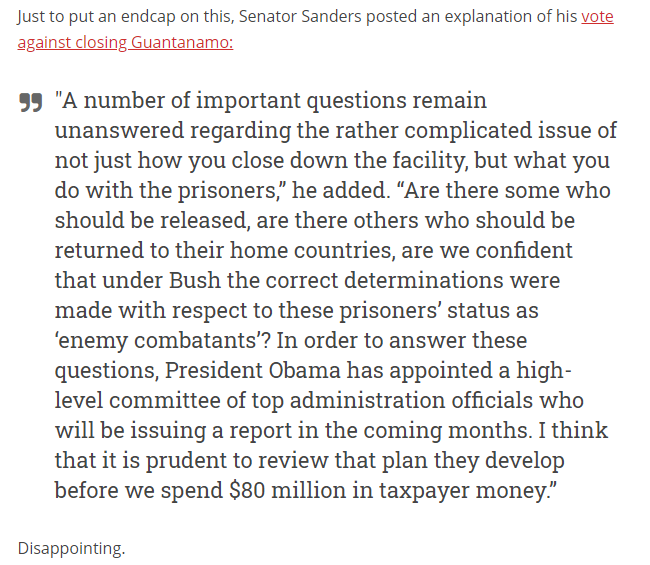
Bernie called closing the torturous gulag at Guantanamo a "complicated issue" and supported a proposal in 2009 to "prohibit funding to transfer, release, or incarcerate detainees detained at Guantanamo Bay, Cuba, to or within the United States."
https://t.co/4p64SgeD1x
Over the last 20+ years, Bernie has endorsed every establishment Democrat running for President: Bill Clinton, Gore, Kerry, Obama, Hillary, and most recently, Biden. These candidates and what they represent largely contradict much of what Bernie says he stands for.
Chris Hedges theorized in 2015: "...All that energy and all of that money goes back into the Democratic party. [Bernie] functions as a sheepdog to corral progressives, left-leaning progressives, back into the embrace of the Democratic
Bernie's foreign policy positions are also telling. While he *did* vote against the US invasion of Iraq, he still voted to fund it once underway, & also backed the US bombing of Kosovo, US sanctions against Iran & Libya, & the Iraqi Liberation Act of
Bernie called closing the torturous gulag at Guantanamo a "complicated issue" and supported a proposal in 2009 to "prohibit funding to transfer, release, or incarcerate detainees detained at Guantanamo Bay, Cuba, to or within the United States."
https://t.co/4p64SgeD1x
You May Also Like


**Thread on Bravery of Sikhs**
(I am forced to do this due to continuous hounding of Sikh Extremists since yesterday)
Rani Jindan Kaur, wife of Maharaja Ranjit Singh had illegitimate relations with Lal Singh (PM of Ranjit Singh). Along with Lal Singh, she attacked Jammu, burnt - https://t.co/EfjAq59AyI

Hindu villages of Jasrota, caused rebellion in Jammu, attacked Kishtwar.
Ancestors of Raja Ranjit Singh, The Sansi Tribe used to give daughters as concubines to Jahangir.

The Ludhiana Political Agency (Later NW Fronties Prov) was formed by less than 4000 British soldiers who advanced from Delhi and reached Ludhiana, receiving submissions of all sikh chiefs along the way. The submission of the troops of Raja of Lahore (Ranjit Singh) at Ambala.
Dabistan a contemporary book on Sikh History tells us that Guru Hargobind broke Naina devi Idol Same source describes Guru Hargobind serving a eunuch
YarKhan. (ref was proudly shared by a sikh on twitter)
Gobind Singh followed Bahadur Shah to Deccan to fight for him.

In Zafarnama, Guru Gobind Singh states that the reason he was in conflict with the Hill Rajas was that while they were worshiping idols, while he was an idol-breaker.
And idiot Hindus place him along Maharana, Prithviraj and Shivaji as saviours of Dharma.

(I am forced to do this due to continuous hounding of Sikh Extremists since yesterday)
Rani Jindan Kaur, wife of Maharaja Ranjit Singh had illegitimate relations with Lal Singh (PM of Ranjit Singh). Along with Lal Singh, she attacked Jammu, burnt - https://t.co/EfjAq59AyI
Tomorrow again same thing happens bcoz fudus like you are creating a narrative oh Khalistan. when farmers are asking MSP. (RSS ki tatti khane wale Kerni sena ke kutte).
— Ancient Economist (@_stock_tips) December 5, 2020
U kill sikhs in 1984 just politics. To BC low IQ fudu Saale entire history was politics.
Hindu villages of Jasrota, caused rebellion in Jammu, attacked Kishtwar.
Ancestors of Raja Ranjit Singh, The Sansi Tribe used to give daughters as concubines to Jahangir.
The Ludhiana Political Agency (Later NW Fronties Prov) was formed by less than 4000 British soldiers who advanced from Delhi and reached Ludhiana, receiving submissions of all sikh chiefs along the way. The submission of the troops of Raja of Lahore (Ranjit Singh) at Ambala.
Dabistan a contemporary book on Sikh History tells us that Guru Hargobind broke Naina devi Idol Same source describes Guru Hargobind serving a eunuch
YarKhan. (ref was proudly shared by a sikh on twitter)
Gobind Singh followed Bahadur Shah to Deccan to fight for him.
In Zafarnama, Guru Gobind Singh states that the reason he was in conflict with the Hill Rajas was that while they were worshiping idols, while he was an idol-breaker.
And idiot Hindus place him along Maharana, Prithviraj and Shivaji as saviours of Dharma.



BREAKING: @CommonsCMS @DamianCollins just released previously sealed #Six4Three @Facebook documents:
Some random interesting tidbits:
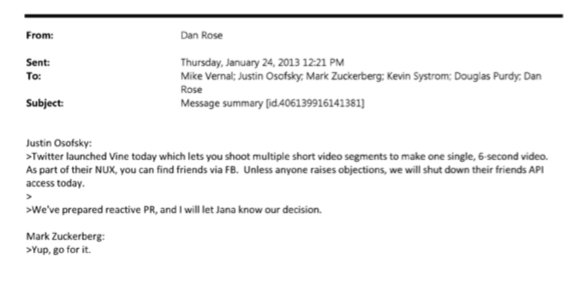
1) Zuck approves shutting down platform API access for Twitter's when Vine is released #competition
2) Facebook engineered ways to access user's call history w/o alerting users:
Team considered access to call history considered 'high PR risk' but 'growth team will charge ahead'. @Facebook created upgrade path to access data w/o subjecting users to Android permissions dialogue.
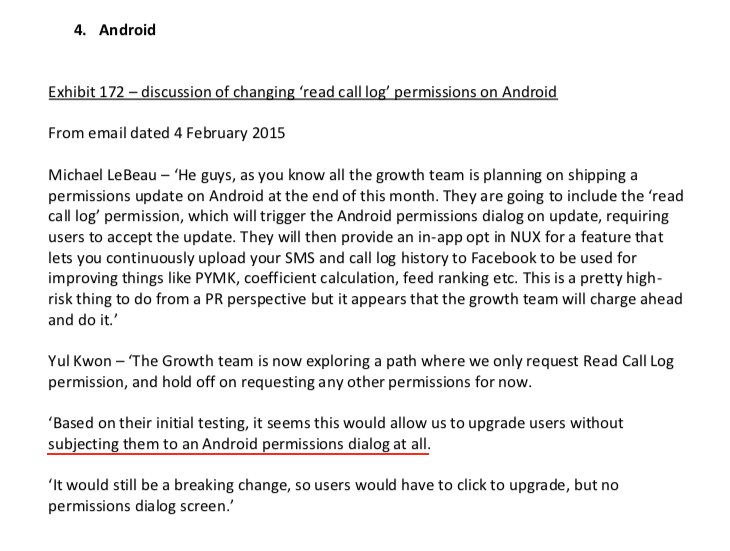
3) The above also confirms @kashhill and other's suspicion that call history was used to improve PYMK (People You May Know) suggestions and newsfeed rankings.
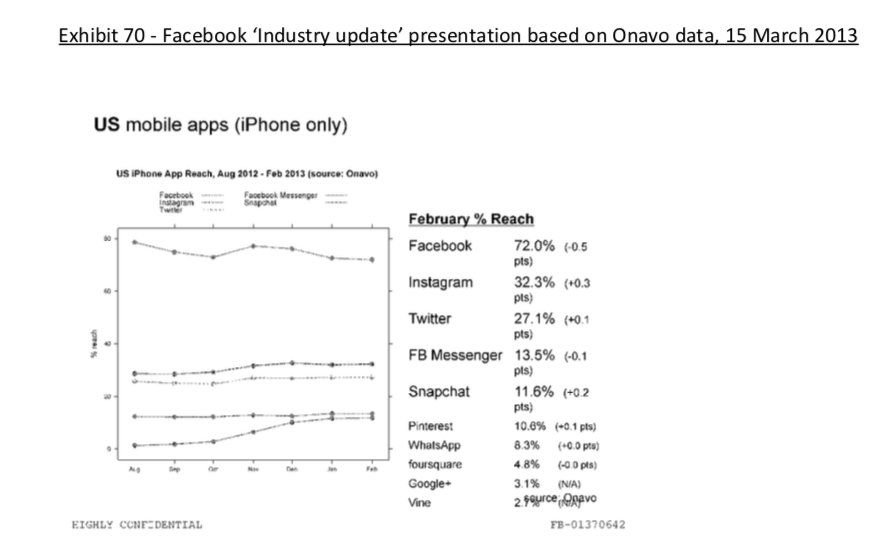
4) Docs also shed more light into @dseetharaman's story on @Facebook monitoring users' @Onavo VPN activity to determine what competitors to mimic or acquire in 2013.
https://t.co/PwiRIL3v9x
Some random interesting tidbits:
1) Zuck approves shutting down platform API access for Twitter's when Vine is released #competition
2) Facebook engineered ways to access user's call history w/o alerting users:
Team considered access to call history considered 'high PR risk' but 'growth team will charge ahead'. @Facebook created upgrade path to access data w/o subjecting users to Android permissions dialogue.
3) The above also confirms @kashhill and other's suspicion that call history was used to improve PYMK (People You May Know) suggestions and newsfeed rankings.
4) Docs also shed more light into @dseetharaman's story on @Facebook monitoring users' @Onavo VPN activity to determine what competitors to mimic or acquire in 2013.
https://t.co/PwiRIL3v9x