https://t.co/p1usloRmsD
1/Today's Substack post is about Biden's chances of becoming a truly transformational president -- someone who will move U.S. economic policy onto a leftward track, as Reagan once moved it onto a rightward
https://t.co/p1usloRmsD
I did not imagine that Biden could be a transformational president.
BUT, it's looking like he just might be one!
https://t.co/UkqOTmu49E


1. Executive actions and appointments that weakened unions and regulation, etc.
2. An enduring ideological shift, which led eventually to Clinton's welfare reform and deregulations.
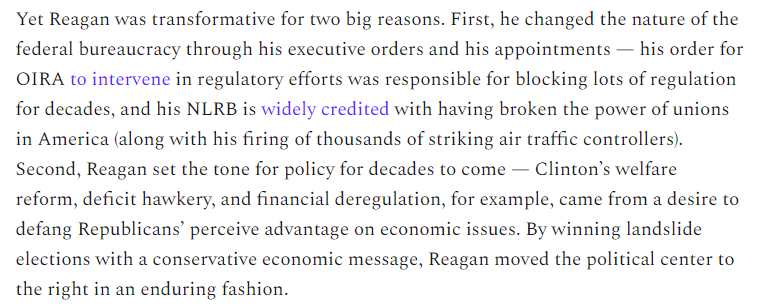
Maybe this is the first glimmer:
https://t.co/eOQEeeroo4
Maybe it's not Biden. Maybe it's COVID making America finally realize that Reaganism is inadequate to the challenges we face.
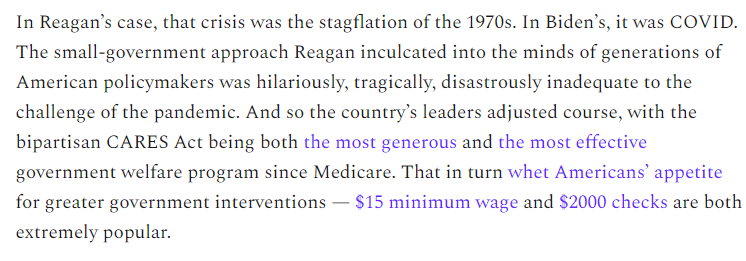
(end)
https://t.co/k5xqLQ88Xq
https://t.co/FGppA1M8W6
More from Noah Smith 🐇
To be honest, I think this is just the effect of Twitter.
If you're on Twitter all the time - as every political commentator now is - it's easy to think that whiny, big-talking Twitter slacktivists are "the Dems".
But what's happening out there on the ground?
This is another reason I think Twitter is so bad for society.
It convinces intellectuals and commentators that practically everyone who's on their side is an extremist.
Which makes them tolerate extremism out of a (false) feeling of necessity.
If you stay on Twitter too much (which we all do now), you start to think that the typical left-of-center person is some British wanker who quote-tweets "Imagine thinking this" to anyone who doesn't like the idea of "ending capitalism".
But he is not typical.
A majority of Americans are not on Twitter.
But *every* journalist, commentator, and intellectual *has* to be on Twitter.
So every journalist, commentator, and intellectual comes face to face with big-talking slacktivist faux-extremists day in and day out.
It's a problem!!
Online bubbles full of shouty faux-extremists are, in general, fine.
The difference is that every journalist, commentator, and intellectual is essentially forced to exist in THIS bubble, because their jobs require it.
Twitter is a dystopian technology.
(end)
If you're on Twitter all the time - as every political commentator now is - it's easy to think that whiny, big-talking Twitter slacktivists are "the Dems".
But what's happening out there on the ground?
— VeryHiddenGeniusHat (@Popehat) October 18, 2018
This is another reason I think Twitter is so bad for society.
It convinces intellectuals and commentators that practically everyone who's on their side is an extremist.
Which makes them tolerate extremism out of a (false) feeling of necessity.
If you stay on Twitter too much (which we all do now), you start to think that the typical left-of-center person is some British wanker who quote-tweets "Imagine thinking this" to anyone who doesn't like the idea of "ending capitalism".
But he is not typical.
A majority of Americans are not on Twitter.
But *every* journalist, commentator, and intellectual *has* to be on Twitter.
So every journalist, commentator, and intellectual comes face to face with big-talking slacktivist faux-extremists day in and day out.
It's a problem!!
Online bubbles full of shouty faux-extremists are, in general, fine.
The difference is that every journalist, commentator, and intellectual is essentially forced to exist in THIS bubble, because their jobs require it.
Twitter is a dystopian technology.
(end)
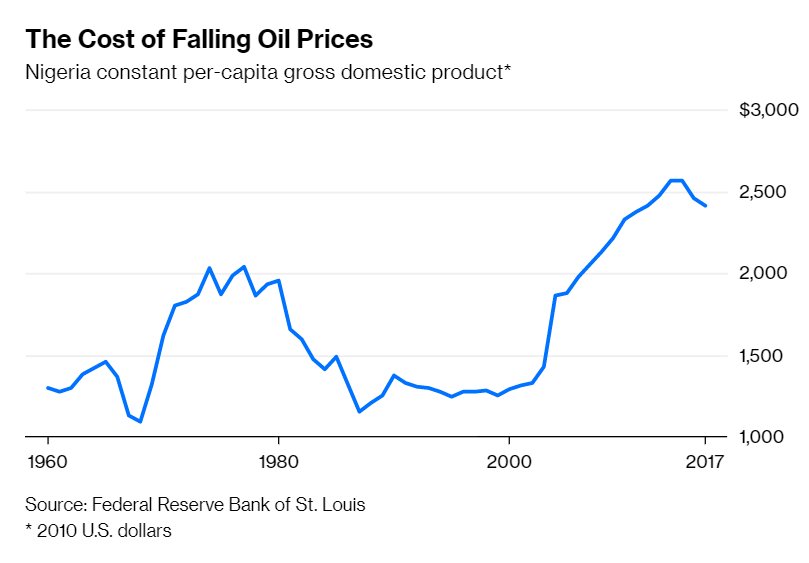


1/OK, data mystery time.
This New York Times feature shows China with a Gini Index of less than 30, which would make it more equal than Canada, France, or the Netherlands. https://t.co/g3Sv6DZTDE
That's weird. Income inequality in China is legendary.
Let's check this number.
2/The New York Times cites the World Bank's recent report, "Fair Progress? Economic Mobility across Generations Around the World".
The report is available here:
3/The World Bank report has a graph in which it appears to show the same value for China's Gini - under 0.3.
The graph cites the World Development Indicators as its source for the income inequality data.
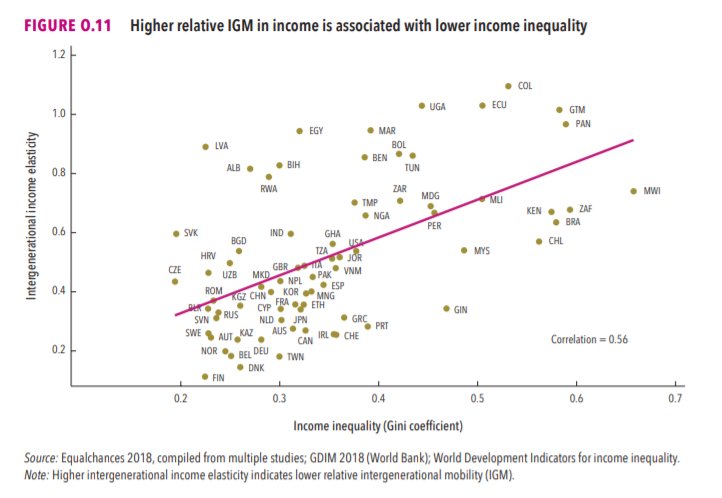
4/The World Development Indicators are available at the World Bank's website.
Here's the Gini index: https://t.co/MvylQzpX6A
It looks as if the latest estimate for China's Gini is 42.2.
That estimate is from 2012.
5/A Gini of 42.2 would put China in the same neighborhood as the U.S., whose Gini was estimated at 41 in 2013.
I can't find the <30 number anywhere. The only other estimate in the tables for China is from 2008, when it was estimated at 42.8.
This New York Times feature shows China with a Gini Index of less than 30, which would make it more equal than Canada, France, or the Netherlands. https://t.co/g3Sv6DZTDE
That's weird. Income inequality in China is legendary.
Let's check this number.
2/The New York Times cites the World Bank's recent report, "Fair Progress? Economic Mobility across Generations Around the World".
The report is available here:
3/The World Bank report has a graph in which it appears to show the same value for China's Gini - under 0.3.
The graph cites the World Development Indicators as its source for the income inequality data.
4/The World Development Indicators are available at the World Bank's website.
Here's the Gini index: https://t.co/MvylQzpX6A
It looks as if the latest estimate for China's Gini is 42.2.
That estimate is from 2012.
5/A Gini of 42.2 would put China in the same neighborhood as the U.S., whose Gini was estimated at 41 in 2013.
I can't find the <30 number anywhere. The only other estimate in the tables for China is from 2008, when it was estimated at 42.8.

More from Biden



Did you miss the Inauguration of the 46th President of the United States,Joe Biden?This Thread is the perfect synopsis for everything you need to know!
Donald Trump left the White House Wednesday morning. For the first time in 150 years the sitting president didn’t attend the swearing-in of his successor.
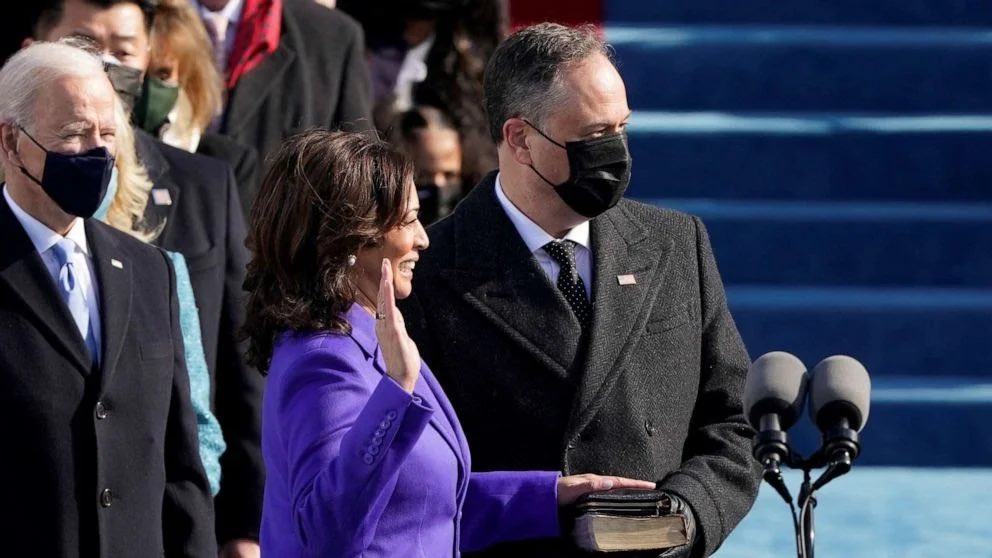
Kamala Harris, the first woman and person of color to hold the office of vice president was sworn in by Justice Sonia Sotomayor, the first Latina member of the Supreme Court.
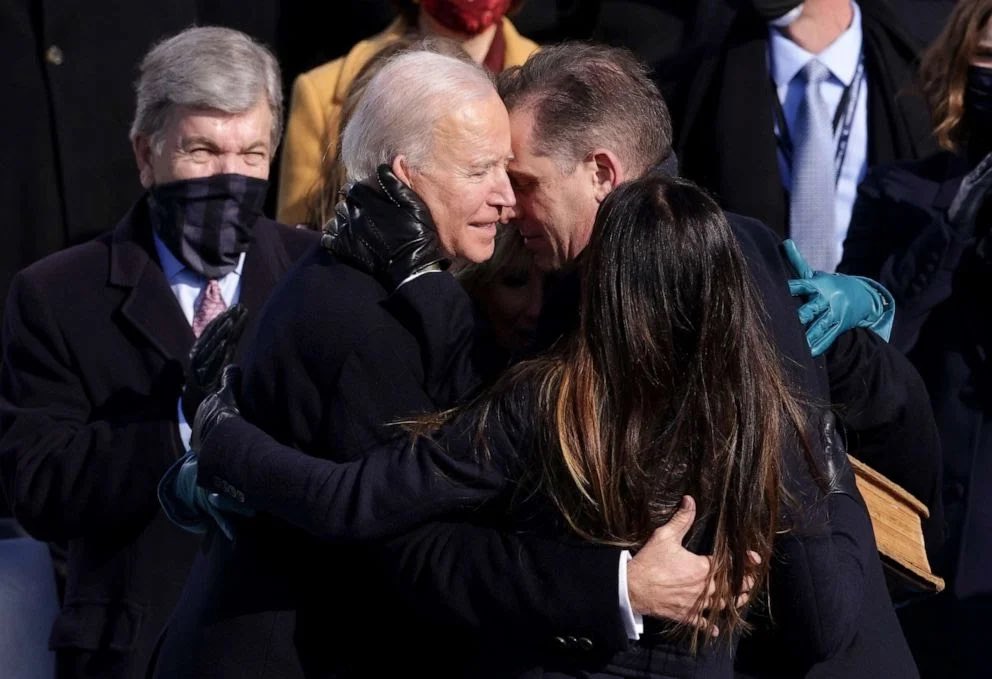
Chief Justice John Roberts later administered the presidential oath to Biden as Jill Biden held the bible and as his children, Hunter Biden and Ashley Biden, stood by.
President Joe Biden gave his Inaugural address. Check out the full transcript below.
Donald Trump left the White House Wednesday morning. For the first time in 150 years the sitting president didn’t attend the swearing-in of his successor.
Trump leaves the White House pic.twitter.com/fed7XB4I99
— Jake Tapper (@jaketapper) January 20, 2021
Kamala Harris, the first woman and person of color to hold the office of vice president was sworn in by Justice Sonia Sotomayor, the first Latina member of the Supreme Court.
Chief Justice John Roberts later administered the presidential oath to Biden as Jill Biden held the bible and as his children, Hunter Biden and Ashley Biden, stood by.
President Joe Biden gave his Inaugural address. Check out the full transcript below.
Transcript: Joe Biden\u2019s inauguration speech https://t.co/YmDAUFX99M
— The Washington Post (@washingtonpost) January 20, 2021