How to make $10,000/month on YouTube in 2023 as a beginner

(Starting with only $20)

- Thread -

1. Select a niche

For our example, we will use the finance niche

There are many channels in this niche making $10k+ per month

All they’re doing is adding video clips to pre-recorded audio

I’m going to walk you step-by-step how you can do the same…

Here’s an example channel:
2. Find Voiceover

Search YouTube for the latest financial commentary

Find clips from people like:
- Warren Buffett
- Robert Kiyosaki
- Dave Ramsey etc.

Extract the audio from their longer-form content

Do this by pasting video URL into YouTube to MP3 converter:
3. Find Music

Go into the YouTube audio library and sort music by mood

Select “Inspirational” and listen to the music demos

Select a track that matches your video content

Add in the credits in your video’s description and you’re set!
4. Find Footage

Sign up for Storyblocks for $20/mo

Search for business related clips

Gather enough clips for the full length of your video
5. Edit Video

To edit your videos, go to Clipchamp

Import your video and audio files

Edit to match video length to length of voiceover

Aim to make your videos 10-15 minutes long
6. Monetize

To make $10k/mo on this channel you should promote an offer

Digital products and affiliate offers work best

Check out sites like Impact Radius or Commission Junction to find offers

Place links to your offers in your videos’ descriptions and pinned comments
Here’s how much a small channel can make:

20,000 monthly views x 2% conversion x $25 commission = $10,000

Getting to 20,000 monthly views only takes 4-6 months

That’s the power of YouTube…
Start building your own $10k/mo YouTube channel

Get my guide Tube Ignite (25% off first 5 copies ONLY): https://t.co/KvlUTFbwmt

If you enjoyed this thread, please RT the first tweet

Follow me for more YouTube wisdom:
@Adam_DelDuca

More from All

॥ॐ॥
अस्य श्री गायत्री ध्यान श्लोक:
(gAyatri dhyAna shlOka)
• This shloka to meditate personified form of वेदमाता गायत्री was given by Bhagwaan Brahma to Sage yAgnavalkya (याज्ञवल्क्य).

• 14th shloka of गायत्री कवचम् which is taken from वशिष्ठ संहिता, goes as follows..


• मुक्ता-विद्रुम-हेम-नील धवलच्छायैर्मुखस्त्रीक्षणै:।
muktA vidruma hEma nIla dhavalachhAyaiH mukhaistrlkShaNaiH.

• युक्तामिन्दुकला-निबद्धमुकुटां तत्वार्थवर्णात्मिकाम्॥
yuktAmindukalA nibaddha makutAm tatvArtha varNAtmikam.

• गायत्रीं वरदाभयाङ्कुश कशां शुभ्रं कपालं गदाम्।
gAyatrIm vardAbhayANkusha kashAm shubhram kapAlam gadAm.

• शंखं चक्रमथारविन्दयुगलं हस्तैर्वहन्ती भजै॥
shankham chakramathArvinda yugalam hastairvahantIm bhajE.

This shloka describes the form of वेदमाता गायत्री.

• It says, "She has five faces which shine with the colours of a Pearl 'मुक्ता', Coral 'विद्रुम', Gold 'हेम्', Sapphire 'नील्', & a Diamond 'धवलम्'.

• These five faces are symbolic of the five primordial elements called पञ्चमहाभूत:' which makes up the entire existence.

• These are the elements of SPACE, FIRE, WIND, EARTH & WATER.

• All these five faces shine with three eyes 'त्रिक्षणै:'.
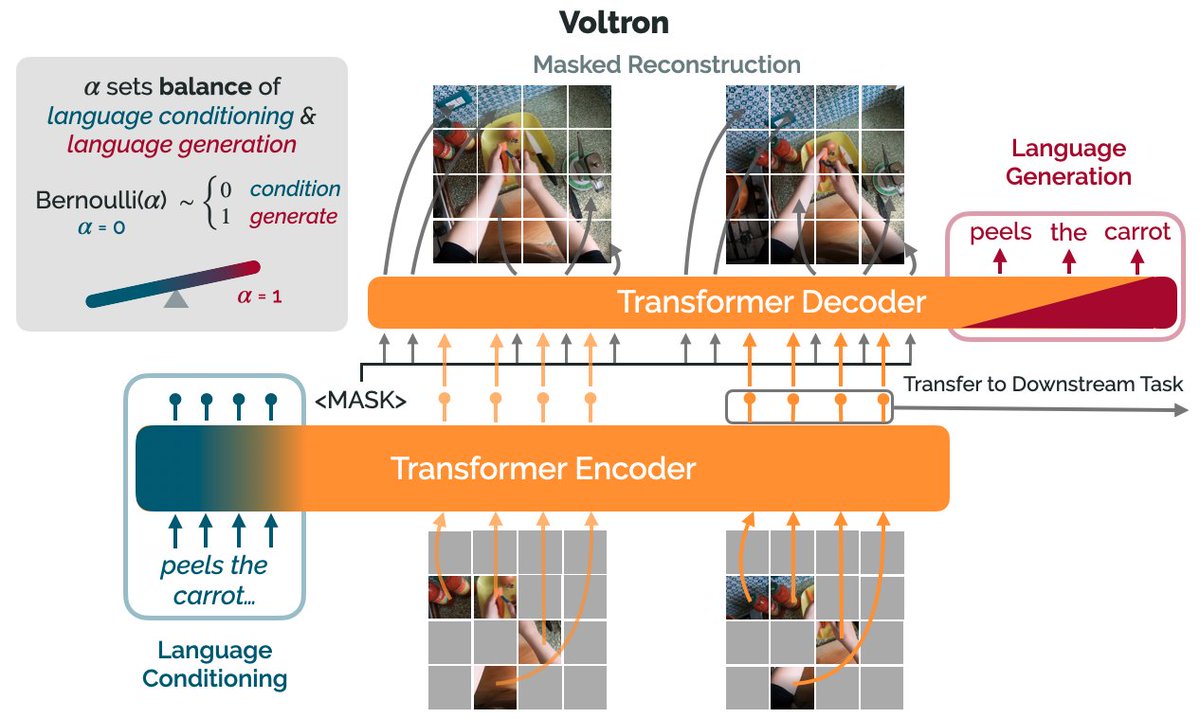
How can we use language supervision to learn better visual representations for robotics?

Introducing Voltron: Language-Driven Representation Learning for Robotics!

Paper: https://t.co/gIsRPtSjKz
Models: https://t.co/NOB3cpATYG
Evaluation: https://t.co/aOzQu95J8z

🧵👇(1 / 12)


Videos of humans performing everyday tasks (Something-Something-v2, Ego4D) offer a rich and diverse resource for learning representations for robotic manipulation.

Yet, an underused part of these datasets are the rich, natural language annotations accompanying each video. (2/12)

The Voltron framework offers a simple way to use language supervision to shape representation learning, building off of prior work in representations for robotics like MVP (
https://t.co/Pb0mk9hb4i) and R3M (https://t.co/o2Fkc3fP0e).

The secret is *balance* (3/12)

Starting with a masked autoencoder over frames from these video clips, make a choice:

1) Condition on language and improve our ability to reconstruct the scene.

2) Generate language given the visual representation and improve our ability to describe what's happening. (4/12)

By trading off *conditioning* and *generation* we show that we can learn 1) better representations than prior methods, and 2) explicitly shape the balance of low and high-level features captured.

Why is the ability to shape this balance important? (5/12)

You May Also Like

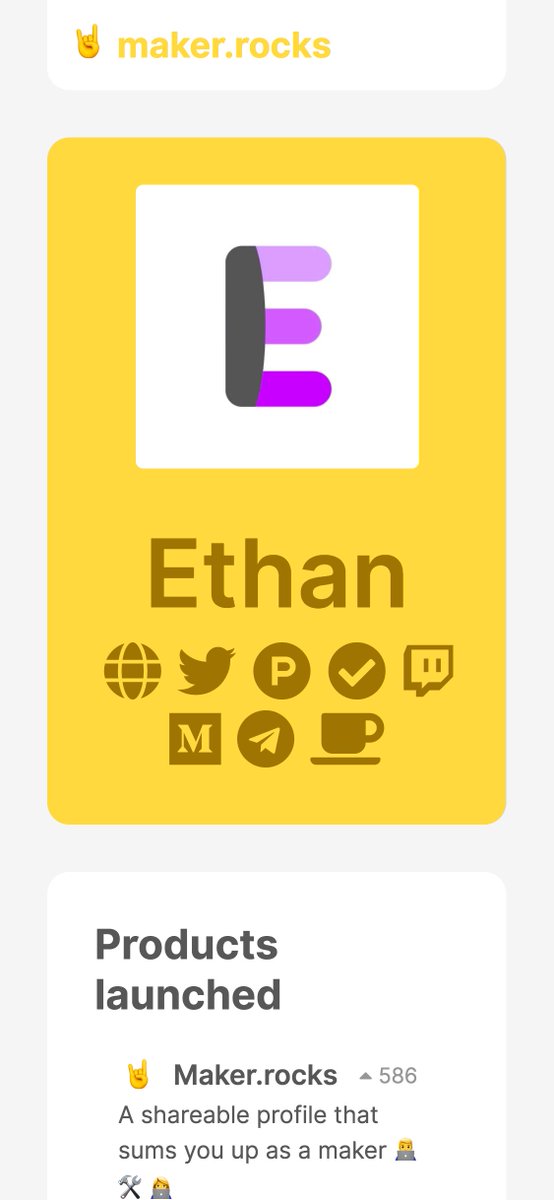
First update to https://t.co/lDdqjtKTZL since the challenge ended – Medium links!! Go add your Medium profile now 👀📝 (thanks @diannamallen for the suggestion 😁)


Just added Telegram links to
https://t.co/lDdqjtKTZL too! Now you can provide a nice easy way for people to message you :)


Less than 1 hour since I started adding stuff to https://t.co/lDdqjtKTZL again, and profile pages are now responsive!!! 🥳 Check it out -> https://t.co/fVkEL4fu0L


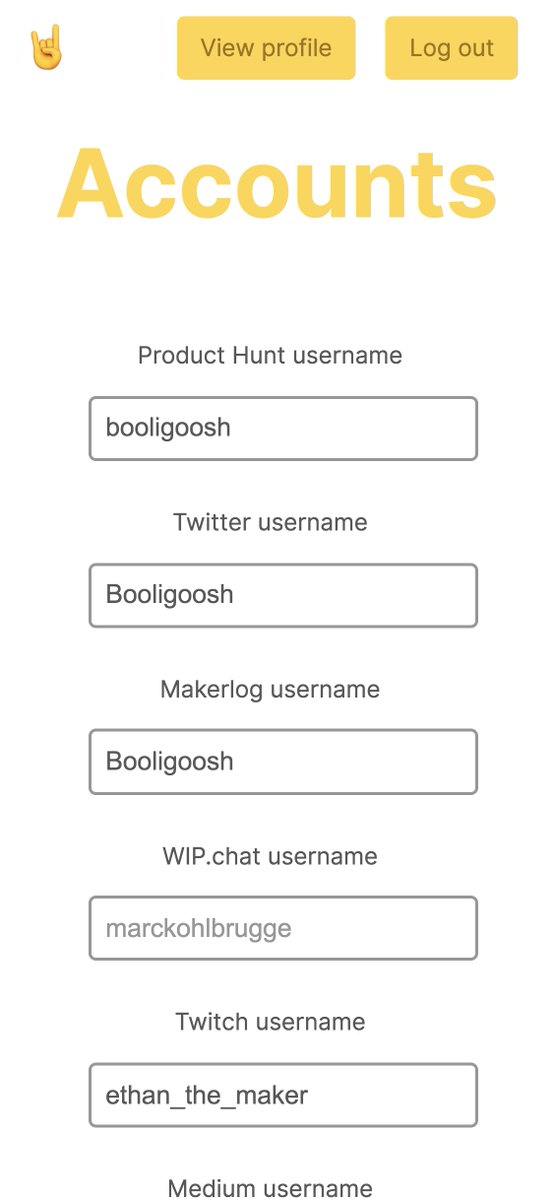
Accounts page is now also responsive!! 📱✨


💪 I managed to make the whole site responsive in about an hour. On my roadmap I had it down as 4-5 hours!!! 🤘🤠🤘