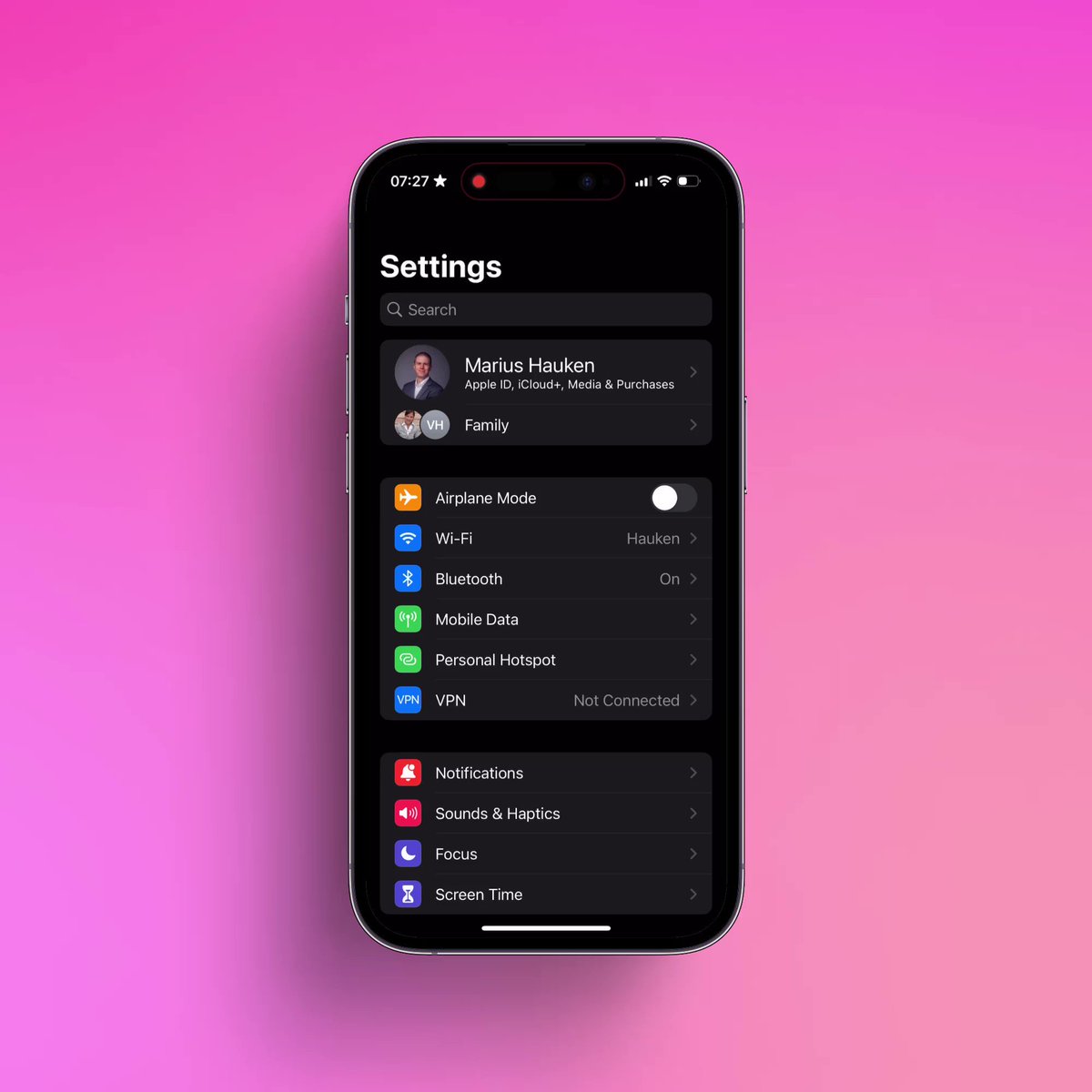
You're not using the Notes app on your iPhone to its full potential.

8 features you might not know about:

1. Scan documents and add them as PDFs to your note:

1. Click on the photo icon
2. Select scan documents
3. Scan your documents and click save

You now have a pdf in your note that is searchable:
2. Copy and paste text from a physical document into your note:

1. Click on the photo icon
2. Select scan text
3. Locate your text and click insert

Your text is now in your note as if you had written it manually.
3. Enable the power of Quick Notes:

Go to Settings > Control Centre and add Quick Note

You can now add a note from everywhere by swiping down in the right corner and tapping the Quick Note button. It also saves the context, displaying the note if you visit an URL you've saved.
4. Collaborate on a to-do or shopping list with ease:

1. Create your list
2. Click the share button
3. Make sure Collaborate is selected
4. Share the link with another user

Your list now syncs across your devices!
5. Create a password-protected note:

1. On your note, click … and select Lock.
2. The first time, choose to use your iPhone's code or a manual one. If you forget the manual code, your note won't be recoverable.
3. Your note now needs FaceId or a code to be seen
6. Organize your notes with smart folders:

Create a new folder by tapping "New Folder" in the bottom left corner and selecting "Make it Into Smart Folder". Here you can create different folders like:
- To do-lists you haven't checked
- Specific tags
- Pinned notes
7. Share folder

Share a notes folder by tapping ... and selecting "Share Folder."

When the invite is accepted, you can tag each other in the notes, and the other person will get a notification. You can also see all the activities in the folder.
8. Save a note as PDF (a hidden feature)

1. Open the note and tap share icon. Below the title, select Collaborate.
2. Tap on Collaborate and select Send a Copy. Swipe up further and tap Markup for PDF preview of your note.
3. Tap Done → Save File

You now have a pdf!
If you found this thread helpful, show some love by retweeting the first tweet and follow me at @mhauken https://t.co/DmnzzmRlCU
If you want to learn more, subscribe here to get a free daily dose of hidden iPhone features:

https://t.co/XpNb4wHges

More from All

The best morning routine?

Starts the night before.

9 evening habits that make all the difference:

1. Write down tomorrow's 3:3:3 plan

• 3 hours on your most important project
• 3 shorter tasks
• 3 maintenance activities

Defining a "productive day" is crucial.

Or else you'll never be at peace (even with excellent output).

Learn more


2. End the workday with a shutdown ritual

Create a short shutdown ritual (hat-tip to Cal Newport). Close your laptop, plug in the charger, spend 2 minutes tidying your desk. Then say, "shutdown."

Separating your life and work is key.

3. Journal 1 beautiful life moment

Delicious tacos, presentation you crushed, a moment of inner peace. Write it down.

Gratitude programs a mindset of abundance.

4. Lay out clothes

Get exercise clothes ready for tomorrow. Upon waking up, jump rope for 2 mins. It will activate your mind + body.

You May Also Like

MDZS is laden with buddhist references. As a South Asian person, and history buff, it is so interesting to see how Buddhism, which originated from India, migrated, flourished & changed in the context of China. Here's some research (🙏🏼 @starkjeon for CN insight + citations)

1. LWJ’s sword Bichen ‘is likely an abbreviation for the term 躲避红尘 (duǒ bì hóng chén), which can be translated as such: 躲避: shunning or hiding away from 红尘 (worldly affairs; which is a buddhist teaching.) (
https://t.co/zF65W3roJe) (abbrev. TWX)

2. Sandu (三 毒), Jiang Cheng’s sword, refers to the three poisons (triviṣa) in Buddhism; desire (kāma-taṇhā), delusion (bhava-taṇhā) and hatred (vibhava-taṇhā).

These 3 poisons represent the roots of craving (tanha) and are the cause of Dukkha (suffering, pain) and thus result in rebirth.

Interesting that MXTX used this name for one of the characters who suffers, arguably, the worst of these three emotions.

3. The Qian kun purse “乾坤袋 (qián kūn dài) – can be called “Heaven and Earth” Pouch. In Buddhism, Maitreya (मैत्रेय) owns this to store items. It was believed that there was a mythical space inside the bag that could absorb the world.” (TWX)
1/“What would need to be true for you to….X”

Why is this the most powerful question you can ask when attempting to reach an agreement with another human being or organization?

A thread, co-written by @deanmbrody:


2/ First, “X” could be lots of things. Examples: What would need to be true for you to

- “Feel it's in our best interest for me to be CMO"
- “Feel that we’re in a good place as a company”
- “Feel that we’re on the same page”
- “Feel that we both got what we wanted from this deal

3/ Normally, we aren’t that direct. Example from startup/VC land:

Founders leave VC meetings thinking that every VC will invest, but they rarely do.

Worse over, the founders don’t know what they need to do in order to be fundable.

4/ So why should you ask the magic Q?

To get clarity.

You want to know where you stand, and what it takes to get what you want in a way that also gets them what they want.

It also holds them (mentally) accountable once the thing they need becomes true.

5/ Staying in the context of soliciting investors, the question is “what would need to be true for you to want to invest (or partner with us on this journey, etc)?”

Multiple responses to this question are likely to deliver a positive result.